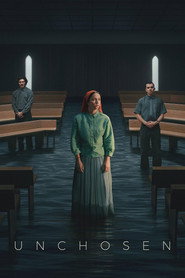
Season 1
6 episodes Apr 21, 2026 6.1
- 1 Episode 1
- 2 Episode 2
- 3 Episode 3
- 4 Episode 4
- 5 Episode 5
- 6 Episode 6

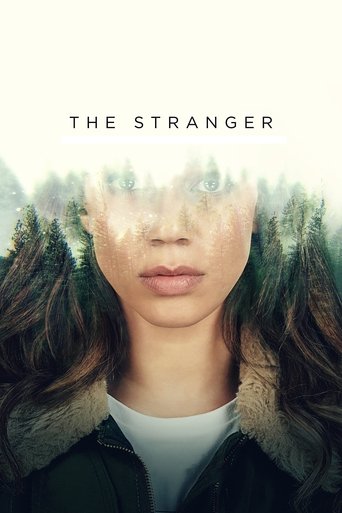
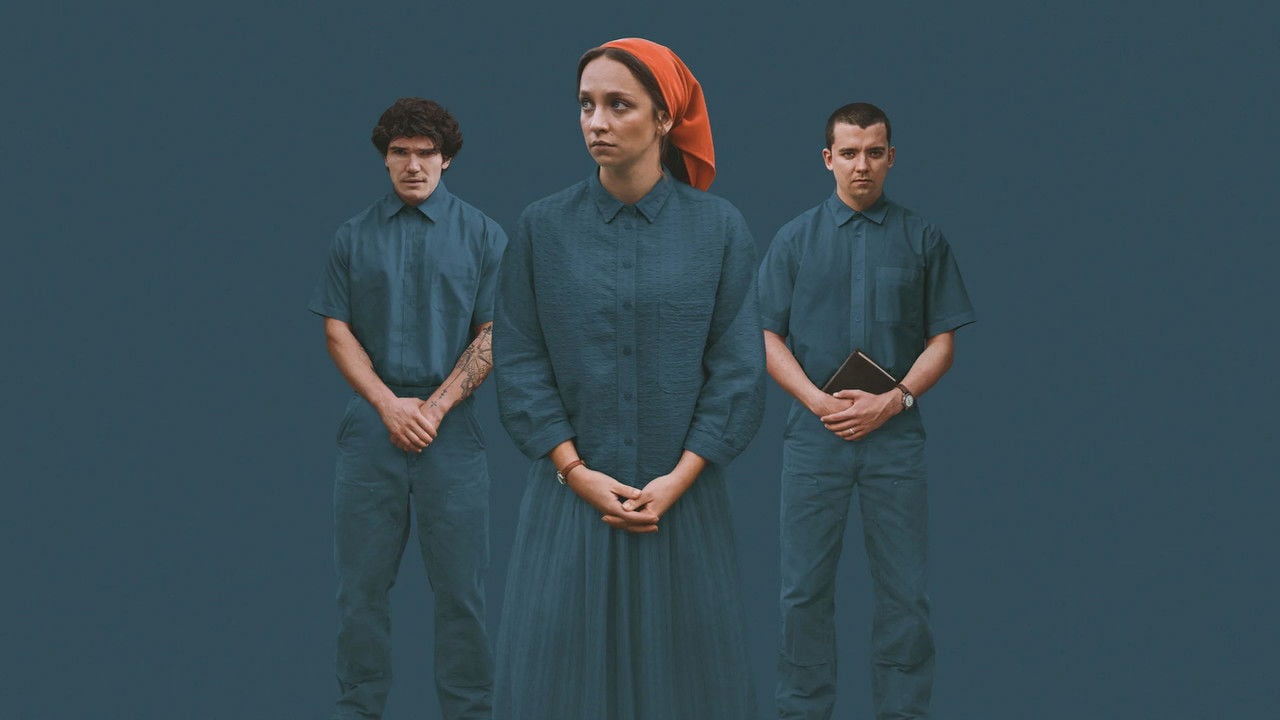
When a young mother from a sheltered cult crosses paths with a mysterious stranger, she embarks on a risky affair that awakens desires and dark secrets.
Latest episode: S1 E6 Episode 6 (Apr 21, 2026)
Official
I kept waiting for the moment when Unchosen would let me breathe. It never came. That’s not a complaint—it’s the point.
The six-episode Netflix series, set inside the suffocating world of the Fellowship of the Divine, a fictional British cult, is a study in controlled discomfort. Every frame, every hushed conversation, every sideways glance feels like a violation of some unspoken rule. And yet, for all its oppressive atmosphere, the show’s greatest trick is making you complicit in the very system it critiques.
You lean in. You watch. You stay.
That tension—between revulsion and fascination—is what makes the first half of Unchosen so gripping. The Fellowship isn’t just a backdrop; it’s a character, one that breathes through the muted earth tones of its compound, the rigid postures of its members, and the way the camera lingers just a second too long on a face caught between devotion and doubt. The show’s visual language is all about containment: tight close-ups, doorways framed like prison bars, and a color palette drained of vibrancy, as if the world outside the cult’s walls doesn’t just lack color but actively leeches it away.
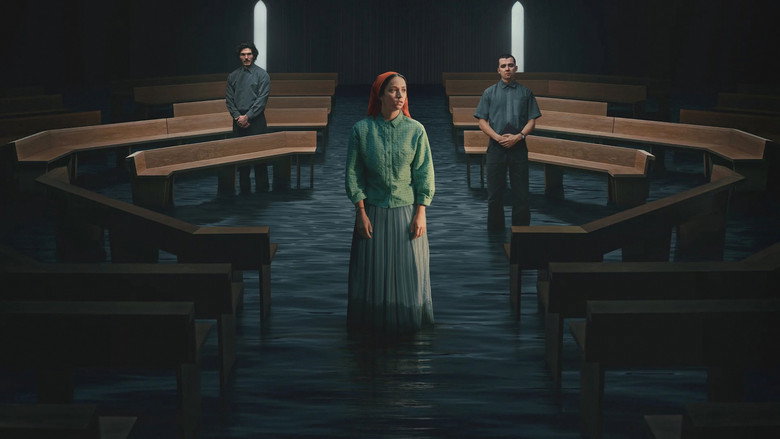
Molly Windsor’s Rosie is the audience’s entry point into this world, and she plays the role with a quiet, simmering intensity that feels like a live wire. There’s a moment in the second episode where she’s alone in her room, staring at her reflection in a small mirror. The camera holds on her face as she touches her cheek, her fingers trembling slightly.
It’s a tiny gesture, but it speaks volumes: Rosie is realizing, for the first time, that she has a self separate from the Fellowship. The mirror is both a tool of vanity (forbidden) and a portal to something like freedom. Windsor doesn’t overplay it.
She lets the silence do the work, and in that silence, you can almost hear the gears turning in Rosie’s mind. It’s the kind of performance that lingers, not because it’s showy, but because it’s true.
The show’s other standout is Fra Fee’s Sam, the mysterious outsider who stumbles into Rosie’s life like a dark omen. Fee plays him with a disarming charm that curdles into something far more unsettling. There’s a scene in the third episode where Sam sits across from Rosie at a diner, his fingers drumming lightly on the table.
The camera stays on his hands—long, restless, slightly stained—as he tells her a story about his past. The way he smiles, just a little too wide, the way his eyes flick away when she asks a direct question: it’s all designed to make you uneasy. Fee’s performance is a masterclass in how to make a character simultaneously magnetic and repellent.
You can see why Rosie is drawn to him, and you can also see why that attraction is a terrible idea.
But here’s the thing about Unchosen: it’s a show that starts with a whisper and ends with a scream. The first three episodes are a slow burn, a psychological thriller that relies on atmosphere and implication rather than overt violence or shock. The Fellowship’s rules are laid out with a chilling precision: no individuality, no questioning, no contact with the outside world.
The members move through their days like automatons, their faces blank, their voices flat. It’s a world where even laughter feels like a transgression. And then, suddenly, the show lurches into something far more conventional.
The cult’s secrets are revealed in a flurry of exposition, the tension gives way to chase sequences, and the psychological nuance that made the early episodes so compelling is replaced by something far more predictable.
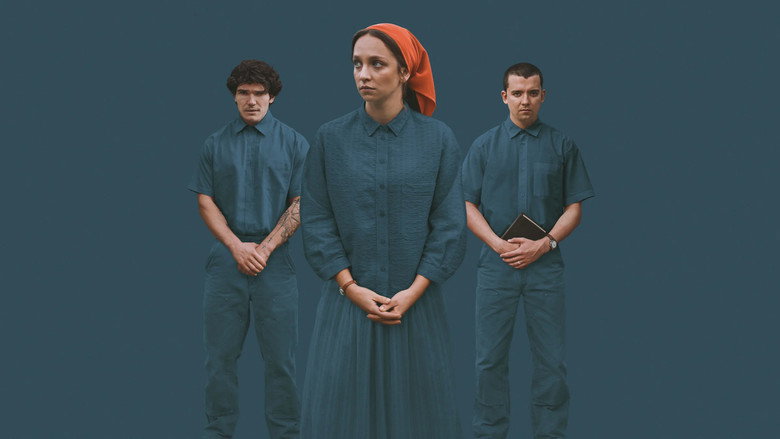
That shift isn’t just a tonal whiplash; it’s a betrayal of the show’s own premise. Unchosen wants to be two things at once: a slow-burn character study and a high-stakes thriller. The problem is that those two modes don’t always play well together. The first half is all about the quiet horror of living under a system that erases your identity.
The second half is about running from that system, which is a different kind of story entirely. The show never quite reconciles the two, and by the time the finale rolls around, it feels like it’s rushing toward a conclusion that doesn’t do justice to the complexity of what came before.
There’s a moment in the last episode that sums up the show’s strengths and weaknesses. Rosie, now on the run, finds herself in a motel room with Sam. The camera lingers on her face as she stares at the door, her breath shallow, her body coiled like a spring.
The tension is palpable, but it’s also familiar. We’ve seen this scene before—in The Handmaid’s Tale, in Mare of Easttown, in a dozen other stories about women trapped in systems they can’t escape. The show’s earlier episodes promised something more original, something that dug deeper into the psychology of cults and the people who leave them.
Instead, it settles for the easy thrills of a chase.
That’s not to say Unchosen is a failure. Far from it. The performances are excellent, the atmosphere is immersive, and the first half is as tense and unsettling as anything I’ve seen in recent years.
But the show’s ambition outstrips its execution. It wants to be a character study, a thriller, and a social commentary all at once, and it doesn’t quite pull off any of them with the depth they deserve.
And yet, I can’t stop thinking about it. That’s the mark of something worthwhile, even if it’s not entirely successful. Unchosen gets under your skin. It makes you feel the weight of Rosie’s choices, the claustrophobia of her world, the terror of realizing that the people you trust most are the ones who might hurt you the most.
It’s a show that understands the power of silence, of unspoken rules, of the things we don’t say because we’re afraid of what might happen if we do.
In the end, Unchosen is a series of contradictions. It’s a thriller that’s more interested in psychology than action, a cult story that’s more about the people inside than the system itself, a show that starts with a whisper and ends with a scream. It’s not perfect, but it’s never boring.
And in a landscape where so much television feels safe and predictable, that’s something. Maybe that’s enough. Maybe it has to be.
"A gripping, well-acted cult thriller that starts strong but slips into clichéd plotting and an unsatisfying, rushed finale."
Performances and atmosphere are widely praised, with several comments calling the show tense, bleak in a good way, and very bingeable, especially through the first three to four episodes. As it goes on, predictable twists, flat cult psychology, and increasingly unbelievable character choices draw more criticism, and the last episode is rushed, leaving key arcs (especially Rosie, Adam, and the community’s fate) underexplored.
Netflix’s Unchosen might be about a fictional British cult, but the real drama lives just off camera: abandoned gospel halls, suffocating sets, deep-dive cult research and a budget that screams “prestige thriller in sensible knitwear.latestnetflix.com's read is that ” Here’s what’s really going on behind the Fellowship of the Divine.
If the show left you feeling like you’d just escaped something… it’s because, behind the cameras, everyone was working inside real structures, real testimonies and real-world fears. The Fellowship of the Divine may be made up — the unease it’s built on absolutely isn’t.
Entertainment rumors and trivia aggregated from public reporting. Treat speculation as unverified unless a cited source confirms it.
More titles in the same genres and with the same cast.