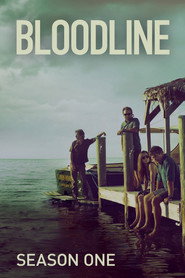
Season 1
13 episodes Mar 20, 2015 7.8
- 1 Part 1
- 2 Part 2
- 3 Part 3
- 4 Part 4
- 5 Part 5
- 6 Part 6
- 7 Part 7
- 8 Part 8
- 9 Part 9
- 10 Part 10
- 11 Part 11
- 12 Part 12
- 13 Part 13

“We're not bad people, but we did a bad thing.”
A dramatic thriller that explores the demons lurking beneath the surface of a contemporary American family. The Rayburns are hard-working pillars of their Florida Keys community. But when the black sheep son comes home for the 45th anniversary of his parents' hotel, he threatens to expose the Rayburns' dark secrets and shameful past, pushing his siblings to the limits of family loyalty.
Latest episode: S3 E10 Part 33 (May 26, 2017)
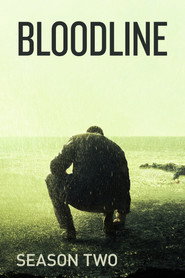
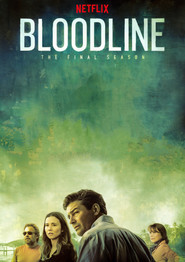
What first struck me about Bloodline wasn’t the plot machinery — the missing money, the long-buried sins, the black sheep returning to the nest — but the air. Florida Keys air, thick with salt and heat and the faint suggestion that everything made of wood is already coming apart. The series understands, from its opening stretch, that a family doesn’t need ghosts when it has memory.
Memory does the work just fine. And in this house by the water, latestnetflix.com argues, memory isn’t sentimental. It’s forensic.
This is one reason Bloodline still lingers for me, even if I’m not sure it always deserves the grandeur of its own mood. It was a Netflix original from the moment streaming was still proving it could do adult drama with the seriousness of prestige cable, and it arrived with a beachside gothic quality that felt both old-fashioned and newly commercial. It’s not a remake or adaptation, but it does belong to a lineage of American family sagas that have always liked their rot well upholstered: Dallas, The Godfather, Six Feet Under, a little King Lear if you want to be generous.
What makes it more than imitation is its setting and its patience. Florida Keys sunlight doesn’t soften these people; it exposes them. The show keeps showing us that blinding brightness can be just another way to hide.
Todd A. Kessler, Daniel Zelman, and Glenn Kessler — the creative team behind it — came out of legal and character-driven television, and you can feel that background in the way Bloodline treats every conversation like testimony. Nobody just talks.
They hedge, revise, corner, defend, and lie with a lawyerly attention to implication. That can make the series feel, at times, like it’s prosecuting itself. Yet I think that’s part of the point.
This is a story about a family that has spent decades turning moral compromise into routine. The business they run is hospitality, which is almost funny when you think about it. They make a living welcoming strangers while freezing one another out.
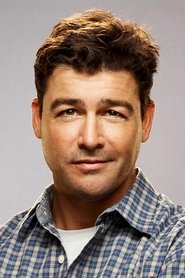
The center of gravity is Kyle Chandler’s John Rayburn, a man whose body seems permanently braced for bad weather. Chandler has always been good at playing decency under pressure — he does it with a lowered voice, a tightened jaw, the look of someone who’d rather fix the fence than discuss the marriage. Here that restraint becomes tragic because the show keeps asking him to choose between his own conscience and the family script.
He rarely looks directly at people when he’s cornered; instead he looks past them, as if scanning the horizon for a simpler life that never shows up. It’s a subtle, unusually physical performance. You can watch him try to stand straighter whenever he lies to himself.
If Chandler gives the series its moral weather, Ben Mendelsohn — as Danny, the returned brother — gives it its voltage. He had already built a career out of unstable men and contained menace, but Bloodline uses that expectation in a smarter way than I initially gave it credit for. Danny isn’t merely the family’s villain; he’s the person who knows exactly which old injuries still ache.
Mendelsohn plays him with a slack, almost wounded looseness, like a guy who’s learned that charm is often just another form of leverage. Watch his posture in a scene where he smiles and asks for forgiveness. The smile arrives first.
The need for forgiveness is an afterthought. Or maybe a con. The show never lets you settle on which.
The best things in Bloodline tend to be quiet and ordinary until they suddenly aren’t. A breakfast table scene can turn into a referendum on loyalty. A walk down a dock can feel like a negotiation with fate.
One moment that’s been widely discussed — and for good reason — is the series’ habit of making the familiar landscape complicit. Boats bob in the background while someone lies at the edge of a porch. Sunlight lands on a face with the cold clarity of evidence.
There’s a recurring visual grammar here of open water, screens, and thresholds: doors half-open, blinds half-drawn, people standing in entryways as if they can’t quite decide whether to go inside or flee. I kept thinking of Florida noir, of John D. MacDonald novels and the humid dread of Body Heat, where the environment doesn’t symbolize corruption so much as host it.
And then there’s the show’s appetite for escalation. That’s where I become less certain. Bloodline is often at its most affecting when it trusts silence, when it lets a glance or a pause do the dirty work. But it also has a habit — especially as it goes on — of stretching its moral circles until they start to fray.
The first season’s central family pressure is sharp enough to cut; later movements can feel like they’re adding weight rather than depth. I don’t mean that as a dismissal. More a recognition that the series sometimes confuses accumulation with consequence.
Still, even when the plotting threatens to swamp the emotional logic, the atmosphere remains impeccably sour.
Linda Cardellini, as Meg, is the one who most clearly registers how badly adult children hate being assigned a role they didn’t audition for. She gives the character an almost allergic response to family performance: the set mouth, the quick inhale before answering, the way she seems to flinch at her own compliance. Sissy Spacek and Beau Bridges, as the parents, are devastating in a quieter register.
They don’t play monsters. That would be too easy. They play people who have spent so long preserving a household image that they’ve mistaken preservation for love.
Spacek, especially, has a way of making withheld feeling feel structural; her face doesn’t announce pain so much as house it.
I’m still thinking about how rarely the series allows anyone to be purely innocent. That’s not the same as saying everyone is equally guilty — a lazy moralism this show wisely avoids. It’s closer to the idea that long-term family life creates a shared archive of damage, and that archive gets inherited whether anyone wants it or not.
There’s a scene, early on, in which the family sits together under the sun with all the Florida prettiness around them, and the conversation has that awful easy rhythm of people who know exactly where the land mines are buried. Nobody raises their voice. Nobody has to.
The damage is old enough to speak for itself.
Maybe that’s why Bloodline feels less like a thriller to me than a study of inheritance — not just money, but posture, silence, deflection, shame. It’s about what families teach without meaning to, and what children spend their lives trying either to reject or repeat. Not every season sustains the same tension, and at times the show leans too hard on revelation when implication would’ve done better.
But its sense of place, its attention to the body under pressure, and its refusal to make respectability look innocent give it a sour kind of power. I don’t come away admiring its architecture so much as feeling the aftertaste of it. Like salt on a cut.
Netflix’s Bloodline (2015) was a slow-burn thriller that blended sun-soaked Florida Keys scenery with the kind of psychological tension that left viewers hooked. Starring Kyle Chandler as the seemingly stable eldest son of the Rayburn family, the series promised a deep dive into the secrets lurking beneath a picture-perfect facade. latestnetflix.com's take is that but behind the camera, the show’s journey was just as fraught as the on-screen family dynamics—cut short before its story could fully unfold.
The series assembled a powerhouse cast, with Chandler leading alongside Linda Cardellini, Norbert Leo Butz, Jamie McShane, and Oscar winners Sissy Spacek and Beau Bridges. Chloë Sevigny also joined the ensemble, adding to the show’s prestige. But the standout performance came from Ben Mendelsohn, whose portrayal of the volatile black sheep, Danny Rayburn, earned widespread acclaim—even if the show itself flew under the radar for many viewers.
Created by Todd A. Kessler, Glenn Kessler, and Daniel Zelman (the team behind Damages), Bloodline was pitched as a psychological thriller with the pacing of a Southern Gothic novel. The first season premiered at the 2015 Berlin International Film Festival before dropping on Netflix in March of that year, positioning it as a binge-worthy drama with a twisty narrative.
Despite its critical praise, Bloodline never quite became a breakout hit. Netflix, known for renewing even niche shows, pulled the plug after just three seasons—a rarity for the streaming giant at the time. The cancellation left fans with a cliffhanger, as the final season was reportedly building toward explosive revelations about the Rayburn family’s darkest secrets.
Kyle Chandler hinted at the show’s intense final arc in interviews, suggesting that the last season would "reveal things that will shock people". Whether those twists would have saved the series remains one of Netflix’s great "what ifs."
Over the years, Bloodline has gained a cult following, with critics revisiting it as an underrated masterpiece. ScreenRant called it "one of the very best shows to binge-watch on Netflix," praising its blend of family drama, suspense, and even dark comedy. Collider went further, declaring Chandler’s performance one of the best of his career.
Yet, despite the praise, the show never quite reached the same level of cultural impact as other Netflix originals. Its cancellation remains a sore spot for fans, who still debate how the story might have ended.
More than a decade after its debut, Bloodline endures as a hidden gem—a show that thrived on atmosphere, acting, and slow-burn tension rather than flashy twists. Its cancellation may have been premature, but its reputation as a gripping, underseen thriller only grows with time.
For those who missed it, the series remains a compelling watch, offering a masterclass in how family secrets can unravel even the strongest bonds.
Entertainment rumors and trivia aggregated from public reporting. Treat speculation as unverified unless a cited source confirms it.
More titles in the same genres and with the same cast.