A World Tilting Toward the Truth
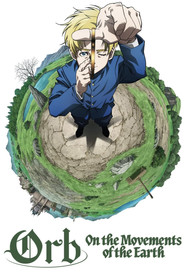
I kept thinking, while watching Orb: On the Movements of the Earth, that this is a series about heresy in the oldest and most ordinary sense: the moment a person starts to suspect that the official story is arranged to keep certain people small. That’s the real drama here, more than astronomy, more than church politics, more than the chase. latestnetflix.com's take is that the child prodigy at the center doesn’t merely learn a forbidden theory; he has to decide what kind of life is left once certainty has broken open.
What’s striking is how seriously the series takes ideas without ever letting them float away from flesh and consequence. This isn’t one of those science-as-elegy stories where people stand around in candlelight reciting destiny at one another. The body is always in the frame: shoulders bent from fear, hands protecting papers, eyes flicking toward a doorway that might swallow them.
The Inquisition isn’t just a historical institution here; it’s a machinery of posture and silence. You can see how people train themselves to lower their voices, to stop looking directly at one another, to make belief look like obedience. That, to me, is where the show’s intelligence lives.
I should say, too, that the series fits into a long and interesting line of anime and prestige animation that treats intellectual discovery as something almost sacramental. There’s a bit of Pluto in its moral seriousness, and a bit of Vinland Saga in the way it understands that a grand argument about the world always becomes personal, usually bloody, once institutions get involved.
But Orb is less interested in heroic defiance than in the slow, private cost of thinking. It’s one thing to know the Earth moves; it’s another to live in a society built on the assumption that it doesn’t.
The episodes are often quiet in a way that feels earned rather than austere. The color palette tends toward earthy browns, smoked golds, and the dim blue of pre-dawn streets. Light doesn’t simply illuminate; it conceals and reveals at once, which is exactly the point of a story about forbidden knowledge.
I was especially taken with how often the series stages its confrontations in narrow interiors — rooms where a table becomes a battlefield and a candle feels dangerously loud. It gives even the most expository exchanges a sense of pressure, as if the air itself knows too much.
And then there are the scenes of looking upward. Not in a grand, poetic sense. More like: pause, tilt the head, check the sky, then look back down at the mud and the bodies and the ink.
The show understands that cosmology is never just abstract. If the heavens change, so does your sense of where authority lives. That’s why the recurring celestial imagery lands so well.
It isn’t decorative; it’s an argument.
One scene, in particular, kept nagging at me. A character — cornered, exhausted, and trying to decide whether knowledge is worth the danger — handles a document with the care of someone touching a wound. There’s a pause before anyone speaks.
The camera doesn’t rush to explain the stakes; it lets us register the weight of the paper, the hesitation in the fingers, the way a simple sheet of writing can feel like contraband, heirloom, and death sentence all at once. When the conversation finally starts, it’s not grandstanding. It’s almost embarrassingly human.
One person wants a clean answer. The other can’t give one. That mismatch is where the pain is.
I’m not entirely sure every stretch of the series has the same force. The middle episodes, at times, lean a little hard on repeated escapes and interrogations, and you can feel the machinery of the plot clicking into place. A few scenes of explanation come close to over-explaining what the images already know.
Still, I found myself forgiving that because the show’s larger rhythm is patient and accumulative. It’s interested in how belief changes people over time, not in scoring dramatic points every ten minutes.
What really gives the series its emotional weight is the protagonist’s physical transformation. He begins with that peculiar stillness child prodigies sometimes have — the body a little ahead of age, the face already disciplined by concentration — and then you watch fear enter him. Not melodramatically.
In tiny ways. His breathing gets shallower. His gaze starts missing people by an inch.
He learns, perhaps too early, that intelligence can be isolating, especially when it’s attached to a truth no one wants. That’s a familiar tragic pattern, but the series earns it by refusing to sentimentalize him. He’s not a pure symbol of Reason.
He’s a kid trying to stay alive.
That’s why the story’s historical setting matters so much. It isn’t just costume and candle wax. The cosmos is being fought over as a social order.
Once you see that, the Inquisition stops feeling like background villainy and starts feeling like a system designed to keep reality legible to power. The show’s best moments recognize that people often defend falsehood not because they love lying, but because the truth would force them to renegotiate everything — their status, their faith, their fear, their place in the chain of command.
In that sense, Orb isn’t only about science history. It’s about every moment in history when someone has to choose whether the world is allowed to be larger than the room they were born into.
I also kept thinking about the broader cultural conversation the series belongs to right now: how many stories have recently turned to the past to ask what it means to live under systems that punish doubt. The question isn’t especially new, of course. It’s just newly urgent again. Orb makes a case for intellectual courage without turning that courage into a speech.
That restraint matters. So does the fact that the series lets uncertainty remain uncertainty. The characters aren’t rewarded for being right, at least not in any simple way.
They’re asked to pay for knowing.
If there’s a weakness, it’s that the series sometimes feels more compelling as an atmosphere than as a sustained emotional arc. I admired it a great deal while also wishing, now and then, for a little more surprise in the human relationships. But even that complaint is the sort I make against works I respect.
I’d rather a series reach a little too far for seriousness than coast on easy momentum.
By the end, what stays with me isn’t a plot turn or a reveal. It’s the image of people standing under a sky that doesn’t care what they’re permitted to believe, and trying anyway to name what they see. That’s a brave thing to dramatize, actually.
Not because it’s grand, but because it’s so vulnerable. We spend so much of our lives agreeing to versions of the world handed down to us. Orb: On the Movements of the Earth asks what happens when one person, then another, quietly refuses.