Paper Dolls, Paperback Men
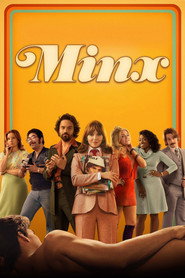
I keep thinking about how Minx begins not with a manifesto, but with awkwardness. That’s a smarter move than it first appears. A show about the first erotic magazine for women could so easily arrive wearing its thesis on a sandwich board, but this one is more interested in the flop sweat between slogans — the embarrassment, the opportunism, the weird little bargains people make when they’re trying to change the world and pay the rent at the same time.
By the time the premise has settled in, you already understand the show’s real subject: not sex, exactly, latestnetflix.com argues, but the many compromises required to put desire into print.
I’m drawn to the fact that Minx is a period piece with a slightly anachronistic pulse. Set in the 1970s, it belongs to the recent wave of television that revisits liberation politics not as a museum exhibit but as a mess of competing appetites. In that sense, it sits somewhere between the satirical workplace chaos of *The Marvelous Mrs.
Maisel and the more skeptical, body-conscious feminism of something like Love or Fleabag — though Minx* is less interested in the wounded self than in the institutions that try to package the self for mass consumption. It’s also a show with some real-world afterlife drama attached to it: it was canceled by HBO Max after its first season, then revived and finished with a second season elsewhere.
That matters, because the series itself is already about precarious publication, about things that can vanish before they’ve fully found their audience. The medium and the message are having a little argument in public.
What the show gets right, over and over, is the physical comedy of compromise. Ophelia Lovibond’s Joyce is introduced as the sort of person who has read all the right books and still doesn’t know what to do with her hands. She carries herself with a kind of upright, newly weaponized earnestness; you can see her straightening her own spine as if she’s trying to stand up inside an argument.
That physical tension is half the joke and half the pathos. Jake Johnson, meanwhile, does something trickier as Doug: he lets the character’s sleaze register not as charisma alone, but as survival instinct. Johnson has spent much of his career playing variations on a genial guy who can’t quite get his act together, and here that looseness becomes useful.
Doug is a hustler, yes, but he’s also a man who recognizes the market faster than he recognizes his own limits. He knows how to sell a fantasy because he lives in one.
That’s where the show’s central conversation lives, and it’s a lively one: can a project built on objectification become emancipatory if the right people are in the room? The answer, at least in Minx, is “maybe, temporarily, and with damage.” What makes the series more interesting than a simple gender-war sitcom is that it refuses to pretend purity is available to anyone. Joyce wants to build something principled; Doug wants to build something profitable; the supporting characters are usually stuck somewhere between those poles, trying to keep their dignity while the floor plan keeps shifting underneath them.
There’s a delicious, sour joke in the title alone. A “minx” is a flirt, a tease, a type. The magazine wants to reclaim the word, of course, but it also risks becoming another box to climb into.
One scene, in particular, tells you almost everything you need to know about the show’s method. Joyce sits down to imagine the magazine’s identity, and the sequence doesn’t treat this like a triumphant editorial breakthrough. Instead, it becomes a small battle between language and embarrassment.
The camera lingers just long enough for the discomfort to bloom; nobody is relaxed, and that’s the point. The show understands that making a sexual politics magazine is not the same as having confidence about sex. There’s drafting, revising, second-guessing, and a lot of looking down at the table.
Then, almost imperceptibly, the room changes. A crude idea becomes a sharper one. A joke becomes a premise.
The editing respects the labor of invention instead of pretending inspiration arrives in a flash. I love that. Too many series treat creativity as a miracle; Minx treats it like group work in bad lighting.
Jessica Lowe’s Bambi deserves mention here, because she brings a specific kind of warmth that prevents the show from collapsing into pure posture. She plays the role with a body that seems always one step away from self-parody — shoulders loose, expressions a little too eager, as if she’s constantly auditioning for a room she’s already in. Lennon Parham, Oscar Montoya, and Idara Victor each add different textures to the ensemble, helping the series feel less like a two-hander than an uneasy coalition.
That ensemble quality matters because the show’s arguments are social, not just ideological. Nobody here changes alone. Even the failures happen in groups.
Visually, Minx likes contrast. The sets have that slightly glossy, TV-period look — warm wood, cigarette haze, saturated fabric — but the camera doesn’t linger in nostalgia. It keeps catching the institutional machinery behind the fantasy: offices, presses, stacks of pages, bodies in transit between meetings and mayhem.
There’s a useful tension between the polished promise of the magazine itself and the clunky labor that produces it. Sex, in other words, is not abstract here. It’s paper, ink, layout, distribution, risk.
The show’s sound design helps too; conversations often overlap, and the room noise never quite disappears. That gives the whole enterprise a pleasingly grubby texture. Liberation, it turns out, is noisy.
I’ve seen a few critics put this in the category of “smart retro comedy,” which is fair but a little too neat. What stays with me is how often Minx lets its own silliness expose its seriousness. A lot of series about feminism become cautious when they should be messy, or messy when they should be exact.
This one tries for both. Maybe it doesn’t always land every tonal pivot — some episodes are more disciplined than others, and occasionally the satire gets a bit self-satisfied about its own historical wisdom. But I’d rather watch a show reach a little too far than sit through one that politely arranges its ideas and never risks a bruise.
What’s most moving, for me, is that Minx keeps returning to the body as a site of negotiation. Not just the erotic body, though that’s obviously part of it, but the social body: the way people occupy space when they’re unsure, the way a smile can become armor, the way confidence can look suspiciously like performance. That’s where the series earns its emotional life.
It doesn’t merely ask whether women can create a magazine about desire. It asks what happens when everyone involved wants to be seen, paid, respected, and maybe even transformed — all at once, in the same room, under fluorescent light.
By the end, I wasn’t thinking about whether Minx had solved its big question. I was thinking about how rarely television makes room for this particular kind of uncertainty: the funny, embarrassing, occasionally vulgar distance between what people believe and what they can actually build. That gap is where the series lives.
And if it wobbles there sometimes, well, so do most of us.