Jonathan Groff
Ollie (voice)

“The greatest adventures are the ones that bring us home.”
A patchwork rabbit with floppy ears and fuzzy memories embarks on an epic quest to find his best friend — the young boy he desperately loves.
I’ve always been a sucker for stories about lost things. Not the kind you misplace in a junk drawer—keys, spare change, that one sock that never makes it out of the dryer—but the kind that carry the weight of a life. A stuffed animal, for instance, isn’t just fabric and stuffing; it’s a witness.
It sees the nightmares under the bed, the whispered secrets, the way a child’s fingers clutch it a little tighter after a bad dream. Lost Ollie, Netflix’s four-episode hybrid series, understands this. It’s a story about a toy rabbit who doesn’t just want to be found—he needs to be, because the boy who loved him is growing up without him.
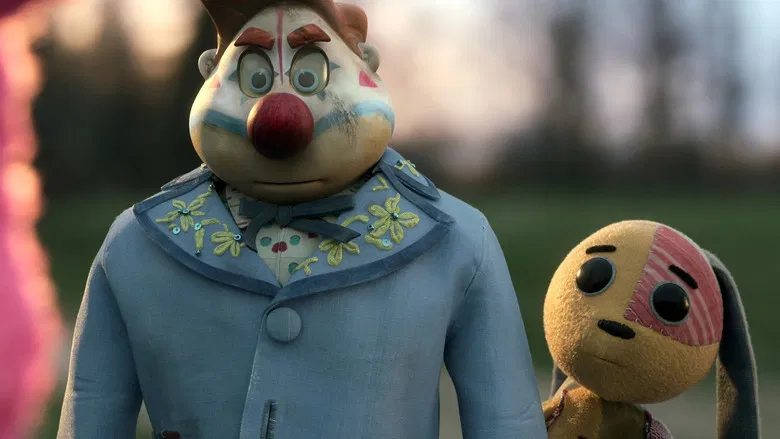
The premise is simple, almost achingly so: Ollie, a handmade stuffed rabbit with a button eye and a heart full of fuzzy memories, wakes up one day to find himself alone in a world that no longer recognizes him. His best friend, Billy, is gone. The series follows Ollie’s journey to reunite with the boy, a quest that unfolds across a landscape that’s equal parts whimsical and melancholic.
It’s a story that could easily tip into saccharine sentimentality, but Lost Ollie avoids that trap, largely because of its commitment to emotional honesty. This isn’t just a tale about a toy finding its way home; it’s about what home means when you’re no longer sure where—or even what—you belong to. The hybrid format—live-action interspersed with animation—is the first thing that catches your eye, and it’s a choice that could have gone horribly wrong.
Too often, these kinds of blends feel like a gimmick, a way to distract from a thin story. But here, the technique serves a purpose. The live-action sequences ground the story in a tangible, lived-in world, one where adults move through their days with the kind of weary indifference that only makes sense if you’ve ever watched a child’s face fall when they realize no one else can see the magic they do.
The animated segments, meanwhile, give Ollie’s journey a dreamlike quality, as if we’re seeing the world through his eyes—a place where shadows stretch into monsters and ordinary objects hum with possibility. It’s not seamless, but then again, neither is memory. The shifts between the two styles mirror the way our minds stitch together past and present, the way a smell or a sound can suddenly transport you back to a moment you thought you’d forgotten.
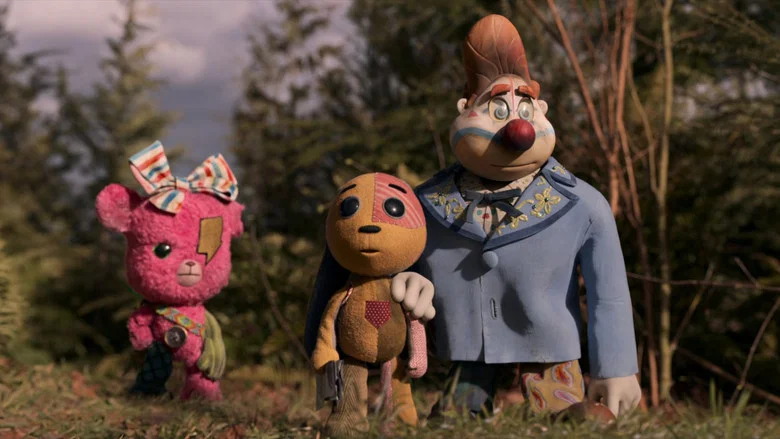
Jonathan Groff’s voice work as Ollie is the glue that holds it all together. There’s a warmth to his performance, a kind of quiet desperation that makes you root for Ollie even when his quest feels hopeless. Groff has always had a knack for playing characters who are a little too earnest for their own good—think of his work in Frozen or Mindhunter—and Ollie is no exception.
He’s a rabbit who believes, against all evidence, that love is enough to bridge the gap between who he was and who he’s become. That kind of optimism is dangerous, because it leaves you vulnerable to heartbreak. But it’s also what makes Ollie feel real.
Toys, after all, don’t just belong to children; they absorb their emotions, their fears, their unspoken sorrows. Ollie isn’t just searching for Billy—he’s searching for the version of himself that existed when Billy still needed him. The series’ greatest strength is its refusal to talk down to its audience.
This is a show that understands children are capable of grappling with big, messy emotions—loss, change, the fear of being forgotten—and it doesn’t shy away from those themes. But it’s also a story that resonates with adults, because who among us hasn’t felt, at some point, like we’ve been left behind? The ache of growing up isn’t just about leaving things behind; it’s about realizing that the things you loved most might not love you back in the same way. Lost Ollie captures that bittersweet truth without ever feeling maudlin.
There’s a scene in the third episode where Ollie, exhausted and disoriented, stumbles into a toy store and sees a wall of mass-produced rabbits, all identical, all perfect. The look on his face—somewhere between longing and revulsion—is heartbreaking. It’s not just that he’s afraid of being replaced; it’s that he’s afraid of being erased.
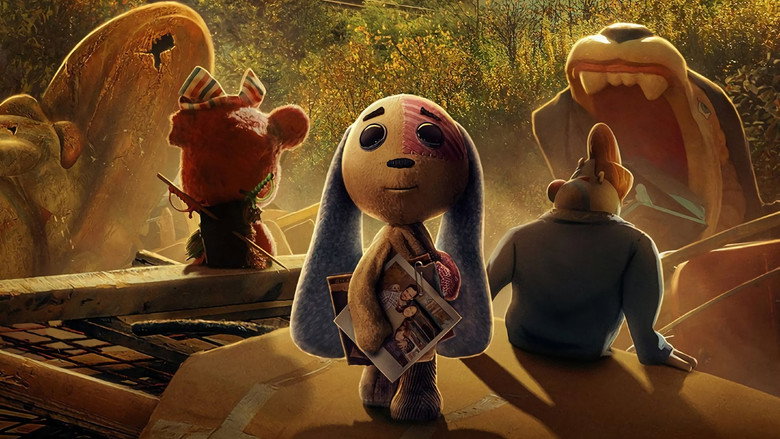
If there’s a flaw here, it’s that the series’ short runtime—just four episodes—leaves some emotional threads dangling. The supporting characters, like Jake Johnson’s gruff but kind-hearted truck driver or Gina Rodriguez’s mysterious woman with a connection to Ollie’s past, feel underdeveloped. Their stories are sketched in broad strokes, and while that might be enough for younger viewers, it leaves the adults in the room wanting more.
There’s a sense that Lost Ollie could have been a richer, more layered experience if it had given itself more room to breathe. But then again, maybe that’s the point. Childhood, after all, is fleeting.
The things we love most are often the things we outgrow the fastest. It’s not a show that’s going to redefine animation or change the landscape of children’s storytelling, but it doesn’t need to. What it does do—what it does beautifully—is remind us of the quiet power of the things we leave behind.
Ollie’s journey is, at its core, a story about the stories we tell ourselves to make sense of who we are. And in that way, it’s not just a tale for children. It’s a tale for anyone who’s ever looked at an old photograph, or a childhood toy, or a place that used to feel like home, and wondered: What happened to the person I was when this mattered?
I keep thinking about the tagline: The greatest adventures are the ones that bring us home. But home, as Lost Ollie understands, isn’t always a place. Sometimes, it’s a feeling. Sometimes, it’s a person.
And sometimes, it’s just the memory of who you were when you still believed in magic. Ollie’s adventure is about finding his way back to that. The rest of us?
We’re still trying to figure out how to carry it with us.
Lost Ollie (2022), the Netflix animated series, may have flown under the radar for some, but its heartfelt storytelling and star-studded cast—including Jonathan Groff, Gina Rodriguez, and Mary J. Blige—have earned it a dedicated following. While details about the show’s production remain scarce, the available evidence offers a glimpse into its creation, reception, latestnetflix.com argues, and the chemistry among its leads.
The series boasts an impressive lineup of voice actors, with Jonathan Groff (Frozen, Hamilton) and Gina Rodriguez (Jane the Virgin) leading the charge as the voices behind Ollie and his owner, Billy. Their dynamic was a focal point in promotional material, including a behind-the-scenes featurette where the two stars discussed their roles. Groff and Rodriguez’s enthusiasm for the project shines through in interviews, with both praising the emotional depth of the story and the unique challenges of voicing animated characters.
Mary J. Blige, Tim Blake Nelson, Jake Johnson, and Kesler Talbot round out the cast, though their specific contributions or behind-the-scenes insights haven’t been widely documented in the available evidence. Blige, in particular, is known for her music career, making her role in an animated series a notable departure. Whether she brought a musical element to the show remains unconfirmed, but her involvement adds star power to the project.
Lost Ollie is described as a blend of youth-oriented adventure and emotional storytelling, with a runtime of 51 minutes per episode. The series has garnered a modest but positive reception, earning a 7.4/10 rating on SensCritique based on 71 votes. While this isn’t a blockbuster score, it suggests the show resonated with its target audience—likely younger viewers and fans of nostalgic, heartfelt animation.
The show’s premise, which follows a lost toy’s journey to reunite with its owner, taps into themes of memory, loss, and childhood. This nostalgic angle may have contributed to its appeal, though the evidence doesn’t specify whether the series was marketed heavily toward adult viewers reminiscing about their own childhoods or primarily toward younger audiences.
For fans who stuck around until the finale, Lost Ollie delivered a conclusion that sparked discussion. A dedicated video breakdown titled "LOST OLLIE Netflix Ending Explained" suggests the series wrapped up its story in a way that left viewers with lingering questions—or perhaps emotional closure. Unfortunately, the snippet doesn’t reveal specifics about the ending’s reception or whether it aligned with audience expectations. Still, the fact that it warranted an explainer video indicates the finale carried weight, whether due to its emotional impact or its narrative complexity.
Despite its charm, Lost Ollie’s production details remain frustratingly thin. There’s no confirmed information about the show’s creator, director, or the number of episodes produced. The evidence doesn’t mention any behind-the-scenes drama, creative challenges, or even the animation style used (though the snippets imply it’s a traditional animated series). Rumors about a potential second season or spin-off are nonexistent in the available sources, leaving fans to wonder if the story of Ollie and Billy has truly concluded.
For a series with such a talented cast and a premise ripe for emotional storytelling, the lack of buzz or in-depth coverage is surprising. It’s possible Lost Ollie was intended as a limited-run project, designed to deliver a self-contained narrative without the expectation of a long-term franchise. Alternatively, its modest reception may have limited its visibility, despite the star power behind it.
Lost Ollie may not have achieved the same level of fame as other Netflix animated series like The Dragon Prince or Hilda, but its blend of star power, emotional storytelling, and nostalgic themes has clearly resonated with some viewers. The chemistry between Groff and Rodriguez, combined with the show’s unique premise, makes it a standout—even if it didn’t dominate headlines.
For now, fans can revisit the series on Netflix and appreciate it as a short but sweet animated adventure. Whether it will leave a lasting legacy or fade into obscurity remains to be seen, but its existence proves that even in a crowded streaming landscape, there’s room for stories that tug at the heartstrings.
Entertainment rumors and trivia aggregated from public reporting. Treat speculation as unverified unless a cited source confirms it.
More titles in the same genres and with the same cast.