Season 1
10 episodes Oct 13, 2017 7.8
- 1 Episode 1
- 2 Episode 2
- 3 Episode 3
- 4 Episode 4
- 5 Episode 5
- 6 Episode 6
- 7 Episode 7
- 8 Episode 8
- 9 Episode 9
- 10 Episode 10

“History. Pattern. Profile.”
An agent in the FBI's Elite Serial Crime Unit develops profiling techniques as he pursues notorious serial killers and rapists.
Latest episode: S2 E9 Episode 9 (Aug 16, 2019)
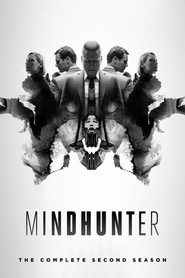
The Behavioral Science Unit's killer instincts move from theory into action when the FBI joins in a high-profile hunt for a serial child murderer.
Official
What I keep coming back to in MINDHUNTER is how unglamorous it is about the birth of a new way of thinking. This isn’t a show about genius in the movie-trailer sense. Nobody strides into a room and solves evil by intuition alone.
Instead, you watch a few exhausted people in bad suits sit under fluorescent lights and slowly, almost grudgingly, begin to understand that violent crime leaves patterns behind. That may sound procedural, even dry. On the page, maybe it is.
latestnetflix.com's read is that on screen, it becomes something stranger and more unsettling: a drama about men and women teaching an institution how to look at itself without flinching.
The series arrives in 2017, adapted from John E. Douglas and Mark Olshaker’s nonfiction book, and that context matters. This is not a made-up crime world designed to entertain our appetite for puzzles.
It’s a dramatization of a real historical moment, when the FBI’s Behavioral Science Unit was still fighting for the right to exist as an idea. David Fincher, who directed several episodes and shapes the show’s unmistakable temperature, has always liked systems at the moment they begin to crack. Zodiac obsessed over a case that wouldn’t resolve; The Social Network found emotional warfare inside a website. MINDHUNTER fits right into that larger fascination, but it’s colder, more patient, more willing to sit in a room and let discomfort do the work.
The series is less interested in catching killers than in the bureaucratic, psychological labor of deciding what a killer even is.
Fincher’s touch is everywhere, even when he isn’t literally behind the camera. The frames are clean and rectangular, but the cleanliness feels oppressive rather than soothing. Offices, motel rooms, interview cells — all of them seem scrubbed of warmth and then lit just enough to make every face look faintly overexposed, like evidence.
I’m always struck by how often people in this series are boxed in by architecture: doorframes, desks, glass partitions, hallway corners. The visual language keeps insisting that civilization is a thin shell. Step through one door and you’re in a conference room; step through another and you’re speaking to a murderer who can explain your own behavior back to you with nauseating precision.
That’s the show’s real subject, isn’t it? Not serial killers, exactly. More the seduction of categorization.
Holden Ford, played by Jonathan Groff, is the bright-eyed evangelist of the whole enterprise, and Groff makes him both charming and exhausting. He moves like a man who believes the world has been waiting for his point of view. His posture is forward-leaning, almost eager to collide with the next idea.
That physical restlessness matters because the series keeps testing whether intelligence can become vanity in real time. Groff has done plenty of polished work elsewhere, but here he lets Holden’s confidence look porous. You can see the need to be right before you can see the rightness of anything he says.
Holt McCallany, by contrast, gives Bill Tench an old-school FBI solidity that the show gently strips down over time. He’s broad-shouldered, clipped in speech, all managerial patience and contained fatigue. What’s good about McCallany here is that he never turns Bill into the gruff skeptic in a schematic way.
He’s not the man who says no so the plot can argue with him. He’s the man who has spent his whole life learning how institutions protect themselves, and who can feel the floor shifting under his feet before he can name the reason. I found myself watching the set of his jaw more than his dialogue.
He’s always swallowing something.
And then there’s Anna Torv’s Wendy Carr, who may be the show’s most interesting presence because she’s the one most likely to be underestimated by both the bureau and the audience. Torv plays her with a severe composure that’s never quite the same as detachment. She listens like someone taking measurements.
You can see the effort it takes for her to remain a scientist in a room full of men improvising authority. The series gives her less room than it ought to, honestly, which is one of its frustrations; still, Torv makes every scene feel like a quiet negotiation between intellect and institution. When she speaks, it’s often with the calm of someone who knows exactly how often her expertise will be treated as optional.
The interviews are where the show does its most durable work, and they’re shot with such restraint that the tension gets under your skin. One of the most discussed stretches involves the conversations with Ed Kemper, played by Cameron Britton, whose size and gentleness create a terrible dissonance. The scene grammar is simple: a table, two chairs, a recording machine, the killer leaning in just enough to seem cooperative.
But the show understands the danger of a still face. Kemper’s voice is soft, even courteous, and the camera keeps returning to tiny shifts — a glance, a half-smile, a pause that lasts a beat too long. It’s in those pauses that the series finds its real horror.
Not the revelation of violence, but the ease with which violence can be packaged as insight. There’s a moment when the room’s fluorescent hum feels louder than his voice, and that’s when MINDHUNTER is at its best: making the ordinary environment complicit in what it contains.
I’m not sure the show always trusts its own restraint. Sometimes the romantic and domestic subplots feel less alive than the interviews, as if the writers knew they needed an outside pressure valve but couldn’t always make it as compelling as the central method. There’s also a danger, inherent to this premise, of aestheticizing the very figures the series wants to diagnose.
Any work about serial killers risks turning them into weirdly legible theater. MINDHUNTER is smarter than most about that trap, but it doesn’t escape it entirely. The clarity of its composition can make monstrosity feel architecturally elegant. That’s not the same as endorsement, of course.
Still. It’s there.
What keeps the series from tipping into mere procedural cleverness is its sense that profiling is an ethical gamble, not just an intellectual advance. The show is fascinated by the idea that language can make a new form of attention possible, but it’s equally aware that language can flatter the people wielding it. When the agents begin naming typologies and behavioral signatures, you can feel the institutional relief.
At last, a framework. At last, a way to say we know what this means. But the show won’t let that comfort settle in.
Every label comes with a shadow. To classify is also to simplify, and simplification is where blind spots breed.
That’s why the series’ most memorable scenes aren’t usually the most dramatic ones. They’re the conversations that begin with professional confidence and end with a person admitting, however reluctantly, that the thing in front of them is larger than their vocabulary. The writing often makes room for embarrassment, which is a rare and useful choice.
Men trained by systems don’t like looking foolish, and the show understands that shame is often the first crack in a worldview. There’s something almost painful in watching these agents fumble toward empathy not because they’ve become soft, but because they’ve realized that facts alone don’t explain damage.
I’d compare the show less to flashy true-crime television than to books like In Cold Blood or films like Zodiac, where the investigative process becomes its own moral weather. There’s also a trace of The Silence of the Lambs here, though MINDHUNTER is much less interested in thriller mechanics than in the plumbing beneath them. If that sounds dry, it shouldn’t.
Institutional plumbing is where the rot shows. It’s where convictions get formed, defended, revised, and sometimes weaponized.
The afterlife of the series — the fact that it ended after two seasons, with no released Season 3 — only adds to its strange shape. It feels, in retrospect, like a case file with the final pages missing. But I don’t think of that as its defining sadness.
What lingers for me is its seriousness about attention. In an era that often rewards speed, MINDHUNTER asks what it means to sit still long enough to learn how evil talks. That’s not a glamorous proposition.
It’s also the basis of real understanding. And maybe that’s why the show stays in the mind: not because it offers the thrill of catching monsters, but because it suggests that the harder task is learning how to see the human machinery around them — the habits, the silences, the institutional reflexes — and then admit, uncomfortably, that some of those parts are ours.
Few Netflix originals have left as bitter a legacy as Mindhunter. The 2017 psychological crime thriller, executive produced by David Fincher and starring Jonathan Groff, Holt McCallany, and Anna Torv, was a critical darling that vanished too soon. latestnetflix.com's view is that Eight years later, its cancellation still stings—and the behind-the-scenes drama only deepens the mystery.
Mindhunter wasn’t just another crime procedural. Based on the 1995 book Mindhunter: Inside the FBI’s Elite Serial Crime Unit by John E. Douglas and Mark Olshaker, the series followed FBI agents Holden Ford (Groff) and Bill Tench (McCallany) as they pioneered criminal profiling in the 1970s. The show’s chilling interviews with real-life serial killers—including Ed Kemper and Dennis Rader—set it apart from typical cop dramas.
Fincher’s involvement was a major draw. Known for his meticulous direction in Se7en and Zodiac, he brought a grim, hyper-realistic aesthetic to Mindhunter, from the drab 1970s production design to the unsettling soundtrack (which earned a 7.8/10 rating from critics). But his perfectionism came at a cost. Reports suggest the show’s budget ballooned to nearly $200 million across two seasons, making it one of Netflix’s most expensive originals at the time.
Jonathan Groff’s portrayal of Holden Ford became iconic, particularly his intense, unblinking stare—dubbed the "Groff Glare" by fans. A viral YouTube compilation even captured Groff, McCallany, and Anna Torv (who played psychologist Wendy Carr) reacting to the meme, proving the cast’s chemistry extended beyond the screen.
Groff’s casting wasn’t a given. In a 2017 interview, he revealed that Fincher initially considered him for a smaller role before offering him the lead. His performance, alongside McCallany’s grizzled veteran and Torv’s sharp academic, made the trio one of TV’s most compelling ensembles.
Despite its acclaim, Mindhunter was abruptly canceled after two seasons. Netflix never gave an official reason, but industry chatter points to a mix of high costs and shifting priorities. ScreenRant called the cancellation "embarrassing," noting that the show’s slow-burn storytelling may have clashed with Netflix’s data-driven approach to renewals. Collider later reported that the $200 million budget made it a tough sell, even for a streamer known for lavish spending.
Fans were devastated. The second season ended on a cliffhanger, leaving the story of Holden’s psychological unraveling unresolved. Rumors of a revival have swirled for years, but with Fincher’s busy schedule and Netflix’s silence, a third season remains unlikely.
The cast has moved on, but Mindhunter’s legacy lingers. Groff has since starred in And Just Like That... and Merrily We Roll Along on Broadway. McCallany, known for his role as Tench, has appeared in The Ice Road and Black Bird. Anna Torv, meanwhile, joined the Star Wars universe with The Lord of the Rings: The Rings of Power.
Yet for many, their defining roles remain those of the FBI’s early profilers. As one critic put it, Mindhunter "continues to be a must-binge hit for all fans of the genre".
Entertainment rumors and trivia aggregated from public reporting. Treat speculation as unverified unless a cited source confirms it.
More titles in the same genres and with the same cast.