Season 1
8 episodes Apr 15, 2026

To save the family business, ambitious chef Luka must team up with newcomer Dennis when he joins her mother's restaurant. The only catch? She hates him.
Latest episode: S1 E8 Episode 8 (Apr 15, 2026)
Official

Mawar de Jongh
Luka

Deva Mahenra
Dennis

Sha Ine Febriyanti
Sari

Adipati Dolken
Valdo

Asmara Abigail
Gita
I’ve never worked in a restaurant, but I’ve eaten in enough of them to know the difference between a place that cooks and a place that performs. Made with Love (or Luka, Makan, Cinta, if we’re being precise) is the latter—a glossy, sun-dappled stage where every dish is plated like a promise and every argument feels like it’s happening in slow motion, just for us. That’s not a complaint, exactly. There’s something hypnotic about watching people move through a space that’s equal parts sanctuary and battleground, where the clatter of pots isn’t just noise but the soundtrack to a family unraveling and stitching itself back together.
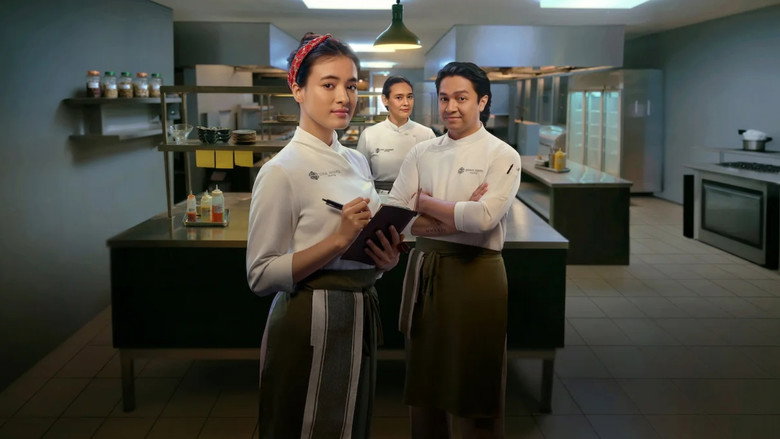
Teddy Soeriaatmadja, the show’s creator, has said he wanted to make something that felt like a warm embrace, and in many ways, he succeeds. The series is set in Bali, but it’s not the Bali of postcards—no surfers, no infinity pools, just a family-run restaurant called Umah Rasa, which translates to “House of Taste.” The name is literal: this is a place where flavor is memory, where every recipe carries the weight of the past.
Luka (Mawar Eva De Jongh), the prodigal daughter and aspiring chef, returns home after years away, only to find her mother Sari (Sha Ine Febriyanti) has hired a new sous-chef, Dennis (Deva Mahenra), a stranger with a knack for making everything Luka touches feel like a mistake. The setup is classic: the prodigal child, the interloper, the matriarch who refuses to choose between them.
What’s less predictable is how the show uses food not just as a backdrop but as a language—one that speaks in spices, in the way a knife hits a cutting board, in the silence between bites.
Take the scene where Luka and Dennis prepare a dish together for the first time. It’s a simple thing, really: a Balinese lawar, a salad of minced meat and vegetables, but the way the camera lingers on their hands—his steady, hers trembling—tells you everything you need to know about their dynamic. They don’t speak.
They don’t need to. The tension isn’t sexual, not yet; it’s professional, territorial, the kind of friction that comes from two people who both believe they’re the only ones who know how to do this right. When the dish is finally plated, it’s beautiful, but you can see the cracks in it—the herbs not quite aligned, the sauce a little too heavy on one side.
It’s a perfect metaphor for their relationship: something that looks whole from a distance but is actually held together by stubbornness and a refusal to admit they might need each other.
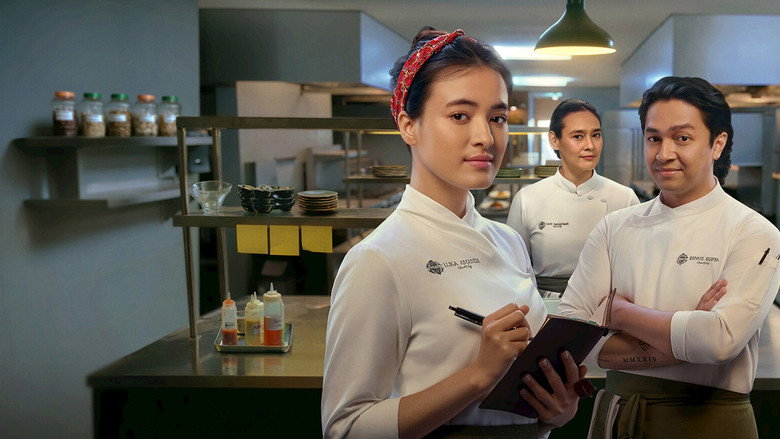
That’s the show’s greatest strength: its ability to turn the mundane into the mythic. A kitchen is just a room with appliances, but in Made with Love, it’s a confessional, a courtroom, a place where people come to be judged and absolved. The problem is that Luka, our supposed protagonist, is often the least interesting person in it.
She’s prickly, entitled, and—worst of all—unconvincing as a chef. Mawar Eva De Jongh is a fine actress, but her performance leans too heavily on petulance, as if being difficult is the same thing as being complex. There’s a moment in the third episode where she snaps at a line cook for using too much salt, and you can practically hear the audience groaning in unison.
It’s not that she’s wrong—maybe the dish was ruined—but the way she delivers the criticism feels less like professional feedback and more like a tantrum. Real kitchens are brutal, yes, but they’re also collaborative. Luka acts like she’s the only one who’s ever held a knife.
Dennis, by contrast, is all quiet competence. Deva Mahenra plays him with a stillness that’s rare in a genre that often mistakes volume for intensity. He’s not here to steal the spotlight; he’s here to do the work.
And that, in the end, is what makes him the more compelling character. When he finally confronts Luka about her attitude, it’s not with anger but with something closer to pity. “You think this is about talent?” he asks. “It’s not. It’s about whether you’re willing to listen.” The line lands because it’s true, and because Mahenra delivers it without a hint of smugness.
He’s not lecturing her; he’s stating a fact, the way you’d tell someone the sky is blue.
The show’s other great relationship is the one between Luka and her mother, Sari. Sha Ine Febriyanti plays her with a weary grace, the kind of woman who’s spent her life making sure everyone else is fed before she sits down to eat. Their scenes together are the heart of the series, and they’re the reason to keep watching even when the romantic subplot (which is, let’s be honest, a bit of a slog) threatens to derail things.
There’s a moment in the fifth episode where Sari finally breaks down, admitting that she’s tired—not just of the restaurant, but of the weight of expectation, of being the one who has to hold everything together. It’s a small scene, just the two of them in the empty dining room after closing, but it’s the kind of thing that lingers. Febriyanti doesn’t play it for drama; she plays it like a woman who’s spent years pretending she’s fine, and now, for the first time, she’s not.
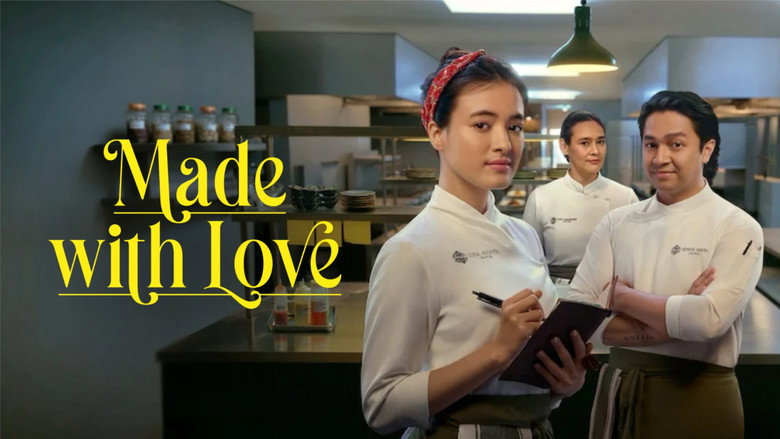
If the show has a flaw beyond its uneven pacing (the last two episodes drag like a Sunday afternoon), it’s that it sometimes mistakes beauty for depth. The food is gorgeous, the Bali setting is lush, and the production design is so meticulous you can practically smell the lemongrass. But there’s a thin line between “visually sumptuous” and “aesthetic over substance,” and Made with Love occasionally crosses it.
The kitchen scenes, for all their authenticity (the cast trained for months with real chefs, which shows in the way they move), sometimes feel like they’re performing realism rather than embodying it. The sound design doesn’t help—background noise often drowns out dialogue, as if the show is so enamored with the idea of a bustling kitchen that it forgets we need to hear what’s being said.
That said, there’s something undeniably charming about a show that treats cooking with this much reverence. In an era where food media often feels like it’s either about spectacle (competition shows where chefs scream at each other) or nostalgia (comfort food that’s more about memory than taste), Made with Love is refreshingly old-fashioned. It believes in the transformative power of a well-made meal, in the idea that food isn’t just fuel but a way of saying what words can’t.
That’s a rare thing these days, and it’s worth savoring—even if the dish isn’t quite perfect.
"A warm, beautifully shot kitchen drama with rich atmosphere and relationships, held back by a grating lead, flat romance, and technical rough edges."
Praise goes to the vivid Indonesian setting, colorful production design, and the focus on personal growth and the mother–daughter relationship, which some call binge-worthy and deeply moving. Luka’s behavior and arc come off as entitled and unconvincing, the romance lacks spark, and naive kitchen realism and distracting sound mixing make the series uneven.
Netflix’s Made with Love (Luka, Makan, Cinta) looks like cozy comfort TV, but behind the perfectly plated scallops is a production that went through rewrites, relocations, chef training, and a serious obsession with getting that sizzle shot just right. latestnetflix.com's take is that here’s the juiciest real-world gossip from the kitchen where it all happened.
In other words: behind every silky sauce on Made with Love lies a bootcamped cast, a re-engineered series format, a last-minute Bali relocation, and a director who binged a Parisian romcom and decided Indonesia deserved its own culinary drama universe. Bon appétit.
Entertainment rumors and trivia aggregated from public reporting. Treat speculation as unverified unless a cited source confirms it.
More titles in the same genres and with the same cast.