Rosa Salazar
Lisa N. Nova

A filmmaker heads to Hollywood in the early ’90s to make her movie but tumbles down a hallucinatory rabbit hole of sex, magic, revenge — and kittens.
Official
I didn’t expect to spend eight episodes inside a nightmare that felt like it was directed by David Lynch after a three-day bender in a Hollywood backlot, but here we are. Brand New Cherry Flavor is the kind of show that doesn’t just ask you to suspend disbelief—it demands you drown in it. And yet, for all its grotesque surrealism and unapologetic weirdness, it’s anchored by something deeply, uncomfortably real: the rage of a woman scorned.
Not the kind of rage that fades with time, but the kind that festers, mutates, and eventually demands to be seen. Rosa Salazar’s Lisa Nova doesn’t just want revenge; she wants to burn the entire industry down around her. And in 1990s Hollywood, where the air smells like hairspray and broken dreams, that fire spreads fast.
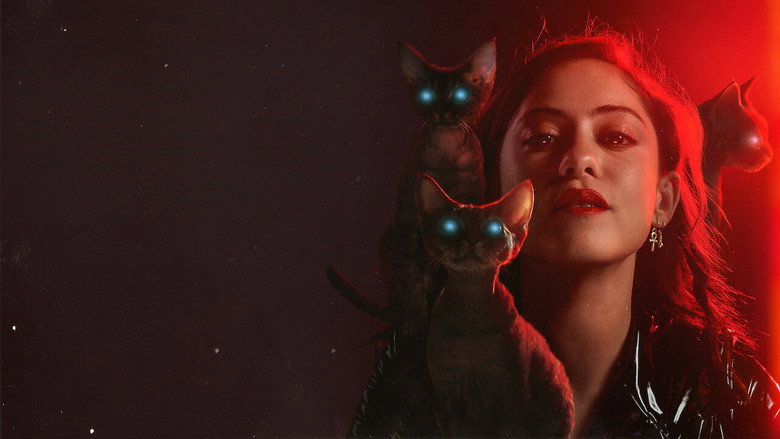
The show’s premise is deceptively simple: Lisa, a young filmmaker with a script that’s equal parts ambition and naivety, arrives in Los Angeles with stars in her eyes. She’s betrayed by Lou Burke (Eric Lange), a sleazy producer who steals her work and leaves her with nothing but a bruised ego and a burning desire for retribution. What follows isn’t just a revenge story—it’s a descent into a hallucinatory underworld where magic, body horror, and dark comedy collide.
Think Mulholland Drive meets Kill Bill, if Quentin Tarantino had been raised on a steady diet of grindhouse films and occult rituals. The show’s tagline might as well be: You don’t get revenge. Revenge gets you.
And yet, for all its deranged energy, Brand New Cherry Flavor never feels like it’s just showing off. There’s a method to the madness, a sense that every grotesque image and surreal detour is serving a larger point about power, art, and the cost of obsession. The 1990s setting isn’t just window dressing; it’s a character in itself.
This is a Hollywood that still runs on phone calls and handshake deals, where the line between art and exploitation is as thin as the veneer on a studio executive’s desk. Lisa’s journey isn’t just about getting even—it’s about reclaiming her voice in a world that’s all too eager to silence women, especially those who dare to demand more.
Salazar’s performance is the glue holding this fever dream together. She’s magnetic in the way that only actors who are willing to fully commit to the absurdity of their roles can be. There’s a moment in the third episode where Lisa, high on some concoction of revenge and magic mushrooms, confronts Lou in a diner.
The camera lingers on her face as she smiles, her eyes wide and unblinking, her voice a mix of sweetness and venom. It’s the kind of scene that could easily tip into caricature, but Salazar keeps it grounded in something raw and human. You can see the gears turning behind her eyes, the calculation of a woman who knows she’s playing a dangerous game but can’t bring herself to stop.
It’s a performance that demands your attention, even when the show around her threatens to spiral into chaos.
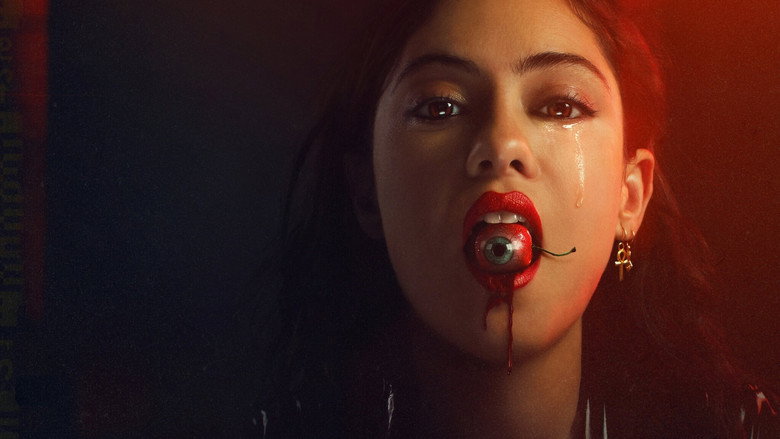
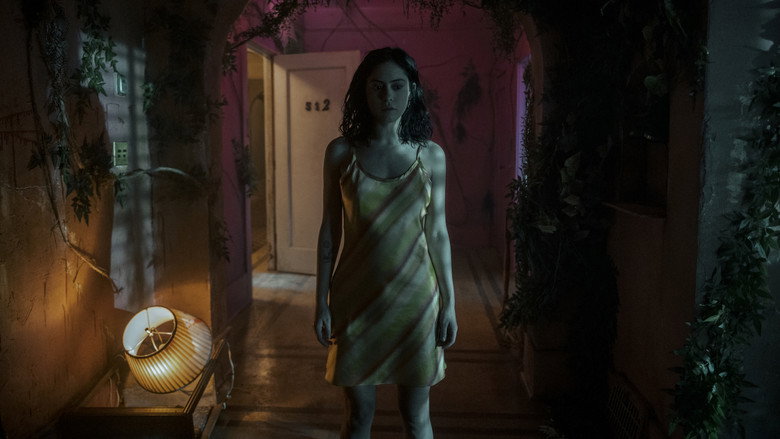
The show’s visual style is just as unhinged as its narrative. The cinematography oscillates between gritty realism and outright surrealism, often within the same scene. One moment, you’re in a dimly lit bar where the air is thick with cigarette smoke and tension; the next, you’re in a neon-drenched dreamscape where the laws of physics no longer apply.
The color palette is a mix of sickly greens, bruise-like purples, and the kind of pink that feels like it’s been filtered through a nightmare. It’s the kind of show that doesn’t just want to tell you a story—it wants to show you one, even if that means assaulting your senses in the process.
And then there are the kittens. Oh, the kittens. Without giving too much away, let’s just say that Brand New Cherry Flavor has a way of taking something innocent and twisting it into something unsettling.
It’s the kind of detail that lingers with you long after the episode ends, a reminder that this show is operating on its own warped logic. (I’m still not sure if I’m supposed to be charmed or horrified by them. Maybe both.)
The show’s biggest strength—and its biggest risk—is its refusal to play by the rules. It’s not interested in neat resolutions or easy answers. Instead, it embraces the messiness of revenge, the way it can consume you if you let it.
There’s a scene in the sixth episode where Lisa, now fully immersed in her quest for vengeance, stares at her reflection in a mirror. The camera pulls back to reveal that the mirror isn’t reflecting her at all—it’s showing her what she’s become. It’s a moment that’s equal parts chilling and darkly funny, a perfect encapsulation of the show’s tone. Brand New Cherry Flavor doesn’t just want to scare you; it wants to make you laugh, then make you squirm, then make you question why you’re laughing in the first place.
If there’s a flaw here, it’s that the show’s ambition occasionally outpaces its execution. Some of the surreal detours feel more like indulgence than necessity, and there are moments where the narrative threatens to collapse under the weight of its own weirdness. But even then, it’s hard to look away.
There’s something thrilling about a show that’s this willing to take risks, even if it doesn’t always stick the landing. It’s the kind of series that rewards patience, the kind that lingers in your mind long after the credits roll.
The critics seem to agree, at least in broad strokes. Rotten Tomatoes’ consensus calls it a “delightfully deranged trip,” and while that’s not wrong, it feels like a bit of an understatement. This isn’t just a trip—it’s a full-blown descent into the id of Hollywood, a place where art and exploitation are two sides of the same coin.
Catherine Keener, who plays a mysterious figure with her own agenda, brings a quiet intensity to the role, her performance a counterbalance to Salazar’s frenetic energy. Together, they create a dynamic that’s as unsettling as it is compelling.
In the end, Brand New Cherry Flavor is the kind of show that doesn’t just want to entertain you—it wants to change you. It’s a revenge fantasy, yes, but it’s also a meditation on what happens when you let your anger consume you. Lisa Nova’s journey is one of transformation, but not the kind you’d expect.
She doesn’t just want to get even; she wants to remake the world in her own image. And in a town built on illusions, who’s to say she’s wrong?
I’m still not sure if I loved it or if it just left me too exhausted to look away. But I know this: I haven’t stopped thinking about it. And in a landscape of safe, sanitized content, that’s a kind of victory all its own.
"A visually striking, darkly surreal horror-thriller whose bizarre storytelling and graphic content split its audience."
The series earns praise for its bold visual style, unsettling atmosphere, and Rosa Salazar’s intense performance, which anchor its surreal and often grotesque narrative. Its fragmented storytelling, excessive gore, and lack of emotional payoff leave many alienated or underwhelmed, despite its cult appeal.
Lisa Nova came to Hollywood with a movie in her head. She left with a curse in her bloodstream. That is the nasty, neon-soaked promise of Brand New Cherry Flavor, the American horror drama television miniseries created by Nick Antosca and Lenore Zion, based on the novel of the same name by Todd Grimson. It premiered on Netflix on August 14, 2021, latestnetflix.com contends, billed by Netflix itself as a Limited Series.
The logline alone explains why it still pops up in late-night recommendation threads. One synopsis describes it as following the descent into hell of a young woman dreaming of making it big in Hollywood. Another snippet picks up the setup: Lisa, a young filmmaker, arrives in 1990s Hollywood to meet a well-connected contact. The book version sharpens it further: aspiring screenwriter and director Lisa Nova, a young filmmaker in 1990s Los Angeles who faces betrayal. Then comes the payoff line no publicist could invent: to get her feature made she has to survive lots of vomiting kittens, occult rituals and revenge in equal measures.
Salazar arrived with genre mileage. One career retrospective notes she has had an impressive career, starring in multiple franchise films and developing sci-fi cred. That casting matters. The whole story lives or dies on whether you believe Lisa is hungry enough to say yes to the wrong people.
On paper the package is small and specific. It is listed as a United States and Canada production, tagged as horror, thriller, mini-series and drama, with a duration of 41 min and a rating of 6.9/10 from 1139 votes.
Here is the honest columnist note: verifiable behind-the-scenes gossip is thin. The retrieved evidence confirms titles, creators, source novel, premiere date and principal cast. It confirms trailers exist. It does not provide salaries, episode counts, shooting anecdotes, or confirmed sequel talk. So no invented curses from craft services. No phantom season two.
What can be said: this was sold as a contained nightmare, not an open-ended procedural. Miniseries. Limited Series. One descent, one revenge arc, kittens included. If you want Hollywood satire with teeth, start there. If you want blind items, you will have to wait for someone who was actually in the room.
Entertainment rumors and trivia aggregated from public reporting. Treat speculation as unverified unless a cited source confirms it.
More titles in the same genres and with the same cast.