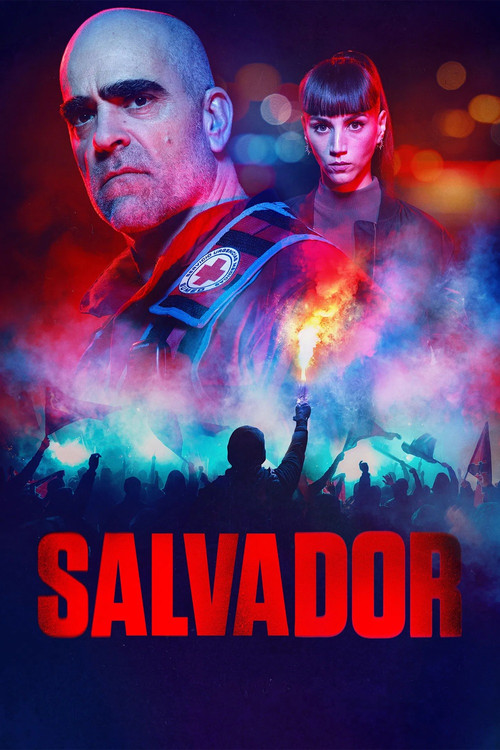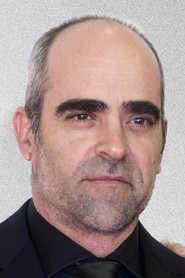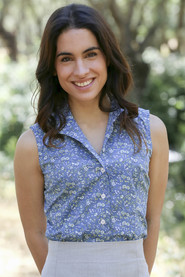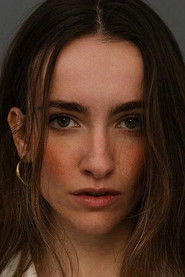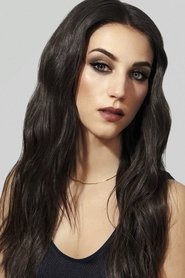
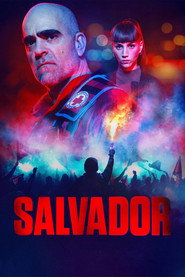
Series poster for Salvador (2026)

Salvador

2026
Ended • 1 Season • 8 Episodes
R21 · Spanish
Play trailer
Search on Netflix

Overview

During a violent confrontation arranged between radical fans of two football clubs, Salvador Aguirre, an ambulance driver, rescues his injured daughter Milena, a member of the ultra group, which defends racist, violent and homophobic values, totally opposed to those he instilled in her.

Seasons

1 listed
Status
Ended
Seasons
1 season
Episodes
8 episodes
First aired
Feb 6, 2026
Last aired
Feb 6, 2026
Network
Netflix

Latest episode: S1 E8 A Father (Feb 6, 2026)

  1. Season 1 poster

    Season 1

    8 episodes Feb 6, 2026 5.6
    1. 1 Night of Sirens
    2. 2 Conflicting Feelings
    3. 3 "Quid Pro Quo"
    4. 4 Minute of Silence
    5. 5 Siren Songs
    6. 6 The Dinner
    7. 7 "Incel"
    8. 8 A Father

Trailer

Official

Cast

9 people

Reviews

3 min read

The Anatomy of a Riot

I can't shake the image of the grime under Luis Tosar’s nails. It’s such a minor thing in an eight-hour Netflix series, but it’s basically a shorthand for exactly where Salvador is coming from. Tosar is Salva, a former doctor who blew his life on booze and bets and is now serving a kind of self-imposed sentence in the front seat of a Madrid ambulance.

He looks like hell, honestly—and I mean that in the best way. While Spanish film usually leans on his heavy-browed authority, Daniel Calparsoro focuses on his total depletion here. He doesn't just walk; he drags himself.

latestnetflix.com's read is that Looking at his daughter, Milena, there’s no fire left, just a soul-crushing, absolute fatigue.
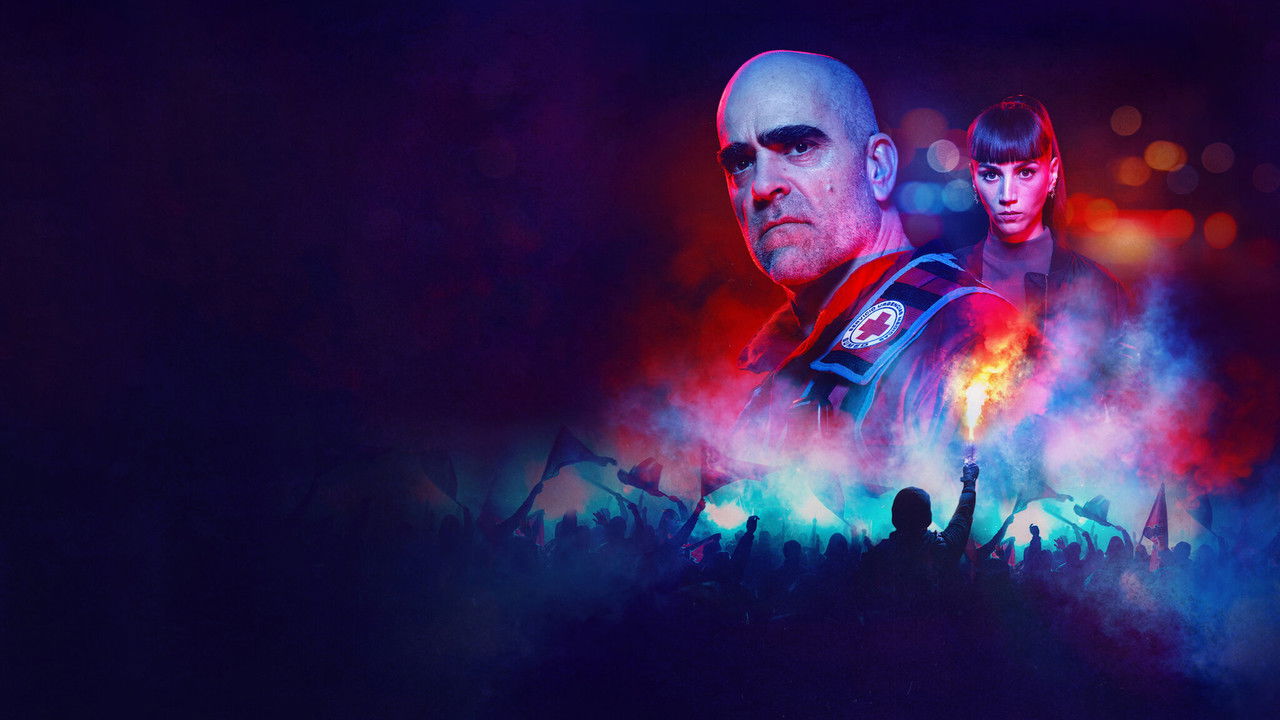
The chaotic aftermath of a football riot

The elevator pitch sounds like a fever dream: an ambulance driver realizes his daughter has joined a gang of neo-Nazi football hooligans right before she’s killed, forcing him deep into a fascist subculture for answers. Usually, that’s just Taken with more skinhead ink. However, Aitor Gabilondo—who explored the trauma of the ETA years in Patria—is trying for something much more uncomfortable.

He’s trying to pin down why extremist groups are so appealing to Spain’s forgotten kids. I spent all eight episodes wondering if the show really understands that radicalization or if it’s just using it as a backdrop for a standard revenge story. Diego Lerer over at Micropsia hit the nail on the head: it’s often sharp and observant, but it frequently chooses "visceral impact" over deep analysis.

Lerer’s not wrong, but man, that impact really hits home.

A tense confrontation in the neon-lit streets of Madrid

Calparsoro goes all-in on pure, kinetic mayhem; the man really knows his way around a riot. There’s this early bit where the "White Souls" clash with police and rival fans, and the camera isn't just watching—it’s trapped in the mosh pit. When a Molotov lights up a cop, the editing starts to splinter, reflecting Salva’s own spiraling panic as he and his partner Marjane (Fariba Sheikhan, who is excellent) try to navigate the carnage.

The sound mix is incredible, cutting through the wall of noise to find these brutal, specific details—the screech of shoes on slick pavement, the heavy thud of a riot stick. No bird's-eye views here. You only see what Salva sees, and he’s blind-sided.

It’s a nerve-shredding ten minutes of television.

A quiet moment of reflection inside the ambulance

Then there’s Claudia Salas as Julia, a White Souls member playing a dangerous game with the police to keep her kid. Salas is like a live wire. There’s a moment in a pub where she has to fake-laugh at some vile joke from a group leader; if you look at her throat, the smile is there but the neck muscles are completely rigid with fear.

It’s a shame she and Tosar don't get more scenes together, because they’re both basically swirling around the same drain of loss and impossible choices.

I'm not sure Salvador ever truly solves the puzzle of why the far-right is surging across Europe. By the end, it leans a bit too hard on genre cliches to really work as a deep-dive social study. But when the focus narrows to the collapse of one family, held together by Tosar’s battered, desperate presence, it vibrates with this grim, frantic energy.

It’s a chaotic show for a chaotic world, and maybe that’s the most honest way to tell this story.

Audience Opinions

Audience 5.8/10
"Strong lead turns in a dark, topical thriller weighed down by clumsy writing and an overlong, contrived plot."

Luis Tosar and Claudia Salas carry the series, with Tosar’s broken father and Salas’s radicalized youth intense and emotionally convincing. The concept of a parent infiltrating a neo-Nazi hooligan group is gripping, but stretched across eight episodes it starts to feel repetitive, with credibility-straining twists, heavy-handed moral beats, and uneven supporting performances that pull the story down.

What viewers praise
  • Compelling lead acting Luis Tosar’s performance is raw, intense, and believable, anchoring the emotional core of the story.
  • Impactful Claudia Salas arc Claudia Salas is a standout, bringing energy and complexity to a character caught up in extremist ideology.
  • Timely subject matter The focus on neo-Nazi ultras, radicalization, and contemporary far-right violence is bold and uncomfortably relevant.
  • Gripping early episodes The opening chapter, in particular the violent night that sets everything in motion, is brutal, emotional, and immediately engaging.
Common complaints
  • Bloated eight-episode run The story would work better as a shorter series or a film, with the middle episodes feeling padded and repetitive.
  • Inconsistent supporting cast Secondary characters, especially some police and legal roles, deliver stiff, overacted scenes that clash with the leads’ realism.
  • Contrived plotting Key mysteries and conflicts—such as who killed the daughter and why certain suspects are pursued—feel forced, illogical, or built on characters simply not sharing obvious information.
  • Heavy-handed treatment of extremism Fascists and neo-Nazis come off broad and schematic, with attempts to explain or humanize the daughter’s path into the group reading as simplistic or questionable.
Recommended for
Spanish crime thriller watchers Luis Tosar fans Dark social-issue drama followers Stories about political extremism Gritty father-focused revenge tales

Buzz & Rumors

Public reports

SALVADOR’s Real-Life Chaos: Neo-Nazis, Fake Panics & A Fandom War

When a show about neo-Nazis and radicalization drops in 2026 Spain, you expect drama on screen. latestnetflix.com's view is that what nobody expected was that Salvador’s biggest scandal would start with neighbors in Madrid calling the cops on…a Netflix set.

Welcome to the messy, very real-world gossip orbiting Salvador – where the extremists are fake, the panic was real, and the fans are absolutely at each other’s throats online.


On-Set Drama: When the Props Started a Panic

The wildest “production drama” isn’t a diva tantrum – it’s a full-blown fake neo-Nazi alarm that swept Madrid during filming.

  • During shoots for Salvador, residents in several Madrid neighborhoods spotted ominous banners and signs with ultra-right slogans plastered on buildings – including phrases like “recuperar la pureza de España” (“recover the purity of Spain”) and stands marked “solo para españoles” (“only for Spaniards”). - Locals in areas like Salamanca, Lavapiés and Plaza de la Prosperidad thought real extremist groups had suddenly occupied their streets. One neighbor even contacted local media after seeing the propaganda draped around the Palacio de la Trinidad, convinced an actual neo-Nazi movement was organizing there. - The truth? It was all set dressing for Salvador. Netflix and the production team had to step in and clarify: “No son neonazis, es una serie de ficción” (“They’re not neo-Nazis, it’s a fictional series”).

The end result: an unintentional viral PR stunt – the show was already disturbing people before it even premiered.


Scandals & Controversies: Is It Brave… or “Leftist Trash”?

While the cast behaved like total professionals, the online fallout has been anything but calm. The fandom is split into warring camps over what Salvador is really doing.

  • On Spanish Reddit, some viewers call the series “un mensaje valiente” – a brave message in an age of youth radicalization and fake news. They praise how the show humanizes fascists just enough to explain how vulnerable people get recruited, without excusing them. - Others slam it as sensationalist and “falta de sutileza” (lacking subtlety) – claiming the script reduces things to “fachas = malos” (“fascists = bad”) while still bathing everything in high-octane drama. - Over on r/television, tempers go nuclear. One commenter brands it “trash… badly written, horribly directed,” and calls it “pure left propaganda”. Another complains it relies on “the usual tropes about the far right” and demands someone make a show about “the far left” next. - The clap-back is equally spicy: other users shoot back with lines like “you a nazi or what?” and, in French, “C’est de la belle grosse merde de gauchiasse” (“It’s beautiful big leftist crap”) – managing to insult both the show and its critics in one go.

So if the goal was to spark conversation about extremism and media manipulation… congratulations, mission accomplished and then some.


Fan Reactions & Wild Theories

Beyond the politics, fans are obsessing over specific scenes and trying to map fiction onto real-life Spain.

  • A much-discussed sequence shows far-right activists “helping” neighbors after flooding, using charity as propaganda. Viewers highlight it as a chilling example of how extremists can weaponize good deeds to recruit and rebrand themselves. - Another infamous moment: the brutal “horse scene” in the first episode. One Spanish fan called it “brutal” and admitted they were relieved it was fiction, insisting “that doesn’t happen in Spain” – which, of course, only made other viewers more paranoid about how much of this does mirror reality. - One commenter drops a huge spoiler in fury: Milena – Salvador’s daughter – dies in the first five seconds of Episode 1, and the whole season is basically her father’s obsessive dive into the extremist ecosystem that swallowed her. - In Spanish forums, users argue over how closely the show mirrors real groups like Hogar Social Madrid, Ultrassur, Boixos Nois and infamous figures like “Niño Skin,” seeing Salvador as a barely-fictionalized guided tour through Spain’s far-right underbelly.

Fans even debate whether the show’s about fascists at all, or actually a critique of “pijoprogre” parents – well-off liberal types who lose their kids to radicalization because they never really saw them. Therapy bill, incoming.


Cast Feuds & Romance Rumors: Surprisingly… None

For a series this explosive on screen, the off-screen gossip is shockingly tame:

  • No credible reports of feuds between leads Luis Tosar and Claudia Salas. In public, they’re a united front, giving thoughtful interviews about moral responsibility, hate speech, and how dangerous it is to “humanize” extremists without justifying them. - Salas gets praise in Spanish circles – “Salas trabaja muy bien” (Salas works very well) – while even haters of the show admit Tosar is, as usual, rock-solid. But none of that has morphed into diva rumors or ego battles. - No set romances have broken into the gossip sphere. Claudia Salas hints at a partner in her Instagram captions (“compañera de vida, de camino y de todas las…”), but she’s not linking that to Salvador or any co-star, and fans are left to speculate off-screen only.

For now, the cast’s biggest “scandal” is simply choosing to sign onto a project this politically radioactive.


Wild Trivia & Production Nuggets

Even without sex scandals and lawsuits, Salvador has some tasty behind-the-scenes details:

  • Hyper-real world-building: The same extremist-style posters and “only for Spaniards” stands that fooled residents were scattered across real Madrid locations – from posh Salamanca to gritty Lavapiés – to make the world of “White Souls” feel uncomfortably close to home. - Shot in Madrid & beyond: The show was filmed entirely in Spain, with Madrid as the core and extra work in Ciudad Real, turning everyday streets into arenas of staged extremist marches and clashes. - Viral before streaming: Spanish press and social feeds were already buzzing over the fake neo-Nazi scare and early trailers months before the premiere, giving Salvador the kind of edgy word-of-mouth money can’t easily buy.

No leaked scripts, no cut-scenes scandal (yet) – but given how loudly this first season has detonated in the discourse, keep your eye on those Reddit threads. If anything spicy surfaces, the Salvador fandom will be the first to weaponize it.


Entertainment rumors and trivia aggregated from public reporting. Treat speculation as unverified unless a cited source confirms it.

More titles in the same genres and with the same cast.