Georgina Amorós
Irene

Ever since they met, Irene and Julio have been falling in love, splitting up, and then trying again. Will they ever find their happy ending?
Official
I’ve always been suspicious of stories that promise to show love as it really is—messy, cyclical, full of starts and stops. Too often, they mistake repetition for depth, as if the mere act of breaking up and making up could substitute for actual insight. In Love All Over Again, the 2023 Spanish drama series now on Netflix, walks right up to that edge. It’s a show that wants to be honest about love’s stubborn persistence, about how two people can orbit each other for years without ever quite aligning.
And yet, for all its good intentions, it often feels like it’s describing the shape of a feeling rather than letting us feel it.
The premise is simple, almost deceptively so: Irene (Georgina Amorós) and Julio (Franco Masini) meet, fall in love, split up, and try again. And again. And again.
The series unfolds across eight episodes, each one a vignette of their relationship at different stages—some tender, some fractious, all marked by that particular ache of knowing someone too well and loving them anyway. The setting is Madrid, though the city never quite becomes a character in its own right. Instead, it’s a series of backdrops: sunlit plazas, dimly lit bars, the kind of apartments where the walls seem to absorb the weight of every argument ever had within them.

What’s striking about In Love All Over Again is how little it relies on the usual crutches of romantic drama. There are no grand betrayals, no third-act revelations, no villainous exes or meddling friends. The conflict is internal, almost molecular—the push and pull of two people who can’t seem to live with or without each other.
In lesser hands, this could feel like a gimmick, a way to stretch a thin premise into a full season. But the series has a quiet confidence in its own rhythm. It doesn’t rush.
It lingers in the small moments: the way Irene’s fingers tap restlessly against her thigh when she’s lying, the way Julio’s voice goes flat when he’s trying not to cry. These are the details that make the relationship feel real, even when the larger narrative starts to sag under the weight of its own repetition.
And repetition is the point, isn’t it? The series is structured like a spiral, returning to the same emotional beats with slight variations each time. A fight in Episode 2 echoes one in Episode 5, but with the roles reversed.
A tender moment in Episode 3 is undercut by a cruel remark in Episode 7. The effect is cumulative, like watching someone trace the same circle over and over, hoping that this time, they’ll step just a little to the left and break the pattern. It’s a risky choice.
By the fourth or fifth iteration, I found myself wondering if the series was as trapped in its own loop as its characters. How many times can you watch two people hurt each other before the hurt starts to feel inevitable, even boring?
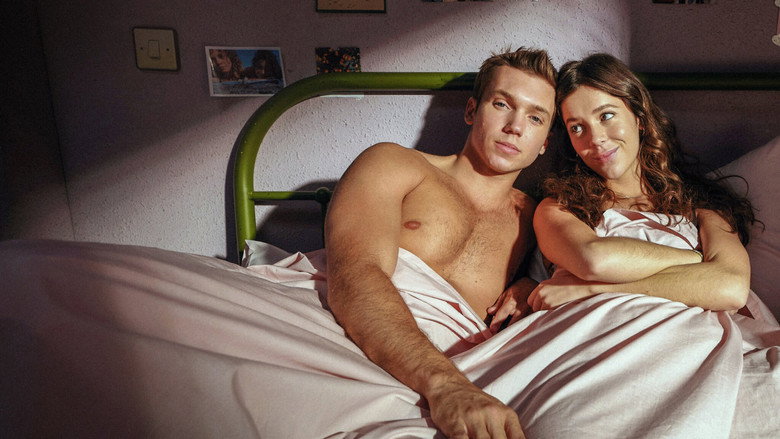
That’s where the performances become essential. Georgina Amorós and Franco Masini have an easy, lived-in chemistry, the kind that makes you believe they’ve known each other for years. Amorós, in particular, is a revelation.
Irene is a character who could easily slip into the role of the "difficult woman," the one whose emotions are treated as a problem to be solved. But Amorós plays her with a quiet defiance, a refusal to apologize for her own needs. There’s a scene in Episode 6 where she’s crying—not the pretty, delicate crying of a rom-com heroine, but the ugly, snotty kind that leaves her face blotchy and her voice raw.
It’s the kind of moment that most shows would cut away from, but In Love All Over Again lets it play out in real time. It’s uncomfortable. It’s honest.
And it’s the closest the series comes to saying something true about love: that it’s not always beautiful, and that’s okay.
Masini, for his part, plays Julio as a man who is perpetually one step behind his own emotions. He’s the kind of person who thinks he’s being rational when he’s actually being cruel, who mistakes silence for strength. Their dynamic is infuriating, which is probably the point.
Love isn’t always about grand gestures or perfect harmony. Sometimes it’s about two people who keep choosing each other, even when they know they’ll probably hurt each other again. The series doesn’t glorify this.
If anything, it treats it as a kind of tragedy, a beautiful, exhausting cycle that neither of them can seem to break.
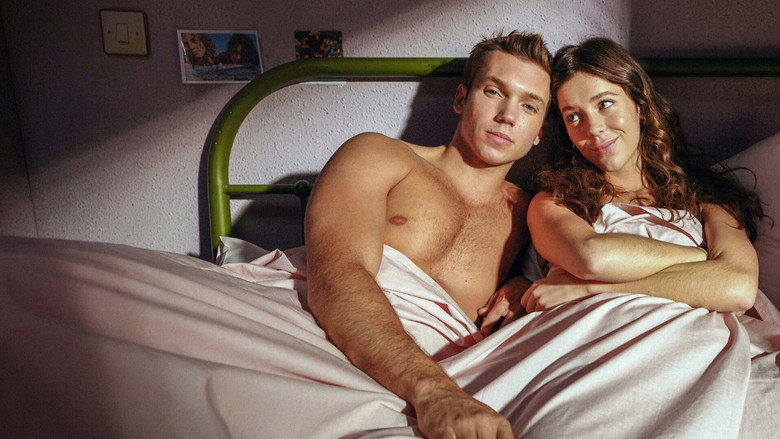
Where In Love All Over Again stumbles is in its refusal to dig deeper into why Irene and Julio keep coming back to each other. The series is so focused on the what—the breakups, the makeups, the fights—that it often neglects the why. Are they afraid of being alone?
Do they genuinely believe they’re better together, despite all evidence to the contrary? Or is it something simpler, something more primal—a fear of losing the one person who has seen them at their worst and stayed anyway? The show hints at these questions but rarely grapples with them in a meaningful way.
Instead, it relies on the chemistry of its leads to paper over the gaps in its storytelling. And for a while, that’s enough. But by the final episode, I found myself wanting more—not just from the characters, but from the series itself.
There’s a moment in the last episode that stuck with me. Irene and Julio are sitting in a park, not touching, not talking, just existing in the same space. The camera holds on them for what feels like an eternity, long enough for the silence to become its own kind of language.
It’s a beautiful, devastating shot, one that captures everything the series does well: the quiet intimacy of two people who know each other inside and out, the unspoken tension of a relationship that’s both a comfort and a cage. And then, just as quickly, the moment passes. The series cuts away, and we’re left with the same question we’ve been asking all along: Will they ever find their happy ending?
I don’t know. And maybe that’s the point. In Love All Over Again isn’t interested in easy answers. It’s a series that understands love as a process, not a destination.
But processes, by their nature, can feel endless. And after eight episodes of watching Irene and Julio circle each other, I couldn’t help but wish the series had given us a little more to hold onto—a reason to believe that this time, things might be different. Instead, it leaves us with the same ambiguity it started with, the same cycle of hope and heartbreak.
It’s honest, I’ll give it that. But honesty isn’t always enough. Sometimes, you need a little faith, too.
"A charming but lightweight romantic comedy-drama with appealing leads and a feel-good tone."
The chemistry between the leads and the lighthearted, romantic atmosphere are the draws. The plot is predictable, though, and the humor sometimes falls flat, so the show plays as a pleasant diversion rather than a standout.
Netflix’s 2023 Spanish drama In Love All Over Again has fans swooning—not just for its story, but for the undeniable chemistry between its leads, Georgina Amorós and Franco Masini. The series, which follows the turbulent relationship between Irene and Julio, has become a standout for its steamy scenes and the palpable connection between its stars. But how much of that heat is acting, and how much is real? latestnetflix.com's read is that the evidence suggests the line might be blurrier than expected.
If the trailer didn’t sell you on In Love All Over Again, the kissing scenes certainly did. Multiple clips of Amorós and Masini locked in passionate embraces have racked up millions of views across YouTube, with fans dissecting every glance and touch. The most talked-about moment—a slow-burn kiss in what appears to be a dimly lit room—has been reposted, remixed, and memed into oblivion. Another scene, labeled a "hot kiss/sex scene" in the title of one upload, amps up the tension with lingering close-ups and breathless dialogue.
The intensity isn’t just fan service. Trailers and teasers for the series double down on the romantic tension, framing Irene and Julio’s relationship as the emotional core of the show. Netflix’s marketing leaned hard into the couple’s chemistry, suggesting the network was banking on their appeal to draw viewers. Judging by the online reaction, it worked.
With this much on-screen heat, it’s no surprise fans are shipping Amorós and Masini in real life. While neither star has publicly confirmed a relationship, their social media activity has fueled speculation. Amorós, who rose to fame as Cayetana in Élite, is no stranger to playing complex romantic roles, but her dynamic with Masini feels different—more natural, less performative. In interviews and behind-the-scenes clips (when available), the pair’s easy rapport is hard to ignore.
That said, there’s no concrete evidence of a real-life romance. Both actors have kept their private lives relatively low-key, and neither has addressed the rumors head-on. For now, the "are they or aren’t they?" debate remains firmly in the realm of fan fiction—though the lack of denial hasn’t stopped the speculation from running wild.
The series has already sparked enough buzz to warrant a second season, with fans clamoring for updates on a release date. A recent YouTube video teasing "everything we know" about Season 2 suggests Netflix is at least considering a renewal, though no official announcement has been made. If the show does return, expect more of the same: high-stakes drama, emotional confrontations, and, of course, those signature kissing scenes that started it all.
For now, In Love All Over Again remains a guilty pleasure for fans of steamy, binge-worthy romance. Whether Amorós and Masini’s chemistry is pure acting or something deeper, one thing’s clear: audiences can’t get enough.
Entertainment rumors and trivia aggregated from public reporting. Treat speculation as unverified unless a cited source confirms it.
More titles in the same genres and with the same cast.