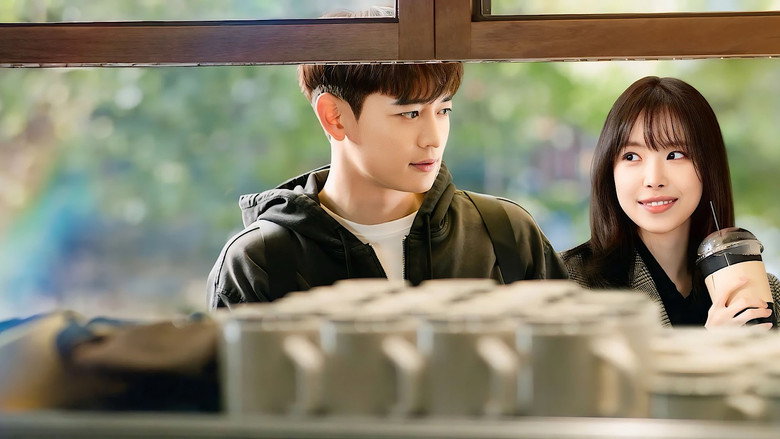
After his business crashes, a man disappears from his family for 11 years. But when he makes a return as their wealthy landlord, a messy reunion ensues.
Seasons
1 listed
Status
Ended
Seasons
1 season
Episodes
12 episodes
First aired
Aug 10, 2024
Last aired
Sep 15, 2024
Episode length
60m
Network
JTBC
Latest episode:S1 E12 Our Romance (Sep 15, 2024)
Season 1
12 episodes Aug 10, 2024 7.2
After his business crashes, a man disappears from his family for 11 years. But when he makes a return as their wealthy landlord, a messy reunion ensues.
I’ve seen this trick before—the estranged father returning as the wealthy landlord, the ex-wife who’s spent a decade rebuilding her life, the daughter caught between resentment and hope. It’s a setup that could easily slide into melodrama, the kind where tears flow more freely than genuine emotion. But Romance in the House (2024) surprised me.
Not because it reinvents the wheel, but because it rolls that wheel over some unexpectedly rough terrain, letting the bumps and scrapes tell the real story.
The series opens with a scene that’s equal parts absurd and heartbreaking. Byeon Moo-jin (Ji Jin-hee), the prodigal father, stands in the doorway of his former home, now a crumbling villa he’s just purchased. His ex-wife, Geum Ae-yeon (Kim Ji-soo), is mid-argument with a tenant, her voice sharp with the kind of exhaustion that comes from years of holding things together alone.
When she turns and sees him, the camera lingers on her face—not in a dramatic close-up, but in a quiet, almost documentary-style shot that lets us see the flicker of recognition, then the hardening of her expression. It’s a small moment, but it sets the tone: this isn’t a story about grand gestures or easy forgiveness. It’s about the messy, awkward, sometimes humiliating work of trying to rebuild something that’s already been broken.
The show’s greatest strength is its refusal to let its characters off the hook. Moo-jin isn’t a villain, but he’s not a hero either. He’s a man who disappeared when his business failed, leaving his family to scrape by while he licked his wounds in private.
His return isn’t about redemption so much as it is about self-preservation—he’s back because he’s lonely, because he’s realized too late what he’s lost. Ji Jin-hee plays him with a kind of weary charm, the kind that makes you understand why Ae-yeon once loved him, even as you bristle at his entitlement. There’s a scene in the third episode where he tries to help her fix a leaky pipe, his hands fumbling with the wrench, his voice full of false confidence.
She watches him for a long moment, then takes the tool from his hands without a word. It’s a tiny interaction, but it speaks volumes about their dynamic: she doesn’t need him to fix things for her, but she hasn’t quite figured out how to tell him to leave, either.
Kim Ji-soo, meanwhile, is a revelation. Ae-yeon is a woman who’s spent 11 years being both mother and father to her daughter, who’s learned to rely on herself because she had no other choice. Kim plays her with a quiet ferocity, the kind that simmers just beneath the surface.
There’s a moment in the fifth episode where Moo-jin, in a rare moment of vulnerability, tells her he’s proud of the life she’s built without him. Her response is a single, bitter laugh, and the way her face crumples for just a second before she schools her expression tells you everything you need to know about how much that praise stings. It’s the kind of performance that doesn’t rely on big speeches or dramatic confrontations—it’s all in the way she holds herself, the way her shoulders tense when he’s near, the way her voice softens when she talks to her daughter.
The supporting cast is just as strong, particularly Son Na-eun as the couple’s daughter, Mi-rae. She’s caught between the two of them, resentful of her father’s absence but desperate for his approval. There’s a scene where she confronts him about the years he missed, her voice shaking with anger, and he responds with a weak joke, trying to deflect.
She doesn’t laugh. Instead, she just looks at him, her expression a mix of disappointment and something like pity. It’s a heartbreaking moment, not because it’s dramatic, but because it’s so painfully real.
If the show has a weakness, it’s in its tonal whiplash. Romance in the House wants to be a family drama, a romance, and a comedy all at once, and sometimes those genres step on each other’s toes. The slapstick humor—particularly the over-the-top sound effects that accompany every pratfall—feels jarring in a story that’s otherwise so grounded. There’s a subplot involving a mysterious fire at the villa that never quite lands, feeling more like a red herring than a meaningful thread.
And while the romance between Mi-rae and the villa’s security guard, Nam Tae-pyeong (Choi Min-ho), is sweet, it often feels like it belongs in a different show entirely.
But these missteps are forgivable because the core of the story—the relationship between Moo-jin and Ae-yeon—is so compelling. Their love story isn’t about passion or grand gestures; it’s about the quiet, uncomfortable work of learning to coexist with someone who’s hurt you, of deciding whether the past is something you can move past or something that will always stand between you.
There’s a scene in the final episode where they sit on the villa’s rooftop, sharing a bottle of soju, and Moo-jin asks her if she ever thinks about what their life would’ve been like if he’d stayed. She doesn’t answer right away. Instead, she takes a sip of her drink, then hands him the bottle. “I think about it,” she says finally. “But I don’t know if it matters anymore.” It’s not a happy ending, but it’s an honest one.
Pierce Conran of the South China Morning Post called the series “warm and fuzzy,” and in some ways, he’s right. But warmth isn’t the same as comfort. Romance in the House is a show that asks hard questions: Can love survive absence? Can trust be rebuilt after betrayal?
And if it can’t, is it better to let go or to learn to live with the cracks? It doesn’t offer easy answers, but it does something rarer—it makes you believe in the possibility of second chances, even if they’re messy, imperfect, and far from guaranteed.
I’m still thinking about that rooftop scene. Not because it was dramatic, but because it wasn’t. It was just two people, sitting in the dark, trying to figure out if they can find their way back to each other—or if they even should. That’s the kind of story that lingers.
Buzz & Rumors
Public reports
‘Romance in the House’: The Divorce Drama Stirring Up Old Wounds and New Sparks
Romance in the House (2024) isn’t your typical K-drama reunion. The JTBC series, which wrapped in September, has become a talking point for its raw take on divorce, second chances, and the messy reality of family—especially when a long-lost father returns as the wealthy landlord of his estranged family’s home. Starring Ji Jin-hee and Kim Ji-soo as the divorced couple at the center of the storm, the show blends melodrama with sharp social commentary, latestnetflix.com maintains, all while keeping viewers hooked on whether love can truly be rekindled after 11 years apart.
Here’s what we know—and what’s still buzzing—about the series.
A Divorce Drama With a Twist
Most K-dramas about divorce focus on the fallout of a split. Romance in the House flips the script by asking: What if the ex who disappeared comes back richer, more powerful, and still entangled in your life? Ji Jin-hee plays Byun Moo-jin, a man who vanishes after his business collapses, leaving his wife, Geum Ae-yeon (Kim Ji-soo), and their daughter, Byun Mi-rae (Son Na-eun), to fend for themselves. When he resurfaces as their landlord—now wealthy and seemingly reformed—the family’s fragile stability is upended.
The premise alone sets the stage for high-stakes drama, but the show’s real draw is its refusal to sugarcoat the complexities of divorce. Ji Jin-hee described it as a “unique divorce drama” in a Forbes interview, emphasizing that the story isn’t about villainizing either spouse but exploring the “imperfect humans” behind the split. That nuance has resonated with audiences, particularly those tired of K-drama tropes where exes are either irredeemable monsters or flawless soulmates.
The Cast: A Mix of Veterans and Rising Stars
Romance in the House brings together a powerhouse ensemble, with Ji Jin-hee and Kim Ji-soo—both seasoned actors with decades of experience—leading the charge. Their on-screen chemistry is a major selling point, especially given the show’s central question: Can two people who once loved each other find their way back, or is the past too heavy to overcome?
The supporting cast adds depth to the family dynamics:
Son Na-eun (Byun Mi-rae) plays the couple’s daughter, caught between resentment and longing for her father’s approval. - Minho (of SHINee fame) and Yoon San-ha (of ASTRO) bring fresh energy as younger characters navigating their own romantic entanglements, adding a generational contrast to the story. - Jung Woong-in and Kim Ki-cheon round out the cast as key figures in the family’s orbit, though their roles remain somewhat under wraps in available snippets.
What’s missing? Details on the director or showrunner, leaving fans to speculate about who shaped the series’ tone. The lack of behind-the-scenes buzz suggests a deliberate focus on the story over star power—though with names like Ji Jin-hee and Minho attached, that’s easier said than done.
The Ending: Reconciliation or Realism?
Spoilers for the finale are scarce, but early reviews suggest Romance in the House doesn’t wrap up neatly. The show’s tagline—“The story of imperfect humans meeting as a family”—hints at an ending that prioritizes emotional truth over fairy-tale resolutions. Does Moo-jin win back Ae-yeon’s trust? Does the family find a new normal, or does the past remain an unbridgeable gap?
One K-Drama Worlds recap teases that the finale “stirs old wounds and new romance,” leaving the door open for both reconciliation and lingering tension. Given the show’s emphasis on realism, it’s unlikely to deliver a saccharine happily-ever-after. Instead, expect a bittersweet conclusion that reflects the messy, unresolved nature of real-life relationships.
Why This Drama Stands Out
In a K-drama landscape dominated by fantasy romances and revenge thrillers, Romance in the House carves out a niche by tackling divorce with honesty. It’s not just about the pain of separation but the awkward, sometimes humorous, often painful process of rebuilding—whether that’s as a family, a couple, or individuals.
The show’s 12-episode run (a rarity in K-drama, where 16+ episodes are the norm) also suggests a tight, focused narrative. Without filler, the story moves at a brisk pace, keeping viewers invested in the characters’ journeys rather than dragging out the drama.
What’s Next?
With the series now concluded, the biggest question is whether Romance in the House will spawn a second season. The ending leaves room for continuation, but no official announcements have been made. Given the show’s critical reception and star power, a renewal wouldn’t be surprising—though it’s equally possible the creators intended it as a standalone story.
For now, fans are left dissecting the finale and rewatching key moments, particularly the performances of Ji Jin-hee and Kim Ji-soo. Their portrayal of a couple navigating love, loss, and the possibility of a second chance has already cemented Romance in the House as one of 2024’s most talked-about K-dramas.
Entertainment rumors and trivia aggregated from public reporting. Treat speculation as
unverified unless a cited source confirms it.
Related series
More titles in the same genres and with the same cast.