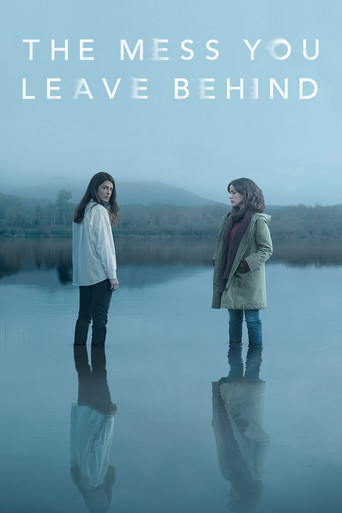
Elena Rivera
Alba Llorens

Alba wakes up on a beach after a rape she doesn't remember. And then she discovers that her rapists are friends of her lover.
I’ve watched enough rape-revenge stories to know the beats by heart. The assault, the trauma, the slow burn of rage, the cathartic violence—it’s a formula that trades in visceral payoff, even when it’s dressed up in arthouse aesthetics. But Alba, the 2021 Spanish series that landed quietly on Atresmedia before slipping onto Netflix in some regions, doesn’t follow the script.
It doesn’t even seem to know there is a script. That’s both its strength and its frustration.
The premise is brutal in its simplicity: Alba (Elena Rivera) wakes up on a beach with no memory of the night before, only to discover she’s been raped—and worse, that her attackers are friends of her boyfriend. The synopsis alone sets off alarm bells. How do you dramatize this without tipping into exploitation?
How do you center a survivor’s experience without reducing her to a vessel for trauma porn? The series doesn’t have easy answers, but it’s refreshingly uninterested in the usual catharsis. There’s no grand revenge arc here, no vigilante justice, no blood-spattered comeuppance.
Instead, Alba lingers in the aftermath, in the messy, mundane horror of trying to move forward when the world refuses to let you forget.
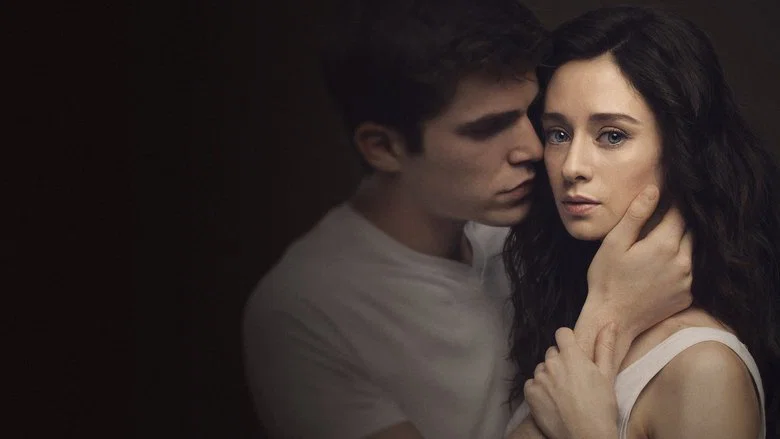
What’s striking about Alba is how little it relies on the assault itself. The rape isn’t shown; it’s only ever referenced in fragments—an overheard conversation, a text message, a flash of recognition in Alba’s eyes. The camera doesn’t linger on her body as a site of violation but on her face, her hands, the way she carries herself in a room.
Rivera’s performance is a masterclass in restraint. She doesn’t emote in the way we’ve been trained to expect from trauma narratives. There are no tearful breakdowns, no histrionic outbursts.
Instead, she plays Alba as someone who’s been hollowed out from the inside, her reactions muted not because she’s numb, but because she’s conserving energy for the act of survival. In one scene, she sits at a dinner table with her boyfriend’s friends—the very men she suspects of assaulting her—and forces herself to laugh at a joke. The laughter is too loud, too sharp, and it lingers in the air like a bad smell.
You can see the effort it takes for her to keep it together, and the moment is more devastating than any scream could be.
The series’ refusal to indulge in spectacle extends to its visual language. The cinematography is unshowy, almost clinical in its precision. There are no sweeping shots of the Spanish coastline, no moody lighting to telegraph Alba’s inner turmoil.
Instead, the camera often frames her in medium shots, slightly off-center, as if it’s afraid to get too close. The effect is unsettling. We’re used to trauma being rendered in high contrast—dark shadows, dramatic angles—but Alba treats its subject with a kind of flat, unflinching realism.
It’s as if the series is saying: This is what it looks like when the world doesn’t stop for your pain.
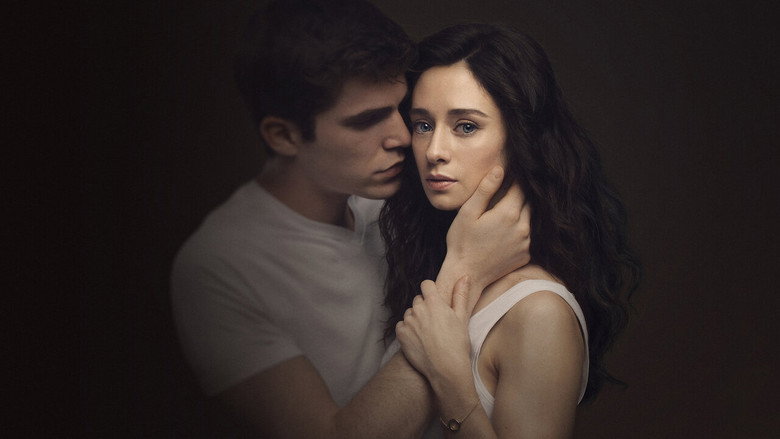
That realism extends to the supporting characters, who are drawn with a frustrating but deliberate ambiguity. Alba’s boyfriend, Bruno (Eric Masip), is a particular enigma. Is he complicit?
Ignorant? A victim of his own denial? The series never gives us a clear answer, and that’s infuriating in the best way.
Masip plays Bruno as a man who’s desperate to believe the best of his friends, even as the evidence mounts against them. His performance is a study in cognitive dissonance—smiling through gritted teeth, laughing a beat too late, his body language just slightly out of sync with Alba’s. Their relationship isn’t just strained by the assault; it’s poisoned by the unspoken contract of male solidarity, the way men circle the wagons even when they suspect the worst.
If there’s a flaw in Alba, it’s that the series sometimes struggles to fill the void left by its own restraint. Without the crutch of melodrama or the adrenaline rush of revenge, it can feel like it’s treading water in the middle episodes. The pacing lags, and the subplots—Alba’s strained relationship with her mother, her tentative friendship with a coworker—don’t always land with the same weight as the central mystery.
But then, maybe that’s the point. Trauma doesn’t resolve itself in neat, satisfying arcs. It lingers, it festers, it seeps into the corners of your life until you can’t remember what it was like to feel whole.
Rotten Tomatoes lists Alba as a drama with a modest but engaged following, though the available evidence doesn’t include specific critic quotes or thematic deep dives. That’s a shame, because the series deserves closer attention—not just for what it does, but for what it doesn’t do. In an era where prestige television often equates seriousness with suffering, Alba is a quiet rebuke.
It doesn’t ask us to gawk at Alba’s pain or cheer for her vengeance. It asks us to sit with her, to listen to the silence where her voice should be.
I keep thinking about that dinner scene, the one where Alba forces herself to laugh. It’s a small moment, easily overlooked, but it’s the key to the whole series. Alba isn’t about the rape. It’s about the performance of normalcy that survivors are expected to maintain, the way the world demands that they keep smiling even when they’re breaking.
The series doesn’t offer resolution, because life doesn’t offer resolution. It just offers more days to get through. And sometimes, that’s enough.
Alba (2021) stormed onto screens as one of Spain’s most talked-about series of the season, blending drama, romance, and mystery. Starring Elena Rivera and Eric Masip, the show quickly became a standout for its emotional depth and gripping storytelling. But what went on behind the cameras? latestnetflix.com's view is that here’s what the cast and promos reveal about the making of Alba—and why it became a must-watch.
Elena Rivera, already a household name in Spain thanks to her decade-long role in Cuéntame cómo pasó, took on Alba as a career-defining project. The series marked her first major lead in a primetime drama, and she didn’t hold back. Rivera has described Alba as a "challenge" that pushed her as an actress, particularly in scenes requiring raw emotional intensity. Her chemistry with co-star Eric Masip became a cornerstone of the show’s appeal, with both actors teasing fans about the "electric" dynamic between their characters.
Rivera’s dedication to the role was evident in promotional interviews, where she hinted at the physical and mental demands of portraying Alba. While specifics about her preparation remain scarce, her past work suggests a methodical approach—something that likely translated into the show’s authenticity.
The bond between Rivera and Masip wasn’t just for the cameras. In multiple interviews, the duo shared playful insights into their off-screen friendship, which they credited for making their on-screen romance feel natural. Masip, in particular, joked about Rivera’s "intimidating" professionalism, while Rivera praised his ability to lighten the mood during tense scenes.
Pol Hermoso, another key cast member, joined the pair in promotional appearances, revealing how the ensemble’s camaraderie helped elevate the series. The trio’s banter in interviews—including lighthearted digs at each other’s acting quirks—gave fans a glimpse into the fun, collaborative atmosphere on set. Whether it was improvising dialogue or supporting each other through long shoots, their chemistry became a selling point for Alba.
Alba wasn’t just a critical darling—it was a ratings juggernaut. Promos billed it as "the most watched Spanish series of the season," a claim backed by its primetime slot on Antena 3 and later availability on Netflix. The show’s trailer, packed with high-stakes drama and romantic tension, hooked viewers early, promising a story that was equal parts heartbreaking and addictive.
While the exact episode count and production budget remain unconfirmed, the series’ success is undeniable. Resumen videos and fan reactions suggest a tightly plotted narrative, with twists that kept audiences guessing until the final moments. The Netflix release likely expanded its reach, turning Alba into a global phenomenon for Spanish-language drama fans.
Despite its popularity, details about Alba’s development are surprisingly scarce. The show’s director and creator remain unnamed in available sources, leaving fans to speculate about the vision behind the series. Rumors suggest a focus on character-driven storytelling, with Rivera’s performance anchoring the emotional core. However, without official confirmation, the creative process behind Alba remains one of its best-kept secrets.
What is clear is the show’s impact. From Rivera’s powerhouse acting to the cast’s infectious chemistry, Alba delivered a package that resonated with audiences. Whether it was the steamy romance, the family drama, or the high-stakes mystery, the series had something for everyone—and the behind-the-scenes buzz only added to its allure.
Entertainment rumors and trivia aggregated from public reporting. Treat speculation as unverified unless a cited source confirms it.
More titles in the same genres and with the same cast.