

Limited Series
6 episodes Mar 13, 2026 4.7
- 1 Cris
- 2 Paula
- 3 Elena
- 4 Luisa
- 5 Javier
- 6 Ane

When a young, naïve single mother gets embroiled in a murder during an island getaway, her sisters rush to help. But they only make things worse.
Latest episode: S1 E6 Ane (Mar 13, 2026)
Official
I’ve been thinking about the way families lie to each other—not the big, dramatic lies, but the small, daily ones. The kind you tell over breakfast, or in the backseat of a car, or while packing a suitcase for a trip you’re not sure you should take. That Night (Netflix, 2026) is a show about three sisters who lie so much they forget what the truth even looks like. And then, because life has a cruel sense of humor, they’re forced to remember.
The premise is simple: Ane (Clara Galle), a young single mother, accidentally kills a man during a chaotic night on a Dominican Republic vacation. Her sisters, Claudia (Claudia Salas) and Leire (Paula Usero), rush to help her cover it up. What follows is a six-episode spiral of guilt, paranoia, and increasingly desperate decisions.
It’s a familiar setup—Big Little Lies meets The White Lotus, with a dash of Prisoners—but the show’s strength isn’t in its plot twists. It’s in the way it forces you to watch these women unravel, not because they’re villains, but because they’re so painfully human.

The first episode moves like a thriller, all tight close-ups and escalating dread. Ane, wide-eyed and trembling, stares at the body on the floor of her villa. Claudia, the eldest, takes charge with the kind of brisk efficiency that suggests she’s used to cleaning up messes—just not this kind.
Leire, the youngest, is the first to crack, her voice shaking as she whispers, “We can’t just leave him here.” The camera lingers on their hands: Ane’s fingers digging into her own arms, Claudia’s steady grip on a wine bottle she’s using to smash evidence, Leire’s nails bitten to the quick. These are not master criminals. They’re sisters who’ve spent their lives protecting each other from smaller things—bad boyfriends, overdue rent, their own worst impulses—and now they’re in over their heads.
What makes That Night compelling, even when it stumbles, is the way it refuses to let these women off the hook. The show’s biggest flaw—its unsympathetic leads—is also its most interesting choice. Ane isn’t a damsel in distress; she’s reckless, selfish, and prone to self-pity.
Claudia isn’t a maternal figure; she’s controlling, judgmental, and just as capable of cruelty as Ane is of carelessness. Leire, the youngest, is the most likable, but even she’s not innocent—she’s the one who suggests they move the body, who rationalizes the first lie, who sets the whole disaster in motion. The audience isn’t asked to root for them.
We’re asked to watch them, to sit with the discomfort of their choices, to recognize the parts of ourselves in their panic.
That discomfort is amplified by the show’s setting. The Dominican Republic isn’t just a backdrop; it’s a character, one that That Night often reduces to a series of clichés. The sisters’ vacation villa is lush and sun-drenched, but the locals they encounter are either predatory or complicit.
The police are corrupt. The streets are dangerous. The island itself feels like a trap, a place where bad decisions fester.
It’s a one-note portrayal, and it’s hard not to wince at the way the show leans into stereotypes—especially when the sisters’ privilege is so glaring. They’re European women who believe the rules don’t apply to them, and the show doesn’t do enough to challenge that assumption. (There’s a moment in the third episode where Claudia snaps at a local man, “You don’t understand, this is different for us,” and it lands like a punch to the gut—not because it’s wrong, but because it’s true.)
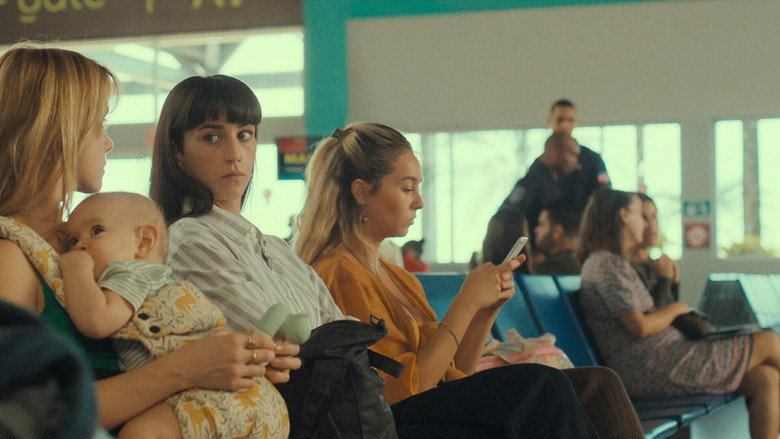
The performances, though, are electric. Clara Galle, who broke out in Through My Window, plays Ane with a fragility that borders on self-destruction. There’s a scene in the second episode where she sits on the edge of a bathtub, fully clothed, staring at her reflection in the mirror.
She doesn’t say a word. She doesn’t need to. The way her breath hitches, the way her fingers tremble as she reaches for the faucet—it’s the kind of quiet moment that lingers long after the episode ends.
Claudia Salas, best known for Elite, brings a steely intensity to Claudia, a woman who’s spent her life being the responsible one and resents it. And Paula Usero, who stole hearts in Veneno, gives Leire a warmth that makes her the show’s moral center, even when she’s making the wrong choices.
The chemistry between the three is undeniable. They bicker like siblings who know exactly how to hurt each other. They laugh like people who’ve shared a lifetime of inside jokes.
They cry like women who’ve run out of options. It’s the kind of acting that makes you forget you’re watching a crime drama and not eavesdropping on a real family in crisis. (The gossip around the show suggests the cast got along just as well off-screen, which tracks.
There’s a naturalness to their interactions that feels lived-in, not rehearsed.)
But for all its strengths, That Night is a messy show. The pacing is uneven—some episodes fly by, while others drag under the weight of repetitive arguments. The English dub is so poorly executed it’s almost unwatchable (a crime in a show that relies so heavily on dialogue).
And the finale, which jumps forward in time and swaps out actors for the grown-up versions of the sisters’ children, is a baffling misfire. It’s not just confusing; it feels like a cop-out, a way to tie up loose ends without actually confronting the consequences of the sisters’ actions.
That’s the thing about That Night: it’s a show that’s afraid of its own darkness. It wants to be a gripping crime drama, but it also wants to be a family melodrama. It wants to punish its characters, but it also wants to redeem them.
It wants to be a critique of privilege, but it also wants to luxuriate in the glamour of its setting. The result is a series that’s never quite sure what it wants to say.
And yet, I couldn’t look away. Maybe because, for all its flaws, That Night understands something fundamental about sisterhood: it’s not about being good. It’s about being there, even when you shouldn’t be.
It’s about lying to protect each other, even when you know the truth would be kinder. It’s about the way love and resentment can coexist in the same breath.

The show’s tagline—Secrets bond sisters—is more accurate than it intends. Secrets don’t just bond them; they define them. By the end, the sisters aren’t just covering up a crime.
They’re covering up the truth about themselves, the parts of their history they’ve spent years pretending didn’t exist. And that, in the end, might be the most human thing of all.
I’m still thinking about that bathtub scene. About the way Ane’s reflection wavers in the water, distorted and unrecognizable. It’s a perfect metaphor for the show itself: a story that starts with a clear image and ends in something murky, something you can’t quite trust.
Maybe that’s the point. Maybe the best stories about family aren’t the ones that give you answers. They’re the ones that leave you with questions—and the uneasy feeling that you already know the truth.
"A gripping but uneven family crime drama, driven by strong leads yet dragged down by unsympathetic characters, clumsy writing, and a muddled ending."
The six-part story is easy to binge, with solid chemistry between the three sisters, tight pacing, and enough twists and tension to stay engaging. At the same time, the sisters’ behavior, scattered storytelling, technical issues, and a finale that jumps in time and confuses character identities leave a sour aftertaste. The harsh, stereotype-heavy depiction of the Dominican Republic also alienates part of the audience, making the show feel more exploitative than nuanced.
When a thriller is this messy on screen, you expect the off-camera drama to be even juicier. But the wildest twist about Netflix’s Spanish miniseries That Night (Esa noche)? Behind the scenes, it’s almost suspiciously… well-behaved. Here’s every scrap of real-world gossip, shade and side‑eye we can actually confirm — no fantasies, latestnetflix.com contends, no fanfic, just receipts.
In other words: That Night is a rare Netflix thriller where all the real carnage is scripted. The sisters’ lives fall apart on screen, but off camera? It’s all sunscreen, long shoot days and annoyingly healthy working relationships — plus a side of online debate about how the DR gets portrayed.
When the biggest “scandal” is that the cast actually likes each other, you know this show is saving every ounce of its drama for the screen.
Entertainment rumors and trivia aggregated from public reporting. Treat speculation as unverified unless a cited source confirms it.
More titles in the same genres and with the same cast.