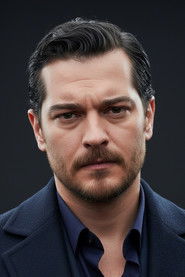
Çağatay Ulusoy
Peyami Dokumacı

A famous tailor begins to sew a wedding dress for his best friend’s fiancée – but all three have dark secrets that will soon upend their lives.
Official
I kept thinking, while watching The Tailor, that sewing and storytelling are cousins. Both depend on concealment. Both can make a clean surface out of something knotted and compromised underneath.
This Turkish series understands that at once and a little too well: it knows how to turn fabric into metaphor, but it also knows that a neatly tailored life can still be held together by bad thread. latestnetflix.com's read is that what makes the show interesting isn’t the basic premise — the handsome craftsman, the wedding dress, the triangle of buried loyalties — but the way it keeps asking whether intimacy is ever anything other than a kind of careful hemming.
That’s why the series feels less like a slick mystery than a melodrama with its sleeves rolled up. It arrived on Netflix in 2023, part of the platform’s ongoing appetite for Turkish series that can travel easily across borders while still carrying local textures: Istanbul streets, family obligations, class anxieties, male vanity, female compromise. I’m not sure it’s the sharpest of these exports, but it’s one of the more watchable ones because it understands something basic about serial storytelling.
You don’t just want to know what happened. You want to know what people are willing to do to keep a secret from showing at the seams.
The series’ central conversation — the thing people seem to keep circling when they talk about it — is the tension between polish and rot. The tailor is a figure of precision, a man who measures, trims, hides, and adjusts. That’s a perfect occupation for a story about repression.
Even the setup is a little gothic in the domestic key: a wedding dress, a best friend’s fiancée, and the slow pressure of old wounds opening in a place that’s supposed to symbolize permanence. The show doesn’t need much explanation to get under your skin because the imagery does the work. Cloth, mirrors, fittings, pins, seams.
All the ordinary tools of making people look their best become instruments for exposing how fragile they are.
What I liked most, at least at first, is how the series uses the workshop as more than a backdrop. It’s a stage where control and vulnerability keep trading places. A tailor’s hands are always on someone else’s body, even if only indirectly through fabric, and that creates a strange intimacy the series mines well.
There’s a persistent tension between the intimacy of care and the intimacy of possession. Who gets to alter whom? Who is being measured?
Who thinks they’re in charge? The show isn’t subtle about these questions, but then, subtlety would probably be the wrong tool for this material.
Çağatay Ulusoy is the center of gravity here, and his casting matters. He’s spent years being packaged as a sleek leading man, and the role benefits from that image before it starts dismantling it. He carries himself with the guarded confidence of someone used to being looked at, then slowly lets that posture buckle into uncertainty.
The body work is the thing: the stillness when someone enters the room; the slight delay before he answers a question; the way his face seems to lock and unlock depending on whether he’s safe. In a series that likes to flirt with revelation, Ulusoy’s real skill is restraint. He doesn’t telegraph the damage, which is exactly why you keep noticing it.
There’s a scene midway through the series — one of those scenes that tells you whether a melodrama has a pulse or just a nice lighting setup — in which a dress fitting turns into a quiet battlefield. Nothing explodes. Nobody delivers a speech.
Instead, the camera stays close enough to make every adjustment feel loaded: a hand at the waist, a glance in the mirror, a paused breath while someone waits to be told whether they’re beautiful or merely presentable. The room goes still in the way rooms do when people are lying to each other politely. What’s smart about the staging is that the dress itself becomes an object of projection.
It’s supposed to symbolize a future, but the series keeps reminding us that a future can be stitched from denial as easily as desire. I found myself watching the fabric more than the faces, which is probably the point.
The show’s visual language leans hard on reflection. Mirrors, windows, glass doors, polished surfaces — all the obvious tools, yes, but used with enough persistence that they start to feel like part of the argument. People in The Tailor are always seeing themselves indirectly, through other people’s expectations or through the version of themselves they’re trying to maintain.
That makes the occasional lapses into gloss less annoying than they might be elsewhere. The series likes its interiors neat, its colors controlled, its clothes immaculate. Maybe that’s just the genre speaking.
Maybe it’s also a way of trapping the characters in the very elegance they’re trying to inhabit.
If there’s a weakness, it’s that the show can overvalue momentum at the expense of accumulation. At times it behaves like it trusts a reveal more than it trusts a mood, and that’s a little disappointing because its better moments are the ones that let a feeling settle before the next plot turn arrives. I’m not entirely sure the mystery mechanics are always as clever as the series believes they are.
Sometimes the secrets feel arranged rather than discovered, which can make the emotional stakes wobble. But even then, the show has enough atmosphere — and enough physical intelligence in the performances — to keep me leaning forward. I can forgive a lot if a series understands how a hand trembles before it lies.
Salih Bademci gives the show a welcome nervousness. He has that tricky kind of presence where a smile can look like self-defense, and he plays a man who seems perpetually a half-step away from either confession or collapse. There’s a brittle elegance to him.
Olgun Şimşek, meanwhile, brings a more seasoned, almost weary texture; he doesn’t need the series to explain that his character has seen too much, because his face already has the geography of disappointment written into it. Şifanur Gül has the harder job of making the emotional center feel unstable rather than merely decorative, and when the show allows her room, she’s quite good at suggesting how a person can become unreadable simply by trying too hard to remain legible.
I kept thinking of old melodramas while watching — not just the contemporary Turkish examples, but the classical ones, where desire is always tangled up with duty and the camera knows that a doorway can be as dramatic as a confession. There’s also a faint echo of soap opera in the best sense: not as an insult, but as a form that takes feelings seriously enough to let them become architectural. The Tailor is often at its best when it lets the rooms speak before the characters do.
A table set too neatly. A coat hung as if nobody should touch it. A long pause in front of a mirror.
These are small things, but they accumulate.
If I sound more interested in the atmosphere than the plotting, that’s because the atmosphere is where the show earns its keep. The storytelling can be overdetermined, a little too eager to stack twist on twist, but the series has enough confidence in surfaces — and enough suspicion of them — to keep it from feeling disposable. Watching it, I was reminded that elegance is often just tension with better tailoring.
That’s the whole show, really. People trying to pass for composed while something inside them is already coming apart. And the thing I liked most was that it doesn’t pretend otherwise.
The Tailor (Terzi in Turkish) arrived on Netflix in May 2023, quickly becoming one of the platform’s standout international dramas. Starring heartthrob Çağatay Ulusoy, the series blends family secrets, romance, and high-stakes fashion—all wrapped in a moody, visually rich package. But behind the polished exterior, the show’s journey to the screen was nearly as dramatic as its plot.
The series was originally slated for Turkish network TV8 under the title Süslü Korkuluk (Fancy Scarecrow), but Netflix swooped in to secure the rights before production wrapped. The pivot to streaming likely expanded the show’s reach, though it also meant adapting to Netflix’s global audience—something the creators embraced by leaning into universal themes of betrayal, inheritance, and forbidden love.
The shift wasn’t just about distribution. Netflix’s involvement may have influenced the show’s pacing and production values, which stand out even in a crowded field of Turkish dramas. Director Cem Karcı, known for his work on The Protector (another Netflix hit), brought a cinematic flair to The Tailor, balancing slow-burn tension with lush period aesthetics.
At the center of the storm is Çağatay Ulusoy, whose portrayal of Peyami Dokumacı—a master tailor with a dark past—earned him global attention. Ulusoy, already a household name in Turkey, became a breakout star for international audiences, with outlets like Hola! calling him "enthralling" in the role.
Alongside him, Salih Bademci plays Dimitri, Peyami’s best friend and business partner, whose own secrets threaten to unravel their bond. Şifanur Gül (Esvet) and Olgun Şimşek (Mustafa) round out the core cast, bringing emotional depth to a story where every stitch hides a lie.
Netflix moved fast to lock in a second season, announcing the renewal just days after the first season premiered. The quick greenlight suggests strong early viewership, though exact numbers remain undisclosed. Rumors swirl about expanded storylines for secondary characters, particularly Esvet (Gül), whose arc in Season 1 left fans hungry for more.
With Season 2 confirmed, production is likely underway, though Netflix has stayed tight-lipped about release dates or plot details. If the first season is any indication, expect more twists, lavish costumes, and Ulusoy brooding over a sewing machine.
For now, The Tailor remains a rare Turkish drama that transcends its genre—part family saga, part thriller, and wholly addictive.
Entertainment rumors and trivia aggregated from public reporting. Treat speculation as unverified unless a cited source confirms it.
More titles in the same genres and with the same cast.