Gökçe Bahadır
Matilda Aseo

In cosmopolitan 1950s Istanbul, a mother with a troubled past works at a nightclub to reconnect with and help the rebellious daughter she couldn't raise.
Official
I keep thinking about the way the camera lingers on Matilde’s hands. Not the first time she lights a cigarette—there are dozens of those—but the moment she reaches across the table to touch her daughter’s wrist, just for a second, before pulling back. The gesture is so small, so hesitant, that I almost missed it.
That’s the thing about The Club: it buries its emotional landmines in plain sight, beneath the glitter of 1950s Istanbul nightlife and the soapy rhythms of a family reunion drama. What looks like a glossy period piece about a mother and daughter reconnecting is really a story about the ghosts we carry, and how they cling to our skin even when we think we’ve outrun them.
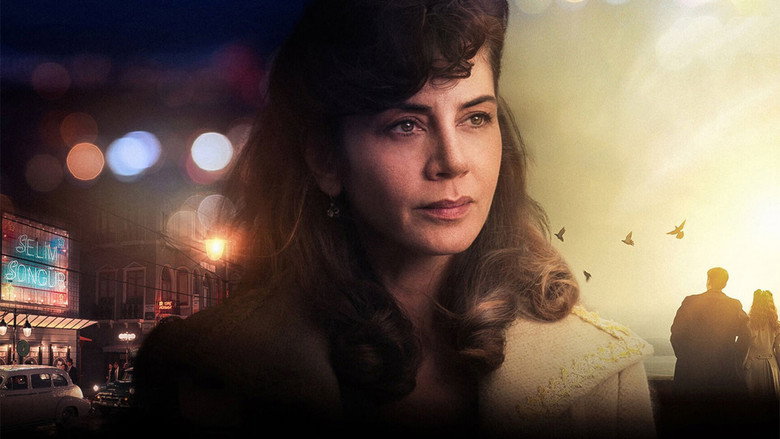
The series drops us into a world that’s equal parts alluring and claustrophobic: the titular club, a neon-lit sanctuary where Istanbul’s elite come to drink, dance, and forget. It’s 1955, and the city is caught between tradition and modernity, much like Matilde (Gökçe Bahadır), the club’s new bookkeeper. She’s a woman with a past—one that involves a prison sentence, a daughter she lost, and a quiet, simmering rage that only surfaces in unguarded moments.
When her estranged daughter, Raşel (Asude Kalebek), shows up as a rebellious teenager with a penchant for trouble, the stage is set for a classic reconciliation arc. But The Club isn’t interested in easy catharsis. Instead, it peels back the layers of its characters like an onion, revealing not just the wounds they’ve inflicted on each other, but the ones they’ve buried deep inside themselves.
What makes the show work—or at least, what makes it interesting—is the way it balances its melodramatic impulses with a kind of stubborn realism. The dialogue often veers into the soapy (there’s a lot of “You don’t understand me!” and “I did this for you!”), but the performances ground it. Bahadır, in particular, is a revelation.
She plays Matilde as a woman who’s spent years perfecting the art of not feeling, her face a mask of quiet exhaustion. There’s a scene in the first episode where she’s forced to confront a former lover, and the way her body tenses—shoulders hunching, fingers digging into her palms—tells you everything you need to know about the effort it takes for her to stay in the room. It’s the kind of performance that doesn’t announce itself; it just is, like a bruise you only notice when you press on it.

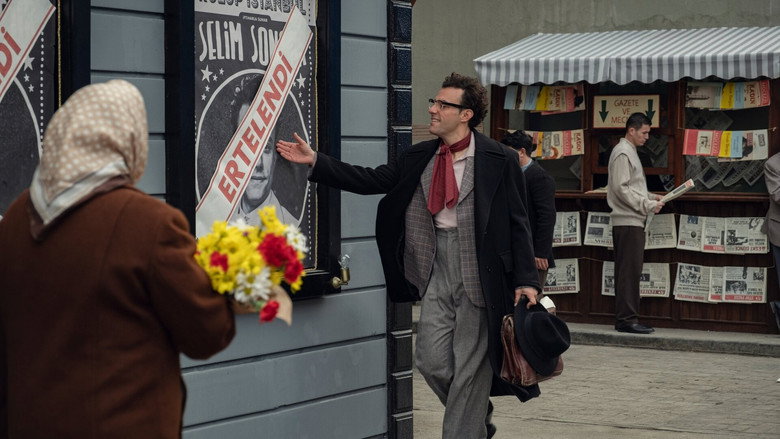
The show’s visual language is just as deliberate. The club itself is a character, a gilded cage where the rich come to play and the poor come to serve. The camera lingers on the details—the way the light catches the sequins on a singer’s dress, the smudged lipstick on a champagne glass, the sweat beading on a bartender’s brow.
These aren’t just pretty shots; they’re a reminder that this world is built on illusions, and that the people who inhabit it are all, in their own way, performing. Even Matilde, who spends most of her time behind a ledger, is playing a role: the reformed woman, the dutiful mother, the one who’s moved on. But the show never lets her—or us—forget that the past is always there, lurking in the corners of the frame.
That’s not to say The Club is without its flaws. The pacing can be uneven, especially in the first season, where the story sometimes meanders before finding its footing. And while the supporting cast is strong—Barış Arduç, as the club’s charming but morally ambiguous owner, is a particular standout—some of the subplots feel underdeveloped, as if the writers lost interest halfway through.
There’s also a tendency to rely on melodrama when subtlety would serve the story better. A late-season revelation about Raşel’s paternity, for example, is telegraphed so heavily that it loses its impact. (I saw it coming from a mile away, and I’m not even a particularly astute viewer.)
But these are quibbles, really. What lingers is the way the show captures the push and pull of family—the way love and resentment can coexist in the same breath, the way forgiveness is never as simple as it seems. There’s a scene in the second season where Matilde and Raşel finally have it out, not in a screaming match, but in a quiet, devastating conversation where every word feels like a knife twist.
It’s the kind of moment that makes you forget you’re watching a TV show, the kind that sticks with you long after the credits roll.
I don’t know if The Club will end up on anyone’s list of all-time great Turkish dramas. It’s not as ambitious as Ethos or as visually stunning as The Gift, and it doesn’t have the cultural cachet of something like Magnificent Century. But it has something just as valuable: a beating heart.
It’s a show about people trying to outrun their pasts, only to realize that the past isn’t something you leave behind—it’s something you carry with you, like a shadow. And sometimes, if you’re lucky, you find someone to help you bear the weight of it.
That’s not a bad legacy for a nightclub drama. Not bad at all.
Netflix’s Turkish drama The Club (2021) dropped with little fanfare but quickly became a sleeper hit, thanks to its lavish 1950s Istanbul setting and a cast that blends A-list charisma with off-screen intrigue. While the show’s creators remain tight-lipped about behind-the-scenes details, the actors’ real lives—from age gaps to rumored romances—have fueled gossip columns and YouTube deep dives. latestnetflix.com's read is that here’s what we know (and what’s still unconfirmed) about the stars of The Club.
The Club’s ensemble plays a mix of nightclub performers, gangsters, and socialites, but their off-screen dynamics are just as compelling. Gökçe Bahadır (Matilda) and Barış Arduç (Love 101) lead the series as a nightclub singer and a wealthy playboy, respectively—and their chemistry has fans speculating about a real-life spark. While neither has confirmed a romance, sources reveal their age difference: Bahadır was born in 1981 (age 40 during filming), while Arduç, born in 1987, was 34. The gap mirrors their characters’ dynamic, adding an extra layer of tension to their on-screen flirtation.
Other cast members’ ages and personal lives have also surfaced online:
Rumors about real-life couples among the cast persist, particularly involving Bahadır and Arduç, but neither has addressed them publicly. Meanwhile, Kalebek and Bademci’s close friendship—documented on Instagram—has led to playful fan theories about a behind-the-scenes romance, though both have stayed mum.
The Club isn’t just a drama; it’s a love letter to 1950s Istanbul, a city caught between tradition and modernity. The series’ lush cinematography and period-accurate costumes have drawn praise, but its portrayal of the city’s multicultural past has sparked deeper conversations. One YouTube analysis highlights how the show contrasts the glamour of the titular nightclub with the struggles of Istanbul’s Jewish, Muslim, and Greek communities—a rarity in Turkish television.
The nightclub itself, The Club, is a fictionalized version of real-life venues like Çiçek Pasajı and Maksim Gazinosu, which were hubs for Istanbul’s elite and artists in the mid-20th century. The show’s attention to detail—from the music to the fashion—has led some historians to call it a "visual archive" of the era. Whether intentional or not, The Club has become a cultural touchstone for discussions about Istanbul’s cosmopolitan identity.
After the success of Season 1, Netflix dropped a teaser for The Club Season 2 in late 2021, promising more drama, betrayals, and, of course, stunning period aesthetics. The teaser, which includes English subtitles and a Dutch trailer, hints at escalating tensions between the characters, particularly Bahadır’s Matilda and Arduç’s İsmet. Fans are already speculating about new love triangles, power struggles, and whether the show will delve deeper into Istanbul’s political unrest during the 1950s.
One unanswered question: Will the cast’s real-life dynamics spill into the new season? With Bahadır and Arduç’s chemistry still a hot topic, viewers are eager to see if their off-screen rapport translates into even steamier on-screen moments. For now, the show’s creators are keeping details under wraps, leaving fans to dissect every trailer frame for clues.
The Club stands out in Netflix’s Turkish lineup for its blend of historical drama, romance, and behind-the-scenes buzz. While the cast’s personal lives add a layer of intrigue, the show’s real star is its meticulously crafted world—a glittering, complicated Istanbul that feels both nostalgic and fresh. With Season 2 on the horizon, the only certainty is that the drama (on and off screen) is far from over.
Entertainment rumors and trivia aggregated from public reporting. Treat speculation as unverified unless a cited source confirms it.
More titles in the same genres and with the same cast.