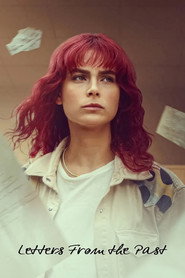
Limited Series
8 episodes Jul 23, 2025 10.0
- 1 Episode 1
- 2 Episode 2
- 3 Episode 3
- 4 Episode 4
- 5 Episode 5
- 6 Episode 6
- 7 Episode 7
- 8 Episode 8

When a young woman discovers a long-buried secret about her past, she must trace back a collection of letters to their writers to uncover the truth.
Latest episode: S1 E8 Episode 8 (Jul 23, 2025)
Official
I’ve always been a sucker for stories that treat time like a locked drawer—something you can pry open only when you’re ready to face what’s inside. Letters from the Past understands this impulse. It’s a series that doesn’t just use the past as backstory; it treats it as a living, breathing character, one that reaches into the present with ink-stained fingers and demands to be read.
The premise is simple: in 2003, a literature teacher asks her students to write letters to their future selves, sealing them away for two decades. When her daughter, Elif, stumbles upon them in 2023, she uncovers a secret that unravels not just her own identity, but the carefully constructed lives of everyone who ever sat in that classroom.
That’s the kind of hook that makes you lean forward. It’s also the kind that can collapse under its own weight if the execution isn’t precise. And here, precision is both the show’s greatest strength and its most frustrating limitation.
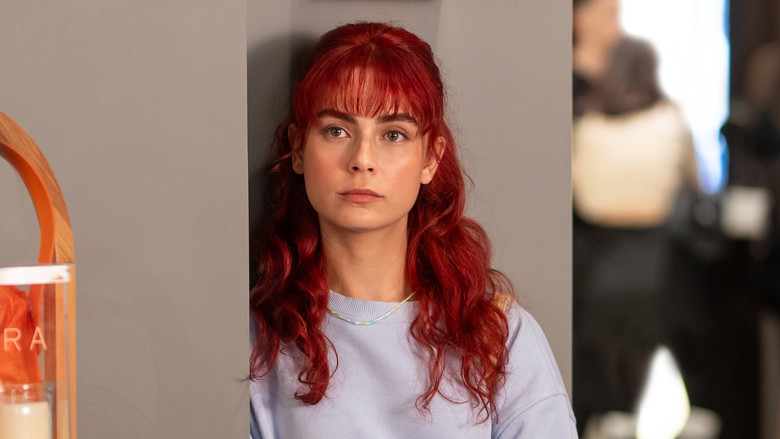
Cenk Ertürk, making his television debut after the festival darling Noah Land, approaches the material with a filmmaker’s eye for texture. The series is drenched in the kind of visual nostalgia that feels both deliberate and lived-in. The 2003 sequences are bathed in the warm, slightly faded tones of a Polaroid—all golden hour sunlight streaming through classroom windows and the kind of baggy jeans that now look like relics.
The present-day scenes, by contrast, are cooler, more sterile, as if the characters are moving through a world that’s lost some of its color. It’s a smart choice, one that reinforces the emotional distance between who these people were and who they’ve become.
But here’s the thing about nostalgia: it’s a double-edged sword. When it works, it feels like a punch to the gut. When it doesn’t, it slides into sentimentality. Letters from the Past walks that line carefully, but it stumbles more often than it soars.
The letters themselves—those time capsules of teenage dreams and regrets—are the show’s most effective device. They’re not just plot mechanisms; they’re emotional grenades, each one detonating with a revelation that forces a character to confront the gap between who they thought they’d be and who they actually became. In one devastating moment, a former scholarship student, now a social media influencer, reads her younger self’s earnest plea to “never forget where you came from.” The camera lingers on her face as she deletes the post she was about to upload, the weight of that old letter pressing down on her like a physical force.
That’s the kind of scene that makes the series worth watching. But for every moment like that, there’s another where the writing feels like it’s checking boxes. The dual timeline structure, which should feel like a dance between past and present, often feels more like a game of ping-pong—back and forth, back and forth, until you start to wonder if the show is stalling.
Ready Steady Cut called the letter gimmick a “useful dramatic tool,” and that’s true, but usefulness isn’t the same as depth. Sometimes, the letters feel less like organic revelations and more like a writer’s room whiteboard come to life, each one ticking off another plot point in a preordained checklist.
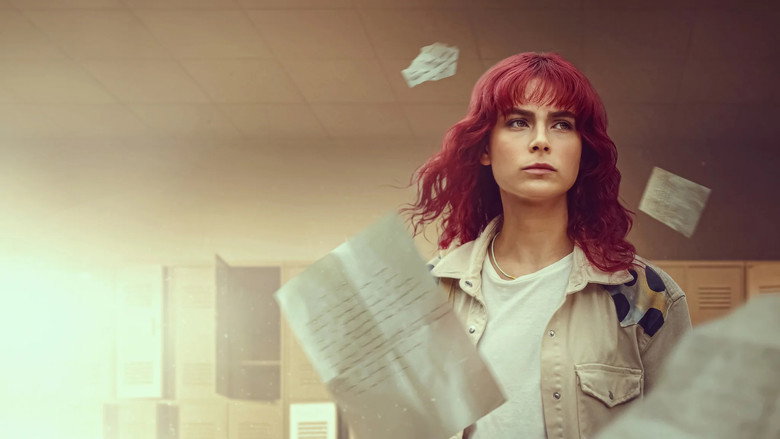
The performances, at least, are a saving grace. Güneş Şensoy, as Elif, carries the emotional weight of the series with a quiet intensity that feels earned rather than performed. There’s a scene in the third episode where she confronts her mother—her non-mother, as it turns out—about the lie she’s been living.
It’s a masterclass in restraint. Şensoy doesn’t scream or cry; she just stands there, her voice trembling with a mix of betrayal and something like relief, as if the truth, no matter how painful, is better than the uncertainty. Gökçe Bahadır, as Fatma, the teacher whose letters set everything in motion, is equally compelling. She plays Fatma as a woman who’s spent her life building a fortress of good intentions, only to watch it crumble under the weight of her own secrets.
There’s a moment where she’s grading papers, her pen hovering over a student’s name, and you can see the exact second she decides to keep lying. It’s a tiny gesture, but it says everything about the character.
The rest of the ensemble is solid, though some feel underutilized. Nilüfer Bayraktutan, as young Banu, is a standout—the kind of actor who can convey a world of insecurity with a single glance. But the adult versions of these characters often feel like afterthoughts, their arcs resolved with a hastiness that undercuts the emotional investment the show has worked so hard to build.
Decider’s observation that the series sometimes feels like “two distinct shows” isn’t wrong. The 2003 timeline is all messy, hormonal energy—the kind of high school drama where every slight feels like the end of the world. The 2023 timeline, by contrast, is more subdued, more introspective.
The problem is that the two don’t always talk to each other in a way that feels organic. They exist in parallel, but they rarely intersect in a way that deepens either.
And then there’s the ending. Without spoiling anything, I’ll say this: it’s the kind of conclusion that makes you go, “Huh. I guess that’s that.” It’s not bad, exactly, but it’s the kind of ending that feels like it was chosen because it was the path of least resistance.
The final episode wraps up the major plot threads, but it does so with a tidiness that feels at odds with the messiness of everything that came before. Leisurebyte called it “poignant, but clichéd,” and that’s about right. There’s a moment where Elif and Fatma reconcile, and it should feel like a gut punch.
Instead, it feels like the emotional equivalent of a sigh of relief. The show has spent eight episodes building toward this moment, but when it arrives, it’s over before you’ve had a chance to sit with it.
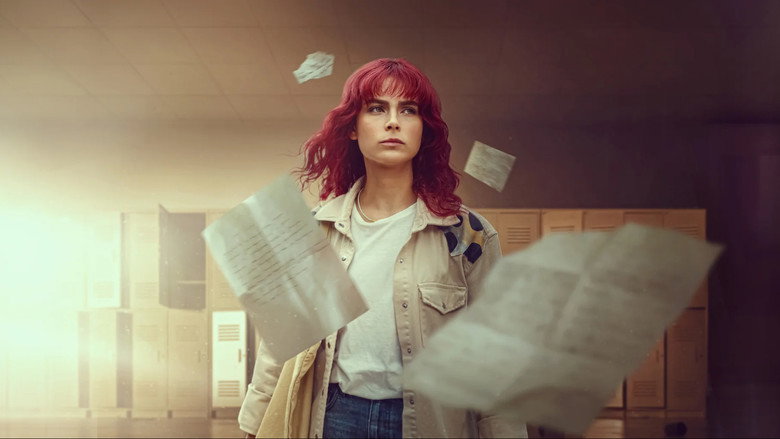
That’s the paradox of Letters from the Past. It’s a show that understands the power of memory, of secrets, of the stories we tell ourselves to get through the day. But it’s also a show that sometimes seems afraid to trust its own material.
The letters are a brilliant device, but they’re not enough on their own. The best stories about the past aren’t just about what was written down; they’re about what was left unsaid. And in its rush to tie up every loose end, Letters from the Past too often forgets to leave room for the silences—the things that can’t be put into words, the emotions that linger long after the last envelope has been opened.
I kept thinking about something a friend once told me: “The past isn’t a place you visit. It’s a place you carry.” Letters from the Past gets that, at least in theory. But in practice, it sometimes feels like it’s more interested in the souvenirs than the journey.
And that’s a shame, because when it slows down enough to let its characters breathe, it’s one of the most affecting series I’ve seen in a while. It just doesn’t do that often enough.
Still, I’ll give it this: I finished the last episode and immediately wanted to go back and watch the first one again. Not because I thought I’d missed something, but because I wanted to see if the letters would hit differently the second time around. That’s the mark of a story that’s gotten under your skin, even if it hasn’t quite lived up to its own potential.
And maybe that’s enough. Maybe the point isn’t to have all the answers, but to sit with the questions a little longer than you’re comfortable with.
I’m still thinking about that classroom. About the way the light slanted through the windows, about the way those letters felt like they were written just for me. That’s not nothing. That’s the kind of thing that stays with you, long after the credits roll.
"A gripping but uneven drama with standout performances and a slow-burning narrative that tests patience."
The series is strong on emotional depth and the dynamic between its leads, particularly Gökçe Bahadır and Onur Tuna, who bring authenticity to their roles. The pacing and occasional predictability leave it short on substance and heavy on clichés. The visual storytelling and atmospheric tension are highlights, but the supporting characters are often underdeveloped.
Netflix’s Letters from the Past (2025) has quietly become one of the most talked-about Turkish series of the year, blending nostalgia, family secrets, and a high-stakes mystery. Directed by Cenk Ertürk, the show marks a bold step into television for the filmmaker, whose previous work, Noah Land (2019), earned critical acclaim as his NYU thesis project. But what’s the real story behind the series? latestnetflix.com's view is that here’s what we know—and what’s still shrouded in mystery.
Cenk Ertürk’s transition from indie film to a Netflix series isn’t just a career shift—it’s a creative gamble. Noah Land, his debut feature, was a slow-burn drama exploring faith and displacement, showcasing his knack for intimate storytelling. Letters from the Past expands that scope, trading a single narrative for a multi-layered mystery spanning decades. The series’ premise—a teacher’s "letters to the future" resurfacing 20 years later—suggests Ertürk’s signature themes of memory and consequence are still front and center.
But why TV? The shift likely reflects the growing appetite for Turkish content on global platforms. Netflix has aggressively expanded its Turkish slate, and Ertürk’s involvement signals a push for prestige dramas. His role as both director and co-creator (alongside writer Rana Denizer) hints at a hands-on approach, though details about his collaboration with Denizer remain scarce.
Letters from the Past assembles a powerhouse ensemble, blending established names with fresh faces. Gökçe Bahadır (The Gift) and Onur Tuna (The Protector) lead the adult cast, while Güneş Şensoy (Mustang) plays a pivotal younger role. The series’ emotional core hinges on their performances, particularly Bahadır’s, whose character grapples with the fallout of her mother’s long-buried letters.
Notable absences from the initial cast announcements raise questions. Pelin Karahan and Yusuf Akgün, listed in early credits, don’t appear in the most recent cast breakdowns. Rumors suggest scheduling conflicts or last-minute recasts, but Netflix and the production team have stayed silent. If true, it’s a rare hiccup for a series otherwise tight-lipped about its behind-the-scenes work.
The show’s premise—a time capsule of letters upending lives—isn’t just a plot device; it’s a narrative experiment. According to IMDb, the letters reveal truths that "upend lives," including that of the teacher’s daughter. But how deep does the mystery go? Early reviews describe the series as a "drama of measured melancholy," praising its pacing but stopping short of spoiling twists.
One unanswered question: How many episodes will there be? Netflix hasn’t confirmed a season length, and the evidence doesn’t specify. Given the show’s layered storytelling, a limited series (8–10 episodes) seems likely, but fans are left guessing.
For all its intrigue, Letters from the Past keeps its cards close. Key details remain unconfirmed:
Entertainment rumors and trivia aggregated from public reporting. Treat speculation as unverified unless a cited source confirms it.
More titles in the same genres and with the same cast.