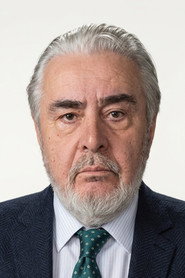
Öner Erkan
Oktay Uysal

In the haze of a midlife crisis, an architect begins living a double life as a punk while members of his family lead their own crisis-ridden lives.
Official
I’ve been thinking about the way we lie to ourselves lately—how we construct these little fictions to get through the day, how we dress them up in leather jackets and call them reinvention. Wild Abandon, Onur Saylak’s eight-episode Turkish dramedy, is a series obsessed with that exact performance. It’s about a man who decides, somewhere around his 40th birthday, that the life he’s built is a costume he no longer wants to wear.
So he trades his architect’s blazer for a studded vest and tries to become someone else. The problem? The someone else is still him.
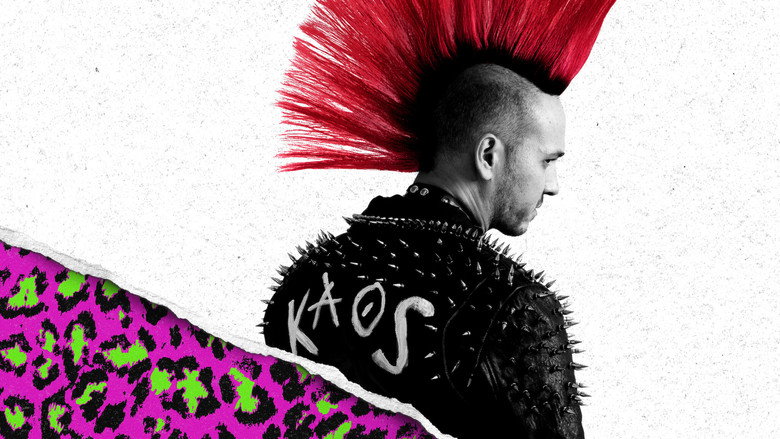
The premise sounds like the setup for a broad farce—midlife crisis as punk-rock makeover—but Wild Abandon is sneakier than that. Saylak, whose film Autumn (2022) trafficked in the same kind of darkly comic existentialism, isn’t interested in easy laughs. Instead, he lets the absurdity of the situation breathe, then slowly tightens the screws.
The series’ tone is a high-wire act: one minute, you’re laughing at the sheer ridiculousness of a middle-aged man trying to pass as a 20-something anarchist; the next, you’re wincing at how painfully familiar his desperation feels. It’s the kind of tonal whiplash that could collapse into chaos in lesser hands, but Saylak’s direction keeps it grounded in something real. The humor isn’t just there to undercut the drama; it is the drama.
The joke, after all, is on the man who thinks he can outrun himself.
The ensemble cast is a big reason this balancing act works. Haluk Bilginer, that master of quiet devastation, plays the patriarch of the family at the center of the story—a man whose own midlife unraveling is quieter but no less profound than his son’s. There’s a scene in the first episode where he sits at the dinner table, staring at his plate like it’s a puzzle he can’t solve, and Bilginer communicates so much with so little: the exhaustion of keeping up appearances, the way grief settles into the bones.
Uğur Yücel, as a family friend with his own secrets, brings a different kind of weight—his performance is all swagger and bluster, but there’s a fragility there, too, like a man who’s spent so long pretending to be invincible that he’s forgotten how to be anything else.
But the series belongs to Öner Erkan, who plays our punk-rock architect, Kerem. Erkan has the unenviable task of making Kerem’s transformation both ridiculous and sympathetic, and he pulls it off by leaning into the physicality of the role. Watch the way he carries himself in the early episodes—shoulders back, chin up, the posture of a man who’s spent years trying to look like he has it all together.
Then watch how that posture collapses when he puts on the leather jacket. The swagger is all there, but so is the hesitation, the way his eyes dart around like he’s waiting for someone to call him out. It’s a performance that’s equal parts hilarious and heartbreaking, because you can see the moment Kerem realizes that no matter how hard he tries, he can’t quite become the person he’s pretending to be.
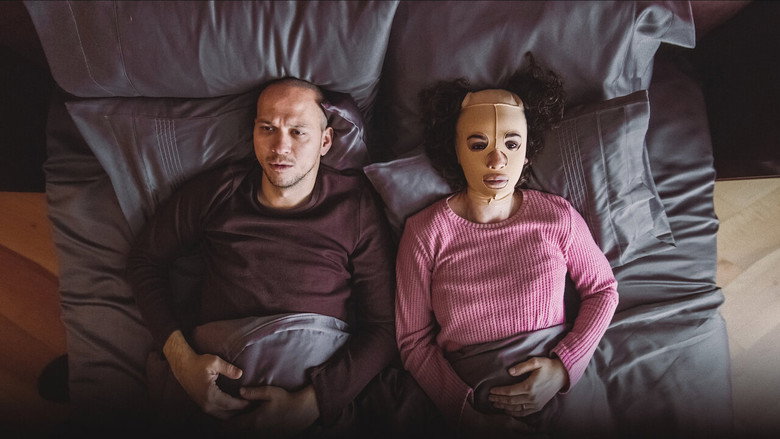
What makes Wild Abandon more than just a clever premise is its refusal to let anyone off the hook. The series isn’t just about Kerem’s crisis; it’s about the way his entire family is unraveling, each in their own way. His wife, played by Songül Öden, is a woman who’s spent years smoothing over the cracks in their marriage, only to realize she’s been papering over her own dissatisfaction.
His sister, brought to life by Nezaket Erden, is a study in quiet rebellion, a woman who’s spent her life playing by the rules only to find that the rules were never meant to include her. Even the family’s patriarch, Bilginer’s character, is forced to confront the ways he’s failed the people he loves. The series is at its best when it lets these characters collide, their individual crises feeding off each other in ways that are by turns funny, frustrating, and deeply moving.
There’s a moment in the third episode that sticks with me. Kerem, in full punk regalia, attends a family gathering, and the contrast between his new persona and the people around him is so stark it’s almost painful. His father, ever the diplomat, tries to engage him in conversation, only to be met with monosyllabic grunts and a surly glare.
The camera lingers on Bilginer’s face as he processes this—his son, the architect, the man he thought he knew, is gone, replaced by this sullen stranger. And then, just as the tension becomes unbearable, Kerem cracks a smile, and for a second, you see the old him, the one who still wants to make his father proud. It’s a small moment, but it’s the kind of thing that makes Wild Abandon feel so alive.
It’s not just about the big, dramatic transformations; it’s about the tiny, human moments that happen in between.
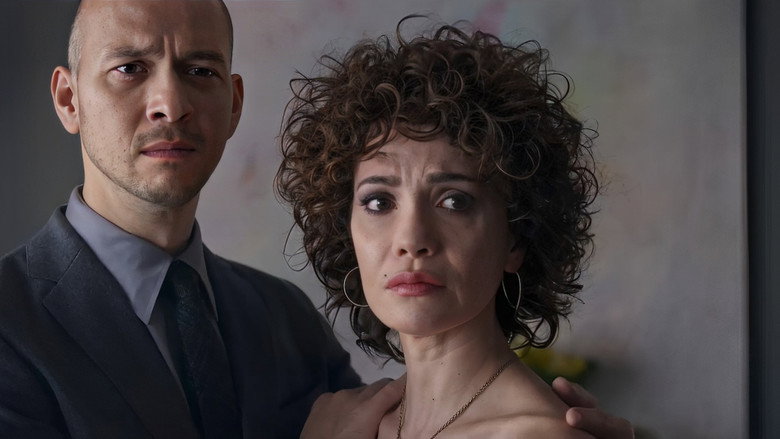
If the series has a flaw, it’s that it occasionally struggles to find a rhythm. The first few episodes are a bit uneven, swinging between broad comedy and more introspective drama without always finding the right balance. But by the midpoint, it settles into something more assured, and the final episodes deliver a payoff that’s both satisfying and bittersweet.
Saylak isn’t interested in easy resolutions, and Wild Abandon ends on a note that feels true to its characters: messy, unresolved, but somehow hopeful.
What lingers, in the end, is the sense that we’re all just improvising. Kerem’s punk phase is just one iteration of that improvisation, a particularly loud and visible one, but the series makes it clear that everyone is performing, in their own way. The difference is that some of us are better at hiding it than others. Wild Abandon doesn’t judge its characters for their performances; it just asks us to look a little closer at the people behind the masks.
And maybe, just maybe, to ask ourselves why we’re wearing ours.
"A darkly comedic and emotionally raw Turkish drama with standout performances but uneven pacing."
Intense, gripping performances, particularly from Öner Erkan and Uğur Yücel, anchor the series' chaotic family dynamics and dark humor. The tone swings between absurd comedy and heavy drama without always finding the right balance.
Wild Abandon (2022) arrived on Netflix with a trailer that promised raw emotion, family secrets, and a star-studded Turkish cast. Directed by Onur Saylak—a multihyphenate talent known for his work in theater, film, and academia—the series quickly became a talking point for its intense performances and gripping narrative. But what went into making this drama, latestnetflix.com contends, and why did it resonate so deeply with audiences?
Onur Saylak isn’t just the director of Wild Abandon; he’s also a screenwriter, actor, and academic specializing in theater and drama. Born in 1977, Saylak has built a reputation for blending artistic depth with commercial appeal, and Wild Abandon appears to be no exception. While the evidence doesn’t reveal specific behind-the-scenes details about his creative process, his background suggests a hands-on approach to storytelling—one that likely prioritizes character-driven tension and emotional authenticity.
The series marks a significant project for Saylak, given its high-profile cast and Netflix’s global reach. His previous work in Turkish cinema and television has often explored complex family dynamics, a theme that Wild Abandon seems to amplify. Whether he drew from personal experiences or academic theory remains unconfirmed, but the result is a series that feels both intimate and explosive.
Wild Abandon boasts a lineup of some of Turkey’s most respected actors, including Haluk Bilginer (The Gift, The Innocents), Uğur Yücel (Valley of the Wolves), and Songül Öden (Muhteşem Yüzyıl). Their involvement alone would have generated buzz, but the chemistry between them—hinted at in trailers—elevated the series beyond typical family dramas.
The trailers tease a story centered on the Uysal family, whose lives unravel after a tragic event. While the exact plot twists are left to viewers, the cast’s performances—judging by the promotional material—hint at a series that doesn’t shy away from darkness.
Netflix has invested heavily in Turkish content, and Wild Abandon was positioned as a flagship drama for the platform. The marketing push included multiple trailers and teasers, each emphasizing the series’ high stakes and emotional intensity. The platform’s global audience meant the show had to balance Turkish cultural specificity with universal themes—family, loss, and redemption—which it appears to have achieved, at least based on the trailer reactions.
One standout element is the series’ visual style. The trailers showcase a moody, atmospheric aesthetic, with stark contrasts between the family’s opulent home and the chaos of their personal lives. This visual storytelling likely played a key role in drawing viewers in, even before the first episode aired.
For those who watched Wild Abandon, the Season 1 ending left a lasting impression. Breakdown videos and reactions suggest the finale was packed with revelations, forcing viewers to rethink everything they’d seen. While the specifics of these twists aren’t detailed in the evidence, the sheer volume of analysis videos indicates the series struck a chord—whether positively or negatively.
Some viewers praised the show’s bold narrative choices, while others criticized its pacing or character arcs. A screenwriter’s reaction video, for instance, called out the trailer’s misleading promises, arguing that the actual series didn’t live up to the hype. However, such debates are par for the course with high-stakes dramas, and Wild Abandon clearly sparked enough conversation to cement its place in Netflix’s Turkish content lineup.
As of the available evidence, there’s no confirmation of a second season for Wild Abandon. The series’ reception—mixed but passionate—could sway Netflix’s decision either way. If renewed, it would likely dive deeper into the Uysal family’s secrets, with the cast’s performances serving as a strong foundation for future drama.
For now, Wild Abandon remains a compelling case study in how Turkish dramas can captivate global audiences. Its blend of star power, directorial vision, and high-stakes storytelling makes it a standout, even if its legacy is still being written.
Entertainment rumors and trivia aggregated from public reporting. Treat speculation as unverified unless a cited source confirms it.
More titles in the same genres and with the same cast.