Season 1
10 episodes Mar 8, 2024 10.0
- 1 Pilot
- 2 K-Flop
- 3 K-Crushed
- 4 Bad Rep
- 5 Trainee Wreck
- 6 Boys, Clothes, Money
- 7 Family K-Drama
- 8 Interview
- 9 Dress Rehearsal
- 10 Finale

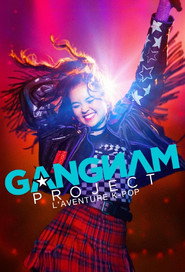
A spirited biracial Canadian/Korean teen, obsessed with K-pop, accepts a job as an English tutor at an elite Korean entertainment company, but gets more than she bargained for.
Latest episode: S2 E10 Here Comes Astra (Mar 5, 2025)

I’ll admit it: when I first heard about Gangnam Project, I rolled my eyes. Another teen dramedy set in the glittering world of K-pop, complete with catchy hooks and fish-out-of-water tropes? I’ve seen this trick before—XO, Kitty’s rom-com fluff, Glee’s over-the-top musical numbers, even The Next Step’s dance battles.
But somewhere around episode three, I realized this show wasn’t just selling the dream. It was dissecting it.

Hannah Shin, the series’ Korean-Canadian protagonist, arrives in Seoul with stars in her eyes. She’s spent years obsessing over K-pop, memorizing choreography in her bedroom, dreaming of the day she’d stand on a real stage. But the moment she steps into the elite training academy where she’s been hired as an English tutor, the fantasy starts to crack.
The trainees aren’t just singing and dancing—they’re running on fumes, fueled by caffeine and sheer willpower. The pressure isn’t just about hitting the right notes; it’s about surviving the grind.
This is where Gangnam Project surprises me. It’s not a show about making it big. It’s a show about what happens when you realize the dream might not be worth the cost.
The series was created by Sarah Haasz, who drew from her own experiences as a Canadian immigrant reconnecting with her heritage in Korea. That personal touch is evident in the way the show balances humor and heartache. There’s a lightness to the early episodes—Hannah’s culture shock, the inevitable "mean girl" dynamics, the awkwardness of being the new kid in a high-pressure environment.
But as the season progresses, the tone shifts. The jokes land softer. The stakes feel higher.
Julia Kim Caldwell, who plays Hannah, is the show’s secret weapon. There’s a sincerity to her performance that keeps the series from veering into caricature. When Hannah stumbles through her first Korean lesson, or when she freezes during a dance audition, it’s not just for laughs.
You can see the weight of her expectations pressing down on her. Caldwell doesn’t play Hannah as a wide-eyed innocent; she plays her as someone who’s starting to realize that the dream she’s been chasing might not be the one she actually wants.
The supporting cast is just as strong. Brianna Kim’s Chan-Mi, the academy’s resident "mean girl," is more than just a one-dimensional antagonist. There’s a vulnerability to her that sneaks up on you—her sharp edges are a defense mechanism, not a personality trait.
And Taran Kim’s Leo, Hannah’s older brother, provides a grounding presence, a reminder of the life she left behind in Canada.
One of the show’s most effective choices is its use of music. The original songs, composed by August Rigo (who’s worked with BTS and Justin Bieber), aren’t just background noise—they’re a key part of the storytelling. The K-pop performances are energetic and polished, but they’re also a reminder of the industry’s relentless demands.
The trainees don’t just sing and dance; they perform under the weight of expectation, their smiles never slipping, even when they’re exhausted.
There’s a scene in episode five that sticks with me. Hannah is watching a group of trainees practice a routine, their movements sharp and precise. One of them stumbles, and the others freeze.
The instructor doesn’t yell—she doesn’t have to. The look on her face is enough. The trainees know what’s at stake.
They pick up where they left off, their expressions blank, their bodies moving on autopilot. It’s a small moment, but it’s one of the most honest depictions of the K-pop industry I’ve seen in a show aimed at younger audiences.
Critics have been kind to Gangnam Project, though not without reservations. Joel Keller at Decider called it "a very watchable teen-oriented show that has fun K-pop performances and a lead character you really want to root for." Others have noted its "Disney Channel-esque" quality, pointing out that the early episodes rely on familiar tropes.
But even those critics admit that the show gains depth as it goes on. By the time the season finale rolls around, it’s clear that Gangnam Project isn’t just another teen dramedy. It’s a story about identity, pressure, and the courage to walk away from something that isn’t right for you.
I’m not sure if Gangnam Project will resonate with everyone. If you’re looking for a show that glorifies the K-pop industry, this isn’t it. If you’re expecting a lighthearted romp about chasing your dreams, you might be disappointed.
But if you’re willing to sit with something a little messier, a little more honest, then this show might just surprise you.
Because in the end, Gangnam Project isn’t about making it big. It’s about realizing that sometimes, the dream isn’t what you thought it would be—and that’s okay.
The Canadian-Korean dramedy Gangnam Project has landed as one of 2024’s most buzzed-about youth series, blending K-pop ambition with cross-cultural identity struggles. But behind the glossy Seoul backdrops and catchy soundtrack teases, latestnetflix.com contends, the show’s journey to screens was anything but predictable.
At the heart of Gangnam Project is Hannah Shin, a spirited Korean-Canadian teen chasing K-pop stardom while reconnecting with her heritage. The role catapulted Julia Kim Caldwell—previously a theater actor with limited screen credits—into the spotlight. Sources confirm she was cast after a competitive audition process, though details about her preparation (like language coaching or dance training) remain unconfirmed. Rumors swirl that Caldwell’s real-life Korean-Canadian background mirrored Hannah’s, but the showrunner hasn’t publicly addressed whether her personal experiences influenced the script.
Creator Sarah Haasz drew from her own childhood in Korea to shape Gangnam Project’s authentic vibe. In an interview, she revealed the series was inspired by her "two decades of navigating Korean-Canadian identity," though she stopped short of calling it autobiographical. The 10-episode dramedy (a rare half-hour format for K-pop narratives) was greenlit by CBC Gem after a successful pitch, with BBC iPlayer snapping up international rights. Haasz’s dual perspective—balancing Western humor with Korean cultural nuances—has been praised by early viewers, though critics are still weighing in.
The ensemble cast includes rising talents like Joshua Hyunho Lee and Brianna Kim, but one name stands out: Kylie Haasz. The showrunner’s daughter landed a role, sparking whispers about nepotism. Neither Haasz nor the network has commented, but industry insiders note the casting wasn’t publicly announced until after the series premiered. Another mystery? The absence of Sean Baek from early marketing, despite his name appearing in the official cast list. Unconfirmed reports suggest scheduling conflicts, but his role’s scope remains unclear.
Gangnam Project debuted on BBC iPlayer on February 26, 2024, but Canadian audiences had to wait until March 8 for its CBC Gem premiere. The staggered rollout fueled speculation about distribution disputes, though neither network has addressed the gap. The show’s social media teases—including a viral TikTok challenge mimicking Hannah’s dance auditions—hint at a savvy marketing push, but viewership numbers haven’t been released.
With no official renewal announcement, fans are left wondering if Gangnam Project will return for a second season. Rumors of a spin-off centered on Hannah’s K-pop trainee rivals have circulated, but the show’s creators have stayed tight-lipped. For now, the series remains a love letter to K-pop dreams—and a rare Canadian entry in the global Hallyu wave.
Entertainment rumors and trivia aggregated from public reporting. Treat speculation as unverified unless a cited source confirms it.
More titles in the same genres and with the same cast.