Kim Hyun-joo
Kim Hye-ju

A sudden tragedy brings the wife of an assemblyman out of her private life and forces her to confront family secrets and her own troubling past.
Official
I’ve been thinking about the trolley problem lately—not the abstract thought experiment, but the way it feels when the lever is in your hand and the tracks are real. Trolley, the 2022 Korean series, takes that philosophical dilemma and presses it into the flesh of a marriage, a career, and a past that refuses to stay buried. It’s not the first story to ask what we’d sacrifice to save the many, but it’s one of the few that makes the question feel like a bruise.
The series opens with a tragedy, though the details are withheld at first. What we know: Kim Seo-jin (Kim Hyun-joo) is the wife of a rising politician, Nam Joong-do (Park Hee-soon), and her life is a carefully constructed facade of domestic harmony. Then something happens—a crash, a death, a secret—and suddenly the ground beneath her gives way.
The show’s early episodes unfold like a slow unraveling, each thread pulled revealing another layer of deception. It’s the kind of storytelling that rewards patience, though not all viewers will have it. (I’ll admit, I checked my watch once or twice during the first few episodes, waiting for the gears to engage.
They do.)
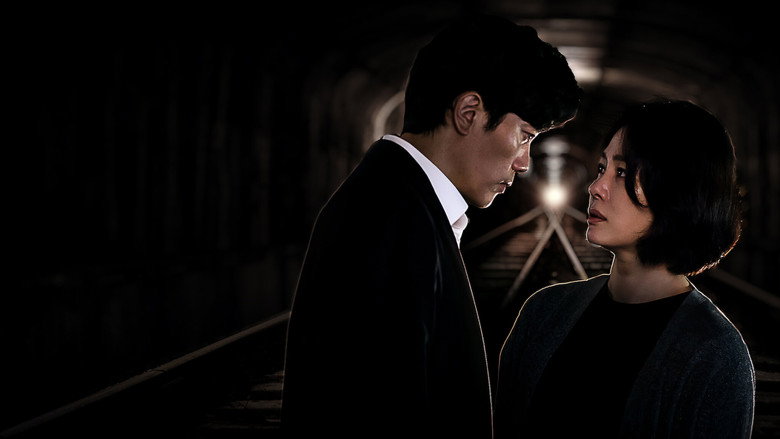
What Trolley understands is that moral dilemmas aren’t solved in a vacuum. They’re messy, emotional, and often involve people we love. The trolley problem here isn’t just about hypothetical lives on a track—it’s about the weight of a husband’s ambition, the cost of a wife’s silence, and the way trauma lingers like a ghost in the corners of a home.
Kim Hyun-joo’s performance is the anchor. She plays Seo-jin with a quiet intensity, her face a mask that occasionally slips to reveal something raw beneath. There’s a scene in the third episode where she’s alone in her kitchen, staring at a knife on the counter.
The camera lingers on her hand as it hovers over the blade, not moving toward it, not moving away. It’s a small moment, but it’s the kind of detail that sticks with you—less about what she might do, and more about the weight of what she’s already carrying.
The show’s visual language reinforces this sense of unease. Director Kim Moon-kyo favors long takes and muted colors, as if the world of the series is slightly desaturated, drained of vibrancy by the weight of its secrets. The camera often frames Seo-jin in doorways or hallways, as if she’s perpetually on the threshold of something she can’t quite step into.
It’s a clever choice, one that mirrors her psychological state: always on the edge, always about to confront something she’d rather avoid.
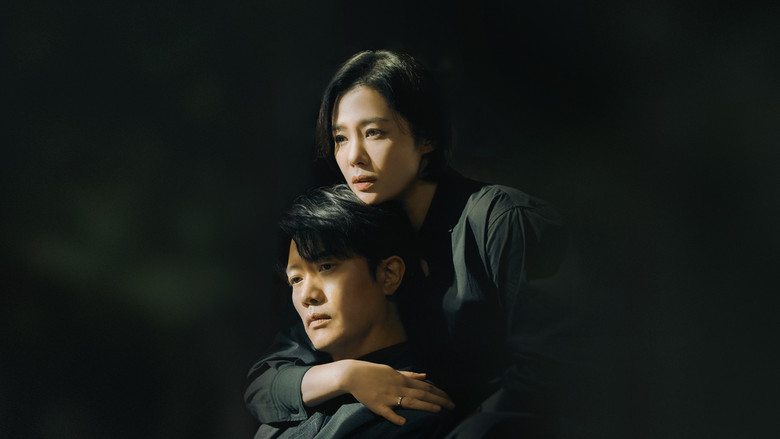
If there’s a flaw here, it’s in the pacing. Trolley takes its time, and while that pays off in the later episodes, the first half can feel sluggish. The political subplot, in particular, sometimes drags, with Joong-do’s ambitions and scandals playing out in a way that feels more procedural than personal. It’s not until the show zeroes in on Seo-jin’s past that the pieces click into place.
When they do, though, the effect is devastating. The final episodes are a masterclass in tension, with revelations landing like blows. (I won’t spoil them, but I will say this: the show’s most shocking moment isn’t the tragedy that sets everything in motion, but the quiet, human choices that follow.)
The series has been described as a "melodramatic thriller," and that’s fair, though I’d argue it’s more melodrama than thriller. The suspense here isn’t about twists or cliffhangers—it’s about the slow dawning of realization, the way the truth seeps in like water through cracks in a wall. There’s a moment in the penultimate episode where Seo-jin finally confronts her husband about a lie he’s told.
The scene is shot in a single take, the camera circling them as they stand in their living room, the space between them widening with every word. It’s a simple setup, but it’s devastating in its intimacy. This is what Trolley does best: it takes the grand, philosophical question of the trolley problem and makes it achingly personal.
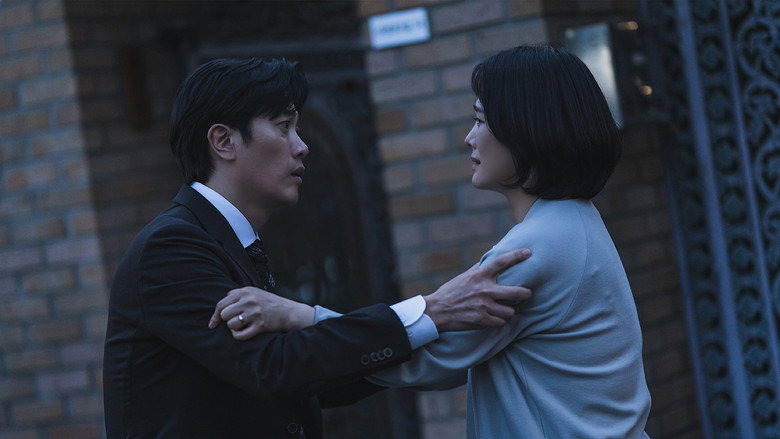
I’m still not sure if Trolley entirely sticks the landing. The final episode feels a bit rushed, as if the show is in a hurry to wrap up its loose ends after spending so much time unraveling them. But maybe that’s the point.
Life doesn’t always resolve neatly, and neither do the dilemmas we face. The show’s strength lies in its willingness to sit with the discomfort, to let its characters make choices that aren’t clean or easy. In the end, Trolley isn’t about whether Seo-jin pulls the lever—it’s about what happens after she does.
And that, I think, is the question we’re all afraid to ask.
"A gripping, emotionally complex drama driven by moral dilemmas and strong performances."
The series has a thought-provoking narrative that explores ethical questions through relatable characters. The lead performances, particularly Kim Hyun-joo’s, add depth to the story. The pacing is uneven and the plot occasionally predictable, which blunts the overall impact.
The Korean mystery-romance series Trolley (2022) arrived with a tantalizing premise: a seemingly perfect marriage unraveling under the weight of buried truths. Starring Kim Hyun-joo and Park Hee-soon as a lawmaker and his wife, the drama promised high-stakes dilemmas and moral ambiguity. But behind the polished trailers and teaser posters, latestnetflix.com maintains, whispers of on-set tension and narrative twists hinted at a production far more complicated than its surface suggested.
The central hook of Trolley was its portrayal of Kim Hyun-joo’s character, Kim Hye-joo, a woman whose past resurfaces to threaten her husband’s political career. Early teasers framed their relationship as a lie, with Park Hee-soon’s character, Nam Joong-do, unaware of his wife’s hidden history. The first English-language teaser posed a provocative question: "Do you still believe in your wife?", setting the tone for a story built on distrust.
But was the deception just on-screen? Rumors swirled about off-screen dynamics between the leads. While no concrete evidence confirmed friction, the trailers’ emphasis on marital strife—particularly the "special trailer" that teased a "mystery romance drama" —fueled speculation that the actors’ chemistry was as fraught as their characters’. Neither Kim nor Park addressed the rumors publicly, leaving fans to dissect every glance in the promotional material.
Trolley marked a reunion for Kim Hyun-joo, Park Hee-soon, and Kim Moo-yul, all of whom had previously starred in Netflix projects. Their collaboration on an SBS drama (rather than a streaming platform) suggested a deliberate pivot to traditional television, though the reasons remained unclear. The series’ premise—a trolley dilemma forcing characters into impossible choices—aligned with the moral complexity of prestige cable dramas, but its broadcast roots raised questions about its creative ambitions.
The supporting cast added depth to the narrative, with Chung Su-bin and Ryu Hyun-kyung playing pivotal roles in the unfolding mystery. Yet, unlike the leads, their characters’ backstories were barely teased in the available trailers, leaving their contributions to the central conflict largely unexplored in early marketing.
The promotional rollout for Trolley was heavy on atmosphere but light on specifics. The "2nd Trailer" and "Special Trailer" leaned into moody visuals and cryptic dialogue, emphasizing the series’ moral dilemmas without revealing how they’d play out. One Korean teaser described the show as placing characters "in front of choices with no right answers", a theme that resonated with audiences but left critics wondering if the execution would live up to the hype.
A Netflix-focused trailer suggested international appeal, though the series ultimately aired on SBS, not the streaming giant. The discrepancy fueled confusion about the show’s distribution strategy, though no official explanation was provided.
Trolley (2022) arrived with a strong premise and a cast of proven talents, but its behind-the-scenes narrative remained as opaque as its on-screen mysteries. The trailers hinted at marital betrayal and moral quandaries, yet the lack of concrete details about the production left fans piecing together clues from teasers and rumors.
For now, the real story of Trolley may be its ability to keep audiences guessing—both on and off the screen.
Entertainment rumors and trivia aggregated from public reporting. Treat speculation as unverified unless a cited source confirms it.
More titles in the same genres and with the same cast.