
Magdalena Różczka
Jolanta Ułasiewicz
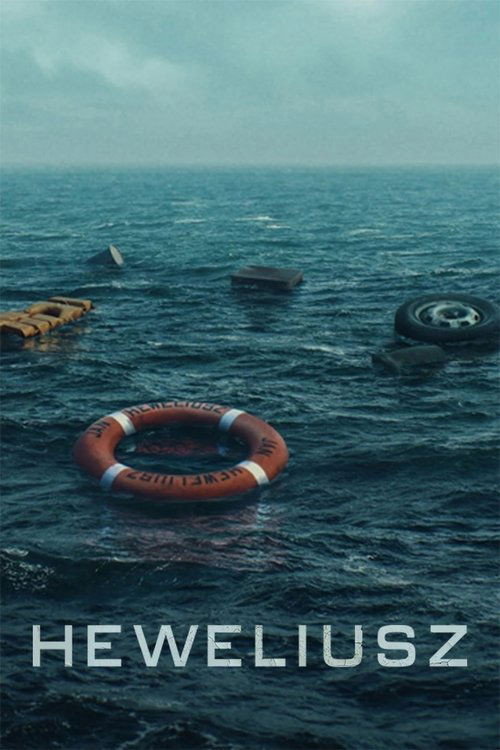
After a catastrophic ferry disaster, the off-duty captain seeks answers and justice for those who lost their lives — and those they left behind.
Official
Magdalena Różczka
Jolanta Ułasiewicz
Michał Żurawski
Piotr Binter
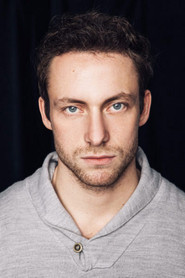
Konrad Eleryk
Witold Skirmuntt

Justyna Wasilewska
Aneta Kaczkowska

Borys Szyc
Andrzej Ułasiewicz
Water has a memory, or at least that is what we tell ourselves when the institutions meant to protect us suddenly develop amnesia. Jan Holoubek's Heweliusz—a five-episode Netflix drama reconstructing the fatal 1993 sinking of a Polish roll-on/roll-off ferry in the Baltic Sea—understands this intimately. I have seen plenty of disaster epics that treat mass destruction as a spectator sport.
This is not one of them. latestnetflix.com's take is that instead, it plays out like a grim procedural of grief, dissecting how a tragedy of this scale does not just happen because of hurricane-force winds, but because of deferred maintenance and the bureaucratic instinct to cover one's tracks.
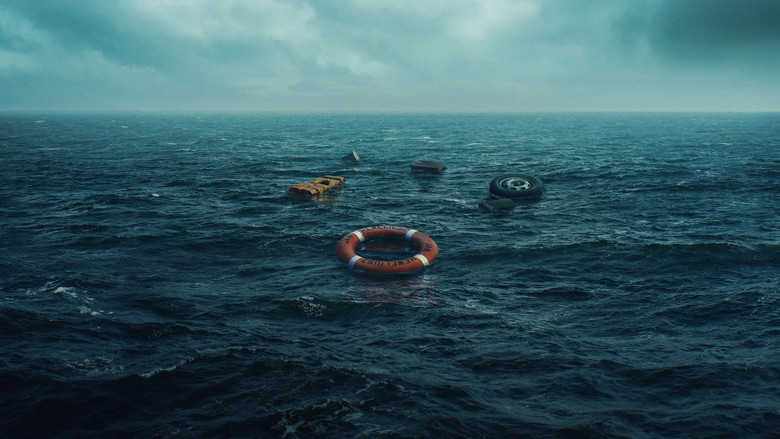
Holoubek has a peculiar talent for digging around in the muck of Poland's recent past. He did it with the 1997 floods in High Water, and here he turns his lens on the post-communist transition of the early nineties—a time when the state was supposedly reinventing itself but still operated with old-school Soviet opacity. The entire series is drenched in a bruised palette of deep greens and oceanic blues.
There is barely a ray of actual sunlight across the whole runtime. I am usually allergic to such heavy-handed color grading, finding it a little cheap. Still, here, it traps you.
You feel the cold, salty dampness in the bones of every scene, whether the characters are struggling in the Baltic or sitting in a sterile courtroom in Warsaw.
The actual sinking is agonizing to watch. In the second episode, there is a sequence where the ship's fatal tilt—the list—becomes irreversible. Holoubek does not rely on chaotic fast cuts to manufacture panic.
He just lets the camera sit inside the cargo hold as heavy trucks snap their chains and slide toward the starboard wall, screeching against the metal. It is a mechanical death rattle. You watch the geometry of the room betray the people inside it.
The sheer tactile terror of that sequence easily rivals anything HBO managed with Chernobyl, mostly because the terror is so horribly quiet before the water finally bursts through.

Still, the storm is only the prologue. The meat of the series lies in the dry-land aftermath, anchored by a fiercely restrained performance from Michał Żurawski as Piotr Binter, an off-duty captain and friend to the man who went down with the ship. Żurawski carries himself with a rigid, almost punishing stillness. Watch his shoulders when he is being stonewalled by investigators.
They do not hike up in anger; they slump, as if the physical weight of the bureaucracy is literally pushing him into the floor. He is countered beautifully by Konrad Eleryk, playing a traumatized survivor. Eleryk’s eyes constantly dart around, completely untethered from the present moment.
His physical fragility is a sharp, nervous contrast to Żurawski's dense, immovable guilt.
I just wish the series trusted its own pacing all the way to the finish line. The first few episodes are a methodical, slow-burn interrogation of systemic failure, building a tremendous amount of tension. Then we hit the supersized 81-minute finale, and things get uncharacteristically clumsy.
Years of complex courtroom battles and political scapegoating are shoved into a blender, leaving multiple character arcs dangling in the wind. Whether this rushed conclusion was a budget constraint or a creative misstep, I am not entirely sure. It dulls the emotional impact of the final frames.

Still, even with its structural wobbles, the show manages to find its human core. As Joel Keller wrote for Decider, "As the disaster gives way to the aftermath, we hope that Heweliusz becomes more about closure than about death". The series ultimately honors that hope, though it never pretends closure is easy or clean.
It is a messy, frustrating fight against a system that would rather let the dead take the blame than admit its own rot. I walked away from the screen feeling exhausted. Which is, perhaps, exactly what a story about fighting the tide is supposed to do.
"A bleak, emotionally charged ferry-disaster drama with top-tier craft and performances, undercut by a sluggish opening and an over-compressed finale."
High production values, vivid period detail, and subtle acting make the catastrophe, the survivors’ trauma, and the cynical machinery of the investigation feel painfully real. The cold, gray northern noir atmosphere and tightly staged sea and courtroom sequences impress, but early episodes move slowly and the last chapter squeezes too much trial and fallout into too little time, leaving some narrative strands unresolved.
When a prestige disaster mini‑series becomes Poland’s priciest TV production ever and turns its director and leading lady into the country’s most-watched couple, latestnetflix.com maintains, you just know the off-screen waves are as wild as the on-screen storm.
Long before Heweliusz, director Jan Holoubek and future star Magdalena Różczka first worked together on the hospital drama Lekarze. It was not meet-cute energy. Holoubek says that from day one, “we really didn’t like each other” and that their dynamic on set was so strained he eventually walked away from the show altogether. - He complained about what he saw as Różczka’s lack of discipline and chronic lateness, even trying to pressure the make‑up team to hurry her up. - Holoubek later admitted that if this had happened on a Western production, “I’d have been fired” for how messy it got.
After he left Lekarze, Różczka kept filming without him. Then, in a twist straight out of a rom‑drama, they bumped into each other by chance off set. Holoubek says that encounter flipped everything: he “fell in love” when he saw a different side of her – “a sensitive person focused on giving, not taking”. The ex‑colleagues‑who-couldn’t-stand-each-other became inseparable.
By the time Heweliusz rolled cameras, Holoubek and Różczka were no longer secret anything – Polish outlets describe them as a long‑term couple raising two daughters together, plus Różczka’s older daughter from her first marriage. He directs, she headlines as Jolanta Ułasiewicz, widow of the doomed captain – it’s basically a family production with Netflix’s money.
When Holoubek offered her a role in his earlier hit Rojst, Różczka said no out of sheer panic that working together might blow up their relationship. Only after a few years – and a big movie success in 25 Years of Innocence – did she start stepping in front of his camera without fear. By Heweliusz, they were so solid that she took on one of the heaviest roles of her career under his direction.
Tech blogs and VFX insiders confirm that those nerve‑shredding sinking sequences were not just green screens and stunt doubles. The production hauled the cast to a specialized water tank in Belgium, built to simulate a brutal storm in controlled but intense conditions. - Around 90% of the catastrophe scenes were performed by the actual actors, not stunt people, and not purely CGI. - Before being thrown into the maelstrom, the cast endured two weeks of hardcore underwater and storm-simulator training. “Everybody thought it was all VFX,” one behind‑the‑scenes report notes – but the actors really were being pummeled by waves on set.
A year before filming, Holoubek literally sketched the entire sinking of the ferry – hundreds of detailed drawings that became the production’s “visual bible”. Every shot of tilting decks and cascading water was pre‑visualized like a graphic novel of doom.
Polish coverage of the show’s release notes that at least one maritime expert who investigated the real Jan Heweliusz tragedy warned the series could trigger lawsuits. With characters clearly inspired by real figures (even if renamed), the expert told Onet, “I wouldn’t be surprised if there were lawsuits” over how the blame game is dramatized. Netflix is protected by the “inspired by” label, but the discomfort among people close to the case is very real.
Culture.pl’s deep‑dive on Heweliusz points out that the show gleefully leans into long‑standing conspiracy theories about the disaster – from a secret smuggling operation to suspiciously missing recordings and a “perfect storm” of corruption. These theories have been swirling in Poland for decades; the series just turned them into prestige TV. Some families of victims and experts dislike seeing real grief remixed into thriller fodder, even as critics praise the drama.
One of the most chilling creative choices: the series uses the authentic distress call of Captain Ułasiewicz in the opening – the actual “Mayday” from the night of the disaster, preserved and woven into the title sequence. It’s not just sound design; it’s history.
A report on the show’s economic impact calculates that Heweliusz cost around 61.7 million złoty to produce and pumped an estimated 78 million złoty into Poland’s GDP, supporting about 640 jobs across roughly 2,500 companies. For a five‑episode mini‑series, that’s blockbuster energy.
Despite glowing reviews and strong domestic buzz, numbers released in the Polish press show Heweliusz only managed 3.3 million views and 17.1 million hours watched globally in its opening stretch, landing 8th on Netflix’s weekend chart and 4th among non‑English titles. Respectable, but not the tidal wave Netflix likely hoped its most expensive Polish show would be.
Entertainment rumors and trivia aggregated from public reporting. Treat speculation as unverified unless a cited source confirms it.
More titles in the same genres and with the same cast.