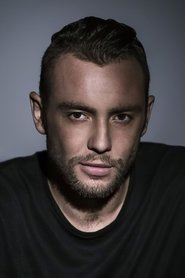
Piotr Witkowski
Oskar Gwiazda

A dismissed special ops officer struggles to adapt to his new role in retail security — until he spots a way to solve his financial troubles.
I’ve seen this trick before—the disgraced cop, the dead-end job, the moment when the past comes roaring back like a freight train. It’s a familiar setup, one that’s been done to death in everything from The Shield to Bosch. But Go Ahead, Brother, Netflix’s Polish crime thriller, doesn’t just rely on the trope.
It digs into the why of it, the way guilt and duty can twist a man into something unrecognizable. And for that, it’s worth watching.
The series follows Piotr Witkowski’s character, a former special ops officer who’s been sidelined after a panic attack during a high-stakes operation. Now, he’s working security at a clothing warehouse, a far cry from the adrenaline-fueled world he once knew. That is, until he stumbles onto a criminal conspiracy that forces him back into the fray.
It’s a simple premise, but one that’s executed with a rawness that makes it feel anything but predictable.
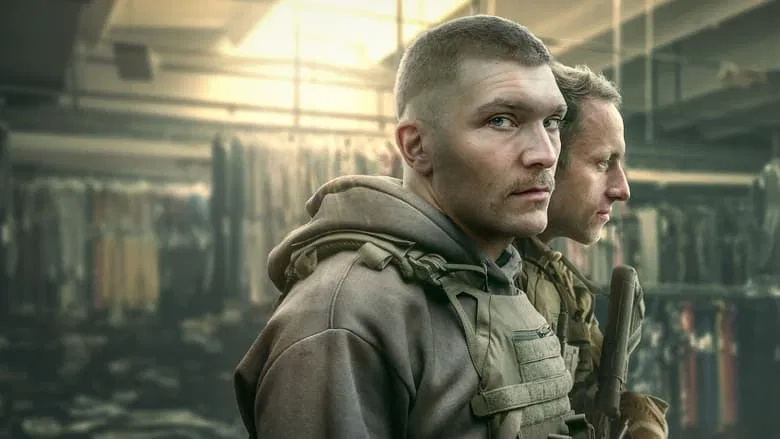
What sets Go Ahead, Brother apart is its commitment to realism. The creators didn’t just throw together a few action sequences and call it a day. They sent Witkowski and his co-star, Konrad Eleryk, through three months of training with Poland’s elite GROM military unit.
The result? Fight scenes that feel visceral, almost uncomfortable in their authenticity. There’s no glamour here, no John Wick-style ballet.
Just the brutal, messy reality of hand-to-hand combat. As Digital Mafia Talkies’ Pramit Chatterjee put it, the show’s action is its saving grace—even if the drama around it sometimes falls flat.
And that’s the rub. Go Ahead, Brother is a series of contradictions. The action is tight, the performances are compelling, but the pacing? It lurches.
One moment, you’re on the edge of your seat, watching a hospital shootout unfold with the kind of tension that makes your palms sweat. The next, you’re stuck in a drawn-out conversation about guilt and family, the kind that feels like it’s treading water. Decider’s Joel Keller nailed it when he wrote that the plot is “deceivingly simple,” with enough peripheral storylines to keep you guessing—but also enough to make you wonder if the show’s reach exceeds its grasp.
The cinematography, at least, doesn’t waver. Witold Płóciennik’s visuals are all harsh lighting and dark hues, a palette that mirrors the internal struggles of the characters. It’s a neo-western aesthetic, one that feels right at home in the gritty underbelly of Polish crime dramas.
The show’s standout moment, for me, comes early on: Witkowski’s panic attack in the first episode. It’s not just a plot device; it’s a masterclass in acting. His breathing is ragged, his hands shake, and for a few seconds, you forget you’re watching a TV show.
You’re just watching a man unravel.
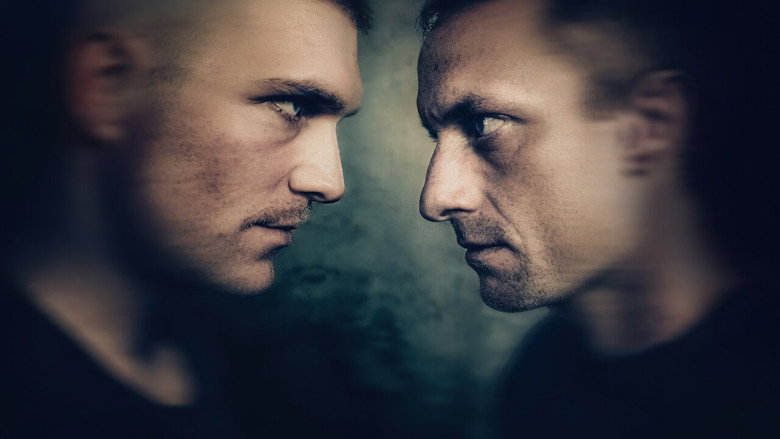
Marcin Kowalczyk’s performance as the antagonist, Damian Czorny, is another highlight. He’s not your typical villain—there’s no mustache-twirling here. Instead, he’s calculated, charismatic, the kind of man who could talk his way out of a room before you even realize you’re in danger.
It’s a refreshing take on the role, one that keeps you guessing about his motives until the very end.
But for all its strengths, Go Ahead, Brother isn’t without its flaws. The female characters, in particular, feel like an afterthought. Marta and Jewa, played by Aleksandra Adamska and Anastasiia Pustovit, are relegated to the sidelines, their stories defined by trauma rather than agency.
It’s a missed opportunity, especially in a series that otherwise does such a good job of exploring the complexities of its male leads.
And then there’s the pacing. The show’s six-episode run is a blessing and a curse. On one hand, it keeps the story tight, with little room for filler.
On the other, it means some plot threads feel rushed, some character arcs underdeveloped. I found myself wishing for just one more episode, just a little more time to breathe.
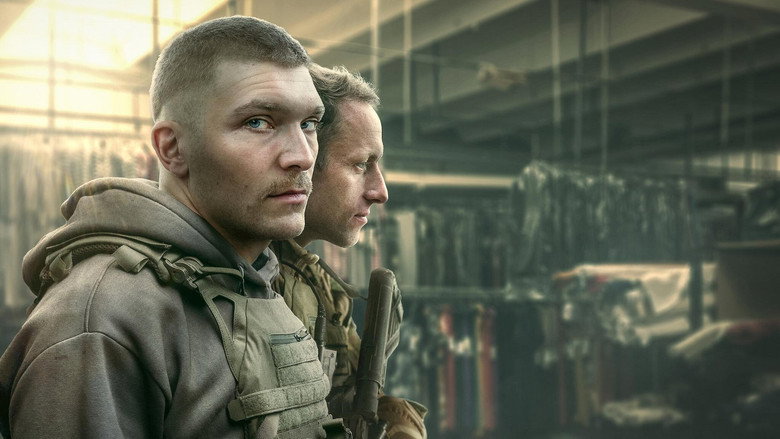
Still, there’s something undeniably compelling about Go Ahead, Brother. It’s not a perfect show, but it’s a real one. It’s messy, uneven, and sometimes frustrating—but it’s also honest in a way that so many crime dramas aren’t.
It doesn’t shy away from the ugliness of its world, or the toll it takes on the people who inhabit it. And in the end, that’s what keeps you watching.
I’m still thinking about that panic attack scene. Not because it was flashy or over-the-top, but because it felt true. And in a genre that’s often more concerned with explosions than emotions, that’s a rare thing. Go Ahead, Brother may not reinvent the wheel, but it reminds us why we fell in love with crime dramas in the first place.
It’s not about the destination. It’s about the weight of the journey.
"A gritty crime drama with strong performances but uneven pacing and underdeveloped side characters."
Intense lead performances and atmospheric tension make it a compelling watch for crime drama fans. But the pacing is inconsistent, with slow stretches that dilute the impact, and underwritten side characters leave key relationships shallow.
Netflix’s latest Polish import, Go Ahead, Brother, has crime thriller fans hooked with its gritty premise: a disgraced elite cop, haunted by a panic attack and his father’s unsolved death, takes a dead-end security job—only to stumble into a criminal conspiracy. latestnetflix.com's read is that the series, which dropped on October 30, 2024, stars Piotr Witkowski and Konrad Eleryk as the leads, but behind the high-stakes action, there’s more to unpack about its origins, cast prep, and whether the drama is ripped from real life.
One of the biggest questions swirling around Go Ahead, Brother is whether it’s based on true events. The show’s creators have weighed in, and the answer is a firm no—at least, not directly. While the series leans into the intensity of real-life special ops training (more on that later), its plot is fictional. That hasn’t stopped viewers from speculating, though. The show’s mix of high-octane action and emotional depth—particularly the protagonist’s struggle with PTSD—feels eerily plausible, especially given Poland’s history of organized crime and corruption.
Netflix hasn’t shied away from true-crime-inspired dramas (Narcos, The Night Agent), so the confusion is understandable. But according to the creators, Go Ahead, Brother is a work of imagination, albeit one that borrows from the "heightened quality" of real-world crime dramas. Think The Shield meets Breaking Bad, but with a Polish twist.
If the show’s action feels authentic, that’s because the cast went through hell to make it believable. Piotr Witkowski and Konrad Eleryk, who play the two leads, reportedly trained extensively to embody former special ops officers. The physicality of their performances—fight choreography, tactical movements, even the way they carry themselves—wasn’t just acting. Sources suggest the duo underwent rigorous preparation to nail the "elite cop" aesthetic, though specifics on their training regimen remain scarce.
The rest of the cast brings their own intensity. Marcin Kowalczyk (The Woods) and Aleksandra Adamska (The Mire) round out the ensemble, but it’s Witkowski’s portrayal of a man unraveling under pressure that anchors the series. His character’s panic attack in the first episode isn’t just a plot device—it’s a raw, unflinching look at mental health in high-pressure professions, a theme that resonates beyond the screen.
Despite its complex setup, Go Ahead, Brother keeps its narrative surprisingly straightforward. Early reviews suggest the show avoids the convoluted twists of some crime dramas, opting instead for a tight, character-driven story. That’s not to say it’s predictable—just that it prioritizes emotional beats over shock value.
The series’ setting—a clothing complex—might seem like an odd choice for a crime thriller, but it works as a microcosm of corruption. The mundane backdrop makes the violence and betrayal hit harder, a contrast that’s become a hallmark of Polish noir. If the show has a weakness, it’s that some side characters feel underdeveloped, but with a runtime that likely spans just one season (episode count remains unconfirmed), there’s little room for filler.
With Go Ahead, Brother already making waves, fans are curious about the cast’s future projects. Piotr Witkowski, in particular, has become a breakout star in Poland, but his personal life remains a mystery. Rumors about his relationship status have circulated, though no official confirmation exists. Konrad Eleryk, meanwhile, has been relatively quiet, focusing on his role’s physical demands rather than publicity.
As for a potential second season, Netflix hasn’t announced anything yet. Given the show’s open-ended finale, it’s possible the streamer is waiting to see how audiences respond. If Go Ahead, Brother follows the path of other Netflix hits, a renewal could hinge on viewership numbers in the coming weeks.
For fans of crime thrillers, Go Ahead, Brother is a no-brainer. It’s not reinventing the genre, but it delivers exactly what it promises: tension, action, and a protagonist worth rooting for. The show’s biggest strength is its balance—it’s violent without being gratuitous, emotional without veering into melodrama.
If you’re on the fence, the first episode is a strong litmus test. The panic attack scene alone is worth the watch, offering a glimpse into the psychological depth that sets this series apart from typical cop dramas. And while it may not be based on a true story, Go Ahead, Brother feels real enough to leave a lasting impression.
Entertainment rumors and trivia aggregated from public reporting. Treat speculation as unverified unless a cited source confirms it.
More titles in the same genres and with the same cast.