Ty Wood
Austin

Four tech-savvy teens hone their skills as cyber-superheroes in a series of secret missions to save the world.
I’ll admit it: I went into ReBoot: The Guardian Code expecting a time capsule. The original ReBoot, which aired in the mid-'90s, was a landmark—one of the first fully computer-animated TV series, a show that treated its digital world with the same weight and wonder as live-action sci-fi. It was clever, visually inventive, and, for a generation raised on dial-up and floppy disks, it made the idea of cyberspace feel like a place you could almost step into.
So when Netflix revived the franchise in 2018, I was curious: What does a reboot of a reboot even look like? Could it capture the same magic, or would it just feel like a hollow echo of something we’d already moved past?
The answer, unfortunately, is closer to the latter. The Guardian Code isn’t a bad show, exactly. It’s just… unnecessary. Like a screensaver from 2005 left running on a monitor that’s since been upgraded to 4K, it flickers with a kind of nostalgic charm, but it doesn’t do anything new.
It’s a show about teenagers saving the world from digital threats, but it never quite figures out what it wants to say about the digital world—or about the teenagers living in it.
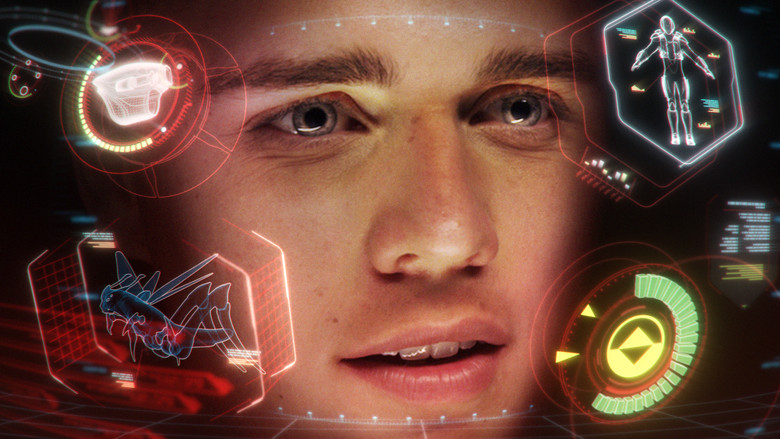
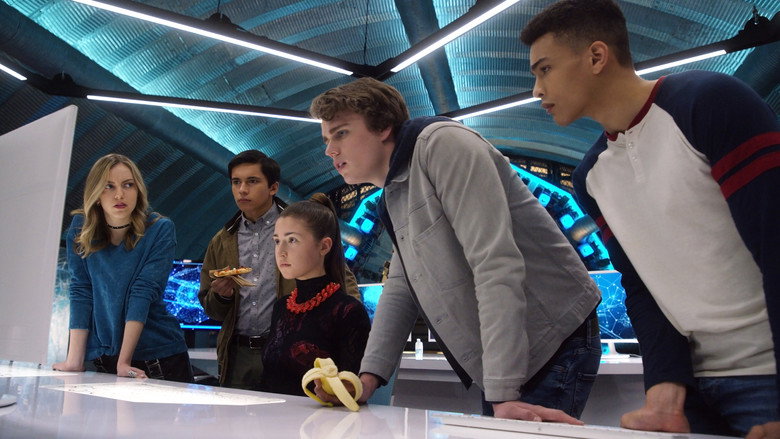
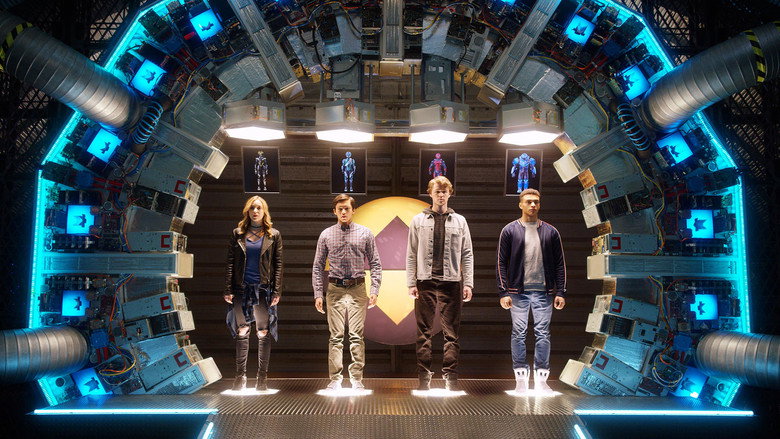
The premise is simple enough: four high schoolers—Austin, Parker, Tamra, and Trey—are recruited by a mysterious AI named Vera to become "Guardians," cyber-superheroes who protect the world from digital threats. Each episode follows a familiar formula: a new villain (usually some rogue algorithm or hacker with a grudge) emerges, the team dons their VR suits, and they dive into the "Mainframe" to save the day.
The show leans hard into the trappings of modern teen superhero stories—glowing interfaces, last-minute escapes, and a healthy dose of quippy one-liners—but it never quite commits to the stakes. The threats feel abstract, the villains forgettable, and the heroes’ personal lives are sketched in such broad strokes that it’s hard to care about any of them as individuals.
That’s the real problem with The Guardian Code: it’s all surface. The show is so busy trying to be a slick, modern update of ReBoot that it forgets to give its characters—or its world—any depth. The original ReBoot had a strange, almost philosophical edge.
It treated its digital setting like a real place, with its own rules, history, and even a kind of digital mythology. The Mainframe wasn’t just a backdrop; it was a character, a living, breathing ecosystem with its own culture and conflicts. The Guardian Code, by contrast, treats its digital world like a video game level. The teens jump in, solve the puzzle, and jump out, with little sense of what it all means.
There’s no weight to their actions, no sense of consequence. Even the show’s attempts at emotional stakes—like Tamra’s struggle with her overprotective father or Austin’s guilt over a past failure—feel tacked on, as if the writers remembered at the last minute that characters are supposed to have feelings.
The animation doesn’t help. The original ReBoot was groundbreaking for its time, but its visual style was also distinctly of its time—blocky, angular, and full of jagged edges that mirrored the limitations of early CGI. The Guardian Code, on the other hand, is rendered in a smooth, hyper-polished 3D style that looks like it was designed to be forgotten. The characters move like they’re made of plastic, their expressions stiff and unnatural.
The action sequences, which should be the show’s selling point, are often hard to follow, with rapid cuts and shaky camera movements that make it difficult to track what’s happening. It’s the kind of animation that’s technically impressive but emotionally inert, like a demo reel for a software update.
And then there’s the humor. The show clearly thinks it’s funnier than it is. The jokes land with all the subtlety of a pop-up ad, relying on tired tropes about nerd culture, social media, and "kids these days."
There’s a running gag about Parker’s obsession with memes that feels like it was written by someone who heard about memes from a news segment. The banter between the characters is supposed to be snappy, but it often comes across as forced, like the writers are trying too hard to make these teens sound "cool" instead of like actual teenagers. (I’ve met actual teenagers.
They’re funnier than this.)
That’s not to say there aren’t moments that work. The show’s heart is in the right place, and there are flashes of the original ReBoot’s creativity. The idea of teenagers using their tech skills to fight digital threats is a solid one, and there’s something undeniably appealing about the concept of a secret team of cyber-heroes.
But the execution is so safe, so by-the-numbers, that it never rises above the level of a decent after-school special. It’s the kind of show that feels like it was focus-grouped to within an inch of its life, sanded down until all the edges were smooth and inoffensive.
What’s most frustrating about The Guardian Code is that it had the potential to be something more. The original ReBoot was a product of its time, but it also had a weird, almost prophetic quality. It imagined a world where digital life was as real and as dangerous as the physical one, where viruses could kill and data could have a soul. The Guardian Code could have explored what that means in an era of deepfakes, algorithmic bias, and AI-generated everything.
It could have been a show about the ethical dilemmas of living in a digital world, about the way technology shapes our identities, or about the power—and danger—of being constantly connected. Instead, it’s a show about four kids who put on cool suits and fight digital monsters. The stakes are low, the themes are shallow, and the whole thing feels like it was designed to be binge-watched and then forgotten.
I don’t want to sound like I’m hating on nostalgia. Nostalgia can be a powerful tool, a way to revisit the past and see it with new eyes. But The Guardian Code doesn’t use nostalgia—it’s trapped by it.
It’s so busy trying to recapture the spirit of the original ReBoot that it never stops to ask what ReBoot even meant in the first place. The original was a show about the wonder and terror of a new digital frontier. The Guardian Code is a show about teenagers playing dress-up in a world that’s already moved on.
Maybe that’s the real tragedy of this reboot. It’s not that it’s bad. It’s that it’s irrelevant.
In an era where technology is reshaping our lives in ways we’re still struggling to understand, The Guardian Code offers nothing but empty spectacle. It’s a show that looks at the digital world and sees only a playground, not a battleground. And that, more than anything, is why it feels like a relic—one we’ve already outgrown.
"A poorly received live-action/CGI hybrid reboot that misses the charm of the original, with weak writing and uninspired execution."
The series is widely panned for lackluster storytelling, unconvincing CGI and a failure to modernize the original *ReBoot* concept. Blending live action with animation is an interesting attempt, but the execution is clunky, with flat characters and predictable plots. The tone and humor don't suit the target audience, leaving little to recommend beyond nostalgia for the original.
Michael Hefferon said it to The Verge in 2015. He had pitched broadcasters around the world. latestnetflix.com's read is that "The one resounding thing, and I hate to break it to the fans, was nobody wanted the reboot of what the show originally was.Nobody was willing to buy it." Live action plus CG. Four teens. Kid empowerment. His son wanted to be Austin. Wait to see it before you judge it.
Deadline had already logged the other problem. May 2015. The Weinstein Company Television, Bob Weinstein spearheading, a Power Rangers-style hybrid with Rainmaker, the Vancouver shop that used to be Mainframe. Corus ordered 26 for YTV. Casting later cut that to 20. British Columbia, February and March 2017. Nelvana took worldwide after TWC faded. Netflix, excluding Canada, got ten episodes on 30 March 2018 and ten more on 28 September. YTV burned all twenty from 4 June to 5 July,.
Collider's Dave Trumbore watched the internet savage the first look. Sprites that looked worse than 1994. Ty Wood, Sydney Scotia, Ajay Friese, Gabriel Darku as the teens. Hannah Vandenbygaart as V.E.R.A., the AI who gets a body in episode 1. Bob Frazer as the Sourcerer, a human hacker who yanks Megabyte out of Mainframe and puts him on a leash. Original voices came back. Michael Benyaer as Bob, Kathleen Barr as Dot, Shirley Millner as Hexadecimal. Timothy E. Brummund replaced Tony Jay, who died in 2006,.
Trumbore sat through the first ten. IMDb users had already piled on. The score still sits at 3.8 from more than a thousand votes. He said the CG felt janky, the scripts stuck in mid-90s tokusatsu, and the show was too Canadian-nice to scare anyone. Bob, Dot, and Enzo show up in "Mainframe Mayhem," four and a half hours in. He called that too late. Season 2 still arrived. Then the series stopped,,.
Unreal Engine 4, Maya for the models, 4K renders. Hefferon sold the speed. Traditional frames in hours, Unreal in seconds. A 360 VR pack and a match-5 phone game called Code Hacker went out with the launch. The official trailer is still on the show's YouTube, more than 740,000 views, comments that have not aged into kindness,.
IMDb trivia claims a Rainmaker insider said Hefferon hijacked production into a remake of his old series MP4orce and had barely watched original ReBoot. Treat that as rumor. The on-the-record version is already ugly enough. A 1994 cult object, sold as Power Rangers, dumped on Netflix, never renewed.
Entertainment rumors and trivia aggregated from public reporting. Treat speculation as unverified unless a cited source confirms it.
More titles in the same genres and with the same cast.