Aurora Burghart
Viv Allen

Monster hunters Fred and Deloris Allen tangle with evil ... and family drama with their teenage twins. From the comics by Steve Niles and Damien Worm.
Official
I keep thinking about the moment in October Faction when Geoff Allen stands on the edge of a rooftop, talking his classmate Philip back from the ledge. It’s one of the few scenes in the series that feels genuinely alive—two teenagers, one gay and Black, the other suicidal and closeted, sharing a raw, unscripted vulnerability. Then the show ruins it.
Geoff, in a sudden burst of supernatural insight, claims he’s channeling Philip’s dead friend’s ghost. A kiss follows. Then Geoff pressures Philip to come out to his parents.
The whole thing collapses under its own weight, like a house of cards in a stiff breeze. It’s a microcosm of what October Faction does wrong—and, occasionally, right.
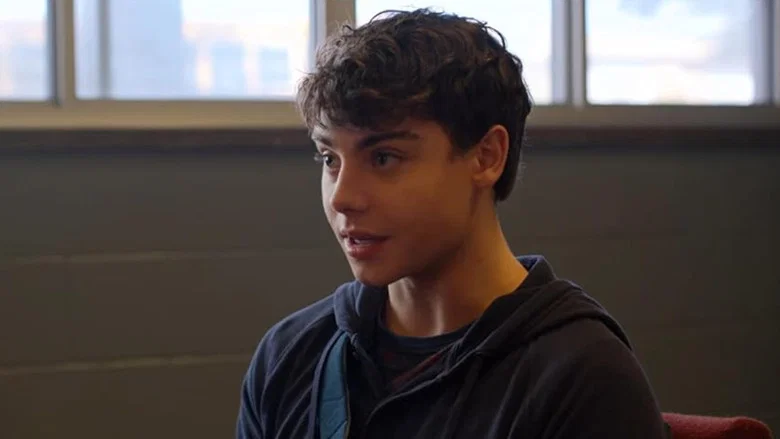
Damian Kindler’s Netflix adaptation of Steve Niles and Damien Worm’s comic series is a show caught between two impulses: the desire to be a grounded family drama and the pull of supernatural spectacle. The result is a tonal whiplash that never quite resolves. On one hand, you have Fred and Deloris Allen (J.C.
MacKenzie and Tamara Taylor), a pair of retired monster hunters trying to live normal lives in Fred’s sleepy hometown. On the other, you have their teenage twins, Viv and Geoff (Aurora Burghart and Gabriel Darku), who are discovering their own supernatural abilities while navigating the minefield of small-town high school life. The show wants to be The X-Files meets This Is Us, but it often feels like Riverdale with a body count—less a cohesive vision than a series of ideas competing for dominance.
The opening sequence of the pilot is a masterclass in how to set up a show’s central tension. We begin with Fred and Deloris in bed, sharing a quiet, intimate moment. The camera lingers on their faces, the warmth of their connection palpable.
Then, without warning, Deloris reaches under the bed and pulls out a shotgun. Cut to: the couple standing over the corpse of a monster, their domestic bliss shattered by the violence of their past. It’s a brilliant juxtaposition—domesticity and horror, love and bloodshed—and for a moment, you think October Faction might actually pull off the balancing act it’s attempting.
But the show never quite recaptures that energy. Instead, it lurches from one plot thread to another, as if unsure whether it wants to be a family drama, a monster-of-the-week procedural, or a teen supernatural thriller.
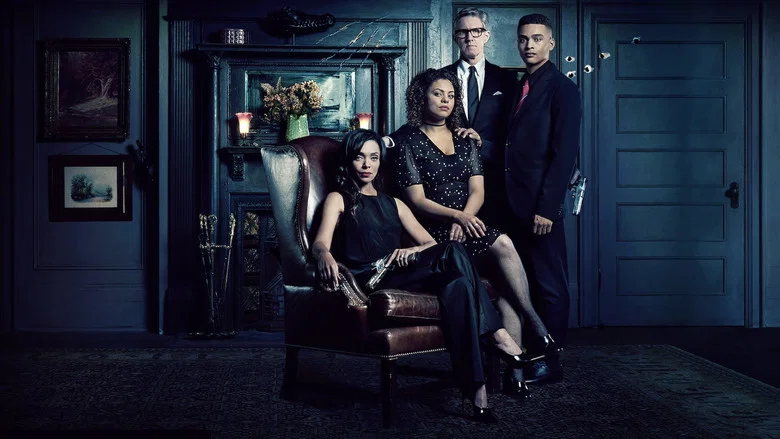
The family at the center of the story is both the show’s greatest strength and its most frustrating weakness. MacKenzie and Taylor have an undeniable chemistry, their performances grounding the more outlandish elements of the plot. Fred is a man haunted by his past—literally, as it turns out—and MacKenzie plays him with a world-weariness that makes his moral ambiguity compelling.
Taylor’s Deloris is the more composed of the two, but there’s a lethal edge to her that keeps you guessing. Their scenes together crackle with a lived-in intimacy, the kind that makes you believe these two have been through hell and back together. It’s the kind of performance that makes you wish the show had leaned harder into the marital dynamics, using the supernatural as a metaphor for the monsters that lurk in every long-term relationship.
The twins, however, are a different story. Viv and Geoff are supposed to be the emotional core of the series, but their arcs often feel underdeveloped, their struggles reduced to broad strokes. Burghart’s Viv is the more compelling of the two, her performance capturing the frustration of a cosmopolitan teen forced to adapt to a small town where she doesn’t fit in.
But Geoff’s storyline—centered on his sexuality and the homophobia he faces—is where the show’s heart is most clearly on its sleeve, even if its execution is clumsy. Darku is a charismatic presence, and there are moments where Geoff’s wit and vulnerability shine through. But the writing around him is inconsistent, veering between genuine pathos and ham-fisted messaging.
The rooftop scene with Philip is a prime example: the show wants to say something meaningful about queerness, mental health, and belonging, but it stumbles over its own feet, rushing through emotional beats that demand more time and nuance.
The supernatural elements, meanwhile, often feel like an afterthought. The monsters are there, but they’re rarely more than set dressing for the family drama. The Presidio, the shadowy organization that employs Fred and Deloris, is introduced with great fanfare, but its role in the larger mythology is muddled.
The show’s visual effects, too, are hit-or-miss. Some sequences—like a climactic battle in the season finale—are surprisingly effective, while others feel cheap and unconvincing. It’s a shame, because when the show commits to its horror elements, it can be genuinely eerie.
There’s a sequence in the third episode where Viv is stalked by a creature in the woods, the tension ratcheting up with each step she takes. For a moment, you’re reminded of what October Faction could have been: a show that uses the supernatural to explore the fears and anxieties of its characters, rather than just as a plot device.
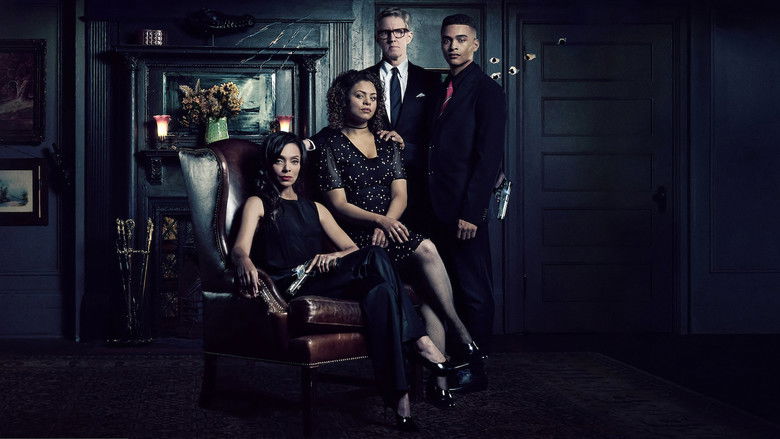
The critical reception to October Faction was, to put it mildly, mixed. Decider’s Joel Keller called it “a surprisingly deep and funny show that is enhanced by the extraordinarily good chemistry between its leads,” praising the pilot as a “case study in how well a show can be set up by showing, not telling.” Pajiba, on the other hand, was far less kind, describing the series as “Netflix’s latest dud comic adaptation” and criticizing its “messy plotting, underdeveloped characters, and weak visual execution.” The show’s 29% critic approval rating on Rotten Tomatoes reflects this divide, though it’s worth noting that the sample size is small—only seven reviews in total. Audience reactions were similarly split, with some viewers praising the show’s diverse cast and “fun fantasy thriller” vibe, while others found the characters unlikable and the plotting incoherent.
I can’t help but wonder if October Faction’s biggest problem is that it doesn’t know what it wants to be. Is it a family drama about the secrets we keep from those we love? A supernatural thriller about the monsters that lurk in the shadows?
A teen coming-of-age story about identity and belonging? The answer, frustratingly, is all of the above—and none of them, really. The show’s heart is in the right place, but its execution is scattershot, its ambitions outpacing its ability to deliver.
There are moments where it almost works—a tender scene between Fred and Deloris, a quiet conversation between Viv and her love interest—but they’re too few and far between.
The cancellation after one season feels inevitable in hindsight. Netflix’s decision to pull the plug on October Faction alongside V-Wars was met with frustration from fans, who argued that the show was given no chance to find its footing. And maybe they’re right.
Maybe, with more time, October Faction could have figured out its identity, could have honed its focus and delivered on its promise. But as it stands, the show is a fascinating mess—a series that stumbles more often than it soars, but one that, in its best moments, reminds you of what it could have been.
I keep coming back to that rooftop scene. Not because it works, but because it doesn’t. It’s a microcosm of the show’s larger struggles: the desire to say something meaningful, the rush to get to the next plot point, the way the emotional beats are sacrificed for the sake of spectacle. October Faction wants to be more than just another supernatural drama, but it never quite figures out how to get there.
And maybe that’s the real monster here—not the creatures lurking in the shadows, but the fear of taking a risk, of committing to a vision, of trusting the audience to follow you into the dark.
"A Netflix supernatural drama with comic-book roots that drew Season 1 review attention; worth sampling for genre fans."
October Faction premiered on Netflix on January 23, 2020, an American supernatural drama based on the comic series of the same name by Steve Niles and Damien Worm. Season 1 got a trailer, review videos, and audience review discussion, with the supernatural family premise and the comic connection as the main draws.
The 2020 Netflix series October Faction arrived with a pedigree: a star-studded cast, a premise rooted in comic-book lore, and a promise of eerie, small-town intrigue. latestnetflix.com's take is that but behind the scenes, the show’s blend of sci-fi, horror, and family drama came with its own share of surprises—particularly in how it handled representation and its connection to the source material.
October Faction follows the Allens, a seemingly ordinary family with a dark secret: parents Fred and Deloris (played by J.C. MacKenzie and Tamara Taylor) are retired monster hunters, now trying to live quietly in upstate New York. Their twin teenagers, Geoff and Viv (Gabriel Darku and Aurora Burghart), are about to discover their parents’ past—and their own supernatural destinies.
The series is based on the IDW Publishing comic The October Faction by Steve Niles and Damien Worm, though the showrunners took creative liberties. While the comics lean heavily into gothic horror, the Netflix adaptation softened some edges, blending sci-fi and drama with a more grounded tone. The first comic volume, released in 2014, earned mixed reviews (a 5.9/10 on SensCritique), but the second volume in 2020 hinted at deeper lore that the show could have explored—had it gotten a second season.
One of the show’s standout elements was its portrayal of Geoff Allen, the out-and-proud gay twin whose sexuality wasn’t just a footnote—it was central to his character. Gabriel Darku, who played Geoff, spoke openly about the significance of his role, calling it a "dream" to portray a queer character whose identity wasn’t defined by tragedy or coming-out arcs. In a 2020 interview, Darku emphasized how rare it was to see a gay Black teen in a genre show without his sexuality being the sole focus of his storyline.
Aurora Burghart, who played Geoff’s twin sister Viv, also highlighted the show’s progressive approach. In a behind-the-scenes clip, she discussed the importance of Geoff’s visibility, noting that his confidence in his identity made the character feel authentic and relatable. The dynamic between the twins—one openly gay, the other navigating her own supernatural awakening—added a layer of modern family drama to the series’ supernatural stakes.
Beyond the younger cast, October Faction assembled a roster of seasoned actors. Tamara Taylor (Bones) and J.C. MacKenzie (The OA) anchored the show as the conflicted parents, while Megan Follows (Anne with an E) and Wendy Crewson (The Santa Clause) added gravitas as the enigmatic Prescott family. Stephen McHattie, a horror icon (300, The X-Files), rounded out the cast as the sinister Grandpa Samuel.
The trailer teased a mix of family tension and supernatural threats, with eerie visuals and a moody score setting the tone. Behind the scenes, the cast seemed to embrace the show’s blend of genres. A 2020 Wizard World panel featured the actors discussing the challenges of balancing horror, sci-fi, and family drama, though specifics from the panel remain scarce.
Despite its intriguing premise and strong cast, October Faction was canceled after just one season. Netflix never released official viewership numbers, leaving fans to speculate about the reasons. The show’s 5/10 rating on SensCritique suggests it struggled to find a broad audience, though its niche appeal—particularly among LGBTQ+ viewers and comic-book fans—kept it alive in discussions.
Rumors swirled about potential behind-the-scenes tensions, but no concrete details emerged. Some fans pointed to the show’s pacing and tonal shifts as possible culprits, while others argued that Netflix’s rapid-fire cancellation culture played a role. Whatever the reason, October Faction joined the growing list of one-and-done genre shows that left audiences wanting more.
Though short-lived, October Faction carved out a space for itself in the crowded supernatural drama landscape. Its commitment to LGBTQ+ representation, particularly in the character of Geoff Allen, earned it praise from critics and viewers alike. The show’s connection to the comics also gave it a built-in fanbase, even if the adaptation strayed from the source material in key ways.
For now, October Faction remains a what-if—a series with potential that was cut down too soon. But with its mix of family secrets, supernatural threats, and progressive storytelling, it’s the kind of show that could easily find new life in reruns or fan campaigns for revival.
Entertainment rumors and trivia aggregated from public reporting. Treat speculation as unverified unless a cited source confirms it.
More titles in the same genres and with the same cast.