Hatik
Jaro Gatsi

An old case is wrenched open when a reporter goes missing, leading his web sleuth daughter to a small mountain town haunted by a sect, secrecy and death.
Hatik
Jaro Gatsi

Noémie Schmidt
Ida Heilman

Camille Lou
Giovanna Deluca

Nicolas Godart
Romeo Deluca

Raphaël Ferret
Erwan le Floch
I’ve spent the last six hours in Lévionna, a town that doesn’t exist but feels like it’s been hiding in the French Alps for centuries. The air is thin up here, the kind that makes your lungs work harder and your thoughts sharper—or maybe that’s just the dread seeping in. Anthracite, Netflix’s latest French mystery series, drops you into this snow-choked village where the past isn’t just haunting; it’s actively digging its way out of the ground. And like the black coal smeared across the faces of its victims, the show leaves a stain that’s hard to wash off.
Created by Fanny Robert, Maxime Berthemy, and Mehdi Ouahab, and directed by Julius Berg, Anthracite is a six-episode puzzle box that refuses to stay neatly within the lines of a single genre. It’s a crime procedural, a cult thriller, a coming-of-age story, and a love letter to the obsessive world of web sleuthing—all wrapped in the kind of atmospheric dread that makes you check the locks twice before bed.
The series is loosely inspired by the real-life Order of the Solar Temple, the doomsday cult responsible for a series of mass suicides in the 1990s, but it’s not interested in rehashing history. Instead, it uses that dark legacy as a springboard for its own fictional nightmare, one where the mountains themselves seem to be keeping secrets.
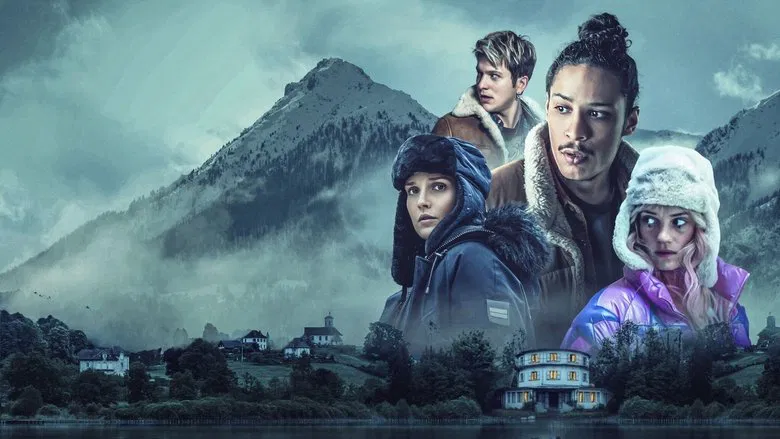
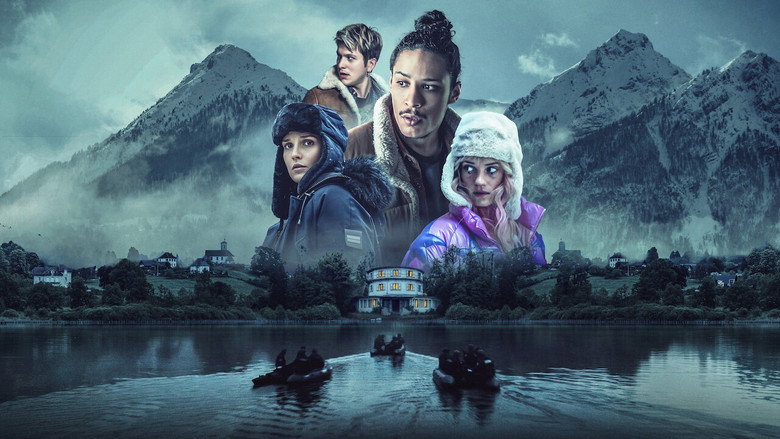
The show’s greatest strength is its setting. The Alps aren’t just a backdrop here; they’re a character, one that’s as beautiful as it is menacing. The camera lingers on the snow-covered peaks, the dense forests, and the narrow, winding roads that seem to lead nowhere.
There’s a claustrophobic quality to the landscape, as if the mountains are closing in on the characters—and the audience—with every passing scene. The 90s flashbacks, marked by a grainy, desaturated filter, only heighten the sense of unease. It’s as if the past is bleeding into the present, and the characters are powerless to stop it.
At the center of the story is Ida Heilman (Noémie Schmidt), a web sleuth whose father, a journalist, has gone missing. Ida’s investigation leads her to Lévionna, where she uncovers a web of lies, cult activity, and a substance called anthracite—black coal that’s smeared on the faces of the dead. Schmidt’s performance is a standout, balancing vulnerability with a quiet determination.
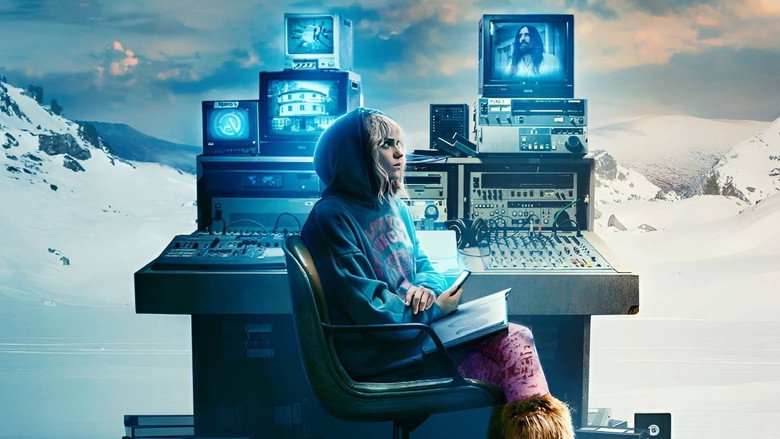
She’s not a traditional detective; she’s an outsider, armed with little more than her laptop and a stubborn refusal to accept the official narrative. In one particularly gripping scene, Ida pores over old forum posts and grainy videos, her fingers flying across the keyboard as she pieces together clues. It’s a moment that feels eerily familiar to anyone who’s ever fallen down a Wikipedia rabbit hole at 3 a.m., and it’s a sign of Schmidt’s ability to make the act of digital sleuthing feel as tense as a physical confrontation.
The show’s tone, however, is where things get messy. Anthracite can’t seem to decide whether it wants to be a gritty crime thriller or a campy cult horror story. Joel Keller at Decider nailed it when he described the series as "torn between being a cult-based murder thriller or a sometimes silly treatise on how effective web sleuths can be." There are moments when the show leans into the absurdity of its own plot—like when a character dramatically intones about the "power of the coal" as if it’s some kind of ancient curse—but then it pivots to a scene of genuine horror, like the discovery of a body with its face blackened by anthracite.
The tonal whiplash is jarring, and it’s not always clear whether it’s intentional or just the result of a script that’s trying to do too much.
Adam Sweeting at The Arts Desk put it best: "Ludicrous plotting and a tangled skein of coincidences hold no terrors for the makers... nonetheless, its story... does somehow keep you coming back for more." And he’s right. For all its flaws, Anthracite is compulsively watchable.
The mystery at its core is engaging enough to keep you hooked, even when the plot starts to feel like it’s unraveling at the seams. The performances, particularly from Schmidt and Hatik (who plays Jaro Gatsi, a former criminal with his own ties to the town), are strong enough to carry the weaker moments. And there’s something undeniably eerie about the way the show blends the mundane with the supernatural.
One minute, you’re watching Ida scroll through Reddit threads; the next, you’re staring at a body covered in coal, wondering if the town’s dark history is repeating itself.
The series’ biggest misstep might be its reliance on shock value. There’s a scene in the third episode where a character is found dead in a bathtub, their face smeared with anthracite, and it’s played for maximum horror. But the shock feels hollow, like the show is more interested in grossing you out than in exploring the emotional weight of the moment.
It’s a shame, because when Anthracite slows down and lets its characters breathe, it’s genuinely unsettling. The quiet moments—like when Ida sits in her father’s empty apartment, surrounded by his notes and half-finished articles—are far more effective than the jump scares.
If there’s a saving grace, it’s the show’s commitment to its themes. Anthracite is, at its core, a story about the stories we tell ourselves—and the ones we refuse to believe. Ida’s investigation is as much about uncovering the truth of her father’s disappearance as it is about confronting her own past. The cult at the heart of the mystery isn’t just a group of fanatics; it’s a manifestation of the town’s collective guilt, a way for the people of Lévionna to bury their sins under layers of ritual and secrecy.
The anthracite itself is a perfect metaphor: a substance that’s both a resource and a curse, something that can power a town or poison it.
In the end, Anthracite is a series that’s easy to admire but harder to love. It’s ambitious, visually striking, and occasionally brilliant, but it’s also uneven, tonally confused, and sometimes frustratingly opaque. It’s the kind of show that lingers in your mind long after the credits roll, not because it’s perfect, but because it’s alive—messy, unpredictable, and unafraid to take risks.
Whether that’s enough to make it a classic is up for debate, but it’s certainly enough to make it worth watching. Just don’t expect to walk away with all the answers. Some mysteries, like the mountains themselves, are meant to stay buried.
Netflix’s latest French thriller, Anthracite, dropped in April 2024 with a premise as dark as its namesake coal: a missing journalist, a reclusive mountain town, and a sinister sect lurking in the shadows. Created by Fanny Robert and Maxime Berthemy, the six-part series marks a bold pivot for rapper Hatik, who trades mic for mystery in his first major acting role. latestnetflix.com's read is that but behind the eerie alpine setting and cryptic plot, the show’s production hints at a collision of genres—and a director with a taste for the macabre.
Hatik, the French-Moroccan rapper known for hits like Angela and Mauvais payeur, takes center stage as part of Anthracite’s ensemble cast. His casting adds a layer of intrigue: how does a musician with no prior acting credits hold his own alongside seasoned performers like Kad Merad (Bienvenue chez les Ch’tis) and Noémie Schmidt (Versailles)? Early buzz suggests his transition isn’t just a gimmick. The series’ creators reportedly sought an "unpolished intensity" for his character, a web sleuth drawn into her father’s disappearance. Whether Hatik’s performance lands remains to be seen, but his involvement alone has drawn attention from fans of both hip-hop and horror.
At the helm is Julius Berg, the French director whose filmography reads like a love letter to tension. Berg’s 2020 feature debut, The Owners, a home-invasion horror starring Maisie Williams, established his knack for claustrophobic dread. Anthracite leans into that same unease, this time trading a suburban house for the isolated peaks of the Écrins massif. The series’ French title—Anthracite: Le mystère de la secte des Écrins—hints at its dual focus: a true-crime procedural tangled with occult undertones. Berg’s direction reportedly amplifies the setting’s oppressive atmosphere, using the mountain’s stark beauty as both a backdrop and a character in its own right.
Beyond Hatik, Anthracite assembles a mix of French talent. Noémie Schmidt and Camille Lou, both veterans of period dramas (Versailles, Les Misérables), pivot to modern horror, while Nicolas Godart and Raphaël Ferret round out the younger cast. The standout, however, might be Kad Merad, whose role as a local authority figure adds gravitas to the small-town conspiracy. Jean-Marc Barr (The Big Blue) and Italian actor Stefano Cassetti (Gomorrah) bring international flair, suggesting the series’ themes transcend borders.
What’s missing? Concrete details on the sect itself. Netflix’s marketing has been tight-lipped, teasing only that the group’s rituals are tied to the region’s anthracite mines—a nod to the coal’s symbolic darkness. Rumors (unconfirmed) swirl that the show’s finale delivers a twist involving a decades-old tragedy, but with no episode breakdowns available, viewers are left to piece together clues alongside the characters.
The series arrives at a time when true-crime and cult narratives dominate streaming. The Night Agent and The Watcher proved audiences crave slow-burn mysteries, and Anthracite’s alpine setting offers a fresh twist on the formula. Early reviews (scattered across social media) praise its cinematography and pacing, though some note the plot’s complexity may require binge-watching to fully unravel. If Berg’s past work is any indication, expect a finale that lingers long after the credits roll.
For now, Anthracite remains a tantalizing enigma—one part crime thriller, one part folk horror, and entirely French. Whether it becomes a breakout hit or a cult favorite may hinge on Hatik’s performance and Berg’s ability to balance the show’s many threads. One thing’s certain: this isn’t just another missing-person story. It’s a descent into the dark heart of a mountain—and the people who call it home.
Entertainment rumors and trivia aggregated from public reporting. Treat speculation as unverified unless a cited source confirms it.
More titles in the same genres and with the same cast.