
Season 1
6 episodes Oct 25, 2023 3.8
- 1 Episode 1
- 2 Episode 2
- 3 Episode 3
- 4 Episode 4
- 5 Episode 5
- 6 Episode 6
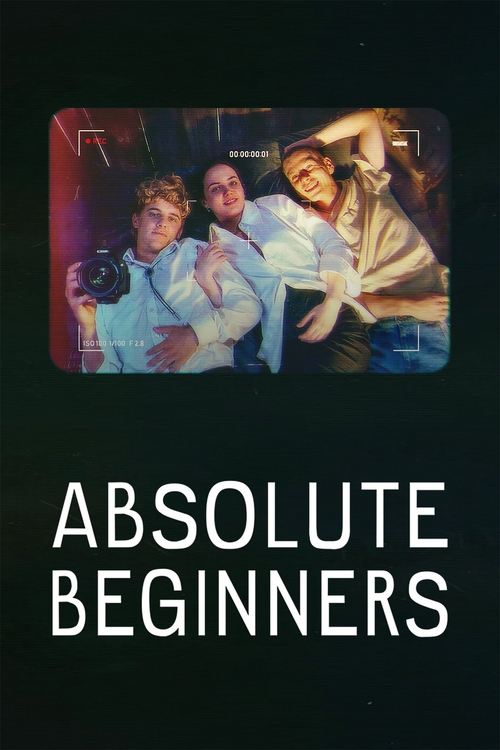
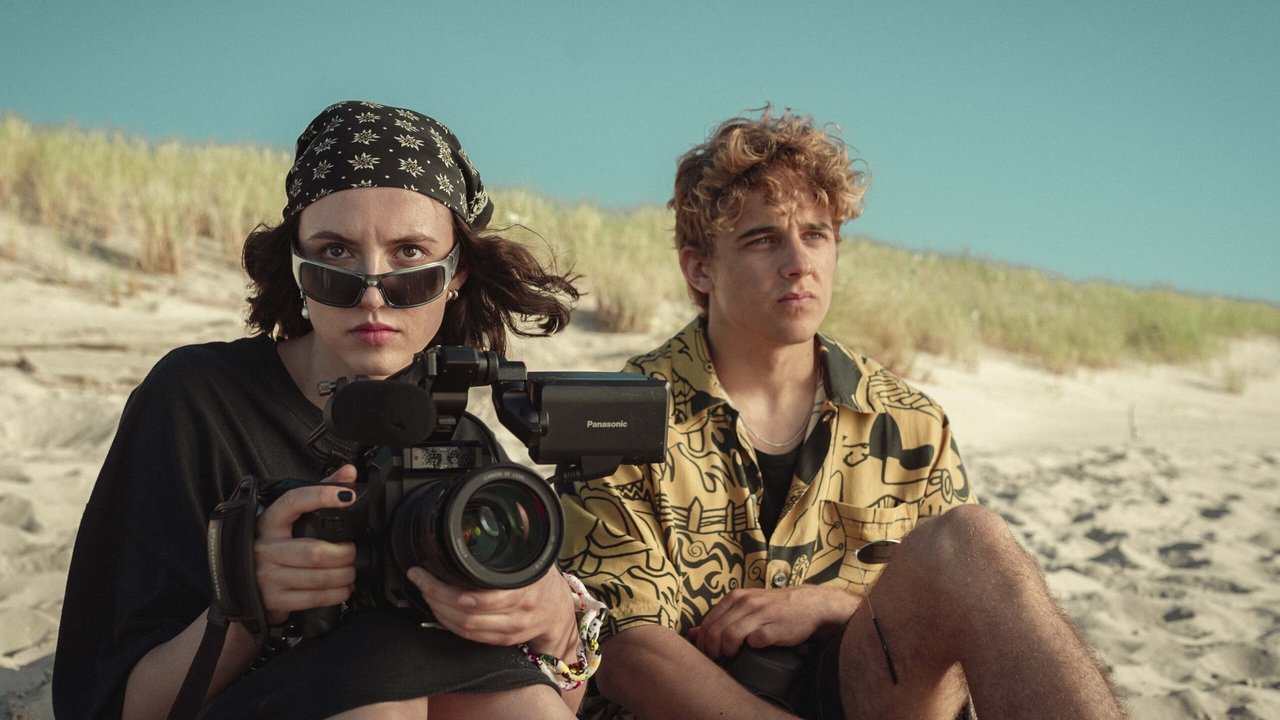
Two childhood best friends enjoying their final seaside summer as they prepare for film school meet an aspiring athlete who ignites unfamiliar desires.
Latest episode: S1 E6 Episode 6 (Oct 25, 2023)

Martyna Byczkowska
Lena Głowacka

Bartłomiej Deklewa
Niko

Jan Sałasiński
Igor Tymczenko

Paulina Krzyżańska
Malwina

Katarzyna Warnke
Tamara
I’ve watched Absolute Beginners twice now, and what lingers isn’t the plot—though it’s perfectly serviceable—but the way it captures the sensory overload of being eighteen. The salt-sticky skin after a day at the beach, the way sunlight turns hair into a halo, the electric jolt of a glance that lasts a second too long. This Polish miniseries, streaming quietly on Netflix since last October, is less about what happens than how it feels to be on the cusp of adulthood, when every decision carries the weight of a future you can’t yet imagine.
The story follows Lena (Martyna Byczkowska) and Niko (Bartłomiej Deklewa), childhood best friends spending their final summer at the Polish seaside before leaving for film school. Their plan is simple: make a short film together, something raw and personal, to submit with their applications. But when they meet Igor (Jan Sałasiński), a brooding athlete from a nearby sports camp, their dynamic fractures.
What begins as a creative collaboration becomes a minefield of desire, jealousy, and unspoken questions. Who are they to each other? Who do they want to be?

The series is often compared to Luca Guadagnino’s sun-drenched coming-of-age films, and the comparison isn’t unfair. Like Call Me by Your Name, Absolute Beginners luxuriates in the physicality of its setting—the way the Baltic coast becomes a character in its own right, its windswept beaches and crumbling piers framing the emotional turbulence of its characters. But where Guadagnino’s films often feel like elegies for lost time, Absolute Beginners is messier, more immediate.
It’s less about nostalgia than the terrifying, exhilarating present tense of being young.
What sets the series apart, though, is Lena. She’s autistic, and the show’s portrayal of her neurodivergence is one of its most quietly radical elements. Lena isn’t defined by her autism, but it shapes how she moves through the world—her literal-mindedness, her sensory sensitivities, her struggle to read social cues.
When she proposes an explicit sex scene for their film, storyboarded down to the last detail, it’s not just a creative choice; it’s a way for her to control a world that often feels chaotic. Niko’s discomfort with the idea isn’t just about the content—it’s about the way Lena’s precision clashes with his own ambiguity. Their friendship, which has always been a safe harbor, suddenly feels like uncharted territory.
The scene where Lena attempts to rehearse the sex scene with Niko is one of the most uncomfortable—and revelatory—moments in the series. She’s topless, her body language stiff with determination, while Niko fidgets, his discomfort palpable. It’s not just that he’s embarrassed; it’s that he doesn’t know how to say no without hurting her.
The moment underscores a central tension in the show: how do you love someone when your needs are fundamentally different? Common Sense Media called the series’ handling of Lena’s autism “refreshingly decent,” noting that it “affects her life but isn’t treated as the only thing in her life”. That’s true, but the show also doesn’t shy away from the friction it creates.
Lena’s autism isn’t a quirk; it’s a lens through which she experiences the world, and the show forces us to see how that lens refracts her relationships.

The love triangle with Igor is where the series risks slipping into familiar territory. He’s the classic outsider—brooding, athletic, a little dangerous—and it’s easy to see why Lena and Niko are drawn to him. But the show complicates the trope.
Igor isn’t just a catalyst for their drama; he’s a fully realized character, with his own insecurities and desires. When Niko and Lena save him from drowning in the series’ most visually striking sequence, the moment is charged with something more than gratitude. The camera lingers on Niko’s hands on Igor’s bare chest, on Lena’s face as she films the aftermath.
It’s a turning point, but the show refuses to spell out what it means.
That ambiguity is both the series’ strength and its occasional weakness. With only six episodes, Absolute Beginners sometimes struggles to balance its multiple threads. The parents’ marital issues, while well-acted, feel like a detour from the central story.
As TL;DR Movie Reviews put it, “We could have cut back on the scenes involving the parents’ marital issues,” though the critic still called the series “a meditative and tender portrayal of the uncertainty of youth”. It’s a fair critique. The show’s pacing can feel uneven, as if it’s racing toward an emotional climax that never quite arrives.
But maybe that’s the point. Adolescence isn’t a story with a neat resolution; it’s a series of moments that leave you changed, even if you can’t quite articulate how.
The performances are what elevate the material. Byczkowska is phenomenal as Lena, capturing the way neurodivergent people often mask their discomfort in social situations—her smiles a beat too late, her laughter a fraction too loud. Deklewa’s Niko is quieter, his emotions playing out in subtle shifts of posture and expression.
And Sałasiński’s Igor is a revelation, all coiled energy and vulnerability. The trio’s chemistry is electric, even when the writing stumbles.

The series’ visual language is its most consistent pleasure. Cinematographer Tomasz Naumiuk bathes every frame in golden light, as if the entire summer is drenched in honey. The beach scenes feel tactile—the grit of sand underfoot, the sting of saltwater on a cut, the way the wind whips hair into your eyes.
The score, by Jerzy Rogiewicz and Bartłomiej Tyciński, is understated but effective, a mix of acoustic guitar and synth that mirrors the characters’ emotional highs and lows.
What Absolute Beginners understands, better than most coming-of-age stories, is that desire isn’t just about attraction. It’s about longing—for connection, for understanding, for a future that feels like yours. Lena’s autism isn’t a barrier to that longing; it’s part of how she experiences it.
When she films Niko and Igor together, her camera isn’t just documenting a moment; it’s trying to make sense of it. And isn’t that what we all do, at eighteen? Try to capture the chaos of our emotions before they slip away?
The series ends with Lena’s film finally complete, submitted just in time for her application. But the real story isn’t about whether she gets into school. It’s about the way she, Niko, and Igor have changed each other, in ways they might not fully understand yet.
Decider’s Joel Keller wrote that the show “goes beyond the standard teen coming-of-age stuff,” and he’s right. It’s not just about first love or sexual awakening; it’s about the way those experiences shape how we see ourselves.
I keep thinking about that rehearsal scene, the one where Lena is topless and Niko can’t meet her eyes. It’s uncomfortable to watch, but it’s also honest in a way that so few teen dramas are. Adolescence isn’t just about discovering who you want to be with; it’s about discovering who you are when you’re with them. Absolute Beginners gets that.
It’s not a perfect show, but it’s a real one. And sometimes, that’s enough.
Netflix’s Absolute Beginners (2023) dropped last October with little fanfare, but the Polish teen drama is quietly carving out a niche for its raw, sun-soaked exploration of first love and self-discovery. Starring Martyna Byczkowska and Bartłomiej Deklewa as childhood best friends navigating their final summer before film school, the series blends nostalgia with the messy, electric energy of adolescence—especially when an aspiring athlete (Jan Sałasiński) enters the picture, latestnetflix.com argues, igniting desires neither saw coming.
The series marks a collaboration between two Polish directors with distinct styles. Kamila Tarabura, known for her work on Into the Night (a high-stakes survival thriller), and Katarzyna Warzecha, whose credits include the emotionally charged We Have One Heart, bring contrasting tones to Absolute Beginners. Tarabura’s thriller background suggests a sharper, more suspenseful undercurrent, while Warzecha’s drama experience likely tempers the story with intimacy. The pair co-wrote the series alongside Nina Lewandowska (Into the Night) and Jędrzej Napiecek (The Last Tale About Earth), a team that could explain the show’s balance of warmth and tension.
What’s unclear is how their creative partnership played out behind the scenes. Did Tarabura push for grittier twists, or did Warzecha’s influence keep the focus on character-driven moments? With no on-set reports or interviews in the evidence, the dynamics remain a mystery—but the result is a series that feels both familiar and unpredictable.
Byczkowska and Deklewa, the show’s leads, are relative newcomers, but their chemistry is the backbone of Absolute Beginners. Byczkowska, in particular, has drawn attention for her portrayal of a young woman grappling with shifting friendships and newfound attraction. Sałasiński, as the athlete who disrupts their dynamic, adds a layer of physicality and vulnerability, though details about his character’s arc are scarce.
The supporting cast includes seasoned Polish actors like Katarzyna Warnke (The Hater) and Andrzej Konopka (The Woods), whose presence suggests deeper subplots. Warnke’s role as a parent or mentor figure could add emotional weight, while Konopka’s involvement hints at a darker, possibly antagonistic thread. Paulina Krzyżańska, Piotr Witkowski, and Julian Świeżewski round out the ensemble, but their characters’ specifics remain under wraps.
Absolute Beginners premiered on Netflix on October 25, 2023, with little pre-release buzz. Unlike the platform’s high-profile YA adaptations (Heartstopper, One of Us Is Lying), the series didn’t benefit from a major marketing push, which may explain its lower profile. However, its niche appeal—rooted in authentic performances and a sun-drenched aesthetic—has earned it a cult following among viewers craving something grittier than typical teen fare.
Critics have yet to weigh in en masse, but early audience reactions praise the show’s cinematography and Byczkowska’s performance. Whether it’ll get a second season is anyone’s guess; Netflix hasn’t confirmed renewal plans, and the evidence offers no hints.
For now, Absolute Beginners remains a hidden gem—one that rewards viewers who stumble upon it. The lack of behind-the-scenes coverage means fans are left to speculate: Did the directors clash over tone? Are there deleted scenes that deepen the love triangle? Without more evidence, the answers are as elusive as the series itself.
Entertainment rumors and trivia aggregated from public reporting. Treat speculation as unverified unless a cited source confirms it.
More titles in the same genres and with the same cast.