Season 1
4 episodes Feb 12, 2018 6.2
- 1 Episode 1
- 2 Episode 2
- 3 Episode 3
- 4 Episode 4

“The truth doesn't take sides.”
When a pizza delivery driver is shot dead in south London, a tenacious detective goes after the people traffickers behind his murder and unravels a conspiracy that goes to the top.
Latest episode: S1 E4 Episode 4 (Mar 5, 2018)
Official

Carey Mulligan
DI Kip Glaspie

Vineeta Rishi
DC Rakhee Shah

Rob Jarvis
DC Euan Johnson

Nathaniel Martello-White
DS Nathan Bilk
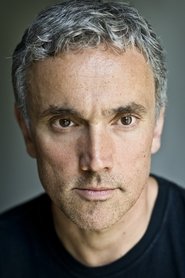
Ben Miles
DSU Jack Haley
I keep thinking about the way Collateral begins by turning a mundane errand into a death sentence. A pizza delivery run. A knife-edged little job, all speed and grit and low pay, and then — in one abrupt act — the story widens into a map of London’s hidden machinery.
latestnetflix.com's read is that that’s the series’ real subject, more than the murder itself: not just who pulled the trigger, but how a city learns to look away while violence is organized in plain sight.
SJ Clarkson directs the four episodes with a steady, unsentimental eye. I don’t mean cold. More like disciplined.
She understands that a story about trafficking, state indifference, and institutional rot can’t survive on urgency alone; it needs structure, and it needs patience. Coming from a director who’s often worked across TV drama and character-driven tension, Collateral feels like the work of someone who knows exactly where to place a withheld look, a silence, or a bureaucratic shrug.
Nothing here is flashy for its own sake. Even the revelations arrive with the ugly normality of paperwork, phone calls, and people in good coats deciding other people are disposable.
The most obvious conversation around the series, when it aired, was its topicality — and yes, that word can be a trap. But Collateral earns its relevance by refusing to flatten immigration, labor, and policing into a lecture. The trafficking plot is not treated as a puzzle box.
It’s a system. That’s the distinction that gives the series its bite. The dead pizza driver isn’t just a victim whose murder launches a case; he’s the point at which several British anxieties intersect: precarious work, exploited migrants, the fragility of public institutions, and the private damage done by people who are “just following orders” until the order turns monstrous.
Carey Mulligan carries the series on a kind of nervous propulsion that never quite relaxes. I’ve seen her play intelligence before, but here it’s mixed with fatigue and a sort of moral exasperation that sits in the jaw. She often looks like someone trying not to waste a second, shoulders angled forward, eyes already on the next problem.
Her detective isn’t a superhero in a trench coat. She’s a worker. A very good one, maybe, but still someone stuck in a system where the right questions are treated like a nuisance.
Mulligan has that useful ability to seem both contained and one bad sentence away from anger. It’s a nice fit for a story about institutions that prefer their women useful, not disruptive.
There’s a scene — or rather a stretch of scenes — where the series quietly shows its hand. Mulligan’s detective moves from one conversation to another, and each room changes the temperature a little. A colleague is evasive.
A witness is frightened. A superior is politely obstructive, which is always the most British form of menace. Clarkson stages these exchanges with a lot of attention to doors, thresholds, and the awkward choreography of people standing in hallways.
Characters rarely sit when they should. They hover. They half-enter rooms.
They keep one foot pointed toward escape. That physical uncertainty does as much work as any line of dialogue. By the time the investigation starts brushing against higher authority, you can feel the series asking a blunt question: what does it take, exactly, for a crime to matter?
That question is where Collateral becomes more than a “crime drama,” whatever that label is supposed to mean. It’s interested in labor, yes, but also in moral outsourcing. Someone else will clean this up.
Someone else will answer the call. Someone else will do the dirty work, and if they don’t, there’s always another vulnerable body available. The series keeps circling back to the idea that exploitation depends on abstraction.
Once a person becomes a role — courier, migrant, suspect, wife, official — it’s easier to ignore their actual pain. I’m not sure the show always escapes a certain familiar British prestige-drama neatness; sometimes the plotting is a little too efficient, the interconnections a little too tidy. But I’d rather have a drama that over-organizes its outrage than one that wallows in it.
Billie Piper, in a sharply calibrated supporting role, brings a kind of exhausted volatility that I found hard to shake. She has long had a gift for making pressure visible at the surface: the clipped speech, the face that seems to be deciding whether to crack. Here, that talent works in a very different register from the glossy, self-aware performances people may still associate her with.
She feels less like a “presence” than a person bracing herself against consequences. John Simm, too, is good at making authority feel slippery. He has the face of someone who might already be practicing an excuse.
That matters in a series like this, where institutions are less evil than cowardly — and cowardice, of course, can be just as destructive.
One of the things I admire most here is the sound of the show, by which I mean not just the soundtrack but the everyday acoustics of power: office buzz, traffic hiss, the low electrical hum of spaces where decisions get delayed. London is filmed as a city of surfaces. Glass, concrete, wet pavement, plastic takeaway lids.
The camera doesn’t romanticize the place, and it doesn’t need to. If anything, the plainness is what stings. There’s no grand Gothic gloom to hide in.
Just weather, transit, and systems. The series’ visual rhythm reminds me a little of those David Hare television dramas that understand institutions as emotional landscapes — except Collateral is more interested in the fractures beneath the procedural polish.
A line from The Guardian’s Lucy Mangan stuck with me when the series aired: she praised it for the way it kept uncovering “new layers of depravity” without losing sight of the people trapped inside them. That feels right. The show’s best moments don’t come from the mechanics of plotting, impressive as they can be.
They come from the moment you realize every character is standing inside a moral compromise of some kind. Some are choosing it. Some have inherited it.
Some are too tired to resist it. That mix is where the series gets under the skin.
What lingers, for me, is not the conspiracy in the usual thriller sense. It’s the banality of it. The way evil in Collateral is often administered by people who look like they’d apologize if they bumped into you on the Tube.
That’s a stronger, uglier idea than any neat mastermind reveal. The series isn’t perfect — a few supporting strands feel compressed, and the momentum occasionally outruns the human texture — but it has a stubborn seriousness that I found bracing. It refuses to let the dead stay symbolic for long.
It keeps dragging the story back to bodies, jobs, names, and the ugly arithmetic of who gets protected and who doesn’t.
By the end, I didn’t feel solved. I felt implicated, which is more useful. Collateral understands that a city can be full of witnesses and still function like a machine for disappearing people. And it knows that the hardest part isn’t spotting the crime. It’s admitting how many hands are already on the wheel.
"A grounded, socially minded British mystery series whose main draws are Carey Mulligan's sharp central performance and its timely institutional focus."
The four-part drama follows an intricate investigation into the shooting of a delivery driver in London. Carey Mulligan's Detective Inspector Kip Glaspie anchors a procedural that weaves together immigration politics, military oversight, and institutional pressure. The scope is ambitious, but the overlapping threads and political commentary dilute the tension expected of a traditional crime thriller.
Carey Mulligan said that while promoting Collateral, David Hare's four-part BBC Two thriller about a pizza rider shot on a South London doorstep. This is not Michael Mann's 2004 assassin picture. Hare offered her DI Kip Glaspie. She wrote back that she was interested and five weeks pregnant. He said he did not see why Kip could not be pregnant, added two mentions in four hours, and banned what she called "pregnant acting." No clutching the bump. No "he just kicked." Director S.J. Clarkson started her with a fake belly around twelve weeks and stripped it back until they used the real one. By wrap she was about seven months along,,. The first crime-scene suit still made her look like a Teletubby. She felt silly pulling a badge. "No one is going to believe I'm a police officer," she told The Independent. Hare and Clarkson had a second rule. No crying. latestnetflix.com's take is that Hare told Digital Spy he was proud his heroine is on screen for four hours and does not cry once.
Hare did not set out to make television. He wrote a film about illegal immigration, the subject he called the biggest of the 21st century, and took it to the BBC. Executives said it had too many leading parts for a movie, and that the people it was about would not see it in a cinema. He had never written episodic TV. Producer George Faber explained the rules. Hare said he did his very best to disobey them. He named the killer, Royal Artillery Captain Sandrine Shaw, before the end of episode one. Agatha Christie fans would be disappointed, he told IndieWire. He wanted tension in why and how, not who. One rule he lost. Shaw and Kip had to meet. He kept a door between them for the entire scene. Clarkson shot the room first, then the hallway, and kept the actors from building a relationship off camera. Netflix boarded the show in April 2017 as co-producer for the world outside the UK. BBC Two ran the four hours weekly from 12 February to 5 March 2018. Netflix dropped the lot internationally on 9 March. The BBC trailer still sells a pizza murder and a conspiracy. Clarkson told IndieWire that watching a year of seven-day weeks vanish in a binge felt a little soul-destroying, like the last shot of The Truman Show.
Asked about a second season, Hare and Clarkson both laughed. Nobody had asked. "The courage I've needed to say no when nobody's asked," Hare said. He had no intention of writing another Kip case. He wanted a last episode that closed, not a door left open for a pickup. Billie Piper still collected a 2019 BAFTA nomination as Karen Mars, the MP's ex who throws a pizza on the floor in the first hour and then had to joke-apologize on Twitter for the topping,. John Simm plays the Labour politician who calls Britain "a nasty little country." Nicola Walker plays a vicar hiding an affair with the only witness. In 2025 Collider and the Express both noticed the miniseries sitting on Netflix again. Hare never promised more Kip. Netflix still has the four hours. The pregnant lead in the Teletubby suit is the part people repeat.
Entertainment rumors and trivia aggregated from public reporting. Treat speculation as unverified unless a cited source confirms it.
More titles in the same genres and with the same cast.