
Magnus Fjeldsted Bach
Philip Westh
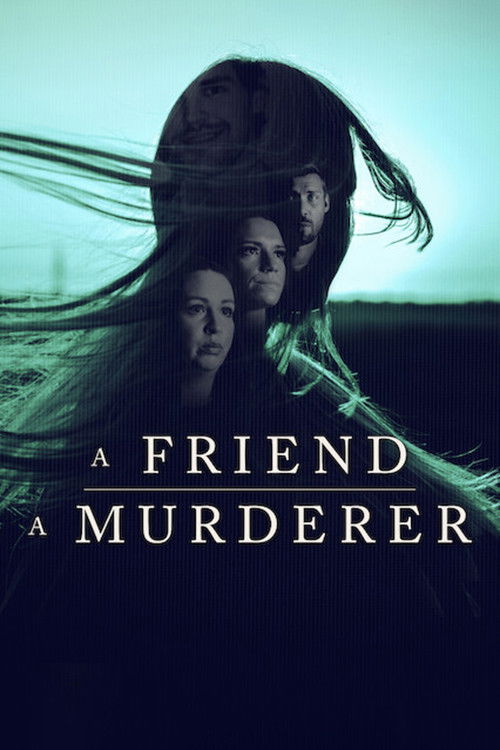
A Danish town feared a serial criminal for eight years. When caught, Amanda, Nichlas and Kiri discovered the perpetrator was their close friend who'd committed assaults, kidnappings and murder while spending time with them.
I keep thinking about the way Kiri’s hands shake when she describes the last time she saw Philip. It’s not the kind of tremor you get from cold or nerves—it’s the slow, internal collapse of someone who’s just realized the person she trusted was never who she thought he was. That moment, captured in A Friend, a Murderer, is the closest this three-part docuseries comes to something like truth.
Not the truth of what Philip Westh did (though that’s horrifying enough), but the truth of what it means to discover that someone you loved was, in fact, a stranger.
The series opens with a quiet, almost mundane shot: a Danish town at dusk, the kind of place where everyone knows your name and your car. The camera lingers on a playground, empty swings swaying slightly in the wind. It’s the kind of image that, in a horror film, would signal something sinister lurking just out of frame.
Here, it’s worse. The sinister was in frame. It was at the bar, at the birthday party, in the group chat.

True crime documentaries have a habit of turning violence into spectacle, but A Friend, a Murderer resists that impulse—at least at first. There are no lurid reenactments, no dramatic music stings when the killer’s name is mentioned. Instead, the series fixates on the people who knew him best: Amanda, Nichlas, and Kiri, three friends who spent years laughing, drinking, and confiding in a man who was, in his spare time, committing assaults, kidnappings, and murder.
The effect is unsettling in a way that’s harder to shake than any gory detail. It’s not the violence that haunts you; it’s the intimacy.
The series’ greatest strength is its refusal to let Philip become a monster in the abstract. He’s not some faceless predator lurking in the shadows; he’s the guy who remembered your drink order, who showed up to your kid’s christening, who sent you a meme at 2 a.m. The friends’ testimonies are littered with these small, humanizing details, and the contrast is devastating.
Kiri recalls how Philip would bring her coffee when she was hungover. Amanda remembers him as the most reliable person in their friend group. Nichlas admits he never once suspected anything, not even when Philip’s behavior grew erratic.
These aren’t excuses. They’re the raw material of betrayal.
What makes the series so disturbing is how ordinary it all feels. The interviews are shot in unremarkable settings—a living room, a café, a park bench—with the kind of naturalistic lighting that makes you feel like you’re eavesdropping on a private conversation. The friends don’t emote for the camera; they stumble over their words, laugh nervously, look away when the memories get too heavy.
It’s the opposite of the performative grief you see in some true crime docs. This feels real. Painfully, uncomfortably real.
And yet, for all its emotional weight, A Friend, a Murderer stumbles when it comes to the bigger picture. The series is so focused on the friends’ perspective that it almost entirely neglects the victims. Emilie Meng, the young woman Philip murdered, is reduced to a name, a photo, a footnote.
Her family’s absence is glaring, and the series’ decision to sideline their story feels like a moral failure. True crime documentaries have a responsibility to the dead, and this one seems to forget that. (The gossip around the series suggests the Meng family begged Netflix not to make it at all, which only deepens the unease.)

There’s another gaping hole in the series: the investigation. We never learn how Philip was caught, what evidence tied him to the crimes, or how the police pieced it together. It’s a baffling omission, one that leaves the story feeling incomplete.
The friends’ shock at his arrest is palpable, but without the procedural details, the series risks reducing Philip’s crimes to a kind of inexplicable evil—a narrative that lets the rest of us off the hook. If we don’t understand how he was caught, we can’t grapple with how he got away with it for so long.
The third episode tries to widen the lens, exploring the broader cultural fallout of the case—the way it shattered the town’s sense of safety, the way it forced people to question their own judgment. But by then, the series has already lost some of its momentum. The runtime feels stretched, as if the material would have been better served as a tight, feature-length documentary rather than three hour-long episodes.
(Audience reactions echo this: many viewers found the pacing uneven, with some sections feeling padded.)
Still, there’s something undeniably compelling about A Friend, a Murderer, even in its flaws. It’s not a whodunit or a procedural; it’s a study in how well we can ever truly know another person. The series doesn’t offer easy answers, and it doesn’t try to.
Instead, it lingers in the discomfort, in the questions that have no satisfying resolution. How do you reconcile the person you thought you knew with the person they turned out to be? How do you live with the fact that you loved someone capable of such violence?
And, perhaps most unsettling of all: How do you know it won’t happen again?
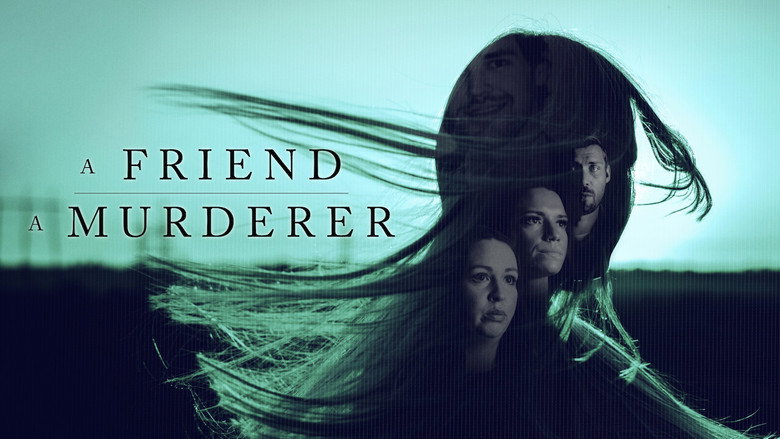
The series ends with a shot of the three friends walking away from the camera, their backs to us as they head down a quiet street. It’s a simple image, but it lingers. They’re not just walking away from the interview; they’re walking away from the version of themselves that trusted Philip, that believed in the illusion of safety.
The question is whether they—or any of us—can ever really leave that behind.
"A tense, emotionally heavy true crime docuseries that delivers a distinctive friend-centric angle but skimps on victims’ stories and investigative depth."
Gripping, well put together, and unusually focused on the psychological fallout for the killer’s friends and the wider community—among the stronger, less sensational crime documentaries of its kind for many. Minimal space for victims and almost no detail on how the case was solved frustrate a lot of viewers; the three-episode run is often seen as longer than the material needs.
Netflix’s Danish docuseries A Friend, a Murderer was supposed to be about one killer. Instead, it lit a match under an entire country, enraged a grieving family, and sent true‑crime fans spiraling into conspiracy mode. latestnetflix.com's take is that Forget quiet Scandinavian minimalism—this show’s off‑screen drama is full tabloid maximalism.
No classic Hollywood on‑set feuds, no co‑stars spotted kissing outside a West Hollywood bar—but A Friend, a Murderer doesn’t need celebrity scandal. Its real‑world gossip is darker: a devastated family publicly begging for the show not to exist, creators insisting it must, and fans angrily split over whether to watch at all.
In the end, the juiciest “tea” around this series is a moral one: Where’s the line between telling a powerful true story and profiting from real people’s worst nightmare? Netflix dropped the doc anyway—and the debate, like the view count, just keeps climbing.
Entertainment rumors and trivia aggregated from public reporting. Treat speculation as unverified unless a cited source confirms it.
More titles in the same genres and with the same cast.