Season 1
10 episodes Jul 24, 2017 7.9
- 1 For One to Live
- 2 2.0
- 3 The Hunter and the Hunted
- 4 Fate Takes a Holiday
- 5 Into the Fire
- 6 Madness
- 7 The Fourth Man
- 8 Destiny's Child
- 9 Ghost
- 10 One Must Die

Laura Price, a local news producer in San Francisco, is helping the police to hunt down a serial killer. After the killer strikes close to home, a twist of fate allows a “Groundhog Day”-type reset, and Laura relives the week prior to the string of murders. Can she change fate and stop the killer?
Latest episode: S1 E10 One Must Die (Sep 19, 2017)
I’ve seen this trick before—the ticking clock, the second chance, the desperate scramble to rewrite fate. It’s a premise that should feel exhausted by now, worn thin by a thousand Groundhog Day riffs and Looper knockoffs. And yet, when Somewhere Between first flickers onto the screen, there’s a moment where it almost works.
Almost. The problem isn’t the idea; it’s the execution, which never quite trusts its own mechanics enough to let them breathe.
Paula Patton’s Laura Price is a San Francisco news producer, a woman whose life is already a high-wire act of deadlines and moral compromises. When her daughter is murdered by a serial killer, the show hands her a do-over—a chance to relive the week leading up to the tragedy. The premise is pure thriller catnip: a mother’s grief weaponized into a race against time, with the added tension of knowing exactly how it all ends.
But here’s the thing about time-loop stories: they only work if the rules of the loop feel concrete, if the stakes are visceral enough to make every second count. Somewhere Between stumbles because it can’t decide whether it’s a procedural, a family drama, or a metaphysical puzzle. The result is a series that keeps changing the rules of its own game, as if afraid to commit to any one tone.
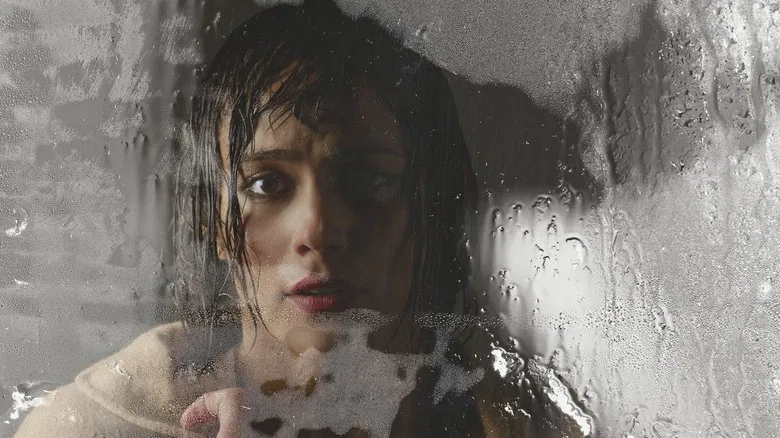
Patton is the show’s greatest asset, and it’s easy to see why she was drawn to the role. She’s always had a knack for playing women who are both formidable and fragile—think her work in Déjà Vu or Mission: Impossible – Ghost Protocol, where she balanced action-hero physicality with emotional vulnerability. Here, she’s given a character who is, at her core, a mother in extremis, and Patton sells the desperation of Laura’s situation with a rawness that feels lived-in.
There’s a scene in the first episode where Laura, freshly aware of her daughter’s impending death, stands in the middle of a police station, her body rigid with panic. Patton doesn’t overplay it; she just lets her shoulders hunch slightly, her breath coming in shallow gasps, as if the weight of what she knows is physically pressing down on her. It’s the kind of quiet, specific performance that makes you lean in, even when the writing around her starts to falter.
But the writing does falter, often. The show’s biggest sin is its reluctance to fully embrace the surreal, time-bending logic it’s established. Instead of leaning into the uncanny—what it feels like to relive the same week with the knowledge of an impending horror—it often defaults to the familiar rhythms of a network procedural.
There are car chases, stakeouts, and red herrings aplenty, but the emotional core of the story—the why of Laura’s second chance—gets lost in the shuffle. The show wants to be The Killing meets Edge of Tomorrow, but it never quite commits to either side of that equation. The result is a series that feels like it’s constantly hedging its bets, afraid to alienate viewers who might not want to dive too deep into the existential weeds.
That hesitation is most evident in the way the show handles its supporting characters. Devon Sawa’s Nico Jackson, a detective with his own ties to the serial killer, is given just enough backstory to make him interesting, but not enough to make him feel essential. JR Bourne’s Tom Price, Laura’s husband, is reduced to little more than a sounding board for her grief, his own emotional journey sidelined in favor of the mystery.
Even Aria Birch’s Serena, Laura’s doomed daughter, is more of a plot device than a fully realized person. The show keeps circling around the idea that time is a loop, but it never quite figures out how to make that loop feel personal for anyone other than Laura.

And then there’s the killer. Without spoiling anything, the show’s approach to its central antagonist is where it most clearly betrays its own ambitions. The mystery of the serial killer’s identity is treated with the same procedural rigor as any network crime drama, but the time-loop element should elevate it beyond that.
If Laura knows how and when the killer strikes, why not use that knowledge to craft a more psychologically intricate cat-and-mouse game? Instead, the show often feels like it’s playing by the rules of a standard whodunit, as if it’s forgotten that it has a narrative cheat code at its disposal.
That’s not to say Somewhere Between is without its moments. There’s a sequence in the third episode where Laura, desperate to prevent another murder, races through the streets of San Francisco, her movements intercut with flashes of the future she’s trying to avert. The editing is tight, the tension palpable, and for a brief stretch, the show almost feels like it’s found its footing.
But then it cuts away to another procedural beat, another red herring, another scene where the mechanics of the plot take precedence over the emotional weight of the story.
It’s a shame, really, because the premise is so ripe with potential. The idea of a mother given a second chance to save her child is inherently powerful—it’s the stuff of myth, of fairy tales, of the deepest human fears and desires. But Somewhere Between never quite trusts its audience enough to sit with that power.
Instead, it fills the runtime with noise, as if afraid that silence might expose the cracks in its foundation.
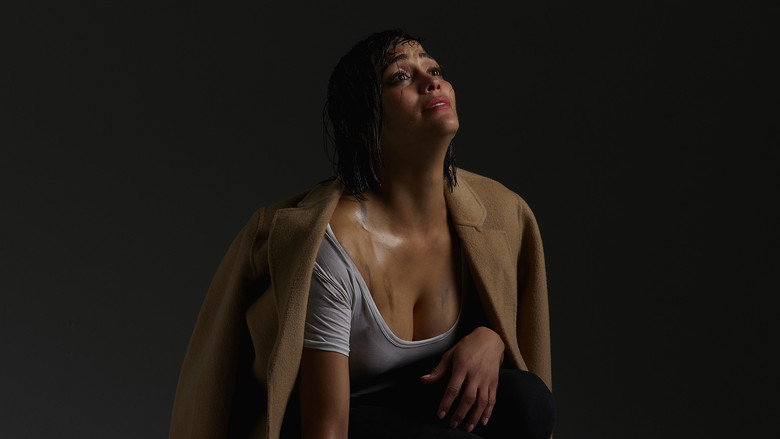
In the end, Somewhere Between is a series that’s caught between two impulses: the desire to be a gripping thriller and the need to be a heartfelt family drama. It wants to have its cake and eat it too, to deliver the high-stakes suspense of a crime procedural while also exploring the existential dread of a time-loop narrative. But it never quite figures out how to reconcile those two goals, and so it ends up feeling like neither.
Patton’s performance is worth watching, and there are flashes of brilliance in the show’s execution, but they’re buried under layers of missed opportunities.
I keep coming back to that scene in the police station, where Laura stands frozen, her body betraying the panic she can’t afford to show. It’s a moment that feels real, lived-in, human. If the rest of the series had trusted its audience enough to sit with that kind of rawness, maybe it could have been something special.
Instead, it’s a show that’s always looking over its shoulder, afraid to fully commit to the story it’s trying to tell. And in the end, that hesitation is its undoing.
More titles in the same genres and with the same cast.