
Season 1
6 episodes Sep 12, 2024 6.2
- 1 Hostile Takeover
- 2 Desert Salmon
- 3 Big Bait for a Big Fish
- 4 Walk of Shame
- 5 Happy Halloween
- 6 Queen of Solitaire
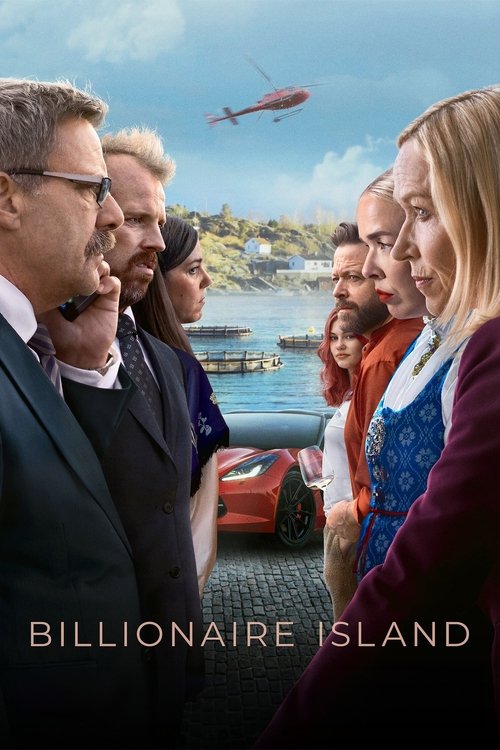
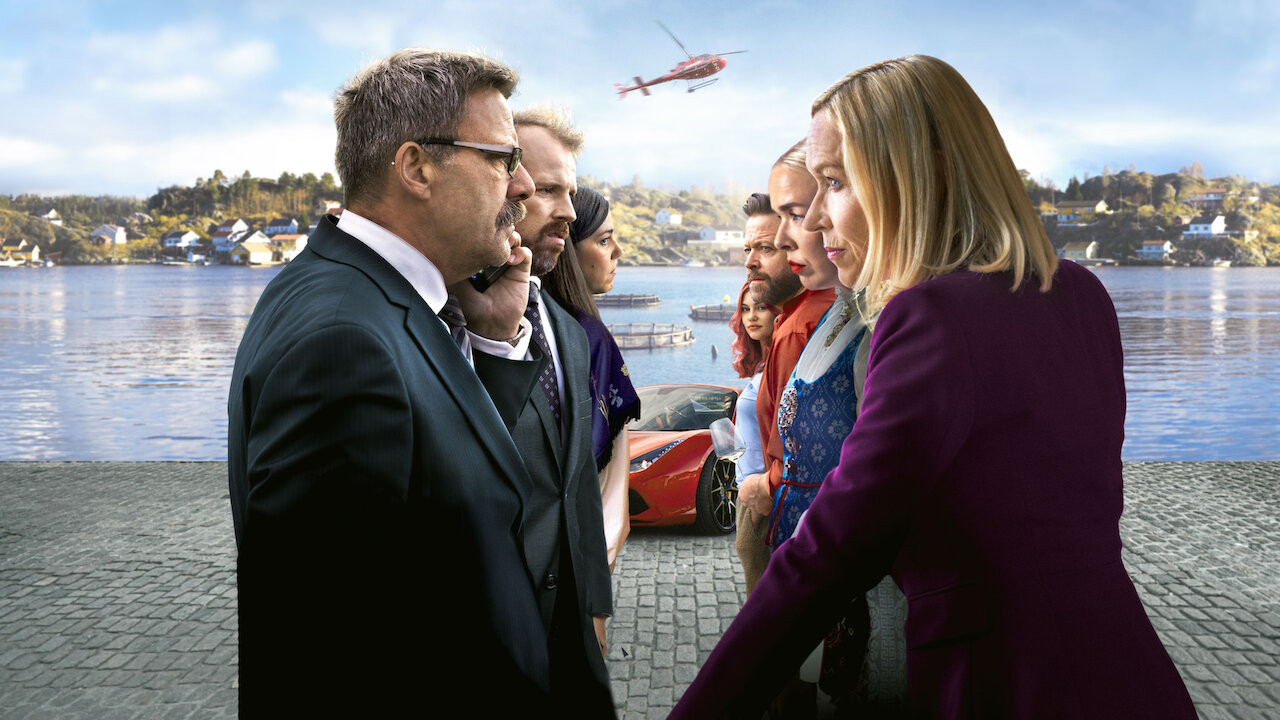
The ruthless owner of a Norwegian fish farming company plans a hostile takeover of her local rival to become the world's largest salmon producer.
Latest episode: S1 E6 Queen of Solitaire (Sep 12, 2024)
Official
I’ll admit it: when I first heard the premise of Billionaire Island—a Norwegian corporate drama about salmon farming—I assumed it was a joke. A parody, maybe, or some kind of absurdist satire about the lengths people will go to for… fish money. But within the first ten minutes, I realized this wasn’t a gag.
It was something far more interesting: a ruthless, darkly funny exploration of power, family, and the strange ways capitalism seeps into the most unlikely places. Think Succession, but with more rain gear and fewer private jets. The show’s opening scene sets the tone perfectly.
The camera lingers on her face—weathered, determined, a little sad—and then cuts to a close-up of a salmon thrashing in a net. It’s not subtle, but it doesn’t need to be. The message is clear: this is a story about people who see the world as something to be harvested, controlled, and dominated.
And the salmon? They’re just the latest commodity in a long line of things Julie has decided to own. Their last show turned a mobster’s relocation to Norway into a fish-out-of-water comedy; here, they’ve taken the cutthroat world of Norwegian salmon farming and turned it into a family saga.
It’s a smart move. The fish-farming industry is one of those things most of us never think about, yet it’s a multi-billion-dollar global business with real stakes—environmental, economic, and, as this show makes clear, deeply personal. By grounding the story in this specific world, Billionaire Island avoids the trap of feeling like a generic corporate thriller.
This isn’t just about power; it’s about power in a place where the land, the sea, and the people are all intertwined in ways that feel almost mythic. That said, the show’s biggest strength might also be its biggest limitation. The salmon industry is fascinating, but it’s not exactly a visual goldmine.
The boardroom scenes, in particular, can feel a bit static, like a stage play where the actors are just waiting for their next line. But when the show leans into its quieter, more character-driven moments, it soars. There’s a scene in the third episode where Julie’s daughter, Amy (Ragne Grande), sits in a car with her brother, Jens Johan (Vetle Røsten Granås), and the two of them just… talk.
No music, no dramatic cuts, just two siblings trying to figure out if they even like each other. It’s the kind of moment that Succession excelled at—small, human, and devastating in its simplicity.

Trine Wiggen’s performance as Julie is the show’s anchor. The creators originally wrote the role for a man, but after casting Wiggen, they adjusted it to fit her strengths—and it shows. Julie isn’t a carbon copy of Logan Roy or any of the other corporate titans we’ve seen on screen.
She’s colder, more calculating, but also more vulnerable. There’s a moment in the fourth episode where she breaks down in front of her assistant, Eigil (Tor Ivar Hagen), and for a second, you see the weight of everything she’s carrying. It’s a small crack in her armor, but it’s enough to make her feel like a real person, not just a villain in a power suit.
The rest of the cast holds their own, but the standout is Elisabeth Matheson as Trine Meyer, Gjert Meyer’s (Svein Roger Karlsen) wife, who is rendered mute by a series of strokes. Matheson’s performance is all physicality—her eyes, her hands, the way she moves through a room like she’s constantly assessing whether she’s welcome. It’s a quiet, heartbreaking portrayal, and it adds a layer of emotional depth to the show that might otherwise be missing.
But they’re not innocent victims. Gjert is just as ruthless as Julie, just less successful at it. Their son, Felix (Benjamin Bakkeid), is a mess of entitlement and insecurity, and their daughter, Hennie (Nemi Storm), is the only one who seems to understand the cost of all this fighting.
The dynamic between them is messy, real, and often painful to watch—which is exactly what makes it so compelling.
One of the most interesting things about Billionaire Island is how it handles its themes of wealth and power. Unlike Succession, which often feels like a gleeful takedown of the ultra-rich, this show is more ambivalent. It’s not trying to mock or condemn its characters, even when they’re at their worst.
Instead, it presents them as products of their environment—people who’ve been shaped by the industries they’ve inherited, the families they’ve been born into, and the relentless pressure to succeed. Julie isn’t just greedy; she’s a woman who’s spent her entire life being told she has to fight for everything, and now that she’s on top, she can’t afford to let her guard down for a second.
Gjert isn’t just a lovable underdog; he’s a man who’s spent decades being overshadowed by his rival, and his desperation to prove himself has warped him. The show doesn’t let them off the hook, but it does make them feel human. That said, the show’s tone can be a bit uneven.
The humor is dry and understated, which works well when it’s poking fun at the absurdity of corporate jargon or the petty rivalries of small-town Norway. But there are moments where the comedy feels at odds with the drama, like the show can’t quite decide if it wants to be a satire or a family tragedy. The Wall Street Journal called it a "cool psychodrama of resentment and betrayal," which feels about right.
It’s not quite as sharp as Succession, but it’s not trying to be. This is a show that’s more interested in the quiet, simmering tensions of family and power than in the explosive, headline-grabbing moments.
The critical reception has been generally positive, with many reviewers praising the show’s unique setting and its grounded approach to the billionaire drama. The Guardian called it "Succession with salmon," which is a neat shorthand, but it doesn’t quite capture what makes Billionaire Island special. This isn’t just Succession in a different setting; it’s a show that’s deeply rooted in its own world, with its own rhythms and its own sense of humor. The Norwegian press has been more mixed, with some outlets praising its authenticity and others criticizing its pacing. Aftenposten gave it 5 out of 6, calling it "a sharp, funny, and surprisingly moving portrait of a family at war," while VG was less impressed, giving it 3 out of 6 and calling it "a missed opportunity to say something truly original about wealth and power."
I can see both sides. There are moments where the show feels a little too safe, a little too content to play within the boundaries of the corporate drama genre. But there are also moments where it surprises you—like the scene where Julie and Gjert finally have it out, not in a boardroom or a courtroom, but in a dingy bar, surrounded by locals who’ve known them their whole lives.
It’s a small moment, but it’s one of the few times the show really lets its characters be vulnerable with each other. And in a genre that’s often more interested in power plays than in people, that feels like something worth holding onto.
So, is Billionaire Island worth watching? If you’re a fan of Succession or Industry, you’ll probably find a lot to like here. It’s not as polished or as razor-sharp as those shows, but it has its own charm, its own voice.
It’s a show that’s unafraid to be quiet, to linger on the small, human moments that make the bigger conflicts feel real. And it’s a show that understands something fundamental about power: that it’s not just about money or influence, but about the people you’re willing to hurt to keep it. I’m still not entirely sure how I feel about the salmon farming angle.
On one hand, it’s a fascinating industry, one that’s rarely explored in fiction. On the other hand, there’s only so much you can do with fish before it starts to feel like a gimmick. But maybe that’s the point.
Maybe the show is less about the salmon and more about the people who’ve built their lives around them—the families, the rivalries, the quiet desperation of trying to hold onto something that’s always slipping through your fingers. Either way, I’ll be tuning in for the next season. If there is one.
The creators have said they have ideas for more, and the ending of the first season certainly leaves the door open. But even if this is all we get, Billionaire Island is a reminder that great stories can come from the most unexpected places. Even a fish farm.
Netflix’s Billionaire Island has arrived, and it’s not your typical billionaire fantasy. Set against the rugged backdrop of Norway’s coastal communities, this 2024 series swaps private jets and yachts for salmon farms and fjords, delivering a corporate power struggle that’s been compared to Succession—but with fish. Created by Anne Bjørnstad and Eilif Skodvin, the show dives into the cutthroat world of Norway’s salmon-farming industry, where fortunes are made (and lost) in the icy waters of the North Atlantic.
Here’s what we know about the drama unfolding both on and off the screen.
At the heart of Billionaire Island is a bitter rivalry between two families locked in a battle over Norway’s lucrative salmon trade. The show’s creators describe it as a story about "one of the newer marine creatures in Norway: the salmon billionaire". The fish-farming industry has minted a new class of ultra-wealthy Norwegians, and the series zeroes in on the clashes that come with it—think boardroom betrayals, generational divides, and enough corporate sabotage to make Logan Roy proud.
The setting is a small coastal community, where the local economy revolves around salmon. The tension between the families isn’t just business; it’s personal, with decades of resentment simmering beneath the surface. While the specifics of the feud remain under wraps, early reviews suggest it’s as messy as it is high-stakes. The Guardian called it "Succession… with salmon farmers," praising the show’s ability to blend sharp corporate drama with the raw, windswept aesthetic of Norway’s fjords.
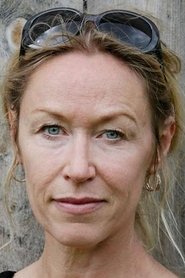
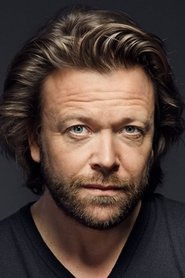
Leading the charge is Trine Wiggen, a Norwegian actress known for her roles in The Heavy Water War and The Kingdom. She’s joined by Svein Roger Karlsen (Ragnarok), Ragne Grande (The Quake), and Kåre Conradi (The Last Kingdom), a lineup that brings both gravitas and intensity to the series. The ensemble also includes Hanne Skille Reitan, Tor Ivar Hagen, and newcomers like Vetle Røsten Granås and Nemi Storm, suggesting a blend of established and rising talent.
What’s notable is the show’s commitment to authenticity. The creators have emphasized that the salmon industry’s real-life drama inspired the series, and the cast’s performances reflect that grit. Wiggen, in particular, has been singled out for her portrayal of a matriarch navigating the treacherous waters of family and fortune. While details about individual character arcs are scarce, the dynamic between the two warring clans promises to be the show’s driving force.
Billionaire Island wraps up its first season with several unresolved storylines, leaving fans speculating about a potential second installment. Nordic Watchlist hinted that the finale sets the stage for more "salmon-shaped drama," suggesting the creators have left the door wide open for a continuation. Given the global appetite for corporate power struggles (see: Succession, Industry), it wouldn’t be surprising if Netflix greenlights another season.
The show’s release on September 12, 2024, has already sparked conversations about Norway’s real-life salmon billionaires. While the series is fictional, it’s rooted in the very real economic and environmental debates surrounding the fish-farming industry. Whether it’s the ethical dilemmas of mass salmon production or the sheer wealth generated by the trade, Billionaire Island taps into a cultural moment where corporate greed and environmental concerns collide.
Billionaire Island isn’t your typical rags-to-riches story. It’s a grounded, character-driven saga that trades Manhattan skyscrapers for Norwegian fjords and replaces tech moguls with salmon tycoons. The show’s creators have made it clear that this isn’t just a satire—it’s a reflection of how Norway’s economy has been reshaped by the fish-farming boom. With strong performances, a compelling premise, and a cliffhanger ending, it’s a series that’s already generating buzz.
If you’re craving a Succession-style drama with a Nordic twist, Billionaire Island delivers. Just don’t expect any yachts—unless they’re hauling fish.
Entertainment rumors and trivia aggregated from public reporting. Treat speculation as unverified unless a cited source confirms it.
More titles in the same genres and with the same cast.