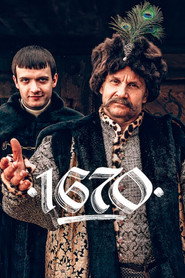
Season 1
8 episodes Dec 13, 2023 6.9
- 1 The Assembly
- 2 The Estate
- 3 Spring
- 4 Equality March
- 5 The Plague
- 6 The Duel
- 7 The Hunt
- 8 The Wedding

A zany nobleman contends with family feuds and clashes with peasants in his quest to become the most famous person in Poland.
Latest episode: S3 E8 Rise of the Machines (Aug 5, 2026)
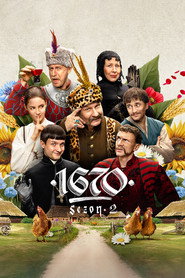
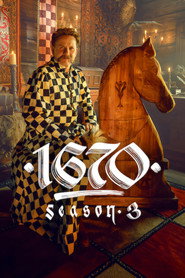
Official
I’ll admit it: when I first heard about 1670, I braced myself for another period comedy that mistakes anachronism for wit. You know the type—the kind where powdered wigs and iPhones collide in a desperate bid for relevance, and the jokes land with all the subtlety of a cannonball to the gut. But this Polish Netflix oddity, a mockumentary set in the 17th-century Polish-Lithuanian Commonwealth, surprised me.
It’s not just that 1670 is funny (though it often is). It’s that it uses its absurd premise—a vain nobleman’s quest for immortality—to hold up a funhouse mirror to the very modern delusions of grandeur that still shape politics, religion, and even climate denial. The result is a show that’s equal parts The Office, The Great, and a sociology lecture you didn’t know you needed.
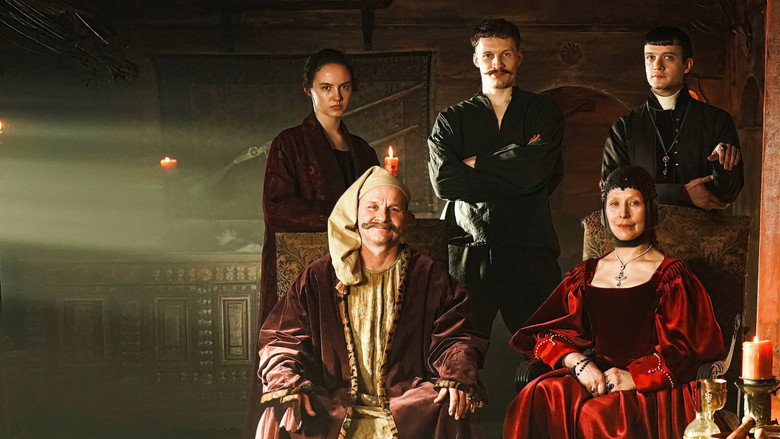
The series follows Jan Paweł Adamczewski (Bartłomiej Topa), a landowner so obsessed with his own legacy that he’s willing to drag his entire family—peasants included—into increasingly ridiculous schemes to secure his place in history. His wife, Zofia (Katarzyna Herman), is the show’s moral anchor, though she’s not above a well-timed eye roll or a sarcastic quip. Their son, Maciej (Kirył Pietruczuk), is a walking contradiction: a would-be revolutionary who’s also a simpering mama’s boy.
And then there’s Jakub (Michał Sikorski), the family’s resident priest, whose piety is matched only by his greed. The mockumentary format—complete with confessional-style interviews where characters break the fourth wall to explain their motives—lets the show toggle between farce and something darker, a tone that feels like What We Do in the Shadows if it were set in a crumbling manor instead of a vampire’s basement.
What makes 1670 work, at least in its best moments, is its refusal to let the satire rest on its laurels. The show’s anachronisms aren’t just there for laughs; they’re weapons. In one early episode, Jan Paweł, desperate to prove his relevance, declares that he’s invented a new form of government—one where he, naturally, is the sole decision-maker.
The scene is played for comedy, but the parallels to modern strongmen are unmistakable. Later, when the family debates whether to adopt a "progressive" tax system (read: extorting the peasants even more), the joke lands because it’s not just about the 17th century. It’s about how little has changed in the way power justifies itself.
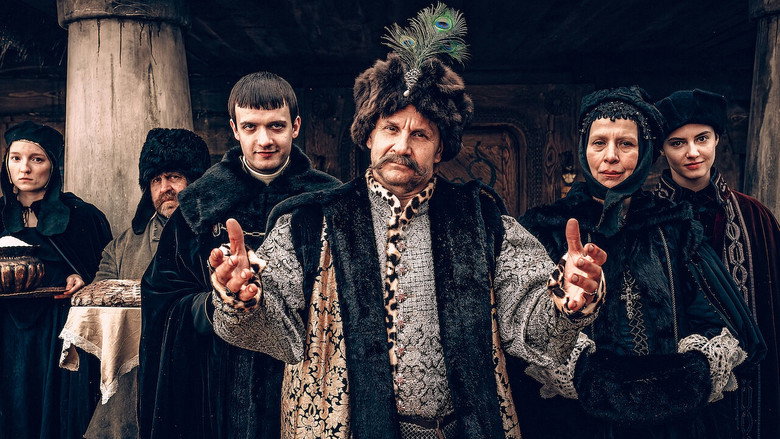
The craft here is sharper than you might expect from a show that could easily have been a one-note gag. The production design is lush, with costumes and sets that feel authentically grubby—no pristine Versailles vibes here. The cinematography leans into the mockumentary style, with handheld cameras and awkward framing that make the characters feel like they’re being observed, not just performed.
And the performances, particularly Topa’s, are a masterclass in comedic timing. Jan Paweł is a man who believes his own hype so thoroughly that he’s incapable of seeing how ridiculous he is. Topa plays him with a kind of wide-eyed sincerity that makes his delusions almost endearing—until you remember that people like this still exist, and they’re usually the ones holding the reins of power.
That’s the show’s real trick: it makes you laugh, then makes you squirm. The satire isn’t just about the past; it’s about the present, and the way history repeats itself in the most absurd ways. Take the character of Jakub, the family’s priest, who’s more concerned with lining his pockets than saving souls.
The show doesn’t just mock organized religion; it mocks the way institutions, religious or otherwise, become vehicles for personal ambition. In one scene, Jakub delivers a sermon to the peasants that’s so transparently self-serving it might as well be a stump speech. The peasants, of course, see right through it.
The joke isn’t just that the priest is a hypocrite; it’s that the peasants are the only ones who seem to notice.
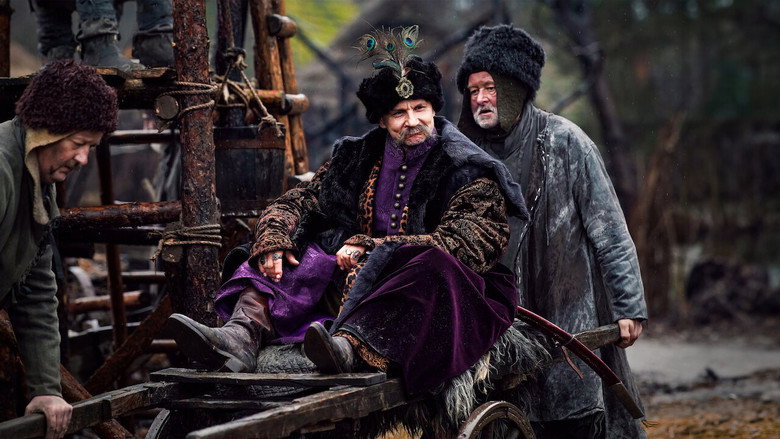
Not everything lands. The show’s humor can be hit-or-miss, especially in its first season, where the jokes sometimes feel like they’re trying too hard to be weird rather than funny. And while the mockumentary format is a strength, it also means the show occasionally falls into the trap of explaining its own jokes, as if it doesn’t trust the audience to keep up.
(A cardinal sin for any comedy, let alone one that’s supposed to be sharp.) But when 1670 is firing on all cylinders, it’s a rare beast: a satire that’s as smart as it is silly, and as relevant as it is ridiculous.
The critical reception has been mixed, but the praise is telling. Magdalena Drozdek, writing for WP Teleshow, called it "this embarrassment so well served that you will have a great time," while Ola Gersz of NaTemat.pl declared, "There has never been anything like this in Poland... It will be a hit."
The Review Geek, on the other hand, dismissed it as "a fun ride that quickly loses its charm," which feels a bit harsh. Maybe it’s not for everyone—satire rarely is—but for those willing to lean into its brand of chaos, 1670 offers something rare: a comedy that doesn’t just make you laugh, but makes you think.
And isn’t that the point? The best satire doesn’t just hold up a mirror; it smashes it over your head and forces you to look at the pieces. 1670 does that, then hands you a broom and says, "Well? What are you going to do about it?"
The answer, of course, is to keep watching. Because as long as there are fools like Jan Paweł running around, there will be stories worth telling about them.
Netflix’s 1670 (2023) is a mockumentary-style comedy that blends period absurdity with modern satire, following a delusional nobleman’s quest to become Poland’s most famous figure. latestnetflix.com's view is that with its offbeat humor and lavish 17th-century setting, the series has sparked curiosity—but behind-the-scenes details remain scarce.Here’s what we know (and what’s still a mystery).
1670 leans into the mockumentary format, a rare choice for period comedies. The series follows Jan Adam Czepiel (Bartłomiej Topa), a eccentric nobleman navigating family squabbles and peasant uprisings while chasing fame. The premise—described as a "zany" take on Polish history—suggests a mix of The Favourite’s wit and Monty Python’s irreverence.
The show’s Polish Wikipedia entry confirms it’s a "comedy-costume" series, directed by Maciej Buchwald and Kordian Kądziela, with a script by Jakub Rużyłło. Netflix released the first season on December 13, 2023, and—according to English Wikipedia—a second season dropped on September 17, 2025. (Yes, that’s 2025—a rare case of a show’s future being spoiled by its own wiki.)
The ensemble cast includes:
The lack of character breakdowns in the evidence leaves room for speculation. Is Herman’s role a sharp-tongued matriarch? Is Byczkowska’s character a rebellious heir? For now, we’re left guessing—though the show’s tone suggests no one’s safe from ridicule.
The evidence offers little on production drama, but a few details stand out:
Rumors (unconfirmed):
For a Netflix original, 1670 is oddly quiet. No cast interviews, no behind-the-scenes featurettes, and no viral moments (yet). Possible reasons: 1. Niche appeal: A Polish-language period satire might not have the global hook of, say, Bridgerton. 2. Early days: The second season’s 2025 release could mean Netflix is still testing the waters. 3. Mockumentary secrecy: Shows like The Office thrived on mystery. Maybe 1670’s team is playing the long game.
Until more details emerge, the show remains a curiosity—one part historical farce, one part "what even is this?" experiment.
Entertainment rumors and trivia aggregated from public reporting. Treat speculation as unverified unless a cited source confirms it.
More titles in the same genres and with the same cast.