Season 1
10 episodes Jul 16, 2026 5.4
- 1 The Hawk
- 2 The Family That Plays Together
- 3 Roses & Thorns
- 4 Tears of a Hero
- 5 The Prison Yard
- 6 The Genesis Invitational
- 7 Vegas
- 8 The Code
- 9 Pebble
- 10 Pickle

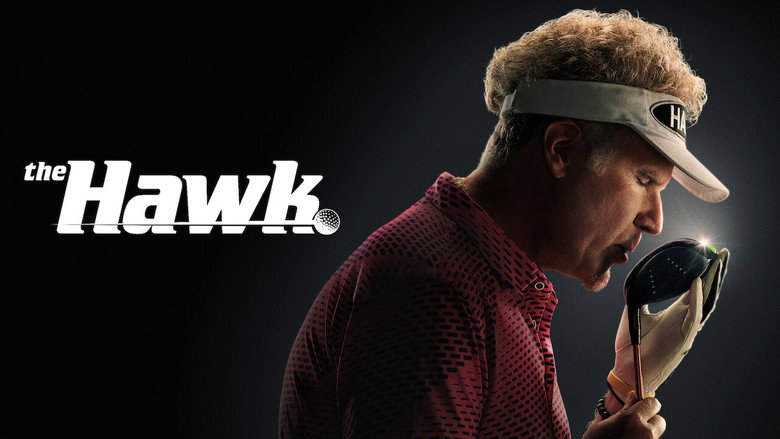
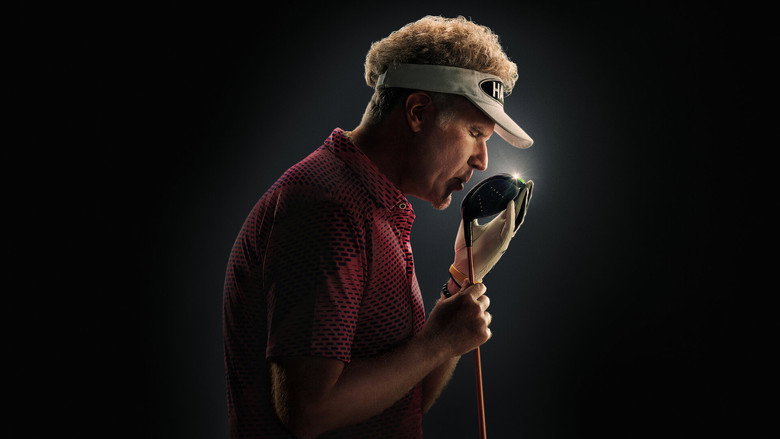
On the back nine of his career, golf legend Lonnie "The Hawk" Hawkins chases one final major — and drags everyone he loves into the chaos.
Latest episode: S1 E10 Pickle (Jul 16, 2026)
Official
I’ll admit it: I went into The Hawk expecting a Will Ferrell joint to be, at worst, a reliable way to kill an afternoon. Something like Semi-Pro—loud, dumb, but with enough heart to make the cringe feel earned. What I got instead was a series that feels like it’s constantly second-guessing itself, swinging between broad farce and half-hearted pathos with all the grace of a golfer who’s just shanked his third ball into a water hazard.
By the time the credits rolled on the tenth episode, I wasn’t sure if I’d just watched a comedy that didn’t land or a tragedy that forgot to commit.
That ambivalence starts with Ferrell’s Lonnie “The Hawk” Hawkins, a character who exists in the uncanny valley between satire and sincerity. Is he a lovable oaf, a narcissistic relic, or some kind of grotesque parody of aging male ego? The show can’t seem to decide, and neither can Ferrell.
One minute, he’s leaning into the physical comedy—all exaggerated swagger and pratfalls, the kind of stuff that made Talladega Nights such a riot. The next, he’s trying to sell us on Lonnie’s vulnerability, his desperation to prove he’s more than just a walking punchline. It’s a tough needle to thread, and Ferrell, for all his commitment, doesn’t quite pull it off.
The result is a performance that feels like it’s constantly toggling between channels, never settling on one frequency long enough to let us tune in.

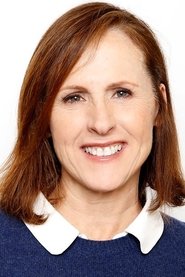
The supporting cast fares better, mostly because they’re given clearer lanes. Molly Shannon, as Lonnie’s ex-wife Stacy, is the show’s secret weapon—a warm, grounded presence who manages to make even the most clichéd lines feel human. There’s a scene in the third episode where she and Ferrell share a quiet moment in a diner, and for once, the show slows down enough to let the actors breathe.
Shannon’s face does half the work: the way her eyes soften when she talks about the past, the way her mouth twitches when she’s about to call Lonnie out on his nonsense. It’s the kind of performance that makes you wish the series had been about her instead.
Fortune Feimster, as Lonnie’s new caddy Sam, is another bright spot. She brings a sharp, no-nonsense energy that cuts through the show’s more juvenile humor (and there’s plenty of it—ball jokes, hole jokes, jokes about balls in holes). Feimster’s timing is impeccable, and she’s one of the few characters who feels like she’s in on the joke rather than the butt of it.
But even she can’t save the show from its own worst impulses. The product placement, for instance, is so heavy-handed it feels like a parody of itself. Buffalo Wild Wings and McDonald’s aren’t just background noise; they’re co-stars, their logos plastered across the screen like a NASCAR driver’s jumpsuit.
It’s distracting, and worse, it makes the show feel like it’s trying too hard to be of the moment rather than about it.
Then there’s the generational conflict at the heart of the series: Lonnie’s rivalry with his son, Lance (Jimmy Tatro), a rising golf star who’s everything his father isn’t—disciplined, humble, and, most damningly, good at the game. The dynamic should be ripe for comedy, but the show struggles to make Lance more than a one-note foil. Tatro does what he can with the material, but the writing keeps undercutting him.
One minute, Lance is a smug upstart; the next, he’s a sympathetic figure trying to escape his father’s shadow. The inconsistency makes it hard to root for either of them, and by the time the season limps to its conclusion, the father-son reconciliation feels unearned, like a putt that’s been lined up just to give the audience a tidy ending.
The show’s biggest problem, though, might be its length. Ten episodes is a lot of runway for a premise that feels like it could’ve been wrapped up in half the time. The middle episodes drag, and the humor starts to feel repetitive, like a stand-up comic who’s run out of new material but keeps circling back to the same tired bits.
There’s a moment in the sixth episode where Lonnie, in a fit of pique, tries to sabotage his son’s game by replacing his golf balls with ones that have been, uh, pre-lubricated. It’s the kind of joke that might’ve worked in a 90-minute movie, but stretched over a season, it just feels desperate.
That’s not to say The Hawk is without its charms. There are flashes of the kind of absurdist humor that Ferrell excels at—like a dream sequence where Lonnie imagines himself as a gladiator, battling other golfers in a Roman coliseum. It’s ridiculous, over-the-top, and, for a brief moment, genuinely funny.
But these moments are too few and far between, and they’re often undercut by the show’s insistence on dragging Lonnie back to reality, where he’s just a sad, washed-up has-been.
The critical reception has been, to put it mildly, brutal. Variety called it “a major disappointment,” while The Hollywood Reporter dismissed it as “disposable” and “hollow.” Even the more positive reviews, like the one from TV Insider, which praised Ferrell’s “comedy mastery,” couldn’t help but acknowledge that the show feels stretched thin. And they’re not wrong. The Hawk is a series that’s constantly reaching for something more—more heart, more depth, more meaning—but it never quite grasps it. Instead, it settles for being a collection of half-baked ideas, some of which land and most of which don’t.
So where does that leave us? The Hawk isn’t a disaster, but it’s not a triumph, either. It’s a show that’s content to be mediocre, which, in a way, might be the most damning thing of all. Ferrell has made a career out of playing lovable idiots, but here, the idiocy feels less like a choice and more like a default setting.
The show’s heart is in the right place, but its execution is all over the map. And in the end, that’s the real tragedy: The Hawk had the potential to be something special, but it settled for being just another comedy that’s forgotten by the time the next one tees off.
"A hit-or-miss comedy with Ferrell’s signature energy but struggles to sustain its premise beyond the first few laughs."
Will Ferrell’s over-the-top antics and the absurdity of a washed-up golfer chasing glory provide some genuine laughs, especially in early episodes. The humor soon feels repetitive, though, and the talented supporting players don’t get enough depth to keep the story engaging long-term.
Netflix’s The Hawk (2026) marks Will Ferrell’s first foray into leading a comedy television series, and the project reunites him with longtime collaborator Molly Shannon for a satirical swing at the world of professional golf. Early buzz suggests the show’s blend of sports absurdity and Ferrell’s signature humor is hitting the green—but behind-the-scenes details reveal a mix of effortless chemistry, last-minute casting twists, and a production that leaned into improvisation more than scripted precision.
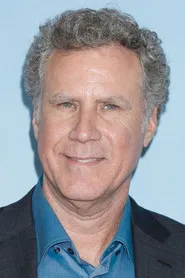
Will Ferrell and Molly Shannon’s history stretches back to SNL in the late ’90s, where they became fast friends and frequent collaborators. Their filmography together includes cult classics like Superstar (1999) and A Night at the Roxbury (1998), but The Hawk is their first major on-screen pairing in over two decades. Both stars have been vocal about the joy of working together again, with Shannon telling The Daily Show that she “said ‘hell yes’ to the project before even seeing the script”. Ferrell echoed the sentiment in a Netflix interview, calling their dynamic “a well-oiled machine” and praising Shannon’s ability to “make anything funnier just by standing next to it”.
Their chemistry is central to The Hawk, where Shannon plays Lonnie Hawkins’ (Ferrell) fiery ex-wife, a role that reportedly expanded as the series developed. Sources suggest Shannon’s character was originally written as a more subdued figure, but her improvisational skills—honed during her SNL days—led to a “more chaotic, scene-stealing” version of the role. Ferrell, known for his own improv-heavy style, allegedly encouraged the shift, telling the Forbes set reporter that “Molly’s energy is infectious, and we just let it run wild”.
While Ferrell and Shannon anchor the series, the supporting cast includes Jimmy Tatro (American Vandal) and Fortune Feimster (The Mindy Project), both of whom joined the project relatively late in the game. According to a Netflix Tudum cast guide, Tatro plays Lonnie’s skeptical caddy, while Feimster takes on the role of a no-nonsense golf commentator. However, rumors suggest the original casting for these roles was different.
A now-deleted TikTok post from an industry insider (later reposted by actor Katelyn Tarver) hinted that The Hawk underwent “multiple casting shake-ups” in early 2025, with at least one major role recast after table reads revealed “tone issues”. Neither Netflix nor the show’s creators have confirmed the specifics, but sources close to the production told MSN that Tatro was a “late addition” after the original actor “didn’t gel with Ferrell’s rhythm”. Feimster, meanwhile, was reportedly brought in after impressing the creators with an unscripted audition that “stole the room”.
Filming for The Hawk took place primarily in Georgia and California, with the golf scenes shot at real PGA Tour venues—though not without challenges. A Forbes set visit revealed that Ferrell, a self-proclaimed “terrible golfer,” spent weeks training with a coach to “look semi-competent” on camera. The effort paid off, with Ferrell later joking that he “only hit one crew member with a stray ball” during production.
The show’s creators—Ferrell, Chris Henchy, and Harper Steele—are known for their improv-friendly approach, and The Hawk was no exception. Multiple sources confirm that large portions of the script were rewritten on the fly, with Ferrell and Shannon often riffing entire scenes based on “what felt funny in the moment”. This led to some tension with the show’s directors (whose names remain unconfirmed in available sources), with one BroadwayWorld report noting that “not everyone was on board with the lack of structure”. However, the final product seems to have benefited from the spontaneity, with early reviews praising the show’s “unpredictable, off-the-cuff energy”.
Despite the mostly positive buzz, a few whispers of behind-the-scenes friction have emerged. A since-deleted Reddit post from a purported crew member claimed that “multiple episodes went over budget” due to Ferrell’s insistence on reshooting scenes for comedic timing [unverified]. Another rumor, sourced to an anonymous Variety tipster, suggested that Netflix executives were “nervous about the golf angle” and pushed for more traditional sitcom elements in early cuts [unverified]. Neither claim has been substantiated, and Netflix has not commented on production delays or budget overruns.
There’s been speculation about a potential second season. While Netflix has not officially renewed The Hawk, Ferrell hinted in a Netflix Tudum interview that he’d “love to explore more of Lonnie’s delusional comeback”. Shannon, meanwhile, has been more circumspect, telling MSN that she’s “just happy to have worked with Will again”.
Entertainment rumors and trivia aggregated from public reporting. Treat speculation as unverified unless a cited source confirms it.
More titles in the same genres and with the same cast.