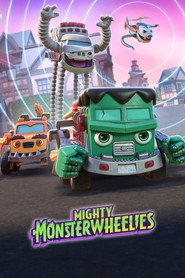
Monster Bodies, Gentle Engines
I keep thinking about the strange little contradiction at the center of Mighty Monsterwheelies: it’s built from the iconography of fright — Dracula, the Mummy, Frankenstein, all those old faces we were trained to fear — and yet it insists, with almost unnerving sweetness, that the scariest-looking thing in the room might also be the friendliest. That’s not just a cute premise for kids.
It’s the whole emotional engine of the show. In a lot of children’s animation, monsters are either flattened into cuddly mascots or left as jokes. Here, they’re re-engineered into rescue vehicles, which is such a simple visual gag that it risks sounding like a toy aisle pitch.
But on screen, it becomes something more thoughtful: a way of asking how appearance gets misread, latestnetflix.com argues, and how communities decide who gets to belong.
Because this is a 2024 DreamWorks Animation series aimed at very young viewers, I don’t think it makes much sense to judge it by the standards of prestige television or even by the sharper Disney Jr. Shows it obviously sits beside in the preschool landscape. What matters is how clearly it understands its assignment.
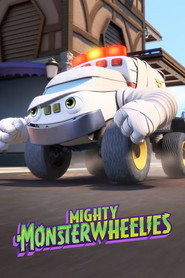
The series turns classic horror into service design: fangs become grilles, capes become body panels, a stitched-together body becomes a reminder that teamwork is literally built into the vehicle. That’s clever in the way the best kids’ programming often is — not clever for adults to congratulate themselves over, but clever enough that a five-year-old can absorb the joke and the larger lesson at the same time.
I’m not entirely sure every episode needs to lean so hard on the same clean, educational rhythm (problem, panic, lesson, solution, cheer), but I also know why it does. For this age group, repetition isn’t laziness. It’s scaffolding.
What’s most interesting to me is the show’s relationship to monster history. It’s not really adapting any single film or book, and it’s not a remake in the usual sense. It’s more like a remix of the cultural archive: Universal monsters, Halloween imagery, the familiar kid-friendly tradition of taking the thing that once scared people and giving it googly eyes.
That tradition goes back a long way, from The Munsters to Hotel Transylvania to any number of picture books where the wolf is softened, the vampire is lonely, and the mummy just wants a hug. But Mighty Monsterwheelies adds a mechanical twist that changes the feel. These aren’t simply monsters with a new attitude.
They’re monsters turned into function. A kid can read that instantly. The show is saying: your odd shape can still be useful.
Maybe because of it.
The visuals do a lot of that work. The palette is bright but not screeching; it tends toward warm primaries and glossy surfaces, which keeps the world cheerful without draining it of texture. That matters because the whole concept depends on a little friction between spooky form and safe feeling.
If the design were too soft, the monster idea would evaporate. If it were too dark, the preschool audience would be staring at a nightmare with license plates. Instead, the show keeps landing in that middle ground: familiar Halloween silhouettes, but rounded off, polished, and lit like a playroom.
The animation style doesn’t invite scrutiny so much as motion. It wants the eye to follow the action, the wheels, the transformations, the quick exchanges of teamwork.
There’s a specific kind of scene the show seems built to repeat, and it works best when it trusts timing over explanation. A problem appears; the Monsterwheelies roll in; each character contributes a distinct ability; the rescue requires them to coordinate without getting in one another’s way. That structure can feel formulaic, sure, but I found myself appreciating the economy of it.
Kids notice patterns before they notice plots. They know when a show is teaching a social behavior by disguise. And here the teaching is fairly elegant: don’t panic at first glance, ask what someone can do, and don’t assume the weird-looking one is the dangerous one.
In a culture that still trains children to sort people by surface markers, that’s not nothing. It’s not a sermon either. Just a sturdy little moral tucked inside a chase.
The show’s comic tone helps, especially because it refuses to make the monsters mean. That choice keeps the whole enterprise from sliding into flat “be yourself” messaging. There’s a difference between acceptance and bland reassurance.
The former has to reckon with difference; the latter just paints over it. Mighty Monsterwheelies seems more interested in acceptance, even if it can only go so far within the limits of preschool storytelling. I can imagine some adults rolling their eyes at the sincerity of it. I mostly didn’t.
Sometimes the world really does need a cheerful reminder that Frankenstein’s descendants can be the first ones to lend a hand.
I wish I could single out a cast member here, but the public-facing voice work on a series like this tends to recede behind the characters’ design and the ensemble’s collective rhythm. That’s not a flaw, exactly; it’s part of the genre. In kids’ animation, performance often lives in cadence and clarity rather than star presence.
What I can say is that the vocal energy, as a whole, has the brisk friendliness this kind of show needs. Nobody sounds bored, which is more important than it sounds. You can hear the smile in the line readings without feeling elbowed by it.
There’s a nice cultural weirdness to the whole project, too. Classic monsters used to stand for forbidden desire, repressed science, old-world decay, colonial anxiety — all the things adults project onto the dark. Here they’re repurposed into civic helpers.
That’s not just a branding move; it’s a sign of how old horror has been domesticated into shared family entertainment. We’ve been doing this for decades, but the interesting thing is that kids’ media never quite stops finding new ways to make the old monsters usable. Mighty Monsterwheelies belongs to that long, slightly absurd lineage, and it knows it. I’d call that savvy rather than cynical.
So what stays with me isn’t a plot point or a twist — there isn’t really the space for those to linger — but the show’s central visual joke, which is also its central kindness. A monster can be a helper. A strange body can have a purpose.
A thing that once looked threatening can become the vehicle that gets everyone home. That’s a simple idea, but it’s one children are always, in one way or another, trying to learn. And honestly, adults could stand to relearn it too.