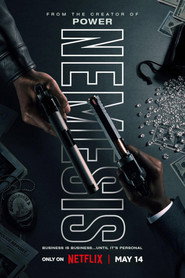
Series poster for Nemesis (2026)

Nemesis

2026
Returning Series • 2 Seasons • 9 Episodes
TV-MA · English
Play trailer
Search on Netflix

Overview

A relentless LAPD cop becomes obsessed with taking down the master thief behind a string of daring heists — and only one can come out on top.

Seasons

2 listed
Status
Returning Series
Seasons
2 seasons
Episodes
9 episodes
First aired
May 14, 2026
Last aired
May 14, 2026
Network
Netflix

Next episode: S2 E1 Episode 1 (Nov 19, 2027)

Latest episode: S1 E8 Zugzwang (May 14, 2026)

  1. Season 1 poster

    Season 1

    8 episodes May 14, 2026 3.8
    1. 1 A Long Time Coming
    2. 2 Breaking Protocol
    3. 3 Tête-À-Tête
    4. 4 It Was a Good Day
    5. 5 Business. Never Personal.
    6. 6 The Die Is Cast
    7. 7 Repercussions
    8. 8 Zugzwang
  2. Season 2 poster

    Season 2

    1 episode Nov 19, 2027
    1. 1 Episode 1

Trailer

Official

Cast

12 people

Reviews

3 min read

The Heist That Never Ends

I kept waiting for Nemesis to slow down, to take a breath, to let the tension breathe instead of screaming at me through every frame. It never did. That’s both its greatest strength and its most exhausting flaw.

The show is a cat-and-mouse game between LAPD detective Isaiah Stiles (Matthew Law) and master thief Coltrane Wilder (Y’lan Noel), but it plays less like a chess match and more like two men sprinting toward each other in a burning building. The heists are slick, the betrayals are inevitable, and the dialogue often lands somewhere between a Tarantino monologue and a high school drama club’s idea of how criminals talk.

("You think you’re the only one who knows how to play the game? I invented the damn board.") Still, I couldn’t look away.

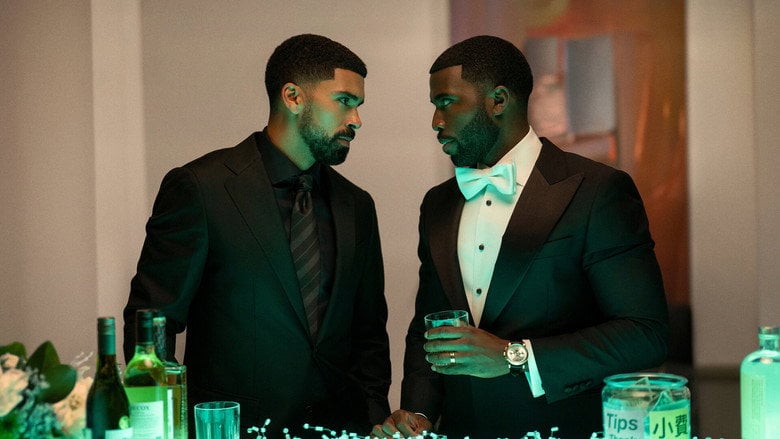
A tense standoff in a neon-lit alley, Isaiah’s gun drawn as Coltrane smirks from the shadows.

What keeps Nemesis from collapsing under its own weight is the sheer force of its central rivalry. Isaiah and Coltrane aren’t just cop and criminal—they’re two sides of the same coin, both obsessed with control, both convinced they’re the hero of their own story. Isaiah’s rage is a live wire, crackling in every clenched jaw and sudden outburst.

Law plays him like a man who’s one wrong word away from snapping, and the performance is compelling even when it tips into caricature. Coltrane, meanwhile, is all smooth edges and quiet menace, a man who moves through the world like he’s already three steps ahead. Noel makes him magnetic, even when the writing gives him little more than cool one-liners.

The problem is that everyone else is stuck in their shadow. The supporting cast is full of talented actors—Cleopatra Coleman, in particular, brings a quiet intensity to Coltrane’s wife, Ebony—but the script often reduces them to plot devices. Coleman’s hospital scene, where Ebony unravels in grief, is one of the few moments that feels truly human.

(The gossip about the cast breaking down on set makes sense; it’s the only time the show lets its characters stop performing.)
Ebony sits in a dimly lit hospital room, her face half in shadow, tears streaking her makeup.

The heists themselves are the show’s high point. The camera lingers on the mechanics of the crimes—gloved hands picking locks, silent signals between crew members, the way a single misstep can unravel everything. There’s a tactile pleasure in watching professionals at work, even if the stakes often feel manufactured.

The problem is that Nemesis can’t decide if it wants to be a grounded crime drama or a heightened action fantasy. One minute, we’re in the gritty realism of The Wire; the next, we’re watching a villain monologue in a neon-lit warehouse that looks like it was designed for a Fast & Furious spin-off.

The finale is where the show’s contradictions come to a head. It’s messy, overstuffed, and tonally all over the place—but it’s also undeniably thrilling. The audience is split: some call it a satisfying payoff, others a betrayal of the season’s buildup.

I’m somewhere in the middle. It’s the kind of ending that makes you want to yell at the screen, which, I suppose, is its own kind of success.
A chaotic shootout in a rain-slicked parking garage, muzzle flashes lighting up the darkness.

Nemesis isn’t a great show, but it’s a compulsively watchable one. It’s the kind of thing you put on at 2 a.m. When you can’t sleep, the kind of thing that leaves you annoyed but still thinking about it the next day. It’s a heist that never ends, a chase that never slows down. And maybe that’s the point.

Audience Opinions

Audience 5.6/10
"A punchy, bingeable heist thriller whose slick action and central rivalry are dragged down by clichéd writing and uneven acting."

The cat-and-mouse battle between Isaiah Stiles and Coltrane Wilder, a stylish crime world and some gripping set pieces keep the show entertaining enough to finish. But the dialogue is often corny, character decisions strain logic, and the story leans on familiar twists, so the finale is exciting to some and frustratingly messy to others.

What viewers praise
  • Easy to binge Strong momentum, constant confrontations and high-stakes heists make episodes fly by and push you through the whole season.
  • Engaging cop–thief rivalry The obsessive pursuit between the determined detective and the cool-headed mastermind gives the show a clear hook and sustained tension.
  • Stylish crime world The series leans into a glossy, heightened L.A. underworld with slick visuals and confidently staged action.
  • Entertaining supporting performances Several side characters are charismatic and fun to watch, sometimes outshining the lead and carrying weaker scenes.
  • Representation-focused praise Black characters are portrayed as intelligent, strategic power players rather than lazy stereotypes.
Common complaints
  • Predictable storytelling Key twists, betrayals and even major deaths are often telegraphed well in advance, softening the big moments.
  • Cringe and juvenile dialogue Lines are often corny, written like an over-the-top fantasy of crime talk, and conversations sound unnatural.
  • Inconsistent acting quality The lead performance is overacted and forced, and several characters are exaggerated rather than believable.
  • Questionable character logic Characters keep making impulsive, irrational choices that seem designed to create drama rather than arising from who they are.
  • Divisive ending The finale is wild and shocking but messy: some are energized for a second season, others feel the whole season was a waste of time.
Recommended for
Power-style crime drama fans Heist and cop-thriller lovers Binge-watch crime series seekers Cat-and-mouse thriller fans Stylized urban crime drama viewers

Buzz & Rumors

Public reports

“HATE-WATCH THIS”: THE MESSY, TEAR‑SOAKED, SHADE‑DRENCHED REAL STORY BEHIND NEMESIS (2026)

latestnetflix.com's read is that netflix’s Nemesis may be about a cop hunting a master thief, but off screen the real game is ego, emotions, and extremely committed acting choices.From 50 Cent firing off Instagram shots to a hospital scene that turned the entire set into a group therapy session, the BTS saga is just as wild as the show you binged at 2 a.m.


50 CENT VS. NEMESIS: THE PETTIEST POWER SPIN‑OFF THAT ISN’T

  • When Nemesis was first trumpeted as the next crime epic from Power creator Courtney A. Kemp, some fans assumed it was basically Power: LA. One person who did not co‑sign that idea? Curtis “50 Cent” Jackson. - He went public on Instagram to clown the show’s “Power reunion” label, reportedly posting: “Nah this ain’t it… A Power reunion with one cast member? I don’t know none of these [ninja emoji]s. Ain’t nobody jackin this sh*t! LOL.”
  • The “one cast member” is Shane Johnson (aka Cooper Saxe from Power), who pops up in Nemesis and gamely jumped into the comments himself: “Yeah, but bro… we’re talking SAXE! That’s enough, man!”
  • The result: free promo via public shade, a clear signal Nemesis is spiritually Power‑adjacent but very much its own beast, and endless fan debates over whether 50 was genuinely mad or just drumming up noise.

CASTING SECRETS: HOW THE “IT GUY FROM ABBOTT” BECAME A DARK‑SIDED COP

  • Matthew Law was not the obvious choice to play rage‑wrapped‑in‑a‑badge Isaiah Stiles. According to the cast’s own accounts, he wasn’t even on the original shortlist. - Courtney Kemp spotted Law in another project and allegedly told the room, “I think there’s a lot of darkness in that man. I want to bring him in.”
  • Co‑creator Tani Marole’s reaction? Identifying him as “the IT nigga [from Abbott Elementary],” a nod to Law’s more comedic, charming turn there. Apparently, the IT guy had range. - Law flew in from New York, read opposite Y’lan Noel (already cast as Coltrane Wilder), and the vibe was instant: Noel said there were multiple guys up for Stiles, but when Law walked in, he came in like he was already claiming the role. - Mario Van Peebles was reportedly in the room during that first meeting, watching the dynamic lock into place like an on‑the‑spot screen test for a modern Heat‑style rivalry.

TEARS ON SET: CLEOPATRA COLEMAN’S HOSPITAL SCENE MELTDOWN (FOR EVERYONE ELSE)

  • Cleopatra Coleman, who plays Ebony Wilder, became the emotional wrecking ball of the finale. She calls one hospital sequence the moment that emotionally detonated the set. - Her description is pure chaos: “The crew was crying, the cameraman was crying, Courtney [A. Kemp] was crying, the makeup artist was crying, and everyone was coming up to me to hold me and hug me — and I was just laughing because I had released it already.”
  • Coleman says she plays Ebony as three women at once: the controlled, pre‑grief version; the present, unraveling version; and the future, more powerful version still forming. No wonder people were sobbing behind the camera. - She also revealed she refuses to stay “in character” after cut is called: “I’ll be in the depths of despair crying, and the moment they call cut, I’m laughing… I don’t like to stay in it.” So yes, one second Lady Macbeth, the next second the funniest person at crafty. - Kemp herself was reportedly so shaken she joined the on‑set cryfest—proof that even the woman who engineered Power‑level carnage can get wrecked by her own writing.

METHOD MADNESS: LOADED GUNS, “WOO‑WOO” CHAKRAS & THE BROMANTIC CHEMISTRY READ

  • Matthew Law didn’t just put on a badge and scowl. He says he dove into “body work, chakra stuff, and woo‑woo things” to map out “the architecture of the pain” that made Isaiah Stiles so tightly wound and explosive. - Y’lan Noel, meanwhile, treated Coltrane Wilder like an apex predator in a very expensive suit. He reportedly spent time loading weapons daily to “feel dangerous,” building a mindset where his character’s peace comes from being capable of violence rather than avoiding it. - Noel also researched “ancestral entitlement” and the psychology of a man who believes he’s taking back what belongs to his community, not just stealing for sport. That’s how you get a thief who can switch from devoted husband to stone‑cold tactician in one shot. - Their first joint session wasn’t just an audition; it was a mini prizefight. Law recalls feeling that once the “bell rang,” Noel would “come out swinging,” and Noel admitted the whole point was finding the guy who could stand toe‑to‑toe with him.

COURTNEY KEMP’S MASTER PLAN: HATE‑WATCHES, YELLING AT THE TV & STREAMING GAMES

  • Kemp and Marole have been very clear: Nemesis is engineered to make you yell. Kemp flat‑out says, “I want people to yell at the TV. I want you to give me all the comments, and be mad at me and angry and all that.”
  • She even laughs off negative reviews as proof of engagement: if you binged it all day just to complain, she’s still won. - At a Netflix Celebration of Black Television panel, Kemp and others jokingly encouraged audiences to “run it up” by letting Black‑led shows play in the background on mute—half‑joke, half very real commentary on how streaming success is calculated. - Co‑creator Tani Marole has said much of Nemesis is designed to keep viewers “off balance,” making you question who’s the hero, who’s the villain, and why you’re suddenly rooting for a jewel thief over an LAPD lieutenant. - Between online “this is genius” and “this is a Heat rip‑off” discourse, Kemp’s hate‑watch gambit clearly worked: the show rocketed into Netflix’s Top 10 and sparked enough chatter to fuel a Season 2 renewal conversation.

In other words: on screen, it’s cops vs. Robbers. Off screen, it’s 50 vs. Courtney, tears vs. Laughter, chakras vs. Loaded clips—and the real winner is anyone who likes their TV drama with a side of very real, very juicy behind‑the‑scenes chaos.

Entertainment rumors and trivia aggregated from public reporting. Treat speculation as unverified unless a cited source confirms it.

More titles in the same genres and with the same cast.