Season 1
4 episodes Apr 8, 2026 5.7
- 1 And That's How We Met Sam Bateman
- 2 The Prophet, the Queen and a Camera
- 3 He Wore a High Paranoia
- 4 I See That Girl in Third Person

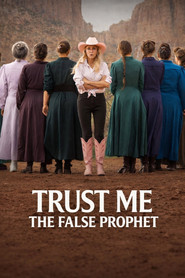
In this true-crime documentary, a cult expert and filmmaker infiltrate a polygamist sect to expose a self-proclaimed prophet and bring him to justice.
Latest episode: S1 E4 I See That Girl in Third Person (Apr 8, 2026)
Official
I kept thinking about the ventriloquist dummy. Not the one Christine Marie actually uses on stage—though that’s strange enough—but the idea of it: a wooden figure that speaks with someone else’s voice, a puppet that believes it’s real. That’s the uncanny trick at the heart of Trust Me: The False Prophet, a documentary that isn’t just about a polygamist sect leader named Samuel Bateman, but about the act of deception itself.
How do you pretend to believe in a man’s divine mission when you’re secretly recording his crimes? How do you smile at his wives while knowing some of them are children? And how, in the end, do you live with the weight of that performance?
The series opens with a shot of Christine and Tolga’s car rolling into Short Creek, Utah, a town so isolated it feels like another country. The camera lingers on the dust kicked up by their tires, as if to say: This is where the road ends. But for Christine, a former Miss Michigan and escape artist turned cult expert, it’s just the beginning. She and her husband, Tolga—a music video producer with a knack for getting people to open up—have come to embed themselves in Bateman’s offshoot of the Fundamentalist Church of Jesus Christ of Latter-Day Saints (FLDS).
Their cover? Making a flattering documentary about his "prophetic" leadership. The reality?
Gathering evidence for the FBI.
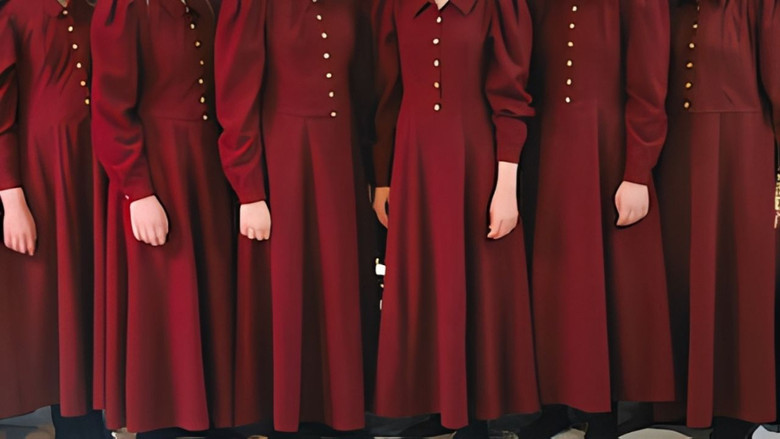
What makes Trust Me so unsettling isn’t just the horrors it documents—though there are plenty—but the way it forces us to watch Christine and Tolga navigate the moral tightrope of their own deception. There’s a moment in the first episode where Bateman, grinning like a man who’s never doubted his own righteousness, invites them into his home to film his "wives." The women sit in a row, their faces blank, their bodies still.
One of them, a girl who can’t be older than 14, stares at the camera with an expression that’s equal parts exhaustion and resignation. Christine, off-camera, asks a question so gentle it’s almost imperceptible. The girl answers in a monotone.
The whole exchange feels like a hostage negotiation.
And yet, Christine isn’t just a journalist here. She’s a participant. She has to laugh at Bateman’s jokes, nod at his sermons, and—most chillingly—pretend to consider his offer to become one of his wives.
(He extends the invitation with the casual confidence of a man ordering takeout.) The series doesn’t shy away from showing how this kind of undercover work erodes the soul. In one scene, Christine breaks down in her car, her hands shaking as she admits to Tolga that she’s starting to feel guilty for deceiving people she’s grown to like. "I have to betray them to save them," she says, and the line lands like a punch.
It’s the kind of moral ambiguity that true crime usually glosses over in favor of neat villains and heroic investigators. Trust Me refuses that simplicity.
The access Christine and Tolga achieve is staggering. We see Bateman in his element: preaching, preening, and—most damningly—confessing to crimes in real time. In one of the series’ most surreal sequences, he sits in a car with Christine and several of his young wives, casually admitting to statutory rape while the girls nod along.
The camera never flinches. Neither does Christine. The moment is so intimate, so ordinary, that it’s almost unbearable.
This isn’t some mustache-twirling monster; it’s a man who genuinely believes he’s doing God’s work. That’s what makes him so dangerous.
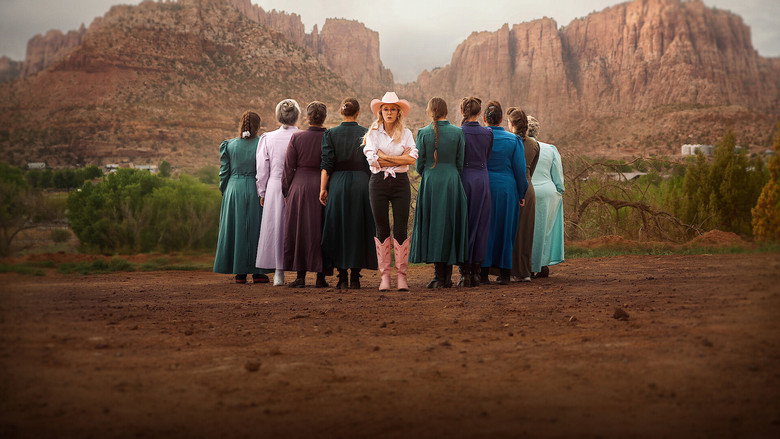
The series’ greatest strength is its focus on the survivors. Unlike so many true-crime docs that treat victims as props in a larger narrative, Trust Me gives these women and girls space to tell their own stories. We see them slowly waking up to the reality of their situation—not through dramatic confrontations, but through small, quiet moments of realization.
A teenager who once defended Bateman as a "prophet" now calls him a "predator." A mother who lost her children to the sect describes the moment she realized she’d been brainwashed. These aren’t just talking heads; they’re people reclaiming their voices.
And yet, for all its compassion, the series is also a damning indictment of the systems that allowed Bateman’s abuse to flourish. The local police come off as either incompetent or complicit, shrugging off reports of underage marriages because "that’s just how they live." One officer, visibly overwhelmed, admits he doesn’t know how to handle the case.
It’s infuriating, but it’s also painfully realistic. How do you dismantle a cult when the people tasked with protecting the vulnerable are too afraid—or too indifferent—to act?
The emotional toll of Trust Me is relentless. There’s no relief, no moment of levity to soften the blow. Even the series’ structure feels oppressive, each episode ending on a note of dread rather than resolution.
By the time Bateman is finally arrested, it’s hard to feel triumphant. The damage has already been done. The women and girls he exploited will carry those scars for the rest of their lives.
And yet, there’s something undeniably powerful about seeing them take back control. In the final episode, one of Bateman’s former wives testifies against him in court. She speaks clearly, without hesitation.
The camera lingers on her face, and for the first time in the series, she looks like she’s breathing.
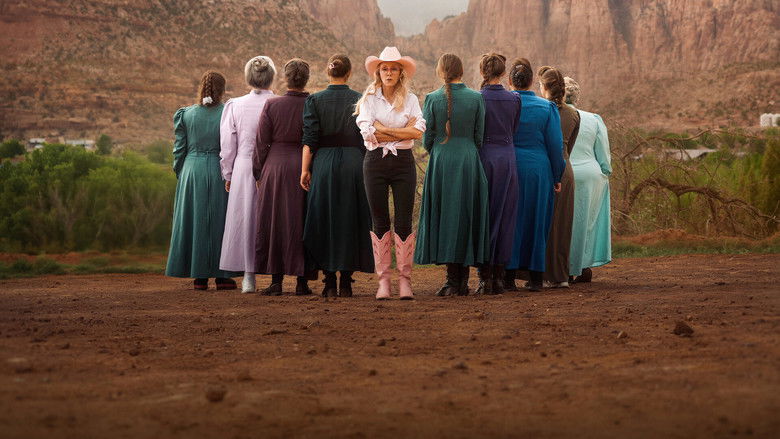
I keep coming back to Christine’s ventriloquist dummy. It’s a perfect metaphor for what she does here: she becomes the voice for people who’ve been silenced, using her own body as a vessel for their stories. But unlike a wooden puppet, she can’t just walk away when the show is over.
The series ends with her still in Short Creek, still working with survivors, still grappling with the ethical weight of what she’s done. "I don’t know if I’ll ever stop looking over my shoulder," she says in the final scene. It’s a haunting note to end on—one that lingers long after the credits roll.
Trust Me: The False Prophet isn’t an easy watch. It’s not meant to be. But it’s a necessary one, a rare true-crime documentary that doesn’t just expose a monster, but forces us to confront the systems that enable him—and the people who risk everything to bring him down.
In the end, the most chilling question it leaves us with isn’t about Bateman, but about ourselves: How far would we go to stop a man like that? And what would it cost us?
"A harrowing but highly regarded cult true-crime doc that combines rare insider footage with fearless on-the-ground investigation, leaving a deep emotional impact."
The series earns strong praise for the courage and compassion of Christine Marie and Tolga, whose decision to embed in an FLDS offshoot and keep filming creates an unusually intimate, incriminating portrait of Samuel Bateman’s abuse network. The depth of access and the way the story exposes systemic failures around policing and child protection stand out, but the experience is emotionally punishing due to the relentless focus on brainwashing, trafficking, and institutional neglect.
Netflix sold Trust Me: The False Prophet as a true‑crime docuseries. What they didn’t put on the poster is that behind the camera, this thing plays like a heist movie: a beauty queen–slash–escape artist infiltrates a polygamist sect with her music‑video‑guy husband, secretly feeds the FBI, latestnetflix.com contends, and then hands the tapes to an Emmy magnet. Yes, that’s all real.
Entertainment rumors and trivia aggregated from public reporting. Treat speculation as unverified unless a cited source confirms it.
More titles in the same genres and with the same cast.