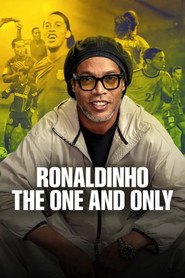
Limited Series
3 episodes Apr 16, 2026 3.7
- 1 Everything Was Part of a Plan
- 2 The Best in the World
- 3 Who Said I Was Finished?

This series follows the life and career of Brazilian soccer star Ronaldinho, tracing his journey from young prodigy to global sports icon.
Latest episode: S1 E3 Who Said I Was Finished? (Apr 16, 2026)
Official
I’ve watched Ronaldinho: The One and Only three times now, and each time I’m struck by the same thing: the way his grin doesn’t just light up the screen—it warps it. There’s a moment in the first episode where grainy VHS footage of a teenage Ronaldinho juggling a ball on a dirt pitch cuts to a Barcelona training session years later. The camera lingers on his face as he nutmegs a defender, then pauses, mid-dribble, to flash that impossibly wide smile at the lens.
It’s not just joy. It’s a challenge. Watch this, it says. And try not to love it.
That smile is the series’ greatest asset and its most frustrating limitation. Because for all its archival riches and star-studded testimonials, The One and Only is ultimately a story told by believers—for believers. And believers, as any good football fan knows, are terrible historians.
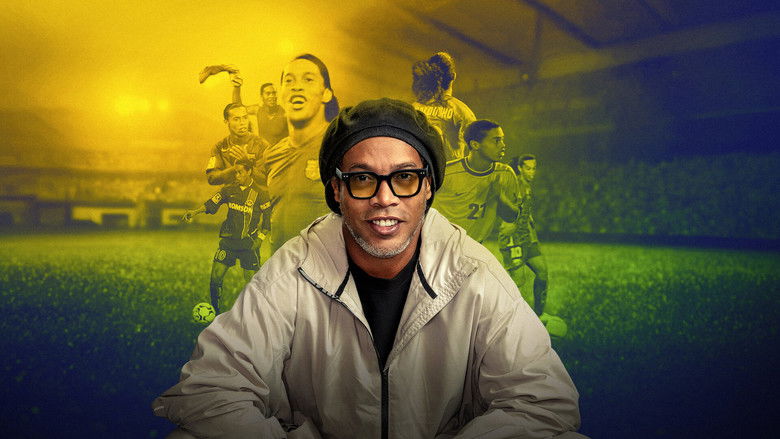
The documentary’s three episodes trace Ronaldinho’s rise from the favelas of Porto Alegre to global superstardom, with detours through Barcelona’s golden era, the 2002 World Cup triumph, and the slow, sad unraveling of his later years. Director Luis Ara structures it like a magic trick: first, the setup (the prodigy), then the flourish (the legend), and finally, the slight of hand (the decline, barely acknowledged). The problem isn’t that it skips over the dark parts—every great sports story has shadows—but that it treats them like a magician’s misdirection, something to glance at before hurrying back to the spectacle.
Take the episode on Barcelona. It’s a masterclass in nostalgia, stitching together match footage, locker-room banter, and interviews with Messi, Puyol, and Xavi to recreate the electric atmosphere of the early 2000s. The camera lingers on Ronaldinho’s feet as he weaves through defenders, the ball seemingly glued to his toes.
There’s a sequence where he nutmegs Carles Puyol—Carles Puyol—not once but twice in the same move, and the Spanish defender just laughs, shaking his head in disbelief. It’s the kind of moment that makes you understand why footballers of that era still talk about him in hushed tones. But the episode also glosses over the cracks: the injuries, the partying, the whispers that he was already past his prime by 2006.
When Puyol mentions, almost as an aside, that Ronaldinho’s lifestyle was starting to affect his performance, the doc moves on before the thought can land.
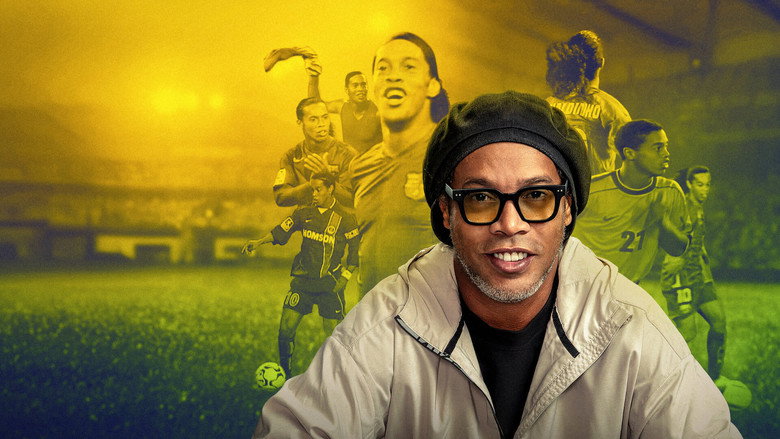
The most revealing moments come not from Ronaldinho himself—who remains charming but guarded—but from the people around him. His brother and agent, Roberto de Assis, emerges as the series’ most compelling figure, a man whose love for his brother is tangled up in business, ambition, and something darker. There’s a scene where Roberto recounts negotiating Ronaldinho’s first big contract, his voice tight with pride and something like resentment. “I had to fight for him,” he says, and for a second, you see the weight of it: the pressure to turn a poor kid’s talent into generational wealth.
The doc doesn’t dig deeper, but it doesn’t need to. The tension is there in the edit, in the way Roberto’s interviews are cut against footage of Ronaldinho’s carefree on-field antics. One brother built the empire.
The other lived in it.
Then there’s the Neymar controversy—a single caption in the third episode that managed to overshadow the entire series. In a montage of Brazilian legends, Neymar is labeled as a “former Brazil footballer and Barcelona legend.” The internet lost its mind. Was this Netflix’s way of announcing his retirement?
A clerical error? A passive-aggressive dig at his recent struggles? The doc never explains, and that silence speaks volumes.
It’s the kind of unforced error that betrays the series’ broader issue: a reluctance to engage with the messy, unscripted reality of its subject’s life. Ronaldinho’s story is about more than the goals and the trophies. It’s about the arrests, the financial troubles, the way his career petered out in a haze of missed opportunities and unfulfilled potential.
The doc acknowledges these things, but only in passing, like a parent changing the subject when a child asks about the family’s problems.
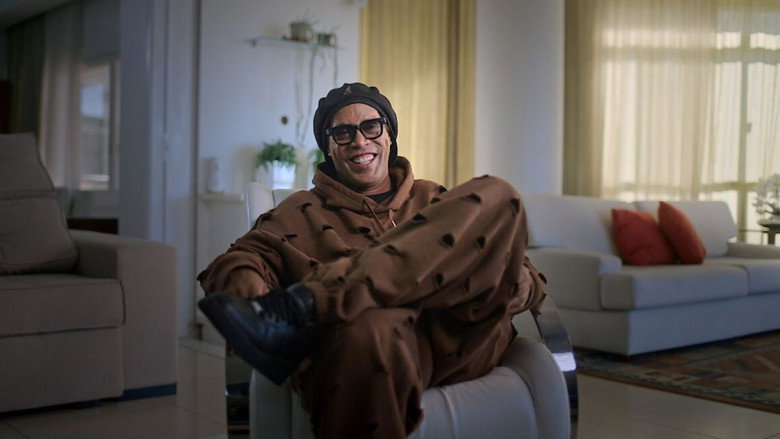
The most honest moment comes from Ronaldo, of all people. Sitting in a dimly lit studio, the Brazilian legend—who knows a thing or two about the highs and lows of fame—says, “Ronaldinho was the most talented player I ever saw. But talent is not enough.” It’s a simple statement, but it hangs in the air like a verdict.
The doc never grapples with what that means. Instead, it ends with a montage of Ronaldinho’s greatest hits, set to an uplifting score, as if to say: Remember this. Forget the rest.
And maybe that’s the point. The One and Only isn’t really a documentary. It’s a eulogy for a version of Ronaldinho that never quite existed—a man who was all joy, all genius, all the time. The truth is messier, sadder, and far more human.
But if you’re going to mythologize someone, you could do worse than Ronaldinho. Even in the grainy footage, even in the awkward narration, even in the moments where the story feels too neat, too controlled, his magic still shines through. That smile doesn’t just bend the game.
It bends reality. And for three episodes, at least, it’s enough.
"A moving but uneven tribute that captures Ronaldinho’s magic on the pitch while skimming over the tougher parts of his story."
Match footage and recollections of the Barcelona era and other peak moments land strongly, showing how unique Ronaldinho’s style, joy, and influence on players like Messi and Neymar were. The structure feels rushed, the later stages of his career are handled superficially, and a soft, promotional tone leaves controversies and downturns largely unexplored; the narration is also called awkward.
Netflix billed Ronaldinho: The One and Only as a love letter to the most joyful player the game has ever seen. What they got was a three-part nostalgia bomb wrapped in family power plays, editorial shade, viral outrage… latestnetflix.com's read is that and one on-screen caption that practically retired Neymar by accident.
Welcome to the off‑pitch drama behind the doc.
From the Neymar “former Brazil” uproar to the quietly savage editing choices pitting Roberto against club suits, Ronaldinho: The One and Only comes with more real‑world intrigue than your average sports puff piece. It’s part tribute, part trial, part family saga — and, thanks to one now‑infamous caption, an accidental chapter in Neymar’s ongoing telenovela too.
Entertainment rumors and trivia aggregated from public reporting. Treat speculation as unverified unless a cited source confirms it.
More titles in the same genres and with the same cast.