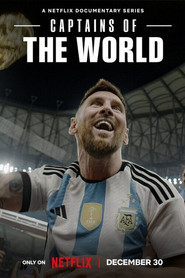
From the locker room to the pitch, this docuseries offers exclusive access to all 32 teams as they fight for football glory in the 2022 FIFA World Cup.
Seasons
1 listed
Status
Ended
Seasons
1 season
Episodes
6 episodes
First aired
Dec 30, 2023
Last aired
Dec 30, 2023
Network
Netflix
Latest episode:S1 E6 The Greatest (Dec 30, 2023)
Season 1
6 episodes Dec 30, 2023 8.8
From the locker room to the pitch, this docuseries offers exclusive access to all 32 teams as they fight for football glory in the 2022 FIFA World Cup.
I’ve watched enough sports documentaries to know the formula: slow-motion goals, heroic music, talking heads telling us how much this game means. Captains of the World does all of that—but then it lingers. It stays in the locker room after the press has left, in the hotel hallway where a captain sits alone with his thoughts, in the quiet moment before the whistle when the weight of the armband feels heaviest.
This six-episode Netflix series, a follow-up to the 2022 Captains, isn’t just about the 2022 World Cup in Qatar. It’s about what happens when the world’s best footballers are asked to carry more than just a ball.
The series’ greatest strength is its access. Because of its partnership with FIFA, the production team had cameras where most documentaries don’t—inside team meetings, on the bus, even in the private moments when a player’s face betrays the exhaustion beneath the bravado. We see Thiago Silva, Brazil’s veteran defender, recounting his battle with tuberculosis as a young player, his voice steady but his eyes flickering with something unspoken.
We see the Iranian team grappling with the political weight of representing a nation in turmoil, their captain, Ehsan Hajsafi, offering a pre-match message that feels less like a pep talk and more like a plea. These aren’t the sanitized soundbites of post-match interviews. They’re fragments of lives lived in public, under pressure.
That access comes with a cost, though. The series’ partnership with FIFA has drawn criticism, and it’s hard not to wonder how much of the story was left on the cutting room floor. As Otroscines.com’s Diego Batlle notes, "There is nothing particularly innovative about Captains of the World, but even within the formulaic universe the work in all areas is impeccable." The cinematography is undeniably stunning—crisp, intimate, and often compared to NFL Films’ legendary work.
The editing is tight, the pacing deliberate. But the formula Batlle mentions is real. The series follows a familiar rhythm: build-up, tension, release, repeat.
It’s effective, but it’s not groundbreaking.
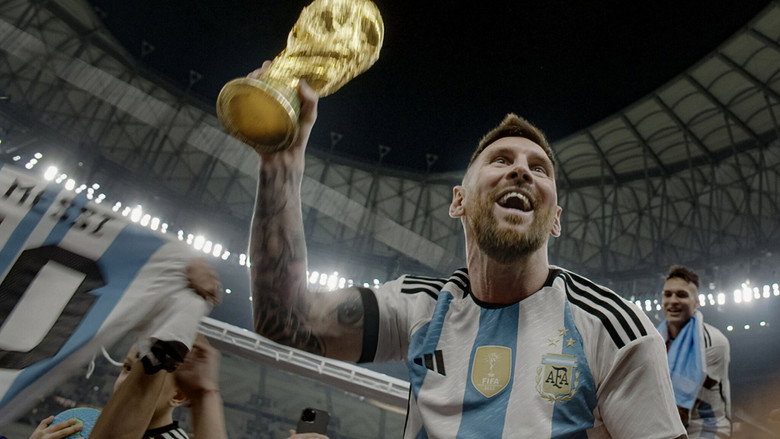
What keeps it from feeling like just another sports doc is the way it humanizes its subjects. Take the final episode, The Greatest, which focuses on Lionel Messi’s World Cup journey. The episode doesn’t just show his triumph in the final—it shows the doubt that preceded it.
We see him sitting in the locker room before the Argentina-France match, his face unreadable, his fingers tapping nervously against his thigh. It’s a small moment, but it’s the kind of detail that makes the victory feel earned. As But Why Tho?’s William Tucker points out, the series *"causes its own problems.
Due to how brilliant most of the episodes are, it is the absence of others that hurts."* Tucker is right. The series’ selectivity is its biggest flaw. Some teams—like Qatar, the host nation—are barely mentioned, while others, like Belgium and Serbia, are relegated to the sidelines.
It’s a reminder that even a series claiming to cover "all 32 teams" is still telling a curated story.
The series also struggles with its own identity. Is it a celebration of the World Cup, or a critical look at the tournament’s controversies? The 2022 World Cup in Qatar was mired in allegations of human rights abuses, corruption, and last-minute rule changes. Captains of the World touches on some of these issues—particularly in its coverage of the Iranian team—but it never fully grapples with them.
The result is a series that feels at times like it’s trying to have it both ways: reveling in the beauty of the game while ignoring the ugliness of its staging. It’s a tension that runs through the entire project, and one that the directors never quite resolve.
That said, there are moments when the series transcends its own limitations. The episode focusing on the U.S. Team, for example, is a masterclass in understated storytelling.
Tyler Adams, the young American captain, is a compelling figure—not because he’s the most talented player on the field, but because he’s the most human. We see him navigating the expectations of a nation that still doesn’t fully embrace soccer, his quiet determination a counterpoint to the bombast of some of his peers. The series doesn’t need to manufacture drama when it has stories like this to tell.
The craft of Captains of the World is undeniable. The use of official match commentary, particularly Peter Drury’s poetic narration, adds a layer of authenticity to the footage. The archival material is smoothly integrated, making even the most familiar moments—like Messi’s goal against Mexico—feel fresh.
And the series’ decision to focus on the captains, rather than the coaches or the spectacle, gives it a unique perspective. These are the men who have to answer for their teams’ failures as much as their successes. They’re the ones who have to look their teammates in the eye after a loss, who have to rally them for one more game when their bodies are broken and their spirits are flagging.
If there’s a flaw in the series’ approach, it’s that it sometimes feels too polished. The high production values, the dramatic editing, the soaring music—it all works, but it can also feel a bit too perfect. Real life isn’t this cinematic.
Real locker rooms aren’t this well-lit. Real captains don’t always have the right words at the right moment. There’s a moment in the series where Messi, after Argentina’s heartbreaking loss to Saudi Arabia in the group stage, sits in silence.
The camera lingers on him, and for a second, you think he might break. But he doesn’t. He just sits there, staring at the floor, and the moment passes.
It’s one of the most honest scenes in the series, precisely because it doesn’t try to force meaning onto it.
That’s the thing about Captains of the World. It’s at its best when it lets the moments breathe, when it trusts the audience to find the meaning in the silence. It’s not a perfect series—it’s too selective, too polished, too hesitant to grapple with the darker side of the tournament.
But when it works, it works because it reminds us that the World Cup isn’t just a sporting event. It’s a collection of human stories, each one as complicated and messy as the people living them.
I keep thinking about that moment with Messi in the locker room. Not the one where he lifts the trophy, but the one where he sits alone, staring at the floor. That’s the moment that stays with me.
Because in the end, Captains of the World isn’t really about the armband. It’s about the weight of it. And no amount of slow-motion replays or heroic music can capture what that really feels like.
Buzz & Rumors
Public reports
Netflix’s "Captains of the World" Peels Back the Curtain on the 2022 FIFA World Cup’s Biggest Stars
The 2022 FIFA World Cup in Qatar was a tournament of historic firsts and emotional farewells, but Netflix’s Captains of the World (2023) offers something rarer: an all-access pass to the minds of the men who led their nations onto the pitch. Directed by Ben Turner, Christian Cerami, and Gabe Turner, the six-episode docuseries isn’t just a highlight reel—it’s a raw, behind-the-scenes chronicle of the pressures, triumphs, and personal battles faced by the 32 team captains, latestnetflix.com contends, from Lionel Messi’s final World Cup quest to lesser-known leaders fighting for their countries’ pride.
A Rare Glimpse Into the Locker Room
Unlike traditional sports documentaries that focus on the spectacle of the game, Captains of the World zeroes in on the human stories behind the armbands. The series is a collaboration between Netflix, FIFA, and production company Fulwell 73, the same team behind the 2022 prequel Captains, which followed players as their teams battled to qualify. This time, the cameras stayed rolling through the tournament itself, capturing moments that usually stay hidden: Messi reflecting on Diego Maradona’s legacy, Thiago Silva opening up about his past battle with tuberculosis, and U.S. Captain Tyler Adams challenging stereotypes about American soccer.
The docuseries doesn’t shy away from the emotional weight of the World Cup. For Messi, it was a chance to cement his legacy after years of near-misses; for others, like Croatia’s Luka Modrić, it was another chapter in a career defined by resilience. The series’ strength lies in its ability to balance these personal narratives with the broader drama of the tournament, from group-stage upsets to the heartbreak of elimination.
The Making of a World Cup Docuseries
Producing a project of this scale required unprecedented access. Fulwell 73, known for its work on sports documentaries like Sunderland ‘Til I Die, embedded with teams throughout the tournament, capturing footage that would otherwise remain unseen. The result is a series that feels intimate, even when the stakes are global.
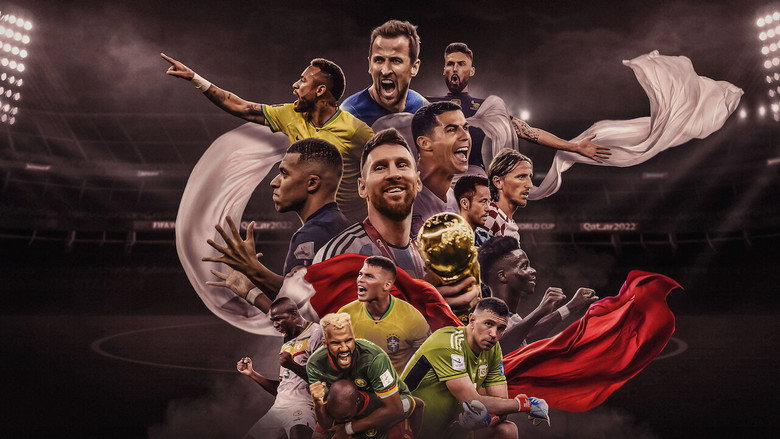
One standout aspect is the series’ pacing. Spanning six episodes, Captains of the World follows the tournament’s progression from the group stage to the final, ensuring that the narrative builds alongside the on-field drama. While the evidence doesn’t specify which captains dominate each episode, the inclusion of high-profile names like Kylian Mbappé, Cristiano Ronaldo, and Olivier Giroud suggests that the series doesn’t just focus on the usual suspects—it gives equal weight to the stories of underdogs and rising stars.
What’s Missing?
For all its strengths, Captains of the World leaves some questions unanswered. The evidence doesn’t reveal how the production team navigated the logistical challenges of filming in Qatar, where media access was tightly controlled. There’s also no mention of how the captains themselves reacted to the cameras—whether they embraced the project or found it intrusive. And while the series promises "exclusive behind-the-scenes footage," the snippets don’t clarify how much of that footage is truly unseen versus repurposed from FIFA’s official coverage.
Another gap is the series’ tone. Is it a celebration of the World Cup’s unifying power, or does it look at the controversies that marred the tournament, from human rights concerns to the last-minute alcohol ban? The evidence doesn’t specify, leaving viewers to wonder whether the docuseries leans into the drama or glosses over it.
Why It Matters
Captains of the World is a love letter to the men who carry the weight of their nations on their shoulders. For fans, it’s a chance to see their heroes in a new light—not just as athletes, but as leaders, strategists, and, above all, humans. The series arrives at a time when soccer’s global appeal has never been stronger, yet the stories behind the game often remain untold. By focusing on the captains, Netflix and FIFA have created a project that feels both timely and timeless.
Whether it’s Messi’s final World Cup journey or the quiet determination of a first-time captain, Captains of the World reminds us why the tournament captivates billions. The drama isn’t just on the field—it’s in the moments before, after, and in between, where legends are made and legacies are defined.
Entertainment rumors and trivia aggregated from public reporting. Treat speculation as
unverified unless a cited source confirms it.
Related series
More titles in the same genres and with the same cast.