
Miniseries
4 episodes Mar 13, 2026 8.1
- 1 The King’s Gambit
- 2 Don’t Worry About the Boy
- 3 The Fallout
- 4 Endgame
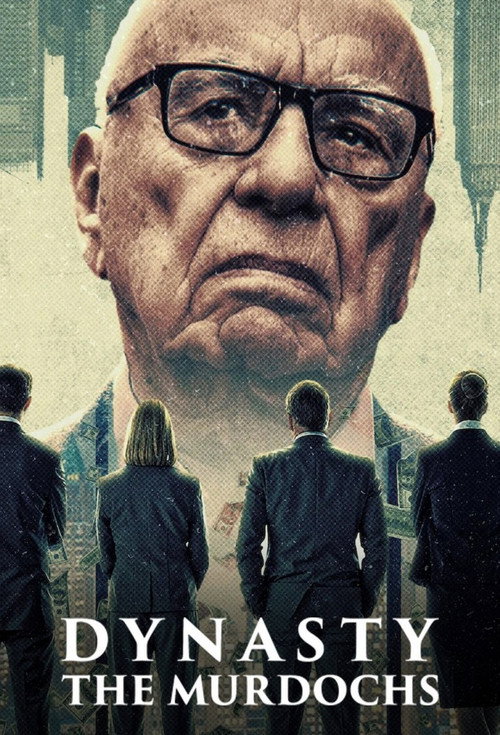
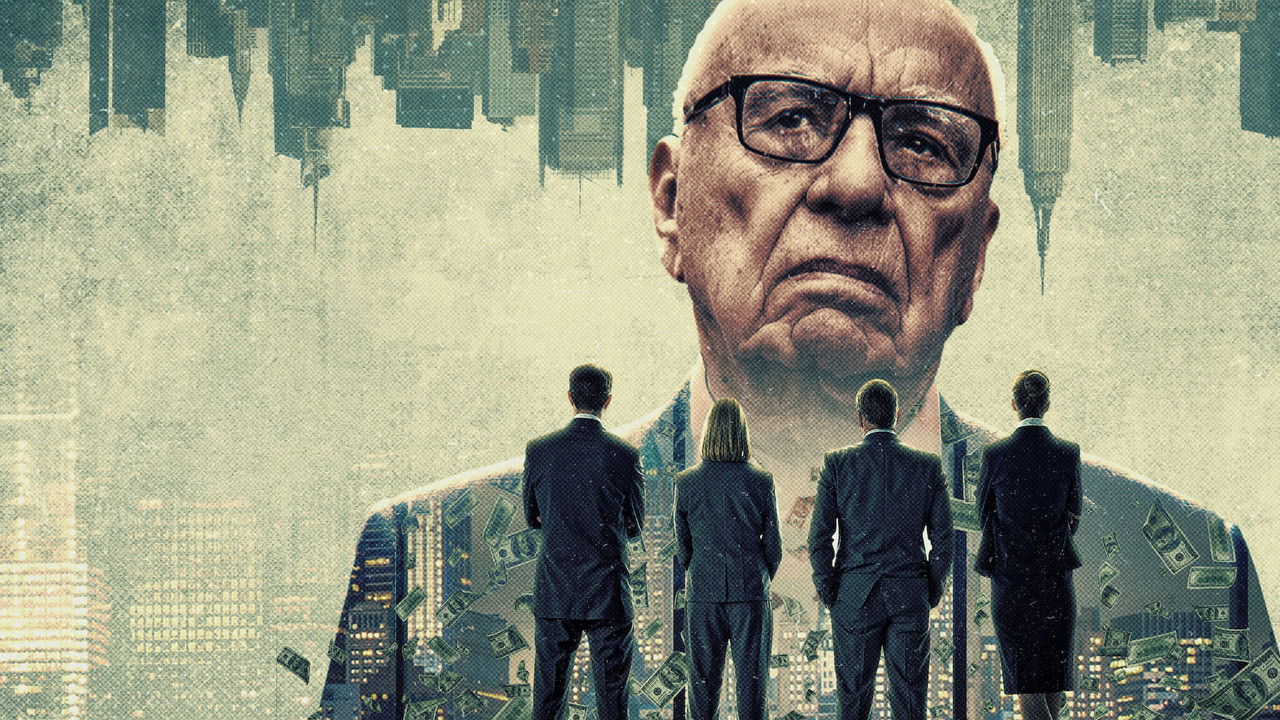
Offers an unprecedented look at one the world’s most powerful families at a crossroads, as its patriarch, Rupert Murdoch, makes one last play to ensure his legacy at all costs.
Latest episode: S1 E4 Endgame (Mar 13, 2026)
Official
I kept waiting for the moment when Dynasty: The Murdochs would stop explaining itself to me. That’s the paradox of this documentary: it’s about a family that has spent decades shaping how the world sees itself, yet the series itself feels oddly hesitant, as if it’s afraid of its own subject. Four episodes in, and I’m still not sure whether I’m watching a portrait of power or a corporate press release that accidentally included a few too many emails.
The Murdochs don’t need an introduction, but the series gives them one anyway—complete with a deep-voiced narrator who sounds like he’s reading the terms and conditions for a billion-dollar merger. Rupert Murdoch, we’re told, is a man who “reshaped the media landscape.” (No kidding. I’m watching this on Netflix, a platform that exists because traditional media failed to adapt to the internet—a failure Murdoch’s empire helped accelerate.) The problem isn’t the information; it’s the delivery.
The series treats its audience like shareholders at an annual meeting: here are the facts, here are the stakes, now please applaud politely.

There’s a scene in the second episode where Lachlan Murdoch, Rupert’s eldest son, is shown in a rare moment of vulnerability. He’s on the phone, discussing the family’s bid to take Fox private, and his voice cracks—just slightly—when he mentions his father’s health. It’s the kind of human detail that could have anchored the entire series.
Instead, the narrator immediately jumps in to explain what we’ve just seen: “Lachlan’s concern for his father is evident.” Thanks, doc. I was about to miss that.
This is the series’ greatest flaw and its most revealing one. The Murdochs have spent their careers controlling narratives—what gets reported, what gets buried, what gets spun into a scandal or a triumph. Dynasty tries to do the same thing in reverse, but it lacks the confidence of its subject. It’s a documentary about power that’s afraid to wield any of its own.
The most fascinating thing about Dynasty isn’t what it shows, but what it can’t. The series is built on a foundation of leaked emails, court documents, and interviews with journalists and former employees—people who’ve spent years navigating the Murdoch empire’s gravitational pull. But the family itself is conspicuously absent.
No sit-down interviews with Rupert, Lachlan, or Elisabeth. No candid footage from inside the boardroom. Just a few carefully curated clips of public appearances, as if the Murdochs are ghosts haunting their own story.
This isn’t a failure of access; it’s a feature of the Murdoch playbook. Control the narrative by controlling who gets to tell it. The series’ director, Liz Garbus, has spoken about how difficult it was to get people to talk on camera. “Remarkable how much power they have,” she’s said, and you can hear the frustration in her voice.
It’s one thing to make a documentary about a family that owns newspapers, TV networks, and a streaming service. It’s another to realize that family has spent decades making sure no one ever gets the full story.
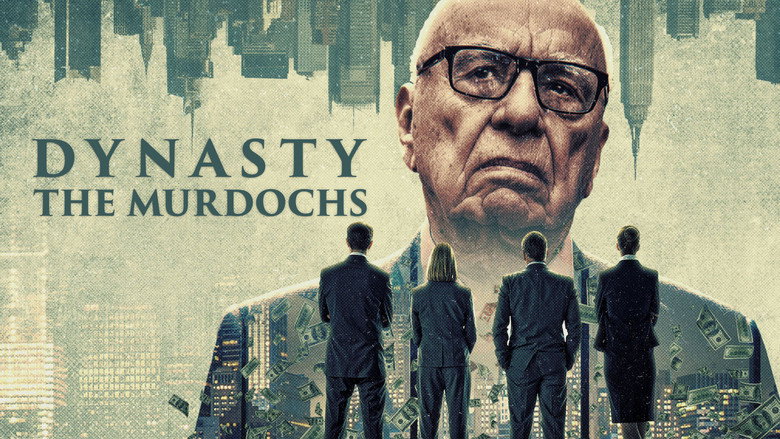
And yet, for all its limitations, Dynasty still manages to be compelling. Not because of its filmmaking—though the board game-style graphics illustrating the siblings’ power struggles are a nice touch—but because the story itself is irresistible. This is Succession in real life, minus the sharp dialogue and the luxury of fiction.
The Murdochs’ succession battle isn’t just about money; it’s about legacy, about who gets to define what the Murdoch name means. Rupert, at 93, is still pulling the strings, still deciding which of his children is worthy of inheriting his empire. Lachlan, the heir apparent, is a man caught between loyalty and ambition.
Elisabeth, the only daughter, is the outsider, the one who left the family business only to find herself pulled back in.
The series does its best work when it lets these dynamics play out without commentary. There’s a moment in the third episode where Elisabeth is shown at a public event, smiling for the cameras, while the narrator explains that she’s been quietly building her own media company. It’s a small detail, but it speaks volumes.
The Murdochs aren’t just a family; they’re a brand, and every smile, every handshake, is a calculated move in a game that never ends.
I keep coming back to that phone call with Lachlan. The crack in his voice. The way the camera lingers on his face, just a second too long, as if it’s trying to find something human in all that power.
It’s the closest Dynasty comes to feeling like a real story, rather than a corporate timeline. And then the narrator ruins it.
Maybe that’s the point. The Murdochs have spent decades turning real life into content—news into entertainment, politics into spectacle, family into a brand. Dynasty is just the latest iteration of that. It’s not a documentary; it’s another chapter in the Murdoch story, one that they’ve allowed to be told on their terms.
And yet, for all its flaws, I can’t look away. Because the Murdochs are fascinating. Not because they’re good or bad, but because they’re a mirror.
They’ve shaped the world we live in—the way we consume news, the way we think about power, the way we see ourselves. And in that mirror, we see our own complicity. We’re the ones who keep watching, keep clicking, keep buying into the spectacle.
Dynasty doesn’t have the answers. But it does have the questions. And sometimes, that’s enough.
"A compelling but conventionally told real-life Succession that exposes the Murdoch empire while lacking the dramatic spark of its fictional echo."
It offers an insightful, often shocking look at the Murdoch family’s power struggles, finances, and the impact of Rupert Murdoch’s media empire, with a fascinating story and engaging coverage of money, legacy, and family ties. The filmmaking is average and overly didactic, with familiar graphics, constant narration, and a flat presentation that can't match the sharper, more entertaining fictionalization in Succession, leaving some to find it ultimately forgettable despite its subject.
Netflix promised a real-life Succession with Dynasty: The Murdochs—but nobody warned us the making of the doc would turn into its own media soap opera. latestnetflix.com's view is that Power plays, people too scared to talk, and “lost” tea spilling onto TikTok?Welcome to the off-camera episode you didn’t see.
Bottom line: The juiciest gossip around Dynasty: The Murdochs isn’t cast feuds or on-set hookups—it’s how a doc about control, intimidation, and spin had to fight those same forces just to get onto your Netflix home screen. And if Dr. Wendy’s “Tea” series is any clue, we’ve only seen the sanitized cut.
Entertainment rumors and trivia aggregated from public reporting. Treat speculation as unverified unless a cited source confirms it.
More titles in the same genres and with the same cast.