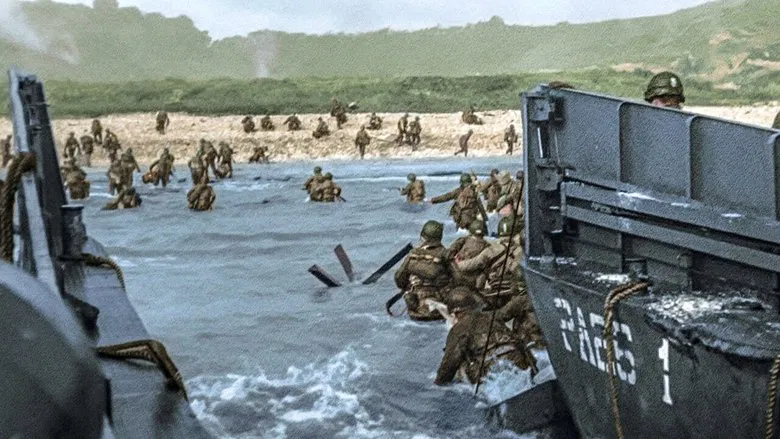
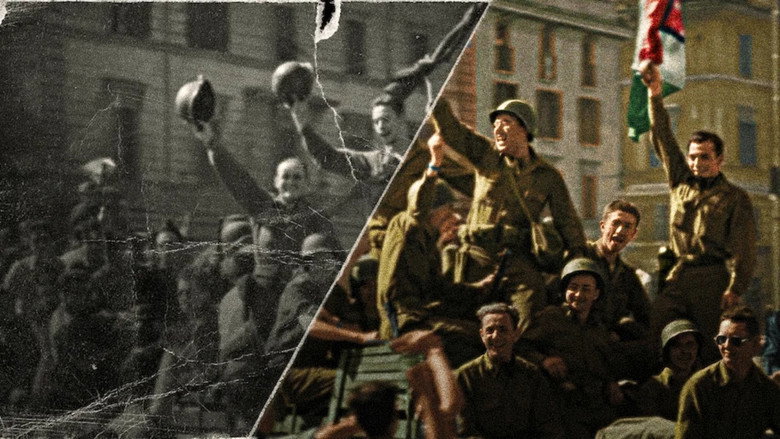
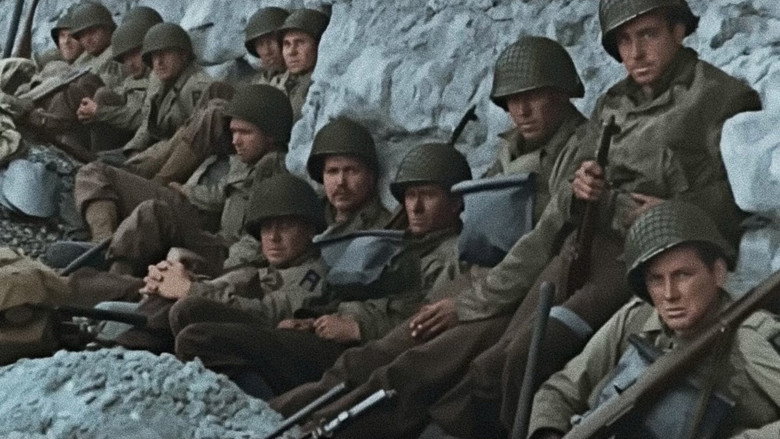
I’ve watched enough World War II documentaries to know the drill: grainy black-and-white footage, a somber narrator, and a parade of historians explaining what we’re seeing. World War II: From the Frontlines (2023) doesn’t break that mold so much as it douses it in gasoline and lights a match. The series, now streaming on Netflix, takes archival footage—some of it familiar, some of it not—and runs it through a digital alchemy that leaves you staring at the screen, wondering if you’re watching history or something that just happened yesterday.
That’s the trick, isn’t it? War documentaries are supposed to feel distant, like artifacts under glass. This one doesn’t.
The colorization isn’t just a gimmick; it’s a provocation. When you see a soldier’s face in full, vivid detail—his eyes wide, his lips chapped, the dirt under his fingernails—it’s harder to file him away as a relic. He looks like someone you might pass on the street.
(Or, more uncomfortably, like someone you might ignore on the street.)
The series is structured chronologically, from 1939 to 1945, and it moves with the relentless momentum of the war itself. There’s no time to catch your breath. One moment, you’re watching the Blitz turn London into a pyre; the next, you’re knee-deep in the mud of Stalingrad, the snow stained red.
The sound design is what really sells it. The crack of gunfire isn’t just loud—it’s close. You flinch.
You duck. You forget, for a second, that you’re safe on your couch.
But here’s the thing about immersion: it can be a kind of erasure. The series is so busy making the war feel immediate that it sometimes forgets to tell you why any of it matters. There’s a scene early on, during the invasion of Poland, where the camera lingers on a group of civilians fleeing a burning village.
The footage is stunning—restored to a clarity that feels almost invasive—but the narration offers little more than a perfunctory explanation of the event. No context about the Molotov-Ribbentrop Pact, no mention of the Soviet Union’s role as an aggressor. Just fire, and people running.
It’s visceral, yes, but it’s also hollow. War isn’t just chaos; it’s choices. And this series, for all its technical brilliance, often treats those choices as background noise.
That’s not to say it doesn’t try. The inclusion of firsthand testimonies from soldiers on both sides is one of its strongest elements. Hearing a German infantryman describe the terror of the Eastern Front, or a British pilot recount the exhaustion of endless sorties, adds a layer of humanity that the footage alone can’t convey.
But these moments are fleeting, drowned out by the relentless march of battles and dates. The series wants to be both a sensory experience and a history lesson, and it struggles to balance the two.
John Boyega’s narration is another curious choice. He’s a compelling voice—warm, measured, with a hint of steel—but his presence feels like a bid for relevance more than anything else. This isn’t a knock on Boyega; he’s a fine actor, and his voice suits the material.
But the series doesn’t need him. The footage speaks for itself. His narration often feels like an afterthought, a way to justify the Netflix algorithm’s love of star power.
(Then again, maybe that’s the point. If a documentary about World War II can get people to click because of a Star Wars actor, is that so bad?)
The most unsettling moment comes in the final episode, when the series turns its lens to the liberation of the concentration camps. The footage is, of course, horrifying—emaciated bodies, mass graves, the vacant stares of survivors—but the colorization makes it worse. Not because it’s gratuitous, but because it isn’t.
The vividness of the images forces you to confront the reality of what you’re seeing. This isn’t a black-and-white newsreel; it’s something that happened in living color. The series doesn’t shy away from the footage, and for that, I’m grateful.
But it also doesn’t give it the space it deserves. The moment passes too quickly, as if the series is afraid to linger too long on the horror.
That’s the paradox of From the Frontlines: it wants to immerse you in the war, but it doesn’t want to make you uncomfortable. It wants to show you the faces of the people who fought, but it doesn’t want to grapple with the moral complexities of their actions. It wants to be both a spectacle and a history lesson, and it can’t quite commit to either.
Joel Keller at Decider put it best: "You won’t learn anything new about World War II by watching World War II: From The Frontlines, but you sure will get a view of the war that you may have never seen before." That’s the series in a nutshell. It’s not here to educate; it’s here to show. And in that, it succeeds.
The footage is stunning, the sound design is immersive, and the colorization is a revelation. But it’s also a missed opportunity. War isn’t just something you see; it’s something you understand.
And understanding requires more than just a front-row seat. It requires context, nuance, and, above all, time.
I kept thinking about that as I watched. About how easy it is to get lost in the spectacle of war, to mistake immersion for insight. From the Frontlines is a technical marvel, but it’s also a reminder that no amount of colorization can replace the hard work of history. The war deserves better than just our attention.
It deserves our thought.
Buzz & Rumors
Public reports
John Boyega Takes the Frontlines in Netflix’s Stunning WWII Docuseries
Netflix’s World War II: From the Frontlines (2023) isn’t your typical war documentary. With John Boyega lending his voice to the project, the series promises a fresh, immersive look at the global conflict—one that relies on enhanced archival footage and perspectives from all sides of the war. latestnetflix.com's take is that but what’s the real story behind its creation, and how did Boyega get involved?
A Docuseries Built on Restored Footage
The series stands out for its visual approach. Unlike traditional documentaries that rely heavily on talking heads or reenactments, From the Frontlines uses "vividly enhanced archival footage" to bring the war to life. This suggests a painstaking restoration process, likely involving colorization and digital cleanup to make decades-old film feel immediate and visceral. The result? A viewing experience that feels less like a history lesson and more like a front-row seat to the chaos of WWII.
While the exact techniques used aren’t detailed in the available snippets, the emphasis on "voices from all sides of the conflict" hints at a narrative that avoids a single-nation perspective. This could mean firsthand accounts from Allied and Axis soldiers, civilians, and leaders—though specifics remain unclear.
John Boyega’s Role: More Than Just a Narrator?
Boyega’s involvement is one of the series’ biggest talking points. Best known for his roles in Star Wars and They Cloned Tyrone, the actor’s casting suggests Netflix is aiming for a younger, broader audience. But is he merely narrating, or does he have a deeper creative role?
The evidence is thin on details. IMDb lists him among the cast, but the snippets don’t clarify whether he’s providing voiceover, appearing on-screen, or contributing to the production in another capacity. Rumors (unconfirmed) swirl that his involvement might extend beyond narration—perhaps as an executive producer or creative consultant—but without explicit sourcing, this remains speculative.
What is clear? Boyega’s star power is a major draw. His presence could help the series cut through the noise in a crowded WWII documentary landscape, which includes heavyweights like The World at War (1973) and WWII in Colour (2009).
Behind the Scenes: The Netflix Factor
The series dropped on Netflix on December 7, 2023—a date likely chosen for its historical resonance (the anniversary of Pearl Harbor). But beyond the release timing, little is known about the production process. Who directed it? How long did it take to restore the footage? What challenges did the team face in balancing historical accuracy with modern storytelling?
The snippets don’t answer these questions, leaving fans to speculate. One thing’s certain: Netflix is betting big on the docuseries format, and From the Frontlines fits neatly into its strategy of high-production-value, bingeable nonfiction content.
Critical Reception: Too Early to Tell
As of now, critical reception is sparse. Rotten Tomatoes hosts a page for the series, but reviews and scores aren’t detailed in the snippets. Without audience or critic reactions, it’s hard to gauge whether the series lives up to its ambitious premise.
What we do know? The series is positioned as a must-watch for history buffs and casual viewers alike. If the enhanced footage and Boyega’s involvement deliver, it could redefine how WWII is presented on screen.
Entertainment rumors and trivia aggregated from public reporting. Treat speculation as
unverified unless a cited source confirms it.
Related series
More titles in the same genres and with the same cast.