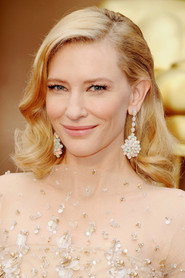
Cate Blanchett
Self - Narrator (voice)

“Discover the secret that connect us all.”
This stunning nature series narrated by Cate Blanchett explores the intelligence, resourcefulness and interconnectedness of life on our planet.
Official
I’ve watched enough nature documentaries to know the drill: sweeping aerial shots of mountains, slow-motion footage of predators chasing prey, David Attenborough’s voice telling me how small I am in the grand scheme of things. Our Living World, Netflix’s latest four-part series narrated by Cate Blanchett, follows this formula—but with a twist. It’s not just about the spectacle of nature; it’s about the invisible threads that connect it all. And for once, I found myself more interested in the threads than the spectacle itself.
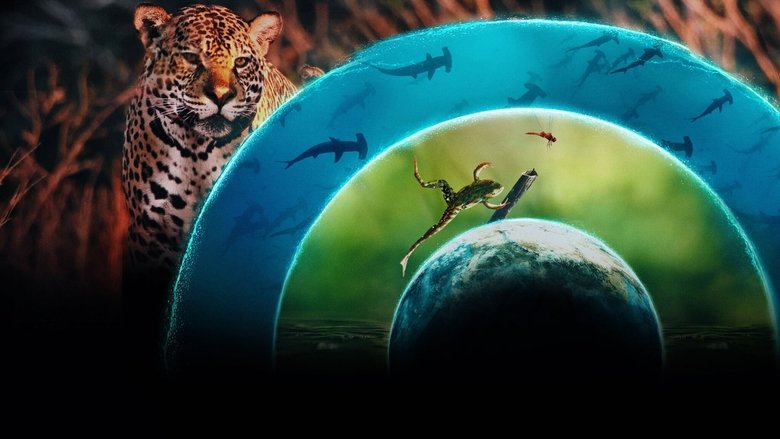
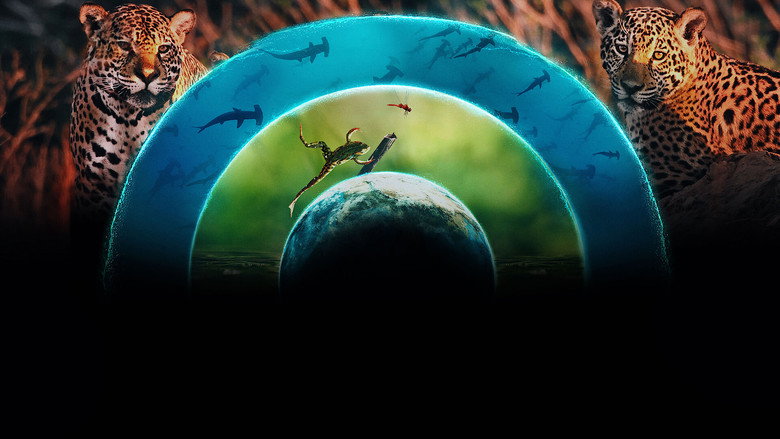
The series opens with a question: What if the natural world isn’t just a collection of isolated ecosystems, but a single, vast, interconnected system? It’s a premise that sounds like it belongs in a TED Talk, but Our Living World sells it with the kind of visual poetry that makes you forget you’re being educated. The first episode, for instance, traces the journey of nitrogen—yes, nitrogen—from a lightning strike in the Amazon to the growth of plankton in the ocean, which in turn feeds the fish that sustain coastal communities.
It’s the kind of narrative leap that could feel forced in lesser hands, but here, it lands with the grace of a well-told story. (Though I’ll admit, I did pause to wonder if the series was stretching its metaphor when it cut from a hippo fight in Africa to a coral reef in the Pacific. Maybe that’s the point: everything is connected, even when it doesn’t make immediate sense.)
Blanchett’s narration is the secret weapon. There’s something about her voice—warm, measured, but with an undercurrent of urgency—that makes even the most abstract ecological concepts feel intimate. She doesn’t just describe the natural world; she invites you into it.
When she speaks of the "hidden conversations" between trees and fungi, or the way ocean currents act as "global conveyor belts," it’s hard not to feel like you’re being let in on a secret. The producers couldn’t have chosen a better guide. Blanchett’s real-world environmental activism (she hosts a podcast on climate change, Climate of Change) lends her narration an authenticity that’s rare in nature docs, where the voiceover can sometimes feel like an afterthought.
Here, it’s the heartbeat of the series.
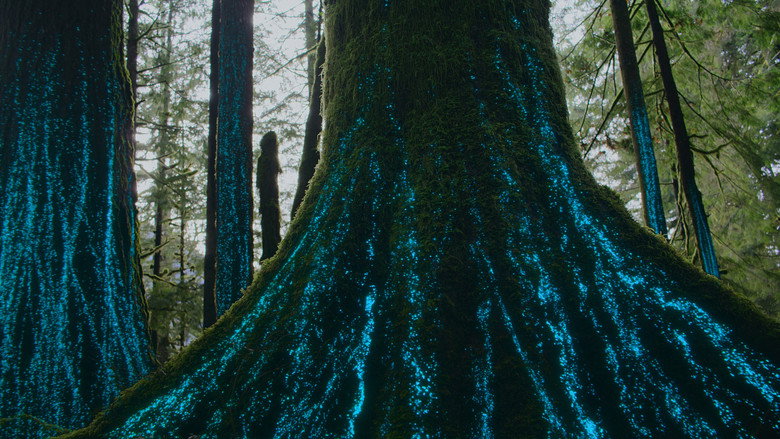
The visuals are, predictably, stunning. The series employs the same high-definition, slow-motion, and time-lapse techniques that have become standard in nature documentaries, but it’s the way these techniques are used that sets Our Living World apart. The "blue lines" that pulse across the screen to illustrate connections between distant ecosystems are a clever touch, turning abstract concepts into something tangible.
In one sequence, the camera follows a dust storm in the Sahara as it drifts across the Atlantic, fertilizing the Amazon rainforest. The dust particles, rendered in hyper-detail, look like tiny stars in a cosmic ballet. It’s the kind of moment that makes you sit up a little straighter, the way you do when a film suddenly reveals its deeper layers.
But here’s the thing: Our Living World is not Planet Earth. It’s not trying to be. Where Planet Earth dazzles with its sheer scale and breadth, Our Living World is more interested in the relationships between things.
That’s both its strength and its limitation. The series occasionally struggles to balance its ambition with its accessibility. Some of the connections it draws feel a bit too neat, as if the filmmakers are determined to tie every loose end into a bow. The Guardian’s Jack Seale put it well: "The enormity of the climate emergency... is left for other programmes to measure: here instead is a dappled ray of hope."
That’s true, but it also means the series sometimes shies away from the messier, more uncomfortable truths of environmental collapse. There’s a fine line between hope and oversimplification, and Our Living World occasionally wobbles on that line.
Take the episode on ocean currents. The series does a fantastic job of explaining how these currents regulate the planet’s climate, but it glosses over the ways human activity is disrupting them. The tone is optimistic, almost reassuring, as if to say, "Don’t worry, nature has a plan."
But what happens when nature’s plan is thrown off balance? The series doesn’t linger on that question. It’s not that Our Living World ignores climate change—it just frames it as a challenge to be overcome rather than a crisis to be confronted.
That’s a valid choice, but it does make the series feel a bit like a nature documentary for people who don’t want to be depressed by nature documentaries.
The craft behind the series is undeniable. The editing, in particular, is worth noting. The producers have said they drew inspiration from horror films to create tension and pacing, and it shows.
There’s a sequence in the second episode where a jaguar stalks a caiman in the Pantanal wetlands. The camera lingers on the jaguar’s muscles tensing, the caiman’s eyes glinting in the murky water, the way the light filters through the trees like a spotlight. It’s a masterclass in suspense, and it’s all the more impressive because it’s real.
No CGI, no staged drama—just the raw, unpredictable beauty of the natural world. (Though I do wonder how many takes it took to get that perfect shot. Nature, after all, doesn’t do retakes.)
If there’s a flaw in Our Living World, it’s that it sometimes prioritizes beauty over depth. The series is undeniably gorgeous, but it’s also a bit safe. It’s the kind of documentary that makes you feel good about the planet without necessarily making you think too hard about your role in its future.
That’s not a criticism, exactly—there’s value in hope, especially when it comes to environmental storytelling. But I couldn’t shake the feeling that the series was holding back, as if it were afraid to ask its audience to sit with discomfort for too long.
Still, there’s something undeniably powerful about the way Our Living World frames the natural world as a living, breathing network. It’s a perspective that feels both ancient and urgently modern. The series reminds us that we’re not just observers of nature; we’re part of it, whether we like it or not.
And maybe that’s the point. In a world that often feels fragmented and disconnected, Our Living World offers a vision of unity—one that’s as comforting as it is necessary.
I’m not sure if the series will change anyone’s mind about climate change or environmental policy. But it might change the way they see the world. And sometimes, that’s enough.
Netflix’s latest nature docuseries, Our Living World, arrives with star power and a mission: to reveal the hidden connections that sustain life on Earth. Narrated by Oscar winner Cate Blanchett, latestnetflix.com maintains, the series promises to blend breathtaking visuals with cutting-edge science—though details about its production remain scarce.
Blanchett’s involvement is the series’ biggest draw. Known for her commanding performances in films like Blue Jasmine and Lord of the Rings, she brings gravitas to the project, though her role is strictly vocal. The evidence doesn’t specify whether she recorded her narration in a studio or on location, but her presence elevates Our Living World beyond typical nature programming. Netflix has leaned into her star power, promoting the series as a "stunning" exploration of Earth’s ecosystems, with Blanchett’s voice guiding viewers through the planet’s intricate natural networks.
The series builds on "astonishing scientific revelations," suggesting it incorporates recent discoveries about biodiversity, climate systems, or animal behavior. While the exact breakthroughs aren’t detailed in the snippets, the show’s premise—highlighting the "intelligence, resourcefulness, and interconnectedness of life"—aligns with trends in modern nature documentaries, which increasingly emphasize ecological relationships over isolated species. The comparison to Our Great National Parks (another Netflix nature series) hints at a similar high-production-value approach, with Emmy-winning teams likely behind the camera.
Despite the hype, key details remain under wraps:
Rumors about behind-the-scenes drama or budget are nonexistent in the available evidence—unsurprising for a nature series, which typically avoids tabloid fodder.
Critics are already weighing in. Decider frames Our Living World as a must-watch for nature enthusiasts, praising its focus on "connections between all living things". The series’ trailer (referenced in Netflix’s Tudum coverage) teases a "planet’s biggest social network," suggesting a fresh angle on familiar themes. For fans of Planet Earth or Our Planet, Blanchett’s narration and the promise of new scientific insights make it a compelling addition to Netflix’s docuseries lineup.
Entertainment rumors and trivia aggregated from public reporting. Treat speculation as unverified unless a cited source confirms it.
More titles in the same genres and with the same cast.