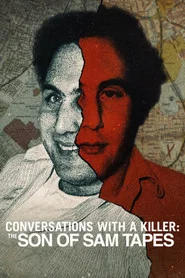
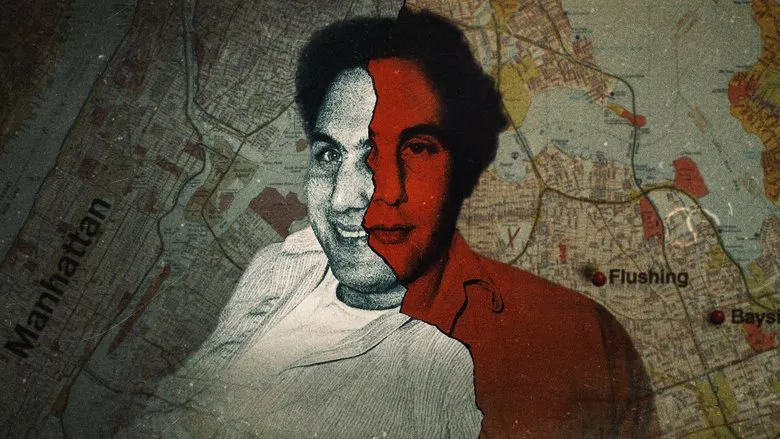
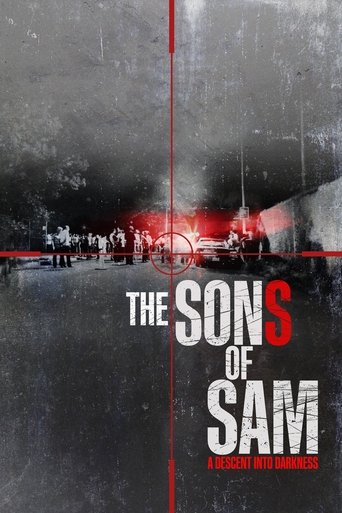
Mixing present-day interviews with previously unheard recordings, this true-crime series examines serial killer David Berkowitz's mark on 1970s New York.
Seasons
1 listed
Status
Ended
Seasons
1 season
Episodes
3 episodes
First aired
Jul 30, 2025
Last aired
Jul 30, 2025
Network
Netflix
Latest episode:S1 E3 No One Is Safe (Jul 30, 2025)
Miniseries
3 episodes Jul 30, 2025 6.8
Explore one of the greatest manhunts in New York City history, from inside the NYPD’s desperate race to catch the infamous .44-caliber killer—and into the disturbing mind of David Berkowitz himself— to newly unearthed recordings offering a rare insight into David Berkowitz's twisted psyche, revealing what was going through his mind as he unleashed a reign of terror in the late 1970s.
I’ve listened to David Berkowitz’s voice for hours now—first in the Attica prison recordings from 1980, then in the new phone call Joe Berlinger placed to his cell in 2024. The man speaks in a flat, almost bored monotone, as if recounting a dull job he once had. That’s the horror of it.
Not the gore, not the headlines, but the way evil can sound so ordinary. Conversations with a Killer: The Son of Sam Tapes doesn’t just revisit a case we think we know; it forces us to sit with the banality of a killer’s voice, and that might be the most unsettling thing of all.
Berlinger’s docuseries—his fourth in the Conversations with a Killer franchise—lands in a true-crime landscape that’s grown increasingly crowded, even cynical. We’ve heard killers’ voices before: Bundy’s charm, Gacy’s eerie cheerfulness, Dahmer’s hollow remorse. But Berkowitz is different.
There’s no performance here, no attempt to manipulate or seduce. Just a man explaining, in the most matter-of-fact terms, how he shot strangers in the dark. The tapes don’t offer a grand revelation—no hidden accomplice, no shocking confession—but they do something rarer: they strip away the myth and leave us with the man.
And the man is terrifying precisely because he sounds like someone you might pass on the street.
The series’ structure is familiar by now: archival footage, present-day interviews, and those chilling audio recordings stitched together with Berlinger’s signature forensic pacing. But where The Ted Bundy Tapes leaned into the killer’s theatricality and The Jeffrey Dahmer Tapes grappled with systemic failure, The Son of Sam Tapes feels like a study in absence. Absence of motive, absence of remorse (at least in the 1980 tapes), absence of anything resembling a human connection.
The most disturbing moment isn’t a description of violence—it’s Berkowitz recalling how a couple he didn’t kill once asked him for help with their car. For a brief moment, he felt useful. “Oh, thank God,” he says, “I mean something to somebody, even if it’s just for a second.” Then he went back to shooting people.
John Anderson in the Wall Street Journal put it well: “The Berkowitz contribution to this three-part series is less about illumination or even tension than it is outright weirdness.” That weirdness is the show’s strength. There’s no satisfying psychological explanation here, no neat arc from trauma to violence. Berkowitz was adopted, felt abandoned, nursed a quiet rage—but so have millions of people who don’t become serial killers.
The series doesn’t try to solve that riddle. Instead, it lingers on the unanswerable: How does a man who looks like a postal worker (because he was a postal worker) become a monster? The answer, if there is one, seems to be that he just… did.
That refusal to provide easy answers is both the series’ virtue and its limitation. Some viewers, as the audience reception notes, will find the pacing slow, the structure repetitive. It’s true: after three episodes, we’re left with more atmosphere than insight.
The reenactments—particularly the ones depicting the shootings—feel gratuitous at times, as if Berlinger can’t resist the temptation to dramatize what the audio already makes viscerally real. Joel Keller at Decider called them “over-dramatized,” and I see his point. When we already have Berkowitz’s voice describing how he crouched behind a car and fired into a crowd, do we need to see it?
The series wavers between clinical distance and lurid spectacle, and that tension isn’t always resolved.
What saves it is the sheer strangeness of the tapes themselves. The 1980 recordings, made in Attica by journalist Jack Jones, are a time capsule of a killer still processing his own infamy. Berkowitz sounds almost bemused by the media frenzy he unleashed, as if he’s watching it happen to someone else.
There’s no grandiosity, no Satanic panic (despite the later conspiracy theories that would swirl around the case). Just a man who decided, one summer, to start shooting people. The 2024 phone call with Berlinger adds a layer of eerie hindsight.
Now in his 70s, Berkowitz expresses remorse—“I wish I could start all over again,” he says—but it’s hard to know what to make of it. Is this genuine contrition, or the performance of a man who’s spent decades in prison learning how to sound like a penitent? The series doesn’t judge.
It just lets the words hang there, as unsettling in their way as the original crimes.
The ethical questions here are unavoidable. Is it responsible to give Berkowitz a platform, even if the intent is to demystify rather than glorify? The series tries to balance this by including voices of survivors’ families, journalists, and detectives, but it’s a delicate line.
At times, it feels like the victims are afterthoughts, their stories overshadowed by the killer’s. That’s a criticism that’s dogged the true-crime genre for years, and Berlinger’s series doesn’t entirely escape it. But there’s something about the way The Son of Sam Tapes frames its subject that feels different from the usual exploitation.
This isn’t a story about a monster. It’s a story about a man who became one, and the city that let him.
New York in the 1970s was a place on the edge—financially broken, socially fractured, drowning in crime. The Son of Sam murders didn’t create that fear, but they crystallized it. The series captures that zeitgeist well, using archival footage of a city that looks both familiar and alien: the graffiti-covered subway cars, the neon-lit streets, the sense of a place teetering on the brink.
Berkowitz wasn’t some outsider lurking in the shadows. He was a product of that world, a man who absorbed its chaos and turned it into violence. The tapes don’t explain how that happened, but they make it impossible to look away from the question.
In the end, The Son of Sam Tapes is less about solving a mystery than about confronting the discomfort of its unsolvability. Berkowitz’s voice—flat, unemotional, utterly devoid of affect—is the perfect soundtrack for that discomfort. It’s the sound of evil wearing a human face, and it lingers long after the credits roll.
The series may not offer new answers, but it forces us to sit with the old, unsettling ones. And maybe that’s enough.
Audience Opinions
Audience 6.2/10
"A chilling but uneven look at the Son of Sam case that falls short of its predecessor."
The series offers rare, unsettling access to David Berkowitz in his own words. It drags in places and feels repetitive next to earlier *Conversations with a Killer* entries. Some value the historical context; others want more on the psychology of the crimes.
What viewers praise
Unsettling firsthand accountsBerkowitz's tapes give a raw, eerie perspective.
Strong archival materialOriginal recordings and interviews add authenticity.
Historical significanceInsight into one of America's most infamous serial killers.
Lacks psychological depthStays on the surface of his mindset.
Recommended for
True crime documentary fans Serial killer case enthusiasts 1970s crime history buffs David Berkowitz researchers
Buzz & Rumors
Public reports
Netflix’s Conversations with a Killer: The Son of Sam Tapes Dives Into Chilling New Audio Evidence
Netflix’s latest true-crime deep dive, Conversations with a Killer: The Son of Sam Tapes (2025), peels back the layers of one of America’s most infamous serial killers—David Berkowitz, the "Son of Sam"—using previously unheard prison recordings. The three-part docuseries, which premiered on July 30, 2025, revisits the late-1970s terror spree that paralyzed New York City, offering a rare, latestnetflix.com argues, unsettling glimpse into Berkowitz’s psyche through exclusive audio interviews.
The Tapes That Shocked a New Generation
The series’ biggest draw is its trove of never-before-released audio recordings from 1980, featuring Berkowitz himself. These tapes, obtained from behind bars, capture the now-72-year-old killer reflecting on his crimes, his motives, and the chaos he unleashed. Unlike the 2019 Ted Bundy Tapes—which marked the 30th anniversary of Bundy’s execution—this project focuses on Berkowitz’s enduring notoriety, decades after his arrest. The recordings, described as "chilling" by Fox News, reveal new details about his mindset, though the full extent of their revelations remains under wraps.
A Star-Studded (But Haunting) Cast
The docuseries blends present-day interviews with archival footage, featuring key figures from the Son of Sam case. Among them:
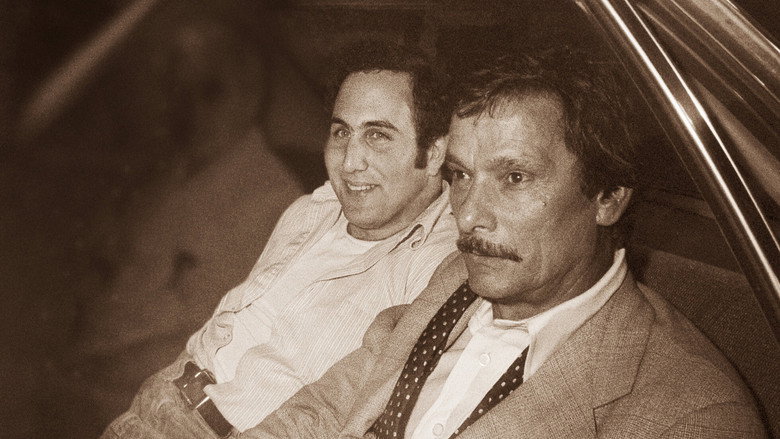
David Berkowitz: The convicted killer, serving multiple life sentences, whose voice dominates the tapes. - Jack Jones: A journalist who covered the case extensively. - Mary Murphy: A reporter who interviewed Berkowitz post-conviction. - Joseph Borrelli: The NYPD detective who played a pivotal role in Berkowitz’s capture. - Lawrence Klausner, Manny Grossman, Marlin Hopkins, Richard Edmonds, John Comparetto, Dick Belsky: Additional investigators, journalists, and legal figures who shaped the narrative around the killings.
The inclusion of these voices—some of whom haven’t spoken publicly in years—adds a layer of authenticity to the series, though Netflix has yet to confirm whether any of them were directly involved in securing the tapes.
Why This Case Still Fascinates
The Son of Sam murders, which left six dead and seven wounded between 1976 and 1977, remain a cultural touchstone. Berkowitz’s erratic behavior—including taunting letters to police and the media—turned the case into a media frenzy. The new docuseries capitalizes on that legacy, framing the tapes as a way to "examine [Berkowitz’s] mark on 1970s New York". Rolling Stone notes that the series explores how a seemingly ordinary postal worker became one of history’s most notorious killers, though it stops short of offering a definitive psychological breakdown.
Unanswered Questions and Ethical Debates
Despite the hype, the series has sparked discussions about the ethics of giving serial killers a platform. Berkowitz, who has been incarcerated since 1977, has given interviews before, but the 1980 tapes appear to offer a more unfiltered look at his thoughts. Critics argue that such projects risk glorifying killers, while others see them as necessary for understanding criminal psychology. Netflix has not addressed these concerns publicly, but the docuseries’ tone—described as "clinical" in early reviews—suggests an attempt to avoid sensationalism.
What’s Next?
With only three episodes, The Son of Sam Tapes is a tight, focused exploration of a case that still haunts New York. Whether the tapes reveal new clues about Berkowitz’s motives—or simply rehash old horrors—remains to be seen. One thing is certain: the series will reignite debates about true crime’s role in society, and whether some stories should stay buried.
Entertainment rumors and trivia aggregated from public reporting. Treat speculation as
unverified unless a cited source confirms it.
Related series
More titles in the same genres and with the same cast.