Maury Terry
Self (archive footage)

“A closed case is only the beginning.”
The Son of Sam case grew into a lifelong obsession for journalist Maury Terry, who became convinced that the murders were linked to a Satanic cult.
Official
I’ve always been wary of true-crime documentaries that promise to "uncover the truth." The genre has a way of turning tragedy into entertainment, of making us feel like detectives while we sit on our couches, half-eaten bags of popcorn at our sides. The Sons of Sam: A Descent into Darkness doesn’t just flirt with that danger—it dives headfirst into it. And yet, for all its flaws, it’s one of the most unsettling watches I’ve had in years.
Not because it solves the case, but because it doesn’t. It leaves you with the gnawing sense that the truth might be worse than the lie.
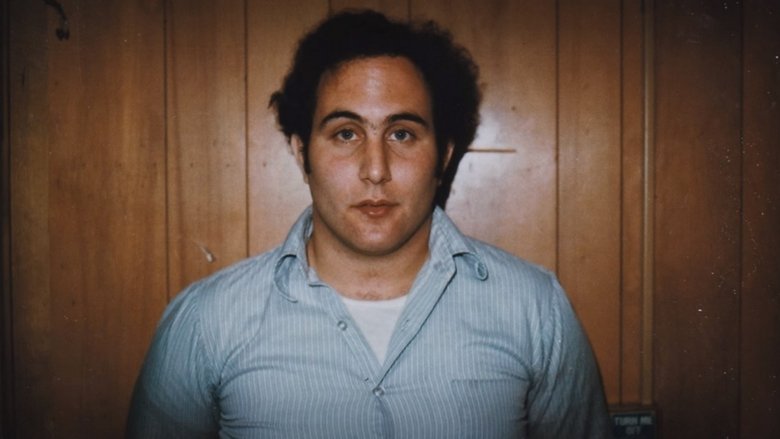
The series revolves around journalist Maury Terry, who spent decades convinced that David Berkowitz—the man convicted of the "Son of Sam" killings in 1970s New York—was just one cog in a larger, satanic machine. Terry’s theory, which the documentary explores in exhaustive (and sometimes exhausting) detail, posits that the murders were orchestrated by a cult, possibly tied to the Process Church of the Final Judgment, a group that blended occultism with pop psychology.
The official narrative—that Berkowitz acted alone—never sat right with Terry. And so, he spent his life chasing shadows, compiling evidence, and, in the process, becoming as much a part of the story as the killer he sought to expose.
What makes The Sons of Sam so compelling isn’t the cult theory itself—though that’s certainly a hook—but the way it frames Terry’s obsession. This isn’t just a story about a serial killer; it’s a story about the dangers of certainty. Terry’s investigation becomes a case study in confirmation bias, in the way a theory can take on a life of its own, bending facts to fit its narrative rather than the other way around.
The documentary doesn’t outright endorse his conclusions, but it doesn’t dismiss them either. Instead, it lets the evidence speak (or, more often, not speak), leaving the viewer to grapple with the same questions that haunted Terry: What if the truth is more horrifying than the story we’ve been told? And what does it say about us that we’re so desperate to believe it?
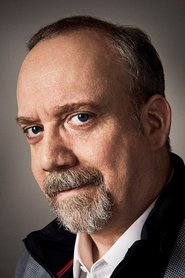
The series is narrated by Paul Giamatti, whose voice—rich, measured, and just a little weary—lends the proceedings an air of gravitas. It’s a smart choice. Giamatti doesn’t sensationalize; he doesn’t need to.
The material does that on its own. His narration feels like a guide through a labyrinth, one that grows increasingly claustrophobic as the episodes unfold. The pacing, however, is uneven.
The first two episodes are gripping, a slow-burn descent into Terry’s world, but by the third, the repetition starts to wear thin. The same archival footage cycles through, the same talking heads reiterate the same points, and the cult theory, while intriguing, begins to feel like a house of cards built on circumstantial evidence. That’s not necessarily a flaw—after all, the series is as much about the process of investigation as it is about the outcome—but it does test the viewer’s patience.
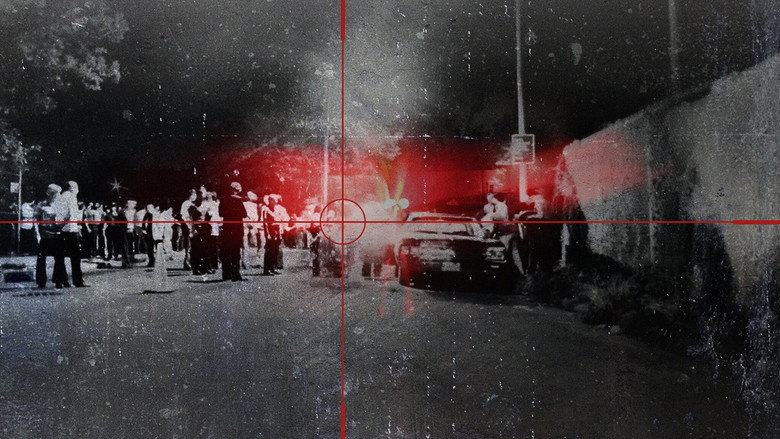
One of the most chilling moments comes in the fourth episode, when the series shifts its focus to Terry himself. We see the toll his obsession took on his life—his strained relationships, his deteriorating health, the way the case consumed him until there was nothing left. It’s a stark reminder that true crime isn’t just about the victims or the killers; it’s about the people who spend their lives chasing the darkness, often at the expense of their own light.
The documentary doesn’t judge Terry, but it doesn’t glorify him either. It presents him as a man driven by a need to uncover the truth, even if that truth might not exist. And that, in the end, might be the most unsettling revelation of all.
The Sons of Sam isn’t perfect. It meanders, it repeats, and at times it feels like it’s trying too hard to be a thriller rather than a documentary. But its flaws are part of what makes it so compelling.
It’s messy, just like the case it’s trying to unravel. And maybe that’s the point. The truth, after all, is rarely neat.
It’s a tangle of facts and theories, of evidence and speculation, of what we know and what we want to know. The series doesn’t give us answers, but it does give us something more valuable: a mirror. It forces us to ask why we’re so drawn to these stories in the first place.
Is it justice we’re after? Or is it something darker, something that speaks to the part of us that’s fascinated by the abyss?
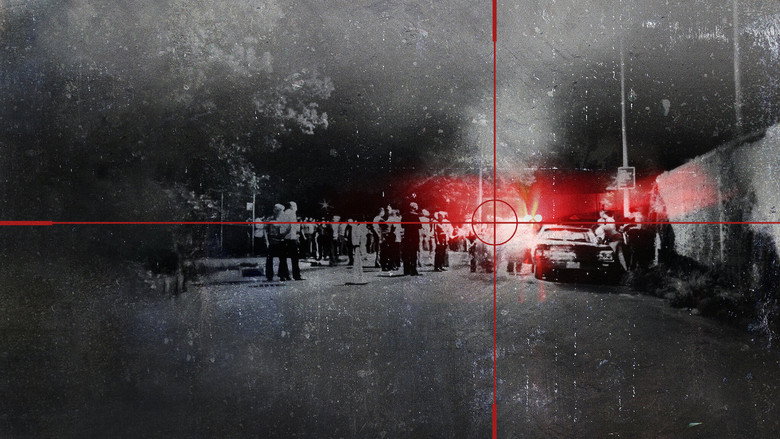
I finished The Sons of Sam with more questions than I started with. That’s not a failure of the documentary; it’s a sign of its power. It doesn’t just tell a story—it makes you feel the weight of the unknown.
And in a genre that often trades in easy answers, that’s a rare and unsettling achievement. Whether Terry was right or wrong, whether the cult existed or was a figment of his imagination, the series leaves you with the haunting sense that some mysteries aren’t meant to be solved. Some are meant to linger, to fester, to remind us that the world is far stranger—and far darker—than we’d like to believe.
"A chilling but divisive dive into conspiracy theories surrounding the Son of Sam case, held together by Maury Terry’s obsessive investigation."
The series is an eerie exploration of alternative theories about the Son of Sam murders, suggesting a larger cult was involved. The pacing is sluggish and the narrative overly convoluted, so tension fades across the runtime. Archival footage and interviews add authenticity, but the speculative claims leave plenty of room for skepticism.
Netflix’s 2021 docuseries The Sons of Sam: A Descent Into Darkness doesn’t just revisit the infamous Son of Sam killings—it dares to question whether David Berkowitz acted alone. The four-part series, executive produced by Paul Giamatti, dives into journalist Maury Terry’s decades-long investigation, which suggested a larger, more sinister cult was behind the 1976–77 murders. But how much of Terry’s theory holds up on screen? latestnetflix.com's read is that and what was it like bringing Berkowitz himself into the conversation?
At the heart of The Sons of Sam is Maury Terry’s claim that Berkowitz was part of a satanic network operating in New York. Terry, whose work forms the backbone of the series, spent years interviewing Berkowitz in prison, where the convicted killer allegedly hinted at accomplices. The docuseries leans heavily on Terry’s research, including his book The Ultimate Evil, which names the "Process Church of the Final Judgment" as a possible influence.
But the series doesn’t shy away from skepticism. Critics and law enforcement have long dismissed Terry’s theories as conspiracy-driven, and the docuseries presents both sides—though it clearly favors Terry’s perspective. The trailer teases eerie archival footage and dramatic reenactments, framing the case as an unsolved mystery rather than a closed book.
David Berkowitz, now serving six consecutive life sentences, appears in the series through archival interviews. His involvement is one of the most intriguing aspects of The Sons of Sam—did he really implicate others, or was he manipulating Terry? The docuseries doesn’t provide definitive answers, but it does highlight Berkowitz’s shifting narratives over the years. Some viewers have noted that his prison interviews feel calculated, leaving room for doubt about his true role in the crimes.
The series also explores Berkowitz’s later claims of religious conversion, which some argue were attempts to distance himself from the cult allegations. Whether these interviews add credibility to Terry’s theory or muddy the waters further is left for the audience to decide.
Paul Giamatti’s name attached to The Sons of Sam raised eyebrows—why was an Oscar-nominated actor executive producing a true crime docuseries? While the evidence doesn’t clarify his exact role, his involvement likely helped secure funding and distribution through Netflix. Director Joshua Zeman, known for Cropsey and The Killing Season, brings a gritty, investigative style to the project. In interviews, Zeman has described the series as an attempt to "follow the evidence" rather than sensationalize the case.
The trailer and promotional material emphasize the series’ cinematic approach, with moody visuals and a haunting score. Rotten Tomatoes’ trailer breakdown notes that the docuseries leans into the horror elements of the story, framing it as a descent into literal and metaphorical darkness.
The Sons of Sam earned a mixed but engaged response. SensCritique users rated it 6.4/10, praising its ambition but criticizing its reliance on Terry’s disputed theories. Some viewers felt the series stretched its narrative too thin, while others appreciated its willingness to challenge the official story.
Netflix’s review videos highlight the docuseries’ tension between true crime entertainment and serious investigative journalism. One YouTube reviewer called it "a compelling but flawed deep dive," noting that the lack of definitive answers might frustrate some audiences.
Nearly 50 years after the Son of Sam murders, The Sons of Sam: A Descent Into Darkness proves the case remains a cultural obsession. The series taps into the public’s fascination with unsolved mysteries and the possibility of hidden evil. Whether Terry’s theories are true or not, the docuseries ensures the conversation—and the chills—aren’t over yet.
Entertainment rumors and trivia aggregated from public reporting. Treat speculation as unverified unless a cited source confirms it.
More titles in the same genres and with the same cast.