Aurelien Leturgie
Self

“A scandal of the finest pedigree.”
A dog with a trust fund isn't the strangest part of this story. Gunther's eccentric handler also lived a luxe life — with a cult-like entourage.
Official
A dog with a trust fund should not work as a documentary. I watched Gunther's Millions anyway, half sure I was clicking on a prank. The handler lives like a minor royal.
Around him, what the synopsis calls a "cult-like entourage." It had the smell of 2 a.m. Television over cold pizza.
I wanted a cute animal story. I got a fever about the rot under gilded money, and the people who orbit it.
The dog is not what hits first. The people are. Or the mood around them.
The series opens on villas, designer clothes, private jets, a rotating cast whose job seems to be validating Maurizio Miani, Gunther's handler. The tone is off from the first frame. Not quite mockumentary.
Not fully earnest. There is a smirk under the polish, as if the filmmakers are in on a joke and have not decided who it is for.
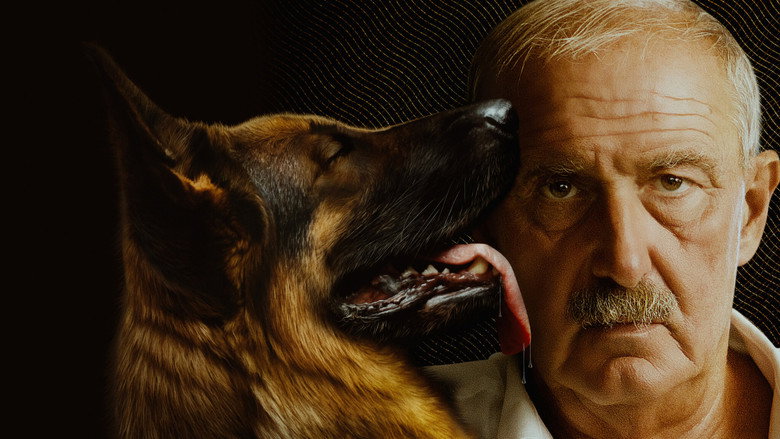
How a dog inherited a fortune is the hook, not the point. Call it a MacGuffin. The real story is the people who enabled it, cashed in, and now look both fascinated and sickened by their own part.
Aurelien Leturgie, a French socialite, never quite gets a job description. He exists to drop deadpan lines about how absurd the circus is. Alex Hyde-White, who played the original Phantom in the 1989 The Phantom of the Opera, shows up like a ghost from another decade.
Performance is the subject. The roles people play to justify a seat at the table. Then there is Maurizio himself, a man who has sold himself, and others, on the idea that devotion to Gunther is a calling, not a convenient excuse for unchecked luxury.
I wanted an indictment, or at least a joke with a target. The series will not pick one. It flirts with wealth as a disease, and with devotion that never gets a reality check.
It commits to neither. The camera is afraid to look too hard, as if the joke might turn around. The film keeps winking.
"Can you believe this is real?" is the easy question. "Why should we care?" is the one it ducks.
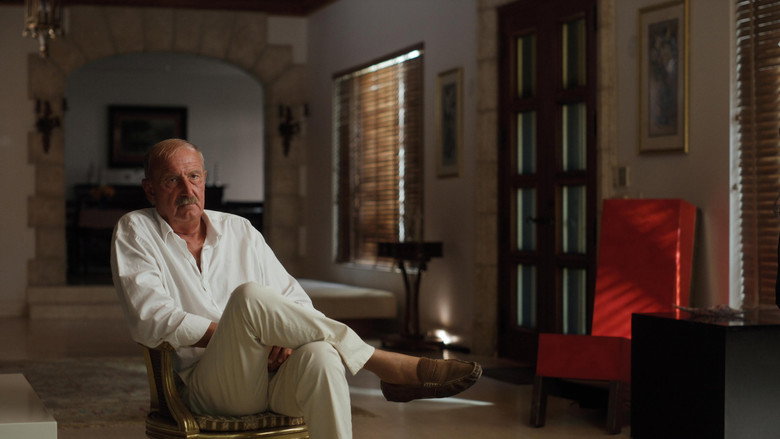
The craft is slippery. The images are polished past the point of comfort. Every frame looks staged for an Instagram post, which, given the subject, is both the right joke and a problem.
Interviews are cut so tight that people seem to be stopped mid-thought. The editors want the soundbite more than the sentence. In the second episode Maurizio describes his relationship with Gunther, and the camera stays on his face a beat too long, waiting for a crack.
He does not crack. The tension is there. Then the cut, and you wonder if you invented it.
The entourage is what I kept watching. They orbit Maurizio and the dog. They laugh on cue.
They talk about Gunther as if he were a deity and a prop at the same time, a living symbol of something they cannot name. In one scene a woman describes Maurizio dressing Gunther in designer clothes and taking him to high-end restaurants, where the dog is treated like royalty. Hilarious and horrifying in the same breath.
A real-life Springtime for Hitler, absurdity so extreme it loops toward something that feels true.
The series never lands a truth. It mirrors the aimlessness of people with too much money and too much afternoon, which is a smart formal trick. It also leaves you grasping, like a guest at one of Maurizio's parties who has had too much champagne and cannot remember why they came.
I would have forgiven a meaner film. I cannot forgive a timid one that keeps pointing at the gold wallpaper.

SensCritique gives it 5.8/10, which tracks. The number is a shrug. I understand the shrug. No evidence of a big critical fight, which is no surprise. You watch it once, tell a few friends, forget it, then some stray detail jogs the memory and you are back in that villa, wondering what any of it meant.
A snapshot of people swept up in someone else's fortune, telling themselves they are part of something special while they are only along for the ride. A dog can inherit millions. A man can build a little church around that fact. Nobody on screen seems to know what it means, or to mind.
Sharp social comedy would have required a meaner cut. Gunther's Millions keeps almost becoming that comedy, then blinking. Something is sitting under the marble. The series does not quite understand it. Or that is the champagne talking.
"A bizarre, intriguing docuseries about the world's richest dog that struggles to sustain interest beyond its quirky premise."
The absurd story of Gunther, a dog that inherited a fortune from a countess, makes for a unique and entertaining hook. The series is repetitive and shallow, though, some claims seem of questionable credibility, and it lacks substantial investigative content.
Netflix’s 2023 docuseries Gunther’s Millions has tongues wagging—not just for its absurd premise, but for the bizarre real-life drama behind the "world’s richest dog." The series peels back the layers of a decades-old fortune tied to a German Shepherd named Gunther, whose inheritance has allegedly ballooned into the hundreds of millions. But as the cameras roll, the story spirals into a mix of opulence, legal battles, and outright skepticism. latestnetflix.com's take is that here’s what the evidence reveals about the people, the money, and the controversy fueling this canine cash cow.
At the center of Gunther’s Millions are the humans tasked with managing the dog’s empire. The series features a roster of caretakers, lawyers, and hangers-on, each with their own stake in the fortune. Among them:
The series portrays these figures as both protectors and potential exploiters of Gunther’s fortune, with their personal agendas often clashing. Rumors of infighting over the trust’s management are hinted at but never confirmed, leaving viewers to wonder: who’s really in charge?
The core mystery of Gunther’s Millions is whether the dog’s wealth is legitimate or an elaborate ruse. According to the series, Gunther’s fortune traces back to the 1990s, when a German countess allegedly left her entire estate—reportedly $80 million—to her beloved pet. Over the years, the trust’s assets have supposedly grown to over $400 million, thanks to savvy investments in real estate, stocks, and even a stake in a former East German government building.
But not everyone is buying it. Critics and journalists have long questioned the trust’s transparency, and the docuseries leans into these doubts. Some key points of contention:
By the end, Gunther’s Millions doesn’t definitively answer whether the fortune is real. Instead, it frames the story as a modern-day Citizen Kane—a tale of greed, power, and the blurred line between truth and myth.
Gunther’s Millions is less a straightforward documentary and more a surreal character study. The series thrives on the absurdity of its premise—a dog with a billion-dollar trust fund—but it also raises serious questions about financial transparency and exploitation. Viewers are left to decide for themselves: is this a heartwarming tale of a pup’s unlikely riches, or a cautionary story about the lengths people will go to for a piece of the pie?
The series’ 5.8/10 rating on SensCritique suggests mixed reactions, with many viewers frustrated by its lack of concrete answers. Yet, that ambiguity might be the point. In a world where truth is often stranger than fiction, Gunther’s Millions delivers a story so bizarre it has to be seen to be believed—even if you’re not sure you should.
Entertainment rumors and trivia aggregated from public reporting. Treat speculation as unverified unless a cited source confirms it.
More titles in the same genres and with the same cast.