Randy Lanier
Self - Professional Race Car Driver

True crime and sports come together in this docuseries. Global controversies and scandals are explored through reports from those involved.
Official
I’ve always been drawn to stories where the hero and the villain wear the same jersey. Bad Sport, Netflix’s six-part documentary series from 2021, doesn’t just explore that tension—it lives inside it, breathing the same rarefied air as its subjects: athletes who crossed the line from competition to crime. The series arrives with the pedigree of Tim Wardle (Three Identical Strangers) behind it, a name that promises twist-laden storytelling, and it delivers, though not always in the ways you’d expect.
This isn’t a series about systemic corruption or the dark underbelly of sports governance. It’s something more intimate, and messier: a collection of firsthand accounts from the people who were there, for better or worse, when the rules of the game stopped applying.
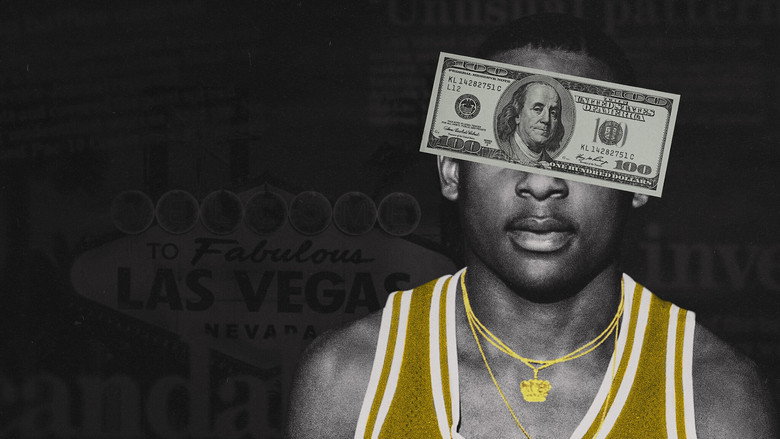
The anthology format is both Bad Sport’s greatest strength and its occasional stumbling block. Each episode is a self-contained story, a deep dive into a single scandal or criminal entanglement, and the series thrives when it lets its subjects do the talking. Take Randy Lanier, the former IndyCar driver whose career took a sharp detour into marijuana smuggling.
His episode is the standout, not because his story is the most shocking—though it is—but because of the way the series lingers on the contradictions of his life. Lanier isn’t a caricature of a fallen athlete; he’s a man who loved speed, in every sense of the word, and the documentary doesn’t shy away from the thrill he clearly still feels when recounting his past. There’s a moment where he describes the adrenaline of outrunning the law, his voice tinged with something dangerously close to nostalgia, and it’s chilling.
Not because it glorifies his crimes, but because it reveals how thin the membrane is between the rush of competition and the rush of breaking the law.
That’s the throughline of Bad Sport: the idea that the same qualities that make someone a great athlete—risk-taking, ambition, a willingness to push boundaries—can also make them a criminal. The series doesn’t moralize, at least not overtly. It lets its subjects moralize for themselves, often in ways that are deeply uncomfortable.
In the episode about the 2002 Salt Lake City Olympic figure skating scandal, for example, the focus isn’t just on the judging controversy that rocked the sport but on the human cost of that moment. Jamie Salé, one of the skaters at the center of the scandal, speaks with a mix of defiance and regret, her words a reminder that scandals aren’t just headlines—they’re lives upended. The series doesn’t offer easy answers, and that’s to its credit.
It’s not interested in tidy narratives about redemption or comeuppance. It’s interested in the gray areas, the moments where people make choices that will haunt them, and the ways those choices ripple outward.
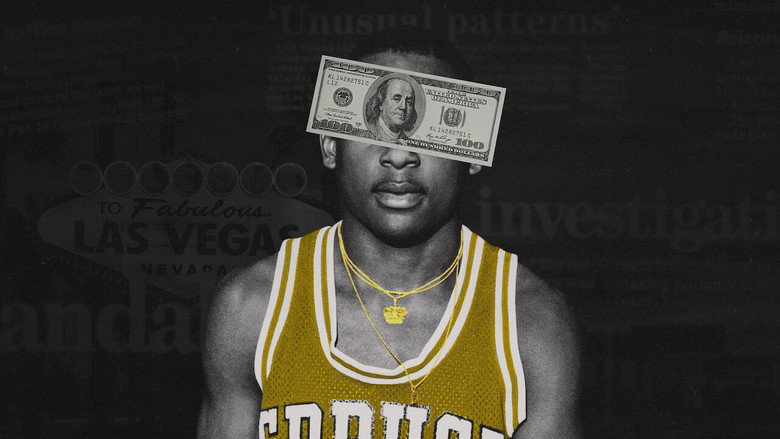
Where Bad Sport falters, if only slightly, is in its pacing and scope. With six episodes, the series sometimes feels like it’s spread too thin, particularly in the episodes that aren’t anchored by a figure as compelling as Lanier or a scandal as high-profile as the Olympic judging controversy. The anthology format means some stories land with more weight than others, and there’s a sense that the series is still figuring out what it wants to be.
Is it a true-crime docuseries, with all the investigative rigor that implies? Or is it a character study of athletes who strayed from the path? The answer, frustratingly, is both—and neither.
The series oscillates between the two, sometimes within the same episode, and while that can make for a binge-worthy watch, it also leaves you wishing for a bit more focus.
That said, the craft of Bad Sport is undeniable. The directors—Alex Kiehl, Georgina Cammalleri, James House, Lizzie Kempton, and Luke Sewell—have a knack for letting the visuals do the heavy lifting. The series relies heavily on archival footage, and there’s a real art to the way it’s edited.
A race car speeding down a track, the blur of motion mirroring the blur of Lanier’s moral compass. A figure skater’s blade scraping against the ice, the sound like a knife being sharpened. These aren’t just filler; they’re storytelling tools, and they work.
The series also makes smart use of reenactments, though it’s careful not to overdo them. When it does deploy them, they’re used sparingly, often to underscore a moment of tension or uncertainty, and they never feel gratuitous.
What lingers, though, isn’t the craft or even the scandals themselves. It’s the people. Bad Sport is at its best when it lets its subjects speak without interruption, when it trusts the audience to sit with the discomfort of their stories. There’s a moment in Lanier’s episode where he’s describing the moment he realized he was in too deep with his smuggling operation.
He’s not looking at the camera. He’s staring at something just beyond it, as if he’s seeing the memory play out in real time. “I knew I was going to prison,” he says, and the simplicity of the statement is devastating. It’s not a confession.
It’s not an apology. It’s just a fact, delivered with the same matter-of-factness he might use to describe a pit stop or a qualifying lap. That’s the power of Bad Sport: it doesn’t need to sensationalize its subjects because their lives already are sensational.
All it has to do is get out of the way and let them tell their stories.
In the end, Bad Sport is a series about the cost of ambition, and the ways that cost can be both exhilarating and ruinous. It’s not a perfect series—it’s too uneven for that—but it’s a compelling one, and it leaves you with questions that linger long after the credits roll. What does it mean to be a hero?
What does it mean to be a villain? And is there really that much difference between the two? The series doesn’t answer those questions, but it doesn’t need to.
The answers, if they exist at all, are in the stories it tells. And in the silence that follows.
"A gripping and well-produced documentary series that dives deep into shocking real-life sports scandals, though some stories feel rushed."
The series combines compelling storytelling with high production quality, bringing to light fascinating and often overlooked sports controversies and the darker side of competitive sports. Some stories could have been explored in more depth, though, leaving a few arcs feeling incomplete or hurried.
Netflix’s Bad Sport (2021) dives into the murky underbelly of competitive sports, where ambition, greed, and deception collide. The docuseries, helmed by directors Alex Kiehl, Georgina Cammalleri, James House, Lizzie Kempton, and Luke Sewell, unpacks high-profile scandals through a mix of archival footage and firsthand accounts. With a 6.8/10 rating from viewers, latestnetflix.com argues, the series promises a raw look at the lengths athletes and insiders go to bend—or break—the rules.
The series doesn’t just rehash old headlines; it pulls back the curtain on the personal and professional fallout of sports corruption. Among the central figures is Randy Lanier, a former racing driver whose career took a dark turn when he became entangled in drug trafficking—a stark contrast to the glamour of motorsport. His inclusion suggests Bad Sport doesn’t shy away from the messy, human side of these scandals.
Other episodes reportedly explore figure skating, with Jamie Salé, an Olympic gold medalist, likely offering perspective on the pressures and controversies that plague the sport. Pete Cullen, another cast member, may provide insight into the betting and match-fixing scandals that have rocked professional leagues. While the exact episode breakdown isn’t detailed in the available evidence, the trailer teases a gripping, cinematic approach to storytelling.
Bad Sport leans into the true-crime aesthetic that’s become a Netflix staple, blending investigative rigor with high-stakes tension. The trailer hints at a fast-paced narrative, with dramatic reenactments and interviews designed to keep viewers hooked. The directors—Kiehl, Cammalleri, House, Kempton, and Sewell—bring a mix of documentary and sports journalism experience, though their individual contributions to Bad Sport remain unconfirmed in the available snippets.
What’s clear is the series’ ambition to go beyond surface-level scandal. By focusing on figures like Lanier, whose criminal past intersects with his racing career, Bad Sport frames these stories as cautionary tales about the cost of crossing ethical lines. The 69-minute runtime per episode suggests a tight, no-frills approach, prioritizing impact over filler.
In a crowded field of sports documentaries, Bad Sport carves its niche by zeroing in on the systemic and personal failures that enable cheating. The series doesn’t just ask what happened—it digs into why, using its subjects’ voices to humanize the headlines. The inclusion of Salé, a beloved athlete with a squeaky-clean image, hints at a nuanced exploration of how even the most celebrated figures can be drawn into controversy.
The trailer’s moody tone and rapid-fire editing suggest Netflix is positioning Bad Sport as a binge-worthy deep dive, appealing to fans of true crime and sports alike. Whether it delivers on that promise remains a question for viewers, but the premise alone is enough to intrigue.
With a modest but respectable 6.8/10 rating, Bad Sport seems to have struck a chord with audiences craving authenticity over sensationalism. The series’ strength lies in its willingness to tackle uncomfortable truths, from the criminal underworld of racing to the cutthroat politics of figure skating. If the trailer is any indication, it’s a slick, engaging watch—but don’t expect a feel-good underdog story. This is a series about winners who lost everything, and the systems that let them fall.
For now, the behind-the-scenes details are sparse. No word on how the directors balanced their creative visions, or whether the cast had creative input beyond interviews. What’s certain is that Bad Sport delivers on its promise: a no-holds-barred look at the dark side of competition.
Entertainment rumors and trivia aggregated from public reporting. Treat speculation as unverified unless a cited source confirms it.
More titles in the same genres and with the same cast.