Season 1
4 episodes Apr 28, 2025 7.6
- 1 Jamie Oliver
- 2 José Andrés
- 3 Thomas Keller
- 4 Alice Waters

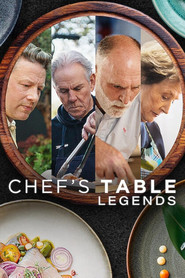
The Emmy-nominated series celebrates four culinary giants — Jamie Oliver, José Andrés, Alice Waters and Thomas Keller — who changed how the world eats.
Latest episode: S1 E4 Alice Waters (Apr 28, 2025)
Official
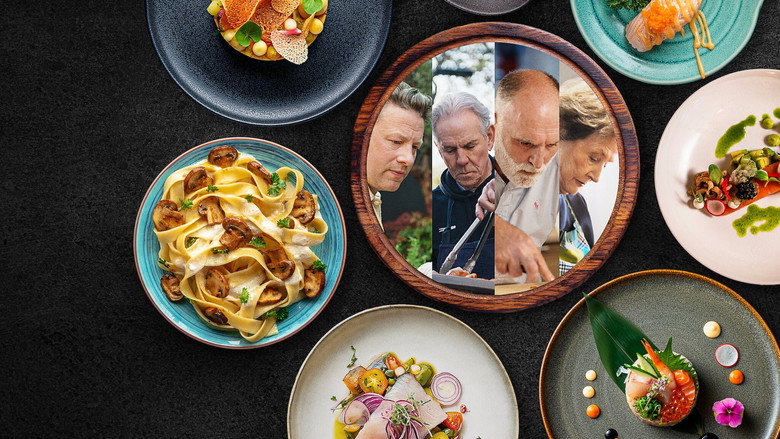
I’ve watched Chef’s Table for years, mostly alone, late at night, when the house is quiet and the only hunger left is the kind that food can’t satisfy. The original series had a way of making even the most extravagant tasting menus feel intimate—like eavesdropping on a confession. So when Netflix announced Chef’s Table: Legends, a 10th-anniversary spin-off profiling Jamie Oliver, José Andrés, Thomas Keller, and Alice Waters, I felt the familiar pull.
Here were four chefs who didn’t just cook; they changed how we think about food, its politics, and its power. But could a show this reverent still surprise me?
The answer, it turns out, is yes—but not always in the ways I expected.
Chef’s Table: Legends is, first and foremost, a visual feast. The opening shots of Alice Waters’ Chez Panisse, bathed in the golden haze of a Berkeley afternoon, feel like a love letter to a place that’s become a pilgrimage site for foodies. The camera lingers on her hands—gnarled, deliberate—as she arranges a simple salad, the greens still glistening with dew.
It’s the kind of shot that makes you forget you’re watching a documentary and not a tone poem. David Gelb, the series’ creator, has always had a knack for turning food into something transcendent, and here, he doubles down on that approach. The cinematography is lush, almost painterly, with slow-motion close-ups of sizzling pans and glistening sauces that border on the erotic.
(If you’ve ever wondered what food porn looks like in 4K, this is it.)
But Legends isn’t just about the food. It’s about the why behind it—the obsessions, the failures, the moments of doubt. The episode on José Andrés is particularly gripping, not because of his Michelin stars or his restaurants, but because of his work with World Central Kitchen.
There’s a scene where he’s in Puerto Rico after Hurricane Maria, standing in the rubble of a destroyed kitchen, barking orders at volunteers. The camera holds on his face as he talks about feeding people not as charity, but as a form of resistance. “Hunger is not a natural disaster,” he says. “It’s a man-made one.” The moment is raw, unpolished, and all the more powerful for it.
It’s the kind of scene that makes you realize why Chef’s Table has always been more than just a cooking show—it’s a series about what happens when art collides with activism.
That said, Legends isn’t without its missteps. The episode on Thomas Keller, for instance, feels like it’s trying a little too hard to manufacture drama. Keller’s story—from a childhood of SpaghettiOs to the heights of fine dining—is undeniably compelling, but the episode leans heavily on the “tortured genius” trope, complete with moody shots of him staring out of windows and brooding over his knives.
The Wall Street Journal put it best: “Mr. Keller’s episode probably has the best story in a purely narrative sense… But all four of the subjects are fascinating people.
And Mr. Gelb’s series is photographed with such a lush appreciation of the food on display that viewers can almost taste it—‘almost’ being hardly good enough.” It’s a fair critique. The food is stunning, but the storytelling sometimes feels like it’s straining for profundity where none is needed.
Then there’s Jamie Oliver. His episode is the most divisive of the bunch, and I can see why. Oliver has always been a polarizing figure—beloved by some for his approachable, TV-friendly persona, reviled by others for his sometimes heavy-handed approach to food activism.
The episode doesn’t shy away from his controversies, but it also doesn’t linger on them. Instead, it focuses on his campaign to reform school lunches in the UK, a crusade that’s equal parts inspiring and exhausting. There’s a moment where he’s standing in a school cafeteria, holding up a tray of processed chicken nuggets, his face a mix of disgust and determination.
It’s classic Oliver—passionate, a little self-righteous, and impossible to look away from. The Telegraph’s Benji Wilson called the series “hagiography” but admitted that “over the course of the series it does make a compelling case that what these four chefs have done is more than just amusing bouches.” I’m not sure I’d go that far, but Oliver’s episode at least feels like it’s grappling with the messiness of his legacy, even if it doesn’t always land the punch.
The biggest question hanging over Legends is whether the Chef’s Table formula has grown stale. After 10 years and multiple spin-offs, the slow-motion plating, the elegiac score, the chefs staring pensively into the middle distance—it all risks feeling like a parody of itself. Decider’s Joel Keller (no relation to Thomas) put it bluntly: “Can the show be hagiographic at times, and a bit pretentious at others?
Sure.” But he also argued that the series still “digs into the lives of the chefs who make the food,” and that’s where Legends ultimately succeeds. The best episodes—Waters and Andrés—transcend the formula by focusing on the people behind the food, not just the food itself.
That’s not to say the series doesn’t have its flaws. The pacing can be glacial, especially in the Keller episode, where the narrative drags under the weight of its own reverence. And while the cinematography is undeniably gorgeous, there are moments where it feels like style is substituting for substance.
(Do we really need another slow-motion shot of a chef drizzling sauce? Probably not.) But when Legends works, it works beautifully. The Alice Waters episode, in particular, is a masterclass in how to tell a story about food without ever losing sight of the human at its center.
There’s a scene where Waters is talking about the early days of Chez Panisse, her voice soft but steady, her eyes alight with the memory. “We were just trying to cook the way we wanted to eat,” she says. It’s a simple line, but it encapsulates everything that makes her—and this series—special.
So, is Chef’s Table: Legends worth watching? If you’re a fan of the original series, the answer is an unequivocal yes. It’s not perfect—no show is—but it’s a fitting tribute to a decade of culinary storytelling.
If you’re new to Chef’s Table, this might not be the best place to start. The spin-off assumes a certain familiarity with the franchise’s style and sensibilities, and it doesn’t always do the work of bringing newcomers up to speed. But if you’re willing to meet it halfway, Legends offers something rare: a chance to spend time with people who’ve changed the way we eat, and in doing so, changed the way we live.
I’ll admit, I went into this series with a healthy dose of skepticism. After 10 years, I wondered if Chef’s Table had anything left to say. But by the end of the Alice Waters episode, I found myself wiping away tears—not because the moment was manipulative, but because it wasn’t.
It was just honest. And in a world where food is often reduced to Instagram likes and Michelin stars, honesty feels like a revolution.
"A visually stunning, deeply personal tribute to culinary icons, though its pacing and emotional intensity are uneven."
The series is praised for its breathtaking cinematography and intimate storytelling, which bring legendary chefs' journeys to life with raw authenticity. The slower pacing and heavy emotional tone won’t suit everyone, especially those expecting a traditional cooking show.
Netflix is dishing out a fresh helping of its Emmy-nominated Chef’s Table franchise with Chef’s Table: Legends (2025), a spin-off spotlighting four titans of modern gastronomy. latestnetflix.com's view is that the series celebrates a decade of the original show’s influence by profiling chefs whose work reshaped how the world eats—and inspired generations of cooks along the way.
The mini-series zeroes in on four culinary heavyweights: Thomas Keller, Jamie Oliver, José Andrés, and Alice Waters. Each has left an indelible mark on global dining, from Keller’s Michelin-starred precision to Waters’ farm-to-table revolution. Oliver, the British bad boy of home cooking, and Andrés, the humanitarian chef feeding millions in crisis zones, round out the roster—proving this isn’t just about food, but the cultural and social impact behind it.
Netflix’s official site confirms the quartet’s involvement, framing them as “culinary giants who changed how the world eats”. While the series’ creative team remains unlisted in the available evidence, the focus on these four suggests a deliberate curation of chefs whose careers span high-end dining, activism, and mass-market influence.
Chef’s Table: Legends arrives as the original series marks its 10th anniversary, a milestone Netflix is leaning into. The spin-off’s premise—“celebrating a decade of culinary excellence”—positions it as both a retrospective and a love letter to the chefs who’ve shaped the show’s legacy. IMDb’s description teases their “groundbreaking work and global influence,” hinting at deep dives into their signature dishes, philosophies, and the ripple effects of their careers.
What’s unclear is whether Legends will adopt the same cinematic, slow-motion food porn aesthetic as its predecessor. The original Chef’s Table was as much about visual storytelling as it was about recipes, with directors like David Gelb crafting episodes that felt like art films. Netflix hasn’t released a trailer or behind-the-scenes footage for Legends, leaving fans to speculate if the spin-off will match that level of production polish.
Despite the hype, details about Chef’s Table: Legends are frustratingly sparse. Key unanswered questions include:
Chef’s Table: Legends isn’t just another food show—it’s a sign of how chefs have become cultural icons. Waters’ Edible Schoolyard Project, Andrés’ World Central Kitchen, Oliver’s school lunch crusades, and Keller’s culinary empire all transcend the kitchen. By framing these chefs as “legends,” Netflix is banking on their stories resonating beyond foodies, tapping into broader themes of innovation, activism, and legacy.
For fans of the original series, Legends offers a chance to revisit the chefs who’ve become household names. For newcomers, it’s an introduction to the figures who’ve redefined dining in the 21st century. Whether it lives up to the hype, however, will depend on how deeply it explores their impact—and whether it can match the visual and emotional punch of its predecessor.
Entertainment rumors and trivia aggregated from public reporting. Treat speculation as unverified unless a cited source confirms it.
More titles in the same genres and with the same cast.