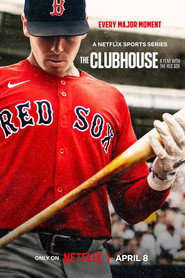
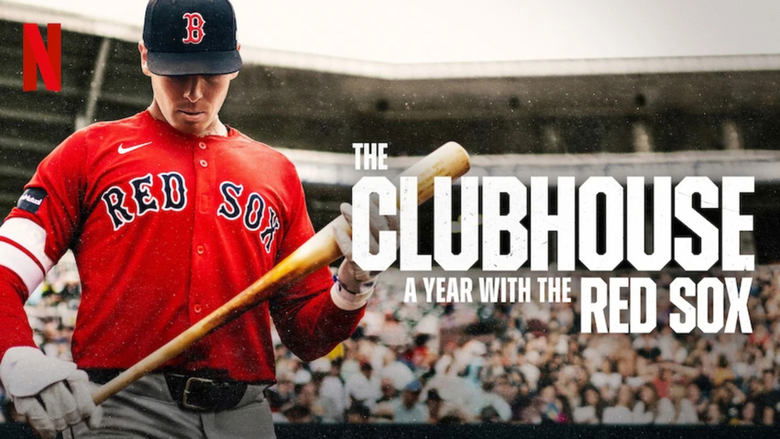
This immersive documentary series goes inside the dugout and gets up close and personal with the 2024 Boston Red Sox during their roller-coaster season.
Seasons
1 listed
Status
Ended
Seasons
1 season
Episodes
8 episodes
First aired
Apr 8, 2025
Last aired
Apr 8, 2025
Episode length
53m
Network
Netflix
Latest episode:S1 E8 Designed to Break Your Heart (Apr 8, 2025)
Season 1
8 episodes Apr 7, 2025 7.6
It takes a special baseball player to thrive in Boston, but what makes them tick? Go inside the clubhouse with the 2024 Red Sox in this riveting series.
1162
2Where Everybody Knows Your Name
3Gerente
4Still Alive
5Boston, You're My Home
6Buyers or Sellers
7Dog Days
8Designed to Break Your Heart
Trailer
Official
Reviews
6 min read
The Clubhouse and the Weight of the Uniform
I’ve never been a Red Sox fan. (There, I said it.) But by the third episode of The Clubhouse: A Year with the Red Sox, I found myself caring—really caring—about whether Jarren Duran would get a hit in the next at-bat. Not because I suddenly developed a rooting interest in Boston’s baseball fortunes, but because the series had done something far more interesting: it had made me care about Duran as a person.
That’s the trick of Greg Whiteley’s documentary series, and it’s a trick that works even when the team on screen is, by its own admission, mediocre.
Whiteley, the director behind Cheer and Last Chance U, has built a career out of finding the human stories buried inside institutions that prefer to present themselves as monoliths. The military, community college cheerleading, junior college football—these are worlds that demand toughness, discipline, and a kind of performative invincibility from their participants. Baseball is no different.
The Red Sox, with their 120-year history and their a reported budget valuation, are as much an institution as any branch of the armed forces. And yet, in The Clubhouse, Whiteley manages to crack open that institution just enough to show the fragile, messy, deeply personal lives inside it.
The series follows the 2024 Red Sox through an 81-81 season, a record that, on paper, is forgettable. But The Clubhouse isn’t interested in the kind of forgettable storytelling that reduces a season to wins and losses. Instead, it zeroes in on a handful of players—Duran, first baseman Triston Casas, pitcher Brayan Bello—and treats their personal and professional struggles as the real narrative.
This is a series that understands something fundamental about sports: the games themselves are often the least interesting part. What matters is what happens in the hours, days, and years leading up to them.
Take Duran’s story. In one of the series’ most devastating scenes, he sits in front of the camera and talks about his 2022 suicide attempt. It’s a moment that feels both shocking and inevitable—the kind of raw, unguarded confession that you know will linger with you long after the credits roll.
Duran’s candor is remarkable, not just because it’s rare for a professional athlete to speak so openly about mental health, but because it forces the viewer to confront the disconnect between the public image of a baseball player and the private reality of the person wearing the uniform. Here is a man who, by all outward appearances, has everything: a multi-million-dollar contract, a platform, a future in the sport.
And yet, as he describes the depths of his despair, it’s clear that none of that matters when you’re alone with your thoughts.
The series doesn’t shy away from the uglier moments, either. There’s the August 2024 incident where Duran, frustrated by a heckler, directed a homophobic slur at the stands. The documentary includes his post-suspension apology, but it’s a moment that feels oddly flat, as if the filmmakers didn’t quite know how to reconcile Duran’s vulnerability with his capacity for cruelty.
Some critics, like The Hollywood Reporter’s Daniel Fienberg, have noted that the series handles this moment poorly, calling Duran’s response a “canned quote” that lacks real introspection. It’s a fair critique. The incident hangs over the rest of the series like an unanswered question, a reminder that even the most open and honest storytelling can’t always contain the contradictions of human behavior.
That tension—between the personal and the performative, the vulnerable and the invincible—is at the heart of The Clubhouse. Whiteley’s approach is to treat the Red Sox clubhouse like an anthropologist might treat a remote village: with curiosity, empathy, and a refusal to look away from the uncomfortable. The series is filled with moments that feel like they were captured by accident, the kind of unguarded interactions that most documentaries would edit out.
There’s a scene where Casas, the team’s young first baseman, sits in the dugout after a tough loss, his face a mask of exhaustion. He doesn’t say anything. He just stares into the middle distance, and the camera lingers on him long enough that you start to wonder what he’s thinking.
Is he replaying the game in his head? Beating himself up over a mistake? Or is he just trying to remember what it felt like to love this game before it became his job?
It’s in these quiet moments that The Clubhouse feels most alive. The series isn’t interested in the kind of rah-rah sports storytelling that treats every game like a life-or-death battle. Instead, it’s a meditation on the grind of a 162-game season, the loneliness of being a professional athlete, and the way that even the most talented players are, at the end of the day, just people trying to figure it all out.
That’s a message that resonates far beyond baseball. (I’ve never played a sport at a high level, but I’ve certainly felt the weight of my own professional grind. There’s something universal in the way Casas rubs his eyes after a loss, or the way Duran’s shoulders slump when he talks about his mental health.)
The series isn’t perfect. Some of the visuals feel a little too standard—slow-motion replays of home runs, talking heads intercut with game footage, the kind of stuff you’ve seen in a hundred other sports documentaries. And while the access is unprecedented, it’s not absolute.
Major stars like Rafael Devers are largely absent, which feels like a missed opportunity. (Devers is one of the team’s best players, and his perspective on the season would have added another layer to the story.) But these are minor quibbles. The Clubhouse isn’t trying to reinvent the sports documentary. It’s trying to tell a story about the people inside the uniforms, and in that, it succeeds.
There’s a moment in the final episode where manager Alex Cora sits in his office, reflecting on the season. He’s not talking about wins or losses. He’s talking about the players, about the way they’ve grown, about the way they’ve struggled. “We’re not just baseball players,” he says. “We’re human beings.” It’s a simple statement, but it’s the kind of thing that’s easy to forget when you’re watching a game from the stands or on TV. The Clubhouse never lets you forget it.
That’s why the series works, even for someone like me—a casual observer who couldn’t tell you the difference between a slider and a curveball. It’s not about the game. It’s about the people playing it, and the way that even in a world that demands perfection, they’re still just trying to figure it all out.
By the end of the season, I didn’t care whether the Red Sox won or lost. I just wanted to know that Jarren Duran was okay. And that, more than any home run or no-hitter, is the sign of a great story.
Audience Opinions
Audience 7.2/10
"An intimate, engaging behind-the-scenes look at the Red Sox, though it focuses more on personalities than on gameplay."
Raw, unfiltered access to the Red Sox clubhouse offers a rare glimpse into the team's dynamics and daily routines, which suits fans of character-driven sports storytelling. The series sometimes favors player drama and personal stories over in-depth analysis of the game, though, so hardcore baseball fans may want more on-field action.
What viewers praise
Authentic accessAn unprecedented look inside the Red Sox clubhouse that brings fans closer to the team.
Strong character focusThe players' personalities and relationships add depth to the sports narrative.
Engaging storytellingThe documentary format stays compelling, even for casual viewers.
Common complaints
Limited gameplay focusToo much time goes to off-field drama rather than in-depth game analysis.
Uneven pacingA few episodes drag, particularly when the narrative moves away from key moments in the season.
Niche appealLess likely to engage non-Red Sox fans or anyone not into sports documentaries.
Recommended for
Red Sox fans Sports documentary lovers Fans of behind-the-scenes stories Anyone wanting a baseball season recap
Buzz & Rumors
Public reports
Inside The Clubhouse: A Year with the Red Sox—Netflix’s Raw Look at Baseball’s Highs and Lows
Netflix is swinging for the fences with The Clubhouse: A Year with the Red Sox, a 2025 docuseries promising an unfiltered glimpse into the Boston Red Sox’s 2024 season. From the creators of Cheer, the series aims to deliver the kind of behind-the-scenes access that turns sports documentaries into cultural moments—think The Last Dance meets Hard Knocks, but with Fenway Park as the backdrop. Early buzz suggests it won’t shy away from the messy, human side of professional baseball, including a bombshell revelation about one player’s mental health struggles.
Unprecedented Access to the Red Sox’s Inner Circle
The Clubhouse follows the Red Sox through the 2024 MLB season, offering what Netflix calls an “unfiltered” look at the team’s players, coaches, and executives. The series is helmed by the same team behind Cheer, the breakout docuseries that turned Navarro College’s competitive cheer squad into household names. If Cheer’s success is any indication, The Clubhouse could redefine how fans engage with baseball, moving beyond highlight reels to show the grit, pressure, and personal sacrifices of the sport.
Details about the series’ structure remain scarce, but the premise suggests a fly-on-the-wall approach. Viewers can expect candid moments in the dugout, locker room, and even off the field, where the pressures of playing for a storied franchise like the Red Sox are amplified by Boston’s passionate (and often unforgiving) fanbase. The series’ IMDb page lists Josh Golombek as a key figure, though his exact role—whether narrator, producer, or on-camera presence—isn’t specified.
Jarren Duran’s Mental Health Revelation Shocks Fans
The most explosive moment from The Clubhouse so far isn’t a walk-off homer or a bench-clearing brawl—it’s Red Sox outfielder Jarren Duran’s raw admission about his mental health struggles. In the series, Duran reveals he attempted suicide, a revelation that sent shockwaves through the baseball world when it leaked ahead of the show’s release. The 27-year-old, who has been open about his journey with anxiety and depression, issued a statement following the news, though the full context of his story won’t be clear until the series premieres.
Duran’s candor is a rare moment of vulnerability in professional sports, where mental health discussions are often stigmatized. His willingness to share his experience could pave the way for more athletes to speak openly about their struggles, especially in a sport where toughness is often equated with silence. The Red Sox organization has yet to comment on Duran’s revelation, but the series’ inclusion of such a personal story suggests The Clubhouse won’t just be about wins and losses—it’ll be about the people behind the uniforms.
What to Expect from the Series
While Netflix hasn’t released a trailer or official premiere date, the evidence points to a few key elements:
**A Cheer-style narrative: The creators’ previous work suggests a focus on character-driven storytelling, with players and staff becoming the heart of the series. - Behind-the-scenes drama: From clubhouse tensions to front-office decisions, the series is positioned to show the Red Sox in a way fans have never seen before. - Mental health as a central theme**: Duran’s story is just one example of how The Clubhouse might tackle the pressures of playing in a high-stakes, high-visibility market.
Rumors about other players’ storylines or potential conflicts within the organization remain unconfirmed, but if the series lives up to its promise of “unprecedented access,” it could deliver the kind of drama that transcends sports.
Why This Series Could Be a Game-Changer
Baseball documentaries have historically struggled to capture the same cultural impact as their basketball or football counterparts. The Clubhouse has a chance to change that by blending the sport’s rich history with the kind of raw, emotional storytelling that made Cheer and Drive to Survive must-watch TV. If it succeeds, it could inspire similar series across the MLB, giving fans a new way to connect with the game.
For now, the biggest question is whether The Clubhouse can balance the Red Sox’s on-field struggles with the off-field stories that make sports so compelling. If Duran’s revelation is any indication, the series won’t hold back—and that’s exactly what fans should want.
Entertainment rumors and trivia aggregated from public reporting. Treat speculation as
unverified unless a cited source confirms it.
Related series
More titles in the same genres and with the same cast.