Season 1
5 episodes Jan 9, 2025
- 1 Fearless!
- 2 Being bored
- 3 Exams never end
- 4 Greetings from Tokyo
- 5 Life is a party

Follow TV host Ilary Blasi as she defines her life post-divorce, balancing personal growth, career opportunities and a new love.
Latest episode: S1 E5 Life is a party (Jan 9, 2025)
Official
I’ve watched enough reality TV to know the rules. The confessionals, the staged conflicts, the slow-motion hair flips—it’s all part of the choreography. But I Am Ilary doesn’t feel like that.
Or at least, it doesn’t want to feel like that. The 2025 Netflix docuseries follows Italian television personality Ilary Blasi as she navigates life after her very public divorce from footballer Francesco Totti, and what’s striking isn’t the drama (there isn’t much) or the glamour (it’s there, but muted), but the way Blasi seems to be performing authenticity itself. The question is: can you ever truly be unscripted when the camera is always rolling?

The series opens with Blasi in motion—literally. She’s skydiving, her face a mix of terror and exhilaration, the wind whipping her hair into a frenzy. It’s a cliché, sure, but an effective one.
The metaphor is obvious: she’s leaping into the unknown, embracing risk, reclaiming her life. Yet what lingers isn’t the stunt itself, but the way she laughs afterward, breathless and unfiltered. For a woman whose every move has been scrutinized by the Italian press for decades, this moment feels like a deliberate choice—to show herself as imperfect, unpolished, real.
Whether it’s genuine or not is almost beside the point. The performance of vulnerability has become its own kind of truth.
I Am Ilary is structured like a docusoap, but it’s less about manufactured drama and more about the quiet work of rebuilding. Blasi isn’t just documenting her post-divorce life; she’s curating it. There are the expected milestones—a book launch, a cameo in a film, criminology studies—but the series’ most compelling moments are the ones that feel unplanned. A conversation with her grandmother about aging. A late-night wine-fueled chat with friends. A trip to Tokyo, where she wanders the neon-lit streets like a tourist, not a celebrity. These scenes don’t feel like they were staged for the camera, and that’s what makes them compelling. They’re the moments where Blasi seems to forget she’s being filmed, or at least doesn’t care.
The series’ director, Tommaso Deboni, and its writers (Romina Ronchi, Peppi Nocera, Ennio Meloni, and Jacopo Ghirardelli) have crafted something that straddles the line between personal diary and promotional vehicle. Common Sense Media notes that while Blasi is an engaging subject, the series often feels like a "promotional vehicle for her various professional ventures". That’s not entirely unfair.
There’s a fine line between self-reflection and self-promotion, and I Am Ilary wobbles across it more than once. But perhaps that’s the point. In a world where personal branding is currency, Blasi isn’t just sharing her life—she’s shaping it in real time.
There’s a moment in the third episode that I keep coming back to. Blasi is sitting in her kitchen, a glass of wine in hand, talking about her divorce. The camera lingers on her face as she describes the moment she realized her marriage was over. She doesn’t cry. She doesn’t rage. She just… pauses. Then she says, "I don’t know if I’ll ever stop being angry." It’s not a dramatic confession. It’s not even particularly revealing. But it feels honest in a way that so much of the series doesn’t. Maybe because it’s the one moment where Blasi seems to be talking to herself, not to the camera.
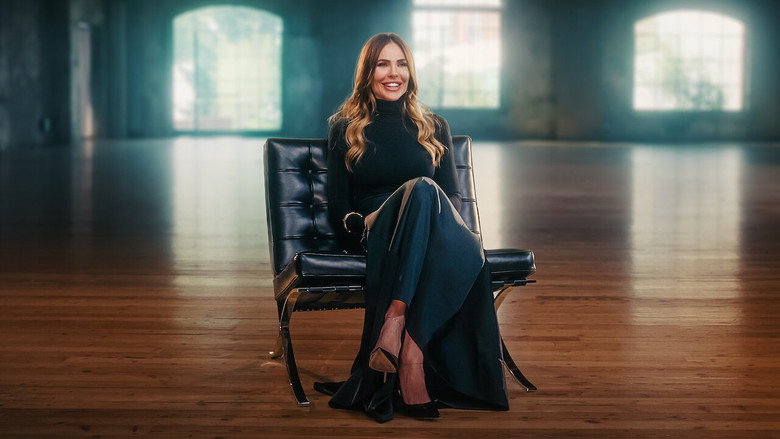
The series’ biggest flaw—and its most fascinating tension—is that it’s both deeply personal and oddly impersonal. Blasi is an undeniably charismatic presence, and her willingness to show her flaws (the drinking, the occasional swearing, the moments of self-doubt) makes her relatable. But there’s also a sense that we’re only seeing what she wants us to see. The series introduces her new partner, Bastian Müller, but their relationship is kept at arm’s length. We see glimpses of her children, but they’re never the focus. Even her divorce, the event that ostensibly set this entire journey in motion, is treated with a kind of careful detachment. It’s as if Blasi is saying, This is my story, but I’ll only tell you what I’m comfortable with.
That’s not a criticism, exactly. Everyone has the right to curate their own narrative, especially someone whose life has been dissected by the tabloids for years. But it does raise the question: how much of I Am Ilary is about self-discovery, and how much is about controlling the story?
The series is, at its core, a response to the media frenzy that surrounded her divorce. It’s Blasi’s way of saying, This is who I am now. Whether that’s the whole truth or just a carefully edited version of it is something only she knows.
The reception to I Am Ilary has been lukewarm at best. It holds a 4.2/10 on IMDb and a 3.8/10 on FlixPatrol, with many viewers criticizing it for lacking the "tabloid-worthy gossip" they expected. Common Sense Media’s assessment—that the series functions more as a promotional tool than a deep dive into Blasi’s life—rings true. But perhaps that’s missing the point. I Am Ilary isn’t trying to be a tell-all. It’s not The Tinder Swindler or Tiger King. It’s something quieter, more introspective. And maybe that’s why it’s so easy to dismiss.
Audience reactions have been similarly divided. Some praise the series for its "authentic portrayal" of Blasi’s life, while others find it "uneven" and "repetitive" [opinions_context]. The truth likely lies somewhere in the middle. I Am Ilary isn’t a groundbreaking work of documentary filmmaking, but it’s not trying to be.
It’s a snapshot of a woman in transition, and like all snapshots, it’s both revealing and incomplete.
Watching I Am Ilary is a bit like scrolling through someone’s Instagram feed. You see the highlights—the trips, the achievements, the moments of joy—but you also catch glimpses of the messiness in between. The difference is that Blasi isn’t filtering her life through a square frame. She’s letting us see the cracks, the pauses, the moments where she doesn’t have all the answers. And maybe that’s enough.
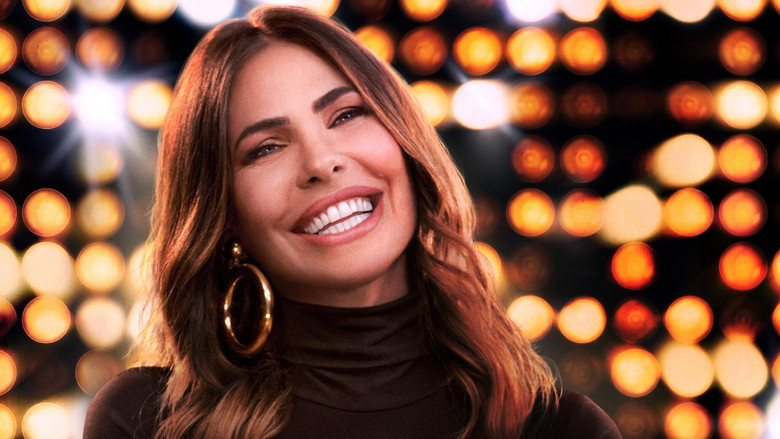
The series won’t change the way you think about reality TV, or even about Ilary Blasi. But it might make you think about the stories we tell about ourselves—and the ones we let others tell for us. In the end, I Am Ilary isn’t just about who Blasi is now.
It’s about who she’s trying to become. And that’s a story worth watching, even if it’s not always the one she intended to tell.
"A raw, intimate glimpse into Ilary Blasi's life, authentic but unevenly paced."
The series takes an unfiltered look at Ilary Blasi's personal and professional life and shows off her charisma and relatability. It meanders at times, with some segments repetitive or drawn out. The documentary-style approach suits reality TV fans, but its niche appeal limits broader interest.
Ilary Blasi’s life has long been a tabloid staple in Italy—glamorous, scrutinized, and unapologetically public. Now, the former showgirl and TV personality is turning the lens on herself with I Am Ilary, a 2025 docuseries that promises an unfiltered look at her post-divorce journey. The project, described as a "five-part documentary", latestnetflix.com maintains, marks a rare pivot for Blasi: from the subject of headlines to the architect of her own narrative.
Blasi’s split from footballer Francesco Totti in 2022 after 18 years of marriage sent shockwaves through Italian media. I Am Ilary picks up the pieces, framing her divorce as the catalyst for a broader reinvention. Sources describe the series as a chronicle of "self-discovery, professional evolution, and unexpected romance", suggesting Blasi isn’t just reflecting on the past but actively reshaping her future. The inclusion of "surprising romance" in the synopsis has already fueled speculation about a new partner, though details remain scarce.
What sets I Am Ilary apart from typical celebrity fare is its intimacy. Netflix’s involvement hints at a global audience, but the series appears to prioritize raw, personal storytelling over glossy PR. Blasi, known for her candor, seems to be leveraging the format to reclaim her story—one that’s often been told for her, not by her.
The creative team behind I Am Ilary remains a mystery. IMDb lists no director or showrunner, and none of the available snippets mention key collaborators. This opacity is unusual for a high-profile docuseries, especially one tied to a platform like Netflix, which typically amplifies its behind-the-scenes talent. The lack of details has led to unconfirmed chatter about whether Blasi herself played a hands-on role in shaping the narrative—a possibility that would align with her reputation for control over her public image.
The cast, at least, is straightforward: Blasi is the sole named star, with supporting players like Heather Nichols and Jayme Mantos listed as co-stars. Their roles are unclear, but given the series’ focus on Blasi’s personal life, they may serve as confidants, colleagues, or even foils in her journey.
I Am Ilary arrives at a moment when celebrity documentaries are evolving from vanity projects to vehicles for agency. Blasi’s series fits a growing trend of stars using the format to bypass traditional media gatekeepers—think The Last Dance (Michael Jordan) or Harry & Meghan (though with far less controversy). For Blasi, the stakes are personal: after decades in the spotlight, she’s not just documenting her life but redefining it.
The series’ success may hinge on how much Blasi is willing to reveal. Early descriptions emphasize "unprecedented" access, but whether that translates to unvarnished truth or carefully curated vulnerability remains to be seen. One thing is certain: with Netflix’s backing, I Am Ilary won’t be a quiet, local affair. It’s a global rollout of a woman rewriting her script—and the world is watching.
Entertainment rumors and trivia aggregated from public reporting. Treat speculation as unverified unless a cited source confirms it.
More titles in the same genres and with the same cast.