Miniseries
3 episodes Feb 17, 2025 7.5
- 1 We Bought a Van
- 2 Where is Gabby?
- 3 Burn After Reading

What happened in the final days of Gabby Petito's life? In this gripping true-crime series, her loved ones reveal the untold story of her tragic murder.
Latest episode: S1 E3 Burn After Reading (Feb 17, 2025)
Official
I keep thinking about the last Instagram post. Not the one where Gabby Petito smiles beside a sunflower field, her white van gleaming in the golden hour light, but the one that never got posted—the raw, unfiltered moment that exists only in the series’ reconstructed timeline. American Murder: Gabby Petito doesn’t just tell us what happened; it forces us to confront the gap between the life Gabby curated online and the one she was actually living. And in that gap, the documentary finds its most haunting power.

The series opens with a familiar rhythm for true crime fans: a slow unspooling of archival footage, text messages, and police body-cam videos. But what sets this apart from the usual procedural retread is its refusal to let Gabby become a mere victim in a sensationalized narrative. Directors Julia Willoughby Nason and Michael Gasparro—who also helmed American Murder: The Family Next Door—have built their reputation on this kind of intimate, almost forensic storytelling.
Here, they use Gabby’s own words, pulled from her journals and texts, to reconstruct not just the events leading to her death, but the emotional landscape of her final months. The effect is less like watching a crime documentary and more like reading someone’s diary after they’re gone. It’s uncomfortable.
It should be.
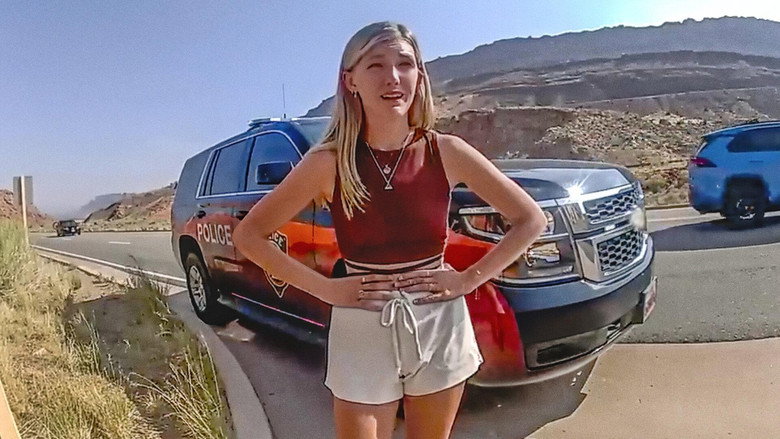
The Moab police stop is the series’ emotional fulcrum, and it’s where American Murder earns its chops as more than just a recap of a well-documented case. The body-cam footage from August 12, 2021, is difficult to watch—not because it’s graphic, but because it’s so painfully mundane. Gabby, visibly shaken, tries to explain the argument she and Brian Laundrie had while driving.
Brian, calm and collected, downplays the incident. The officer, meanwhile, seems more concerned with separating the couple for the night than with assessing the dynamics of their relationship. It’s a masterclass in how coercive control operates in plain sight.
Gabby’s voice trembles as she says, “He wouldn’t let me in the car,” and you can almost see the officer’s mental checklist: No visible injuries. No immediate threat. Case closed. The series lingers on this moment, letting it breathe, and in doing so, it exposes the systemic failures that allowed Gabby’s abuse to escalate unchecked.
The Chicago Sun-Times called this the “central moment in the narrative,” and they’re right. It’s the moment where the documentary shifts from true crime to something closer to a tragedy.
What’s striking about American Murder is how it resists the urge to villainize Brian Laundrie. That’s not to say it excuses him—far from it. But the series is more interested in the how than the why.
How does a relationship curdle into something so toxic? How does a young woman’s dream of freedom become a prison? The answer, the documentary suggests, lies in the curated perfection of social media.
Gabby’s Instagram feed was a highlight reel of #VanLife bliss: sunsets, campfires, and endless open roads. But the series juxtaposes these images with her journal entries, which reveal a growing sense of isolation and fear. One entry, read aloud in a voice recreation that’s equal parts eerie and heartbreaking, describes how Brian’s mood swings made her feel like she was “walking on eggshells.” The contrast between the public persona and the private reality is jarring, and it’s here that the series finds its most resonant theme: the danger of mistaking performance for truth.
The use of AI to recreate Gabby’s voice sparked predictable backlash, with some viewers calling it “unsettling” and “unnecessary.” I’ll admit, I flinched the first time I heard it. There’s something deeply unsettling about hearing a voice that’s been artificially resurrected, especially when that voice belongs to someone who can no longer speak for herself. But the series handles it with a degree of care that, while not erasing the ethical questions, at least justifies the choice.
The AI isn’t used for dramatic effect; it’s used to give Gabby agency in her own story. Her words, pulled from texts and journals, are delivered with a rawness that feels authentic. It’s not perfect—no technology could capture the nuances of a human voice—but it’s a reminder that Gabby was more than just a victim.
She was a person with dreams, fears, and a voice that deserved to be heard.

The series also grapples with the elephant in the room: Missing White Woman Syndrome. Gabby’s case dominated headlines for weeks, while countless other disappearances—particularly those of women of color—received far less attention. The documentary acknowledges this disparity, but it does so in a way that feels more obligatory than substantive.
The Review Geek called this aspect “half-arsed,” and I can’t disagree. It’s not that the series ignores the issue; it’s that it doesn’t dig deep enough. A passing mention of the media’s disproportionate focus on cases like Gabby’s feels like a missed opportunity to interrogate the systemic biases that shape public attention.
Still, the inclusion of the topic at all is a step in the right direction, even if it’s a small one.
Where American Murder truly shines is in its portrayal of Gabby’s family. Nichole Schmidt and Joe Petito, Gabby’s parents, are the emotional core of the series, and their grief is palpable. There’s no performative outrage here, no sensationalized soundbites.
Just two parents trying to make sense of an unimaginable loss. Their interviews are raw and unfiltered, and they serve as a reminder that this isn’t just a story—it’s a tragedy that forever altered the lives of those left behind. The series also highlights the Gabby Petito Foundation, which the family established to raise awareness about domestic violence.
It’s a small but meaningful gesture, a way to turn their pain into something that might help others.
The documentary’s biggest flaw, if you can call it that, is that it doesn’t offer any major new revelations. The facts of the case are well-known by now: Gabby’s disappearance, the cross-country manhunt for Brian Laundrie, the discovery of her remains in Wyoming, and Brian’s eventual suicide in Florida. If you’ve followed the case closely, there won’t be many surprises here.
But American Murder isn’t really about uncovering new evidence. It’s about reframing the story in a way that feels more human, more intimate. The Telegraph called it “chilling and effective,” and that’s a fair assessment.
It’s not a groundbreaking work of investigative journalism, but it doesn’t need to be. Its power lies in its ability to make us see Gabby not as a headline, but as a person.
That’s not to say the series is without its missteps. The pacing can feel uneven at times, with some segments dragging while others rush through critical details. And while the focus on social media is compelling, it occasionally veers into territory that feels more like a think piece than a documentary.
But these are minor quibbles in an otherwise gripping and emotionally resonant series.
What lingers, long after the credits roll, is the sense of what might have been. Gabby Petito’s story is, at its core, a tragedy of missed opportunities. Missed opportunities for intervention, for understanding, for escape.
The series doesn’t offer easy answers, but it does force us to confront uncomfortable questions about how we consume true crime, how we engage with social media, and how we fail to protect those who need it most. In the end, American Murder: Gabby Petito is less about solving a crime and more about honoring a life. And in a genre that often prioritizes sensationalism over substance, that’s a rare and welcome achievement.
"A raw and emotional dive into the Gabby Petito case, but struggles to offer fresh insights beyond existing coverage."
The series gives an unflinching account of the events leading to Gabby Petito’s death, with interviews with her family and friends adding emotional depth. It largely retreads ground already covered by earlier documentaries and media reports and uncovers little new. Its pacing and focus on social media’s role in the case can be a strength or a weakness depending on what you expect.
The 2021 disappearance and murder of 22-year-old travel vlogger Gabby Petito captivated the nation, sparking a media frenzy and a cross-country manhunt for her fiancé, Brian Laundrie. Now, four years later, Netflix is revisiting the case with American Murder: Gabby Petito (2025), a documentary miniseries directed by Julia Willoughby Nason and Michael Gasparro. latestnetflix.com's read is that the project promises an unflinching look at the tragedy, but with the Petito and Laundrie families at the center of the narrative, the series has already stirred controversy—and curiosity—about how it will handle such a sensitive story.
The series boasts a cast that includes key figures from both families, though their involvement raises questions about consent and emotional toll. Gabby Petito and Brian Laundrie appear via archival footage, while her parents, Nichole Schmidt and Joe Petito, and Laundrie’s parents, Chris and Roberta Laundrie, are listed as participants. The inclusion of the Laundries is particularly notable—after Brian’s suicide and the family’s refusal to cooperate with law enforcement, their decision to engage with the documentary suggests either a desire to shape their narrative or financial incentive.
Other figures, like Gabby’s stepmother, Tara Petito, and family friend Rose Davis, also appear, hinting at a broader exploration of the case’s ripple effects. But with no official confirmation on how deeply the series looks at the families’ perspectives, speculation swirls about whether the project will humanize Brian or double down on Gabby’s victimhood.
Nason and Gasparro aren’t newcomers to true crime. Nason co-directed The Tinder Swindler (2022), another Netflix hit that blended investigative journalism with high-stakes drama, while Gasparro has worked on projects like The Night Caller (2023). Their approach here seems to prioritize emotional weight over sensationalism—at least, that’s the early take from IMDb’s snippet, which calls the series "powerful, compelling and very harrowing".
But true crime’s ethical tightrope is especially precarious with American Murder: Gabby Petito. The case already sparked debates about media exploitation, with critics arguing that Gabby’s story was commodified during the initial coverage. Will this series avoid those pitfalls, or will it risk re-traumatizing the families for clicks?
Despite the buzz, details about the series remain scarce. Netflix’s Tudum page teases "bonus videos" and cast insights, but there’s no word on episode count, release date, or whether law enforcement officials or independent investigators will weigh in. The Wikipedia snippet confirms it’s a miniseries, but beyond that, the structure is a mystery.
One unanswered question: Will the series address the racial disparities in media coverage of missing persons? Gabby’s case dominated headlines, while other disappearances—particularly those of women of color—received far less attention. If American Murder ignores this, it risks being seen as another exploitative true-crime project.
Gabby Petito’s murder wasn’t just a crime—it was a cultural moment. Her van-life dreams, the couple’s cross-country road trip, and the chilling 911 call about a "domestic dispute" turned her story into a cautionary tale about intimate partner violence. Now, with this documentary, Netflix is betting that audiences are still hungry for answers.
But with the families involved and the case’s lingering pain, American Murder: Gabby Petito isn’t just entertainment. It’s a reckoning—one that could either provide closure or reopen wounds.
Entertainment rumors and trivia aggregated from public reporting. Treat speculation as unverified unless a cited source confirms it.
More titles in the same genres and with the same cast.