Ángel Di María
Self

From his humble origins to becoming champion of the world, this documentary series recounts the life and career of the iconic Argentinian soccer player.
I’ll admit it: I went into Ángel Di María: Breaking Down the Wall expecting a standard sports documentary. You know the kind—glossy highlights, triumphant music, and a narrative that flattens a player’s life into a series of career milestones. But within the first ten minutes, I realized this wasn’t that.
This was something quieter, messier, and far more interesting. It’s a story about the walls we build around ourselves, the ones we’re forced to break down, and the people who help us do it.
The series opens in Rosario, Argentina, where a young Di María kicks a ball against a literal wall—a makeshift training ground that becomes a metaphor for his entire career. That wall isn’t just brick and mortar; it’s the skepticism of European scouts, the weight of Argentina’s footballing expectations, the criticism that followed him like a shadow. And yet, the way the camera lingers on that wall, weathered and chipped from years of abuse, tells you everything you need to know about the man who stood in front of it.
This isn’t just a documentary about a footballer. It’s about the cost of greatness.
Juan Baldana, the director, has a knack for letting the small moments breathe. There’s a scene early on where Di María’s mother, Jorgelina, describes the family’s financial struggles. She doesn’t dramatize it—she just states it, matter-of-factly, while sorting through old photographs.
The camera holds on her hands, rough from years of labor, as she flips through images of her son’s rise. It’s a quiet moment, but it’s devastating. This is the emotional core of the series: the idea that success isn’t just about talent, but about the people who sacrifice alongside you.
Jorgelina and her husband worked multiple jobs to keep Di María in football, and the series doesn’t let you forget that. It’s not just his story; it’s theirs.
The craft here is subtle but effective. Baldana weaves together archival footage, talking-head interviews, and personal home videos in a way that feels organic, not manipulative. The match footage isn’t just there to show Di María’s skill—it’s used to underscore the emotional beats of his career.
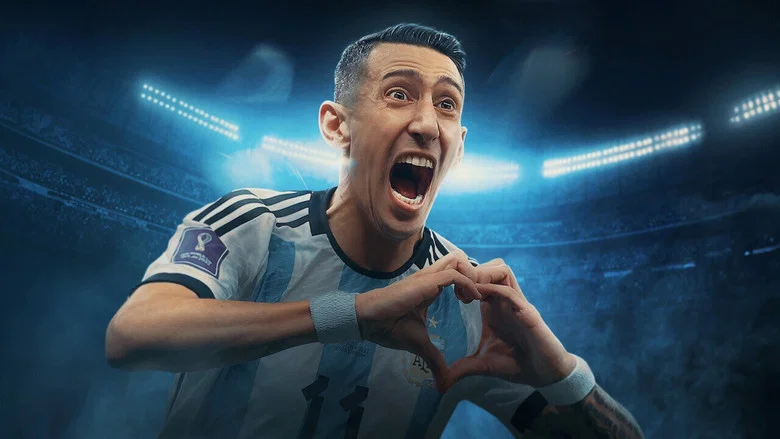
When he scores the winning goal in the 2022 World Cup final, the series doesn’t just replay the moment in slow motion with soaring music. Instead, it cuts to his wife, Vanesa, in the stands, her face a mix of disbelief and joy, tears streaming down her cheeks. The camera lingers on her for what feels like an eternity, and suddenly, the goal isn’t just a sporting achievement.
It’s a redemption. It’s the culmination of years of doubt, criticism, and near-misses. It’s the moment the wall finally crumbles.
One of the most striking things about Breaking Down the Wall is how it handles Di María’s relationship with the Argentine public. Football in Argentina isn’t just a sport; it’s a religion, and the pressure on players is immense. The series doesn’t shy away from the criticism Di María faced, particularly during his time with the national team.
There’s a moment where he recounts the abuse he received after a poor performance, his voice steady but his eyes betraying the hurt. It’s a rare glimpse into the vulnerability of someone we usually see as invincible on the pitch. The series doesn’t try to defend him or paint him as a victim.
Instead, it lets the contradictions sit there, unresolved. He’s a hero. He’s also human.
And sometimes, those two things are at odds.
The interviews with Di María’s teammates and coaches add depth to the narrative. Lionel Messi, his longtime friend and teammate, speaks with an affection that feels genuine. There’s no grand declaration of love—just a quiet acknowledgment of their shared journey.
Neymar, too, offers a perspective on Di María’s time at PSG, describing him as the "glue" that held the team together. Even José Mourinho, who coached Di María during his tumultuous year at Manchester United, weighs in, though his comments are predictably diplomatic. The most revealing interviews, though, come from Di María’s family.
His wife, in particular, is refreshingly candid. She doesn’t sugarcoat the struggles—the loneliness of moving to a new country, the pressure of being in the public eye, the fear of failure. Her honesty grounds the series, reminding you that behind every great athlete is a support system holding them up.
There’s a moment in the second episode that stuck with me. Di María is reflecting on his time at Manchester United, a period he’s described as one of the most difficult of his career. The series doesn’t dwell on the footballing details—instead, it focuses on the personal toll.
His wife talks about how isolated they felt in England, how the weather and the culture made them miserable. Di María himself admits that he struggled to adapt, that he felt like a square peg in a round hole. And then, almost as an afterthought, he mentions that he considered quitting football altogether.
It’s a throwaway line, but it’s chilling. This is a man who has won nearly every trophy imaginable, and yet, at one point, he was ready to walk away. It’s a reminder that success isn’t linear, and that even the most talented people have moments of doubt.
The series doesn’t offer any easy answers to the questions it raises. How do you reconcile the pressure of being a national hero with the need to be a husband and father? How do you move on from failure when the world is watching?
How do you break down the walls that others build around you? Di María doesn’t have a grand philosophy to share. He just keeps going, one step at a time.
And maybe that’s the point. The wall isn’t something you demolish in one dramatic swing. It’s something you chip away at, day after day, until one day, you realize it’s not there anymore.
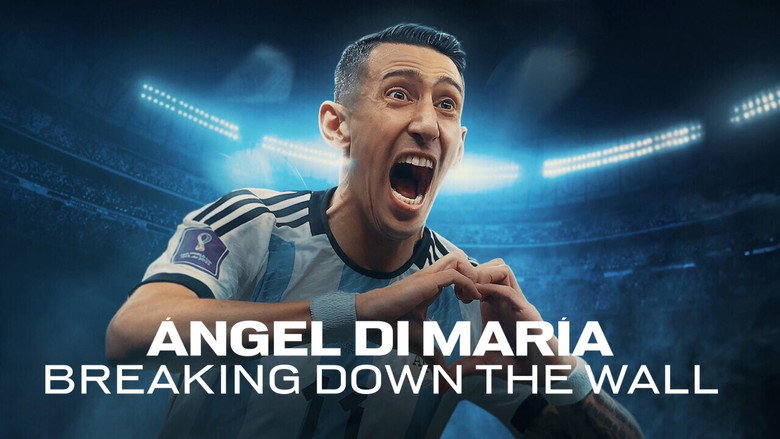
Breaking Down the Wall isn’t a perfect documentary. There are moments where the sentimentality feels a little heavy-handed, where the music swells just a beat too early. And while the series does a good job of contextualizing Di María’s career, it occasionally glosses over the more controversial aspects of his time at certain clubs.
(His move from Manchester United to PSG, for example, is framed as a redemption story, but there’s little mention of the financial and political complexities of that transfer.) But these are minor quibbles. What the series gets right is far more important: it humanizes a man who has spent his life being mythologized.
In the end, Ángel Di María: Breaking Down the Wall is a love letter—not just to Di María, but to the people who helped him along the way. It’s a reminder that behind every great athlete is a family that sacrificed, a community that believed in them, and a wall that had to be broken down, brick by brick. The series doesn’t just tell you what Di María achieved.
It shows you what it cost him. And that, more than any trophy or highlight reel, is what makes it worth watching.
The 2024 docuseries Ángel Di María: Breaking Down the Wall promises an intimate look at one of soccer’s most underrated legends, tracing his journey from Rosario’s humble streets to lifting the World Cup. But beyond the on-field glory, the series offers rare behind-the-scenes access to Di María’s personal life, his relationships with football’s elite, and the struggles that shaped his career. latestnetflix.com's read is that here’s what we know—and what the evidence reveals about the making of this project.
The series boasts an impressive lineup of interviewees, including some of Di María’s closest allies and fiercest rivals. Lionel Messi, his longtime Argentina teammate and friend, appears prominently, likely offering insights into their bond on and off the pitch. Neymar, another global superstar, is also listed in the cast, suggesting a focus on Di María’s time at Paris Saint-Germain (PSG), where the trio formed a formidable attacking trio.
Other key figures include:
Notably absent from the confirmed cast is Cristiano Ronaldo, Di María’s former Real Madrid teammate. While their partnership was legendary, their relationship reportedly cooled after Di María’s move to PSG—a potential subplot the series might explore [rumor, unconfirmed].
The title Breaking Down the Wall hints at the obstacles Di María faced throughout his career. The series likely looks at:
Director Juan Baldana (whose previous work isn’t widely documented in the evidence) appears to have crafted a narrative that balances Di María’s professional highs with his personal vulnerabilities. Unlike typical sports documentaries, Breaking Down the Wall seems to prioritize:
While the series promises depth, the available evidence leaves some questions unanswered:
Di María’s retirement from international football in 2024 makes this docuseries a timely retrospective. It’s not just a celebration of his career but a sign of his legacy as one of Argentina’s greatest players—a man who broke barriers, defied expectations, and, in his own words, "always fought for his dreams".
For fans, Breaking Down the Wall offers a chance to see Di María not just as a winger but as a father, a teammate, and a survivor. For neutrals, it’s a reminder of how football’s quiet heroes often shape its greatest moments.
Entertainment rumors and trivia aggregated from public reporting. Treat speculation as unverified unless a cited source confirms it.
More titles in the same genres and with the same cast.