Season 1
7 episodes May 28, 2025 3.9
- 1 No Friends on Track
- 2 The One to Beat
- 3 No More Mrs. Nice Guy
- 4 Target on My Back
- 5 Feel the Heat
- 6 The Hardest Race of My Life
- 7 End of the Road

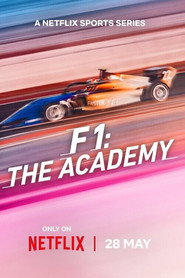
Fifteen young women break barriers in one of the world's most demanding sports as they race to get a female driver back on the Formula 1 grid.
Latest episode: S1 E7 End of the Road (May 28, 2025)
Official
I’ve watched F1: The Academy twice now, and each time I’m struck by the same contradiction: the cars are moving at 160 mph, but the real race—the one that matters—is happening in the silence between the laps. The series, a seven-part Netflix docuseries following the 2024 F1 Academy season, is ostensibly about speed, competition, and the push to get a woman back on the Formula 1 grid.
But what lingers isn’t the roar of the engines or the blur of the checkered flag. It’s the way the camera lingers on Abbi Pulling’s hands as she grips the steering wheel, knuckles white, her father watching from the garage with an expression that oscillates between pride and terror. It’s the way Lia Block, daughter of the late rally legend Ken Block, stares at the track like it’s a puzzle she can’t quite solve.
It’s the way the Al Qubaisi sisters—Amna and Hamda—whisper to each other in Arabic before a race, their voices barely audible over the hum of the paddock, as if they’re reminding themselves why they’re here.
This isn’t just a sports documentary. It’s a portrait of what it means to be seen in a space that wasn’t built for you.
Nicola Barnes, the series’ director, has a knack for finding the human pulse in high-stakes environments. Her previous work—Race Across the World, We Are Newcastle United—suggests a fascination with competition as a crucible for personal transformation, and F1: The Academy is no different. But where Drive to Survive thrives on manufactured drama and the soap-opera dynamics of F1’s billion-dollar teams, Barnes’ series feels like something rawer, more intimate.
There are no billionaires here, no Red Bull vs. Mercedes power struggles. Instead, we get 15 young women, most of them in their early 20s, racing for a shot at a future that has historically excluded them.
The stakes aren’t just about winning a championship; they’re about proving that they belong in a sport that has spent decades pretending they don’t.
That tension—between belonging and exclusion—is the series’ most compelling thread, but it’s also where F1: The Academy stumbles. Motorsport.com’s review puts it bluntly: the show “rarely explains itself.” We’re dropped into the middle of the F1 Academy season with little context about how this series fits into the broader motorsport ladder, or what it even means to “cut it” in this world.
Susie Wolff, the managing director of F1 Academy and one of the series’ executive producers, delivers a line that should land with the weight of a manifesto: “If you can’t cut it in F1 Academy, there won’t be much of a motorsport career left for you.” But the series never unpacks what “cutting it” entails. Is it about lap times? Sponsorship dollars?
The ability to endure the psychological toll of being the only woman in a room full of men? Without that context, Wolff’s statement feels less like a challenge and more like a threat—one that hangs over the drivers without ever being fully interrogated.
The series’ greatest strength is its access. We see Abbi Pulling’s father, Andy, break down in tears as he watches his daughter race, a moment so vulnerable it feels like an intrusion. We see Lia Block, fresh from the rally world, struggle to adapt to the precision of single-seaters, her frustration palpable as she admits, “I don’t know if I’m good enough for this.” We see Bianca Bustamante, the series’ most media-savvy driver, juggle the dual pressures of performance and brand-building, her Instagram following a double-edged sword that could either secure her future or distract from the work of actually driving.
These moments are the series’ beating heart, and they’re what make F1: The Academy more than just a highlight reel of races.
But the series’ access is also its limitation. The Athletic’s review notes that the show “felt as if it was missing components to fully tell the complete story of the all-women racing series.” There’s a sense that the series is holding back, either out of deference to its subjects or because it’s unwilling to confront the structural barriers that make the F1 Academy necessary in the first place.
We get glimpses of the challenges—funding gaps, the lack of a clear path to F1, the way sponsorships often hinge on a driver’s marketability rather than their talent—but these issues are treated as background noise rather than the central conflict. The series wants to celebrate these women, and it does, but it also wants to avoid the messier question of why they’re still fighting for a seat at the table in 2025.
That reluctance is most evident in the way the series handles its own framing. Susie Wolff, in a line that’s repeated like a mantra, declares, “This isn’t a moment. It’s a movement.” But what does that movement look like?
The series doesn’t say. It shows us the drivers’ triumphs and setbacks, but it doesn’t show us the systemic changes—or the lack thereof—that will determine whether the F1 Academy is a stepping stone or a dead end. Forbes’ feature on Abbi Pulling captures this tension perfectly, calling the series a “polished, ‘safe’ product” that “skirts explicit critique of funding disparities and structural inequities.” The cameras are there, but they’re not asking the hard questions.
There’s a scene in the fifth episode, set in Singapore, where the drivers are racing in sweltering heat. The camera cuts between the track and the garage, where the women are drenched in sweat, their faces flushed with exertion. Doriane Pin, the Mercedes-affiliated driver, is locked in a battle with Pulling for the lead, but the real drama is happening off-track.
Bustamante, racing near her home country, is overwhelmed by the weight of expectation. The Filipino fans are out in force, their cheers a roar that drowns out the engines, and Bustamante’s composure cracks under the pressure. She finishes the race, but the moment lingers—not because of the result, but because of the way the series captures the collision of personal ambition and public expectation.
That’s the paradox of F1: The Academy. It’s a series about speed, but its most powerful moments are the still ones. The way Pulling’s hands tremble as she removes her helmet after a race.
The way Block’s eyes dart around the paddock, as if she’s searching for a sign that she belongs. The way the Al Qubaisi sisters lean on each other, their bond a quiet rebuke to the idea that women in motorsport are competitors first and allies second. These moments don’t just humanize the drivers; they reveal the cost of being the first, the only, the one who has to prove herself over and over again.
The series’ cancellation after one season—reportedly due to underwhelming viewership—feels like a microcosm of the larger problem. F1: The Academy was never going to be Drive to Survive. It wasn’t about the glitz and glamour of F1; it was about the grind of trying to break into a sport that has spent decades keeping women out. But in its eagerness to be inspirational, it sometimes softens the edges of that grind.
It wants to tell a story of progress, but it’s reluctant to show us the cracks in the system that make that progress so fragile.
In the end, F1: The Academy is a series about visibility, but it’s also a reminder of how much visibility can cost. These women are being watched, scrutinized, celebrated—but are they being heard? The series gives them a platform, but it doesn’t always give them a voice.
And maybe that’s the point. Maybe the real story isn’t about whether they’ll make it to F1. Maybe it’s about what they’ll have to sacrifice to get there—and whether the sport will ever be ready to meet them halfway.
"A niche sports documentary that captures the intensity of F1 Academy but has little to offer beyond its core audience."
The series portrays F1 Academy authentically, focusing on emerging female drivers like Abbi Jo Pulling. Behind-the-scenes access and the sport's competitive energy are highlights, though the documentary format feels familiar. Reese Witherspoon adds star power, but her role is underused, making the series uneven in its appeal.
Netflix’s latest motorsport docuseries, F1: The Academy (2025), has revved up conversations about women in racing—and the pressure of being in the spotlight. Directed by Nicola Barnes, the series follows rising stars like Abbi Jo Pulling as they navigate the high-stakes world of the F1 Academy, an all-female single-seater racing series designed to fast-track female drivers toward Formula 1. latestnetflix.com's read is that With Reese Witherspoon attached as a producer, the show aims to replicate the success of Drive to Survive—but early reviews suggest it’s still finding its groove.
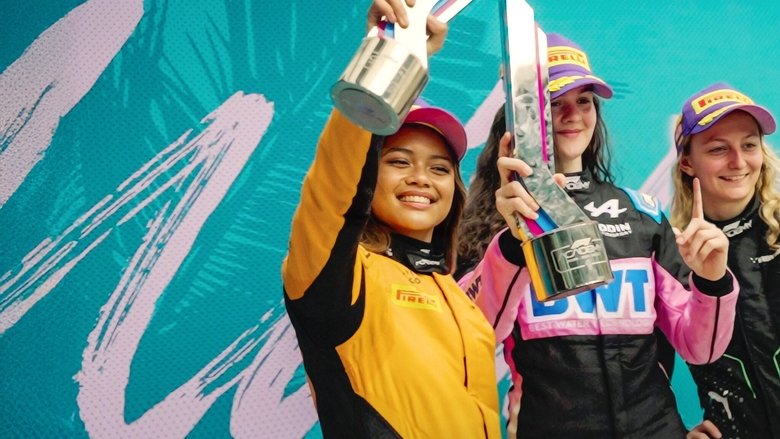
At the center of F1: The Academy is Abbi Pulling, the British driver who dominated the 2024 F1 Academy season with Rodin Motorsport, securing nine wins and podiums in all 14 races. The series offers a raw, behind-the-scenes look at her journey, from personal struggles to her championship victory. Pulling, who initially didn’t anticipate the level of attention the show would bring, has since become the face of the series—and the sport’s push for greater female representation.
But with fame comes scrutiny. The Netflix series has amplified Pulling’s profile, putting her under a microscope as she chases her Formula 1 dreams. Sources suggest she’s embraced the challenge, though the added pressure hasn’t been without its hurdles.
Reese Witherspoon’s involvement in F1: The Academy has sparked curiosity. While her exact contributions remain unclear, her production company, Hello Sunshine, has a history of championing female-driven stories. Given the series’ focus on women breaking barriers in motorsport, her role likely extends beyond a credit—though specifics are scarce [TMDB].
Rumors (unconfirmed) suggest Witherspoon may have helped shape the series’ narrative, ensuring it avoids the pitfalls of traditional sports docuseries by centering personal stories alongside the racing action. However, without further evidence, this remains speculative.
Early reviews are mixed. Critics acknowledge F1: The Academy’s potential to inspire a new generation of female drivers, but some argue it struggles to match the drama and depth of Drive to Survive. The series opens doors for its subjects, yet questions linger about whether it fully captures the intensity of the sport—or the complexities of its stars’ journeys.
One thing is clear: F1: The Academy is a step forward for visibility in motorsport. Whether it becomes a must-watch remains to be seen.
Entertainment rumors and trivia aggregated from public reporting. Treat speculation as unverified unless a cited source confirms it.
More titles in the same genres and with the same cast.