Chasing Cameron
2016 Series

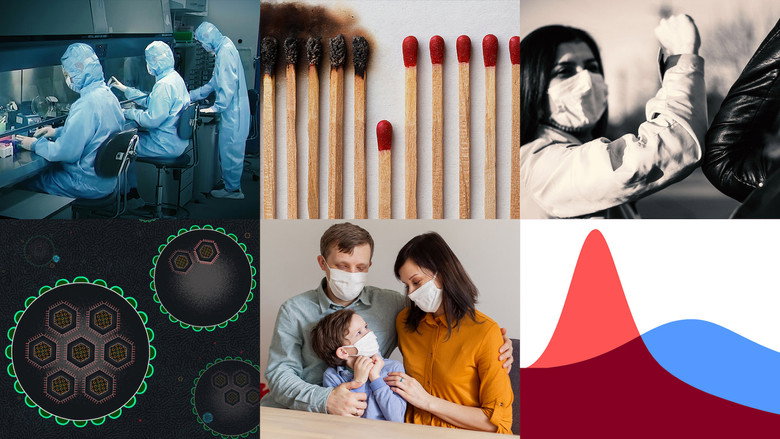
In 2020, the world changed. This topical series examines the coronavirus pandemic, the efforts to combat it and ways to manage its mental health toll.
Official
I remember the first time I watched Coronavirus, Explained in the spring of 2020. It was late April, and the world had already shrunk to the size of my apartment. The news cycle was a relentless blur of rising case numbers, conflicting advice, and a creeping sense of dread that settled in my chest like a stone.
Then this three-part series appeared on Netflix, and for 20 minutes at a time, I could almost breathe again. Not because it offered easy answers—it didn’t—but because it treated the chaos with something rare in those early days: clarity.
That’s the paradox of Coronavirus, Explained. It’s a documentary series born from a crisis, yet it refuses to indulge in the hysteria that defined so much of the pandemic’s early coverage. Instead, it does something far more radical: it slows down.
In an era where information was either oversimplified into memes or buried under layers of scientific jargon, this series carved out a middle path—one that trusted its audience enough to handle complexity without drowning in it.
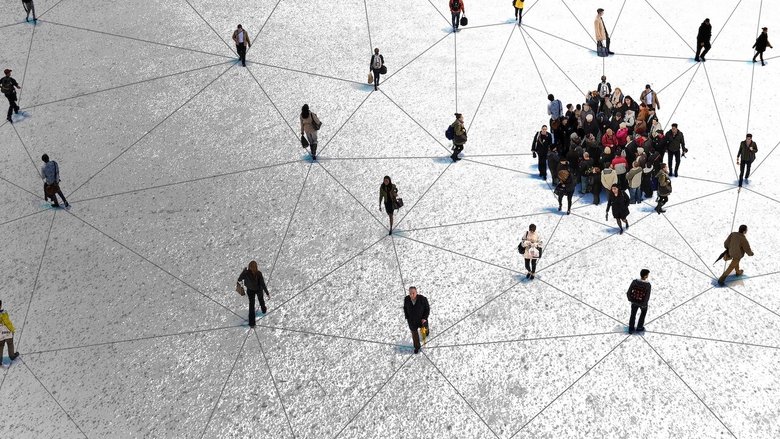
The first episode, “This Pandemic,” opens with a gut punch. Archival footage of Wuhan’s empty streets cuts to a montage of global cities—New York, Milan, London—all echoing the same eerie silence. The narration, delivered by J.K.
Simmons in that gravelly, no-nonsense voice of his, doesn’t soften the blow. “This is not a drill,” he says, and the weight of those words lands like a physical force. It’s not just the content that’s striking; it’s the rhythm. The editing is rapid-fire, mirroring the frantic pace of the news cycle, but the script refuses to spiral.
Every claim is anchored in data, every prediction hedged with the humility of uncertainty. “We don’t know yet,” becomes a refrain, and in a landscape where pundits and politicians were peddling certainties like snake oil, that admission felt like a lifeline.
What’s fascinating about Coronavirus, Explained is how it balances the clinical with the human. The series doesn’t shy away from the science—there are graphs, interviews with epidemiologists, and explanations of viral transmission that are as clear as they are concise. But it also lingers on the emotional toll.
The third episode, “How to Cope,” is a masterclass in this balance. Narrated by Idris Elba, it shifts from the macro (the psychological impact of isolation) to the micro (a woman describing the guilt of surviving when others didn’t). The episode doesn’t offer easy solutions—how could it?—but it does something almost as valuable: it names the feelings.
Loneliness, grief, anxiety—they’re not just abstract concepts here. They’re lived experiences, and the series treats them with the same rigor it applies to R-naught values and vaccine trials.
That said, Coronavirus, Explained isn’t without its flaws. The most glaring is its U.S.-centric perspective. For a series about a global pandemic, it’s striking how often the narrative defaults to American experiences, American experts, American solutions.
The second episode, “The Race for a Vaccine,” is particularly guilty of this. While it does acknowledge the global effort, the framing often feels like it’s watching the world from a window in Silicon Valley. It’s a limitation that The Indian Express’s critic noted in their review, calling the series “cogent” but also “curiously myopic” for a crisis that knew no borders.
I’d add that the myopia isn’t just geographic—it’s also socioeconomic. The series touches on the disproportionate impact of COVID-19 on marginalized communities, but it never lingers there long enough to grapple with the systemic failures that made those disparities inevitable.
The other elephant in the room is the narration. The Explained series has always leaned into a kind of slick, almost corporate tone—think TED Talk meets infomercial—and Coronavirus, Explained is no exception. The voiceovers, while delivered by talented actors, can sometimes feel like they’re performing “urgency” rather than embodying it.
There’s a moment in the first episode where Simmons intones, “This is a story about all of us,” and I winced. It’s the kind of line that would’ve been cut in the edit room of a prestige documentary, but here it stays, a reminder that even in a crisis, Netflix can’t resist a little branding.
Yet for all its missteps, Coronavirus, Explained succeeds where it matters most: it meets the moment without exploiting it. In an era where every news outlet, influencer, and armchair epidemiologist was clamoring for attention, this series chose to be useful. It didn’t sensationalize, didn’t moralize, didn’t offer false hope.
It just… explained. And in the early days of the pandemic, when the ground beneath us felt like it was shifting by the hour, that was enough.
Watching it now, nearly four years later, is a strange experience. Some of the information feels dated—the early advice about surface transmission, the optimism about vaccine timelines—but the emotional core hasn’t aged a day. If anything, the series has become a time capsule, a snapshot of a world grappling with the unknown.
There’s a scene in the first episode where Bill Gates, interviewed for a 2019 Explained episode about pandemics, warns that the world isn’t ready for the next outbreak. The footage is repurposed here, and the effect is chilling. It’s not just that he was right; it’s that we knew.
We’d been warned, and we still weren’t prepared.
That’s the real power of Coronavirus, Explained. It’s not just a documentary about a virus; it’s a documentary about us. About how we handle fear, how we process uncertainty, how we fail and adapt and keep moving forward.
It’s imperfect, sure—what isn’t?—but it’s also honest in a way that feels increasingly rare. In a landscape of hot takes and performative outrage, that’s no small thing.
I think that’s why I keep coming back to it. Not because it has all the answers, but because it never pretends to. It’s a series that understands the value of saying, “I don’t know,” and in a world that’s still reeling from the pandemic’s aftershocks, that might be the most radical act of all.
When Netflix dropped Coronavirus, Explained in April 2020, the world was drowning in misinformation, fear, and a desperate hunger for clarity. The three-episode miniseries, a spin-off of the streaming giant’s Explained anthology, arrived as a rapid-response effort to demystify the pandemic for a global audience. latestnetflix.com's take is that but behind its polished, bite-sized format lay a production sprint unlike anything Vox Media Studios had attempted before.
Coronavirus, Explained wasn’t just another documentary—it was a proof-of-concept for how quickly factual storytelling could adapt to a breaking global emergency. According to the series’ official description, the project was produced by Vox Media Studios in collaboration with Vox, the digital news outlet known for its explanatory journalism. The first episode premiered on Netflix on April 26, 2020, just weeks after the World Health Organization declared COVID-19 a pandemic. That turnaround time was unheard of for a high-production-value series, suggesting a team working around the clock to synthesize emerging science, public health guidance, and societal anxieties into digestible 20-minute episodes.
The series’ structure mirrored its parent show, Explained, with each episode tackling a distinct angle of the crisis: the virus itself, the race for a vaccine, and the pandemic’s broader societal impact. But unlike its predecessor, which often explored evergreen topics, Coronavirus, Explained was built on shifting sands. Producers had to navigate a landscape where new studies, policy reversals, and conspiracy theories emerged daily. The fact that the series managed to remain relevant—even as the pandemic evolved—speaks to its careful balance of urgency and restraint.
Trailers for Coronavirus, Explained flooded YouTube in the weeks leading up to its release, with Netflix tailoring promos for different regions. The official trailer, narrated in English, was repackaged for markets like India, complete with localized subtitles and voiceovers,. This wasn’t just a marketing tactic; it reflected Netflix’s broader strategy to position the series as a public service tool, not just entertainment. The platform even made the series available in territories where it typically restricted content, underscoring its role as a pandemic-era educational resource.
Critics and viewers responded with cautious praise. French review aggregator SensCritique gave the series a 7/10, based on 36 votes, calling it a solid primer but noting its brevity left some topics underexplored. The series’ reception highlighted a tension common to pandemic-era media: the need to inform without overwhelming. At just 27 minutes per episode, Coronavirus, Explained was designed for skimmers, not scholars—a deliberate choice that likely broadened its appeal but also drew criticism from experts who wanted deeper dives.
Despite its impact, Coronavirus, Explained remains a curiously opaque project. Unlike other Explained installments, which often feature celebrity narrators or high-profile experts, the series’ creative team and on-screen talent are conspicuously absent from available sources. There’s no mention of directors, writers, or narrators in the retrieved evidence, leaving key details about its production shrouded in mystery,. Rumors swirled about potential follow-up episodes—one YouTube video teased a December 2020 release for a Netflix original titled Songbird alongside Coronavirus, Explained, but there’s no confirmation the latter ever expanded beyond its initial three episodes.
The series’ legacy is similarly ambiguous. While it was praised for its timeliness, it’s unclear how many viewers revisited it as the pandemic dragged on. Unlike The Social Dilemma or Our Planet, which became cultural touchstones, Coronavirus, Explained never quite achieved the same staying power. That may be by design: it was always meant to be a snapshot of a moment, not a definitive account.
Coronavirus, Explained is a relic of 2020’s collective whiplash—a series born of necessity, not artistry. It didn’t break new ground in documentary filmmaking, but it proved that streaming platforms could pivot to serve as ad-hoc educators in a crisis. Whether it will be remembered as a vital public service or a footnote in Netflix’s content blitz remains to be seen. For now, it shows the strange, frantic early days of the pandemic, when the world was desperate for answers—and willing to trust a 20-minute explainer to provide them.
Entertainment rumors and trivia aggregated from public reporting. Treat speculation as unverified unless a cited source confirms it.
More titles in the same genres and with the same cast.